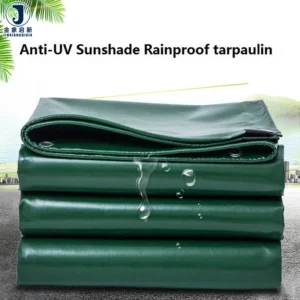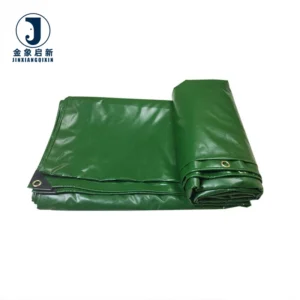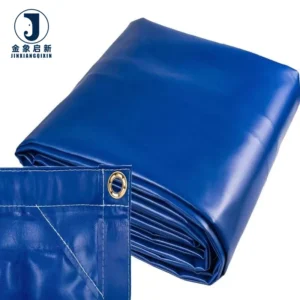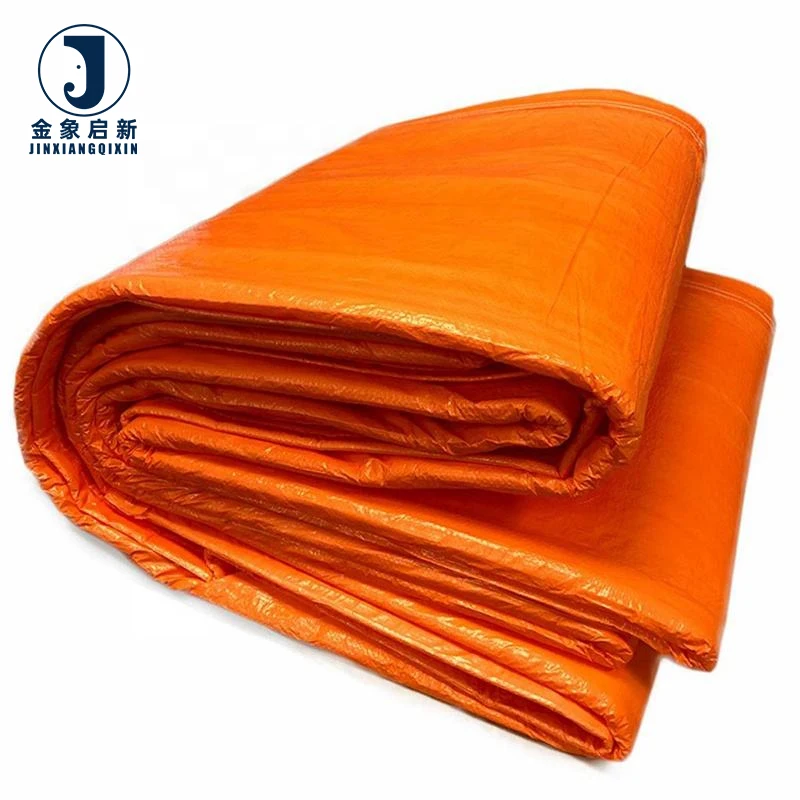
Reinforced Edge Construction — Every insulated concrete curing blanket we ship carries reinforcement-stitched edges with grommets spaced at 61cm and 91.5cm intervals, verified against tie-down stress points before leaving the factory.
Technical Specifications
| Parameter | Value |
|---|---|
| Product Type | Insulated Concrete Curing Blanket |
| Dimensions | 6ft x 24ft / 8ft x 25ft / 12ft x 20ft / 12ft x 24ft |
| Total Thickness Options | 2x2mm / 3×1.5mm / 1x4mm / 5mm / 6mm / 8mm / 12mm |
| Material Structure | PE cloth + closed cell PE foam core + PE cloth |
| Color Options | Orange / Black / White / Silver / Customized color |
| Grommet Configuration | Aluminum grommets, hole spacing 61cm and 91.5cm |
| Edge Finish | Reinforcement stitch, rust-proof brass grommets on stitched edges |
| Water Resistance | Waterproof surface fabric (both sides) |
| Surface Treatment | UV resistant treatment in base fabric |
| Thermal Core | Closed cell PE foam for heat loss prevention |
Application Suitability
| Application | Exposure & Requirement |
|---|---|
| Flatbed trailer load insulation | Road vibration, tie-down strap abrasion, wind-driven rain, temperature fluctuation |
| Winter concrete pour curing | Sub-zero ambient contact, ground moisture, repeated repositioning on-site |
| Temporary heated enclosure wrap | Sustained wind load, scaffold tie-back stress, thermal retention |
| Vertical wind block on scaffolding | Lateral wind pressure, UV exposure, grommet pull-through risk |
| Equipment cover on transport | Vibration-induced flex at contact points, weather exposure, securement load |
Why a Generic Truck Cover Fails Where an Insulated Concrete Curing Blanket Succeeds
A standard PE tarp holds water off the load but cannot hold heat in — and that distinction determines whether a winter pour cures or cracks.
Fleet operators and transport contractors often reach for the heaviest tarpaulin they can source, assuming GSM translates directly to thermal protection. On a moving flatbed in cold weather, the real failure point is not water ingress but heat loss at the flex zones where the cover bends over sharp load edges. Generic-size covers leave gaps at the trailer tail and sides, creating convection channels that strip heat from the cargo faster than the blanket can retain it. [NEED_CITE: heat loss mechanisms in temporary transport enclosures under highway conditions]
An insulated concrete curing blanket addresses this by combining a closed-cell PE foam core with waterproof outer layers, creating a thermal barrier that a single-layer PVC or PE sheet simply cannot match. The question is whether the grommet layout and edge reinforcement can survive the road.
Tie-Down Geometry and Grommet Spacing on Moving Loads
When you secure an insulated concrete curing blanket over a flatbed load, the tie-down straps pull directly against the grommets at every braking event and lane change. Grommets spaced at 61cm and 91.5cm give you anchor points that align with standard cargo strap intervals, distributing the pull across the reinforcement-stitched edge rather than concentrating it at a single tear point.
Aluminum and brass grommet options address different corrosion environments. Brass resists salt-spray exposure on coastal routes, while aluminum keeps weight down on blankets that crews lift and reposition manually at each job site. The edge stitch must hold through repeated removal and redeployment without the thread cutting through the PE cloth surface layer.
Thermal Core Behaviour Under Road Vibration
Closed-cell PE foam does not compress permanently under sustained load the way open-cell foams do, which matters when straps press the blanket against steel edges for hundreds of kilometres. The foam cells maintain their air pockets — and therefore their insulating value — even after the load shifts and the blanket flexes at contact points.
Multiple thickness grades from 5mm to 12mm let you match the insulation level to the route and ambient conditions. A 5mm core may suffice for a short-haul delivery in marginal cold, while a 12mm core provides the thermal mass needed for overnight staging in sub-zero yards. [NEED_CITE: closed-cell foam compression recovery under sustained point loads]
Reading the Thickness Spec Beyond the Number
Total thickness alone does not define thermal performance — the ratio of foam core to surface fabric does. A 2x2mm construction means two layers of 2mm foam sandwiched between PE cloth faces, delivering symmetrical insulation and balanced flex in both directions. A 3×1.5mm layout concentrates more foam on one side, which can matter when the blanket is always deployed foam-side-down against a concrete surface.
The dual PE cloth surfaces serve as abrasion barriers protecting the foam core from puncture at load corners and scaffold contact points. Waterproof performance depends on these outer layers remaining intact — once the surface fabric tears, the closed-cell foam resists water absorption at the cell level, but the exposed edge becomes a dirt and debris trap that degrades the blanket over time. Selecting the right thickness means matching both the insulation requirement and the mechanical exposure the blanket will face.
What Happens When Grommet Spacing Does Not Match the Tie-Down Pattern
The most common on-site failure with insulated covers is not the material tearing — it is the grommet pulling free because the strap spacing does not align with the anchor points. When a crew forces a strap through a grommet that sits at an awkward angle, the pull load shifts from the reinforcement stitch into the face fabric, and the blanket tears outward from the hole within the first few hours of highway travel.
Blankets sized to match standard trailer footprints reduce the number of fold-over points where excess material bunches and creates wind-catching pockets. Excess fabric flapping at speed generates oscillating loads that fatigue the edge stitch far faster than steady tension does. [NEED_CITE: fatigue failure at stitched edges under oscillating wind load on transport covers]
Why Procurement Verification Matters for Fleet Insulation
Our production process builds in verification at the points where insulated covers most often fail specification. Grommet spacing is measured against the order sheet before the blanket leaves the finishing line, not assumed from the die setting. Edge reinforcement stitch density is checked per production run, and material specification sheets state the exact foam core thickness and PE cloth weight for each layer.
Custom cut sizes are developed against your trailer model dimensions through a sample approval step, so the first blanket that arrives at your depot has already been fitted and confirmed. A 10-person R&D team handles material selection and pattern development, supporting fleet-wide orders where colour coding distinguishes insulation grades or route assignments.
Documentation & Verification
- Material specification sheet stating foam core thickness and PE cloth weight per layer
- Pre-shipment inspection record confirming grommet spacing and edge reinforcement
- Roll or unit packing list with individual blanket dimensions for receiving checks
- UV treatment basis stated for outdoor exposure verification
Fabrication, Handling & Storage
- Stitch needle size must match PE cloth weight to avoid perforation damage along edges
- Fold insulated blankets along existing crease lines to prevent foam core compression marks
- Store flat or on wide-diameter cores to avoid permanent foam compression at roll edges
- Clean with mild detergent — solvent-based cleaners can degrade the PE surface layer
- Repair surface tears with PE-compatible adhesive patches before moisture reaches the foam core
- Deploy brass grommet edges outward on salt-exposure routes to resist corrosion buildup
Getting the Specification Right Before You Order
To size an insulated concrete curing blanket correctly for your fleet or job site, we need the trailer bed dimensions or concrete pour area, the lowest ambient temperature the blanket must perform in, and the tie-down method your crews use. Share whether the blanket will be laid flat, hung vertically, or both — this affects which thickness grade and grommet configuration we recommend.
If you operate a mixed fleet or manage multiple site conditions, tell us the range of trailer models and climate zones so we can group thickness and size options into a manageable number of SKUs rather than a custom blanket for every single load.
Frequently Asked Questions
Q: How do I choose the right insulated blanket size for a specific trailer model?
A: Measure the flatbed length and width including any overhang needed for side drape. Standard sizes like 8ft x 25ft cover many common flatbeds, but custom cuts are available to match your exact trailer footprint. A blanket that is too large creates wind-catching folds; one that is too small leaves cargo edges exposed. We recommend ordering one sample blanket for fitment verification before committing to a fleet order.
Q: What grommet material and spacing options are available for heavy-duty tie-down?
A: Aluminum and brass grommet options are available with hole spacing at 61cm and 91.5cm. Brass suits coastal or salt-treated routes where corrosion resistance is critical. The spacing aligns with standard cargo strap intervals so the pull load transfers into the reinforcement stitch rather than tearing through the face fabric. Confirm your strap pattern so we can match the grommet layout accordingly.
Q: Can these blankets be used vertically as wind blocks or only laid flat?
A: Both applications are supported. When hung vertically on scaffolding or enclosure frames, the grommets provide tie-back points and the closed-cell PE foam core maintains insulation value without sagging. Vertical use increases wind load on the grommets, so we recommend the brass option with reinforcement-stitched edges for sustained wind exposure on multi-week site installations.
Q: How do I verify insulation thickness and thermal performance on delivery?
A: Request the material specification sheet with your order — it states the exact foam core thickness and PE cloth weight per layer for each blanket. Cross-check the stated thickness against your order requirement during receiving inspection. For projects requiring documented thermal performance, discuss test parameters during the specification stage so the correct grade is produced.
Q: What are the minimums for custom sizes and colours across a fleet order?
A: Custom cut sizes and colour options are available for fleet-wide orders. Minimum quantities depend on the number of distinct SKUs — fewer size and colour combinations mean lower minimums per variant. Provide your full trailer list and preferred colour coding so we can consolidate the order into an efficient production run and confirm minimums against your specific configuration.