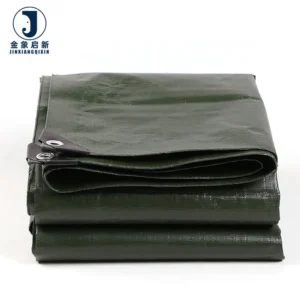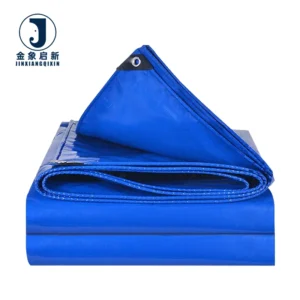
Custom Sizing Expertise — Jinan Jinxiang’s R&D team cuts PE tarpaulin to exact vehicle dimensions, eliminating on-site modification and material waste for transport fleets.
Technical Specifications
| Parameter | Value |
|---|---|
| Product Type | PE Tarpaulin |
| Coating Material | PE |
| Waterproof | Yes |
| Mildew-Proof | Yes |
| UV Resistant | Available (test basis not stated in source) |
| Construction | Heavyweight woven |
| Color | Customizable |
| Size | Customizable |
Application Suitability
| Application | Exposure & Requirement |
|---|---|
| Truck and trailer load coverage | Road debris abrasion, wind flutter, UV exposure, tie-down stress at corners |
| Construction equipment transit | Puncture risk from sharp edges, weather protection during multi-day hauls |
| Outdoor event temporary roofing | Rain load, UV degradation over event duration, wind uplift on unsupported spans |
| Agricultural stockpile covers | Moisture ingress prevention, mildew growth in humid storage, UV fading over season |
Why Generic-Size PE Tarpaulin Fails on Moving Loads
A truck cover must match the trailer, not the nearest round number.
Fleet operators often receive covers sized to standard increments rather than their actual vehicle dimensions. The result is excess material flapping at highway speeds, accelerating abrasion at the grommets and hem lines. PE Tarpaulin for truck and transport applications requires a precise cut, with reinforcement placed exactly where the ratchet straps and bungee cords bear the load.
I have reviewed field returns where the fabric body remained intact but the hems tore away because the cover was 150mm too wide, creating a continuous whip action at speed. [NEED_CITE: tarpaulin failure analysis at stress concentration points]
Designing the Fit Around the Vehicle, Not the Fabric Roll
When a transport company specifies a PE Tarpaulin for truck and transport use, the starting point is the trailer model and its exact load envelope. Side curtains on a curtain-sider face continuous flexing and road spray, demanding a fabric that tolerates repeated folding without cracking the PE coating. Flat-deck loads require a different approach: the cover must drape over irregular cargo shapes, with eyelets positioned to match the vehicle’s lashing points rather than a generic grid.
Reinforcement Where the Load Flexes Most
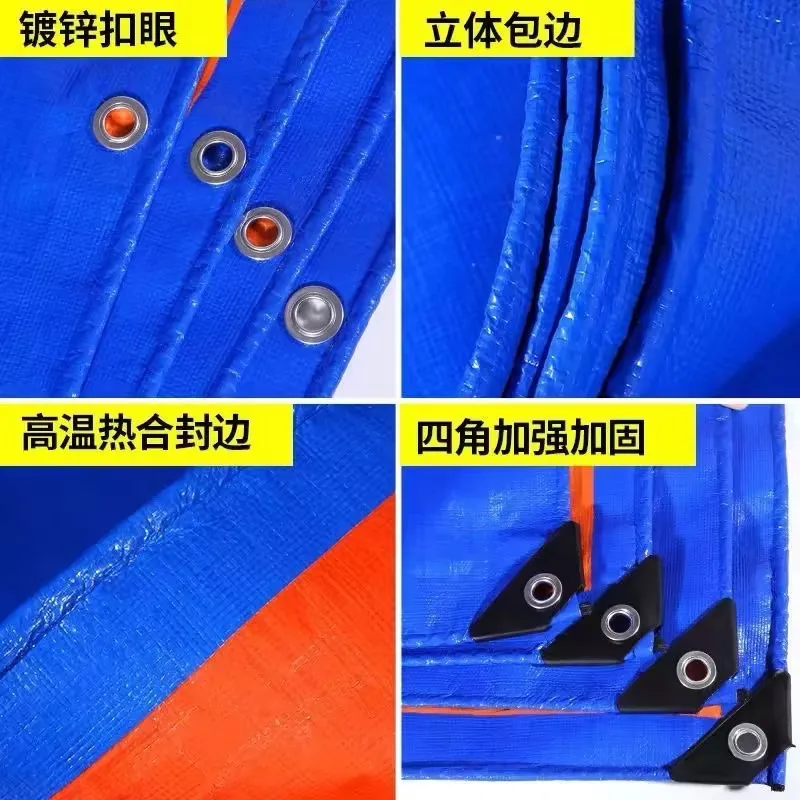
The corners and tie-down edges of any cover experience concentrated stress every time a strap is tensioned. A heavyweight woven construction provides the base tear resistance needed, but the hem design determines whether that resistance is fully utilized. Doubling the fabric at the perimeter and spacing eyelets to align with standard ratchet strap positions reduces the point load on each grommet. This approach keeps the load secure without the fabric cutting into itself during transit vibration. [NEED_CITE: tie-down load distribution on flexible covers]
Specifying Weight and Weave for Transport Duty
How GSM and Base Weave Interact in PE Tarpaulin
GSM alone tells you how much material is present, but not how it is distributed. A PE tarpaulin with a tight warp and weft weave achieves higher tear resistance at the same weight compared to a loosely woven base with thicker coating to compensate. For transport covers, the base fabric density determines how well the fabric resists the initial cut from a sharp cargo corner, while the coating weight protects the yarns from abrasion and moisture. Selecting the right balance depends on whether the primary risk is puncture from the load or abrasion from wind-driven road grit.
The Hidden Cost of Underspecifying Transport Covers
When a cover is selected on price per square metre without verifying the weave density and coating adhesion, the failures tend to appear in the second season rather than the first. Hems pull away from the body of the fabric, eyelets tear through under strap tension, and the coating delaminates at the fold lines where the cover is repeatedly tied down and released. These are not material defects in the traditional sense — the fabric was simply not specified for the mechanical demands of its actual application. [NEED_CITE: coated fabric delamination mechanisms under cyclic loading]
Sourcing Precision from a Specialist Coating Facility
Three full production lines and 36 sets of professional equipment provide the capacity to run dedicated batches for individual fleet orders without mixing short runs into longer production schedules. A 10-person R&D team handles pattern layout and custom sizing, developing samples within days so the fit can be confirmed before the full order runs. Dedicated QA and QC at every production stage, culminating in 100% pre-shipment inspection, ensures each cover meets the dimension and reinforcement specification agreed at the quotation stage. ISO and CE certification supports documentation requirements for export to regulated transport markets. Nearly 30 years of focused coated fabric production provides the process control that maintains batch-to-batch consistency across repeat orders.
Documentation & Verification
- Material specification sheet confirming PE base fabric, coating type, and weight per roll
- UV resistance test report supplied where UV treatment grade is specified in the order
- Pre-shipment inspection record documenting dimensions, eyelet count, and hem reinforcement
- ISO and CE certificates provided with each shipment for customs and compliance review
- Roll packing list matching each piece to its designated trailer model or size code
Fabrication, Handling & Storage
- Heat-welded seams preferred over stitched for waterproof integrity on heavyweight woven PE
- Eyelet spacing aligned to vehicle lashing points prevents point-load tearing at the hem
- Store rolls horizontally on pallets to avoid permanent crease marks in the PE coating
- Allow cold-stored rolls to reach ambient temperature before unrolling to prevent coating crack
- Use mild detergent only; solvents will degrade the PE coating surface over repeated washes
- Field repairs with PE-compatible adhesive patches maintain water integrity at minor punctures
Before You Request a Quotation
To specify a PE Tarpaulin for truck and transport coverage accurately, we need the trailer make and model, the typical cargo profile, and the tie-down method in use. If your fleet operates in a region with specific fire or safety compliance requirements for load covers, please state the standard so the correct treatment grade can be quoted. Indicate whether you require finished, hemmed, and eyeleted covers or roll stock for in-house fabrication.
Frequently Asked Questions
Q: How can I verify the fabric weight matches the quotation when the shipment arrives?
A: Each roll or finished piece is weighed during pre-shipment inspection, and the result is recorded on the inspection report included with your documents. You can replicate this by cutting a measured square from a sample piece, weighing it, and calculating GSM. We provide the test methodology in the specification sheet so both parties use the same approach.
Q: How does the custom sizing process work for specific trailer models?
A: We request the trailer dimensions and a diagram showing lashing points and any protrusions. Our R&D team develops a cutting pattern and produces a sample cover for your approval. Once the fit is confirmed, the pattern is locked for repeat orders, ensuring every replacement cover matches the original without re-measurement.
Q: What eyelet spacing and hem reinforcement options do you offer for tie-down loads?
A: Eyelet spacing is set to match your strap pattern, typically at intervals suited to standard ratchet or bungee configurations. Hems are doubled with heavyweight woven PE fabric, and corner patches are added where diagonal loads concentrate stress. The exact layout is confirmed during the sample approval stage.
Q: How do you ensure colour consistency when I order multiple covers at different times?
A: We retain a master colour swatch for each custom colour we produce. Every new batch is compared against this reference under controlled lighting before dispatch. If the colour drifts outside the agreed tolerance, the batch is re-run rather than shipped, which protects the visual uniformity of your fleet.