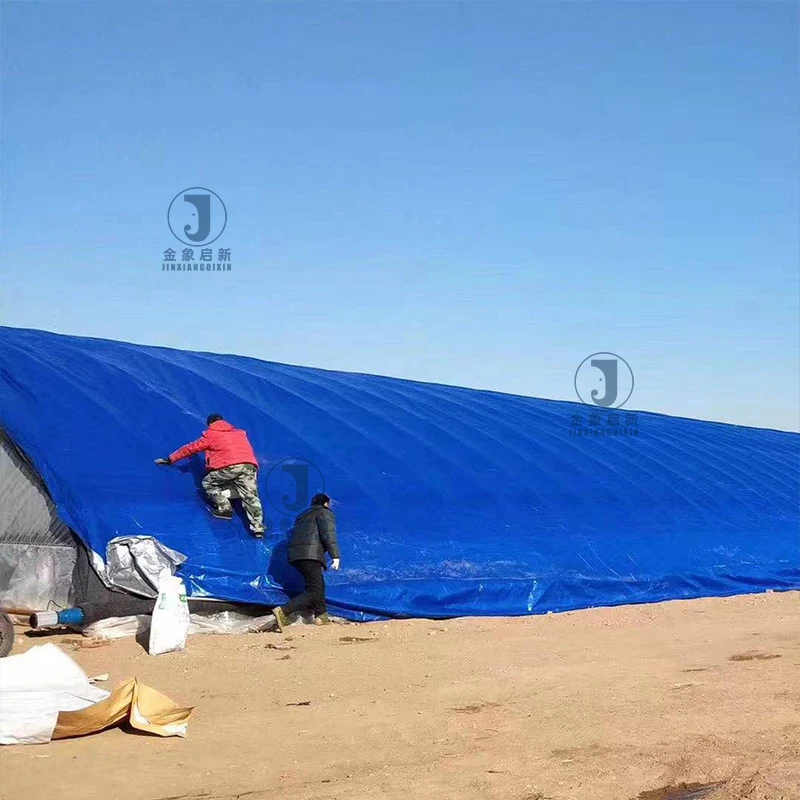
Dual-Side LDPE Lamination — Every roll undergoes in-process coating weight checks to ensure the HDPE woven base is fully encapsulated on both sides for consistent waterproofing across the entire sheet.
Technical Specifications
| Parameter | Value |
|---|---|
| Product Type | PE Tarpaulin |
| Coating Material | HDPE weaving with LDPE lamination on both sides |
| Weight (GSM) | 50 g/m² ~ 220 g/m² available (confirm the grade for this item) |
| Mesh Count | 6×6, 6×7, 7×7, 7×8, 8×8, 9×9, 8×10, 10×10, 12×12, 14×14, 14×16 weave options |
| Total Thickness | 0.2–0.4 mm / 8 mil–16 mil / Custom |
| Roll Width | 6 ft, 8 ft, 10 ft, 12 ft or 2 m, 4 m, 6 m |
| Roll Length | 100 yards, 100 meters, or custom |
| Finished Sizes | 2×2 m, 3×3 m, 3×5 m, 4×4 m, 4×5 m, 4×6 m, 4×8 m, 4×10 m, 5×5 m, 5×6 m, 5×8 m, 5×10 m, 6×6 m, 6×8 m, 6×10 m, 8×10 m and imperial equivalents |
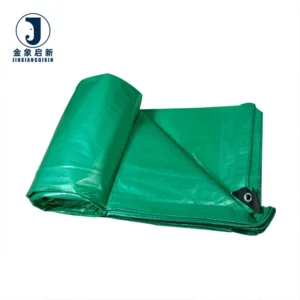
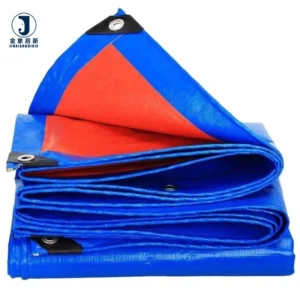
| Color Options | Blue, Blue/Orange, Green, Grey, Black, Clear, Grey/Green, Orange, or custom |
| UV Treatment | Available (test basis not stated — request report) |
| Key Features | Waterproof, washable, tear resistant, weather proof, anti-mildew, anti-aging |
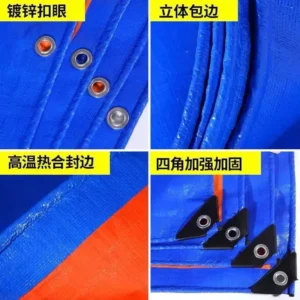
| Hem Reinforcement | All four edges reinforced with PP rope in hem |
| Eyelet Detail | Galvanized eyelets every 3 ft or 1 m interval; reinforced plastic corners |
| Printing Option | Custom branding available |
| Standards | ISO, CE |
Application Suitability
| Application | Exposure & Requirement |
|---|---|
| Truck and trailer load covering | Continuous road vibration, wind uplift on tie-down straps, rain and road spray, UV exposure during multi-day hauls |
| Container top weather protection | Static UV load during port storage, salt-laden air in coastal transit, pooling water on flat surfaces |
| Flatbed freight protection | Abrasion from shifting cargo edges, high-tension strap contact at flex points, thermal cycling across climate zones |
| Boat and marine covers | Permanent moisture contact, UV reflection off water, mildew risk in humid storage |
| Pallet wrapping for road transport | Corner abrasion during loading, condensation under the sheet, repeated handling and re-covering |
Why a Generic-Size Cover Fails Your Trailer Before the First Rain
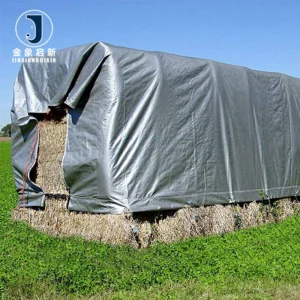
PE tarpaulin for truck and trailer covering must be cut to the exact footprint of your vehicle, not the nearest standard sheet size.
A cover that is even half a metre too short leaves the rear edge of the load exposed to road spray, while one that is too wide creates fabric folds where water pools and eventually seeps through. Fleet operators who order generic sizes often find themselves adding secondary tie-downs or bungee cords to manage the excess fabric, which introduces uneven tension and accelerates eyelet pull-out at the corners [NEED_CITE: load cover sizing and tension distribution on flatbed trailers]. The result is a cover that looks adequate at the depot but fails at the worst point in the journey.
Matching the Cover to the Trailer Footprint
Every trailer model — whether a standard flatbed, a curtain-sider, or a low-loader — presents a different plan area and tie-down geometry. This PE tarpaulin for truck and trailer covering is available in finished sheets cut to standard metric and imperial dimensions, or produced in custom widths and lengths that match a specific vehicle. The PP rope reinforced hems and galvanized eyelets are positioned to align with typical strap spacing, reducing the chance of fabric bunching between tie-down points.
Reinforcement at the Points That Actually Fail
The corners and hem edges of a truck cover absorb the majority of tie-down stress, especially when the load flexes over uneven road surfaces. Reinforced plastic corners and galvanized eyelets spaced every 3 ft or 1 m distribute that stress across a wider fabric area. On long-haul routes, where the cover is tensioned and released repeatedly at each stop, this reinforcement pattern is the difference between a sheet that lasts the season and one that needs patching within the first few trips [NEED_CITE: eyelet pull-out testing for transport covers].
Reading Weave Density Against Road Conditions
Mesh count and GSM together determine how the fabric behaves under road abrasion and wind load. A 6×6 weave at 50 g/m² suits short-distance pallet covers where weight savings matter more than abrasion resistance. A 12×12 or 14×14 weave, corresponding to higher GSM grades up to 220 g/m², is specified for open-road hauls where the cover faces sustained wind uplift and contact with rough cargo edges. Selecting the right combination prevents both over-specification on light loads and under-protection on heavy hauls.
What Happens When the Specification Is Guesswork
Ordering PE tarpaulin without confirming the actual GSM on arrival is one of the most common procurement failures in transport covering. A quoted 120 g/m² sheet that arrives at 90 g/m² will have a lower weave density than expected, leading to earlier tearing at strap contact points. Similarly, UV treatment claimed without a supporting test report leaves fleet operators uncertain whether the cover will survive a summer of open-road exposure or begin to embrittle within weeks [NEED_CITE: UV degradation of polyethylene laminates under continuous outdoor exposure]. Colour variation between rolls in the same shipment becomes visible once sheets are installed side by side on adjacent trailers, creating an unprofessional appearance for branded fleets.
Why Source PE Tarpaulin From This Facility
Three full production lines and 36 sets of professional equipment allow bulk roll production with consistent coating weight across the run, which matters when multiple trailers in a fleet need identical covers. The 10-person R&D team handles custom width, mesh count, and finished size requests, developing samples within days so buyers can verify fit on their specific trailer model before committing to a full order. A dedicated QA/QC team inspects every production stage, with 100% pre-shipment inspection confirming that GSM, eyelet spacing, and hem reinforcement match the agreed specification. Deep process control over the LDPE lamination ensures the coating adheres uniformly to the HDPE woven base, reducing delamination risk at the edges where the fabric is cut and heat-sealed. Nearly 30 years of focused coated fabric production means the team understands how transport-grade covers behave under real road conditions, not just laboratory tests.
Documentation & Verification
- Material specification sheet stating GSM, base fabric weave, and LDPE coating weight per side
- Pre-shipment inspection record confirming quoted GSM matches delivered rolls or finished sheets
- UV treatment test report where anti-UV is specified — confirms test basis for your market
- Roll packing list with batch reference for colour consistency traceability across the order
- Certificate of origin and customs documentation for cross-border transport shipments
Fabrication, Handling & Storage
- Heat-seal LDPE laminated surfaces at moderate temperature to avoid burning through the thin coating layer
- Position galvanized eyelets away from cut edges to prevent tear propagation under strap tension
- Store rolls flat or upright on end to avoid permanent crease marks in the 0.2–0.4 mm sheet
- Allow cold-stored PE tarpaulin to reach ambient temperature before unfolding to prevent cracking
- Clean with mild detergent only — solvents can degrade the LDPE lamination bond on the HDPE base
- Plan cutting layout around standard roll widths of 2 m, 4 m, or 6 m to minimise offcut waste
What to Include in Your Inquiry
Provide the trailer make, model, and bed dimensions so the finished sheet size can be matched precisely rather than approximated from a standard range. Specify the expected haul distance and climate exposure — coastal salt air, high-UV routes, or cold-weather regions — so the correct GSM, weave density, and UV treatment level can be recommended. If multiple trailers in your fleet need the same cover, confirm the quantity and whether batch colour consistency is required across the entire order. Indicate whether you need rolls for your own fabrication line or finished sheets with eyelets and reinforced hems ready for immediate deployment.
Frequently Asked Questions
Q: How do I specify the right GSM and weave density for my truck or trailer?
A: Consider the haul duration and cargo type. Short-distance pallet covers typically use lower GSM with a 6×6 or 7×7 weave, while long-haul open-road transport benefits from a 10×10 or 12×12 weave at higher GSM grades. Share your trailer model and route conditions, and a specific grade will be recommended from the available 50 g/m² to 220 g/m² range.
Q: Can PE tarpaulin sheets be cut to my exact trailer model dimensions?
A: Yes. Finished sheets are produced in standard metric and imperial sizes, and custom dimensions are available to match specific trailer beds. Provide the vehicle make and model along with required overhang, and a sample can be developed for fit verification before bulk production.
Q: How is UV treatment verified on this PE tarpaulin?
A: UV treatment is available, and a test report confirming the test basis is provided when specified. Request the report at the inquiry stage so the results can be reviewed against the exposure conditions of your transport routes and the compliance expectations in your market.
Q: What eyelet spacing and hem reinforcement options are available?
A: Standard configuration includes galvanized eyelets every 3 ft or 1 m, with PP rope reinforced hems on all four edges and reinforced plastic corners. If your tie-down hardware requires different spacing, custom intervals can be arranged to match your strap layout.
Q: How is colour consistency maintained across multiple sheets in one order?
A: Roll-to-roll colour checks are performed during production. For fleet orders requiring identical colour across all covers, batch consistency records are maintained and can be reviewed before dispatch to ensure uniform appearance when sheets are installed side by side.