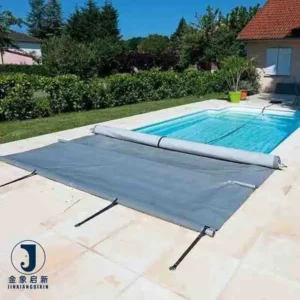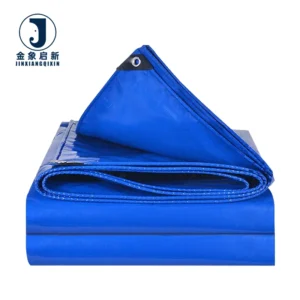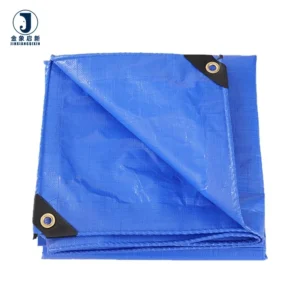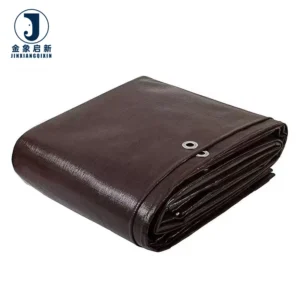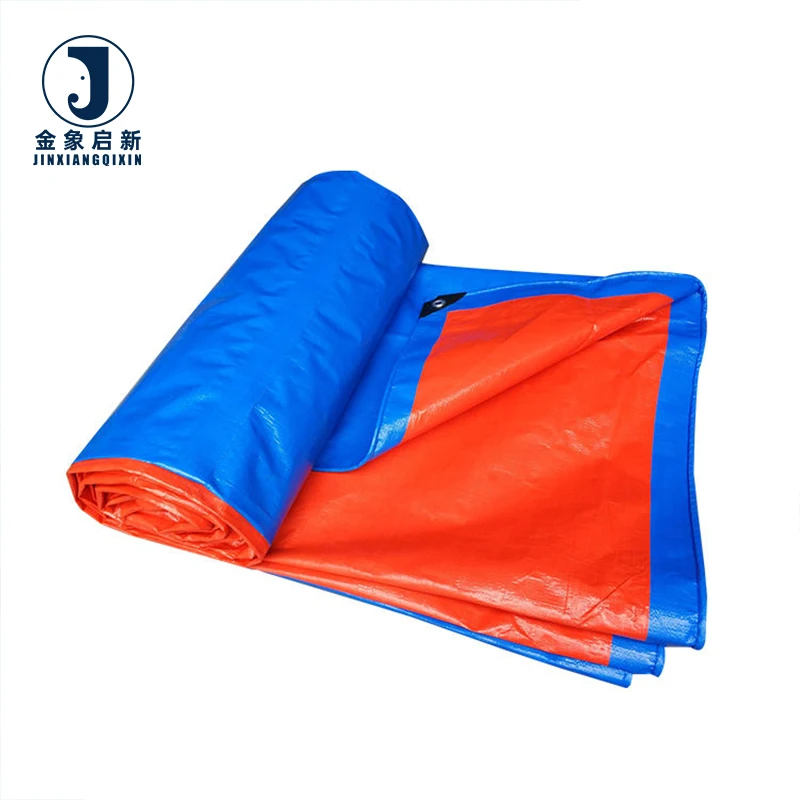
Deep Process Control Over Coated Fabric — nearly 30 years of focused production experience translates into consistent coating weight, reliable adhesion, and repeatable color across every roll of PE tarpaulin leaving the line.
Technical Specifications
| Parameter | Value |
|---|---|
| Product Type | PE Tarpaulin |
| Material | HDPE woven fabric with LDPE coating on both sides |
| Mesh Density | 6×6 to 16×16 |
| Weight Range | 50 g/m² to 300 g/m² (grade available per requirement) |
| Color Options | Blue, Orange, White, Black, Grey, Yellow, Green, Red, any color available |
| Sheet Sizes | 2×3, 3×4, 3×5, 4×5, 5×6, 6×8, 10×10, 10×12, 12×14 m or custom dimensions |
| Roll Length | 100 m per roll or as specified |
| Edg*forcement | Black plastic triangle at each corner |
| Eyelets | Rustproof aluminum, spaced every 1 m or 1.5 m or per requirement |
| Logos or company information; reinforced strip optional | |
| Special Treatment | Fire resistant / UV protection available as per requirements (confirm the grade required for your application) |
| Standards | ISO, CE certified production |
Application Suitability
| Application | Exposure & Requirement |
|---|---|
| Truck and trailer load covering | Highway wind load, road debris abrasion, constant UV exposure, repeated folding at flex points |
| Side curtain fabric for transport equipment | Continuous lateral flex, tension from tie-down hardware, weather sealing during transit |
| Fleet-branded logistics covers | Color consistency across units, logo print durability, rapid identification in yard operations |
| Construction site sheeting | Ground contact, moisture exposure, UV degradation on exposed surfaces |
Why Generic-Size PE Tarpaulin for Truck and Transport Covers Fail on the Trailer
A cover cut to a generic size that does not match your specific trailer model leaves flapping edges, uneven tension, and cargo exposed at the worst possible moment.
When fleet operators order covers without providing actual trailer dimensions, the result is predictable: excess material bunches at corners, tie-down points miss the eyelets entirely, and the hem rope bears concentrated load where it was never designed to. Highway speeds amplify every fitment error. I have seen covers shift off loads within the first hundred kilometers because the eyelet spacing did not align with the trailer’s tie-down rails. [NEED_CITE: trailer tie-down spacing standards for flatbed and curtain-side transport]
The cost is not just a replacement cover. Damaged cargo claims, delayed deliveries, and the labor of re-securing a shifting load on the roadside add up quickly. Specifying PE tarpaulin for truck and transport coverage requires starting with the vehicle model, not a catalog size.
Trailer Model Fitment Starts with Actual Dimensions
Every trailer model has specific deck width, side height, and tie-down rail positions. Supplying these measurements allows the cover to be cut so that eyelets land directly over D-rings or side hooks. This is how PE tarpaulin for truck and transport applications should be specified — not by a standard sheet size pulled from a catalog. When the cover fits the trailer precisely, tension distributes evenly across the hem rope rather than concentrating at two or three overloaded eyelets.
Tie-Down Alignment and Edge Reinforcement* rustproof aluminum eyelets to handle tie-down tension. When eyelet spacing is matched to the trailer’s hardware positions, each strap carries its intended share of the load. Black plastic corner triangles reinforce the highest-stress points where two hems meet. These details matter most at highway speed, where aerodynamic lift and road vibration constantly test every connection point between the cover and the load.
How Mesh Density and Coating Weight Define Performance on the Road
The HDPE woven base fabric provides the structural skeleton, while the dual-side LDPE coating delivers waterproof coverage. Mesh density — ranging from 6×6 to 16×16 — determines how tightly the yarns are woven, directly affecting tensile strength and resistance to tear propagation. A 6×6 mesh suits general-purpose load covers where weight and cost are priorities. A 16×16 mesh delivers substantially higher resistance to tearing and puncture, suited to heavy or sharp-edged cargo. The LDPE coating weight must be matched to the base fabric density; coating a loose weave heavily does not compensate for a weak base cloth. [NEED_CITE: tensile and tear test methods for woven PE fabrics per relevant ISO standards]
The Hidden Cost of Specifying by Weight Alone
When buyers focus only on GSM and ignore mesh density, they may receive a cover that feels heavy but tears easily along the weave because the base fabric was loosely constructed. Similarly, requesting UV protection without specifying a test basis means there is no way to verify the treatment was actually applied or whether it meets the exposure conditions your fleet encounters. Covers that degrade after one season on the road often trace back to a specification that left critical details unconfirmed. Batch-to-batch color variation is another issue that surfaces only when multiple covers are installed side by side on a fleet of trailers. [NEED_CITE: color consistency verification methods for batch-produced PE tarpaulin]
What This Production Setup Delivers
Three full production lines and 36 sets of professional equipment mean that volume orders for fleet-scale cover programs can be fulfilled without splitting runs across multiple factories. The 10-person R&D team handles custom cut sizes, pattern printing for fleet branding, and sample development before bulk production begins. Dedicated QA/QC at every stage includes 100% pre-shipment inspection — every sheet is checked for dimensions, eyelet placement, and hem integrity before packing. Samples for custom trailer dimensions are developed within days, allowing fitment confirmation before the full order runs. ISO and CE certified production provides a documented quality framework that satisfies fleet procurement audits.
Documentation & Verification
- Material specification sheet stating GSM, mesh density, and HDPE/LDPE composition per batch
- Pre-shipment inspection record confirming cut dimensions match specified trailer model
- Eyelet pull-out check and hem reinforcement verification at high-stress corners before dispatch
- Roll-to-roll color consistency report for multi-cover fleet orders
- UV or fire-resistant test documentation where special treatment is specified
Fabrication, Handling & Storage
- Weld temperatures for LDPE-coated PE tarpaulin differ from PVC; confirm heat settings before joining seams on dual-side coated sheets
- Rustproof aluminum eyelets should be set after hem folding to avoid crushing the PP rope insert
- Store rolls upright on pallets to prevent permanent creasing across the 100 m roll length
- Folded sheets should be opened flat before deployment to avoid stress concentration at fold lines
- Clean LDPE surfaces with mild detergent; solvent-based cleaners can degrade the coating finish
What to Include in Your Inquiry
Provide the trailer make, model, and deck dimensions so that cut sizes and eyelet spacing can be matched to your tie-down hardware. Specify the mesh density and weight grade needed for your typical cargo type and route exposure conditions. If fleet branding or color-coding is required, indicate the color reference and logo artwork for print layout. Confirm whether UV protection or fire-resistant treatment is mandated by your operating region so the correct grade can be quoted.
Frequently Asked Questions
Q: How do I provide trailer dimensions for a precise-fit PE tarpaulin cover?
A: Measure the deck length and width, side height if applicable, and the spacing of tie-down points along the rails. Provide the trailer make and model as a reference. These details allow the cover to be cut so that eyelets align with your existing hardware, eliminating slack and uneven tension during transit.
Q: What eyelet spacing is right for highway-speed tie-down loads?
A: Standard spacing is 1 m or 1.5 m, but the correct interval depends on your tie-down rail positions. When eyelets land directly over D-rings or hooks, load distributes evenly across the hem rope. Supplying a diagram of your trailer’s hardware layout allows spacing to be matched precisely.
Q: Can PE tarpaulin be supplied in roll form for custom fabrication?
A: Rolls are available at 100 m per roll or custom lengths. Roll stock suits transport equipment builders who fabricate side curtains or load covers in-house. Specify mesh density, weight grade, color, and any print requirements when ordering by the roll.
Q: How is batch color consistency maintained across a fleet order?
A: Each production run uses matched pigment batches, and rolls are inspected side by side before dispatch. For large fleet programs, all covers can be produced in a single run to eliminate inter-batch color variation. A color consistency report is available with shipment documentation.
Q: How do I verify UV treatment has been applied to the fabric?
A: UV protection is available as a special treatment, but the specific grade and test basis must be confirmed for your market requirements. Request the test documentation with your inquiry so the correct formulation is applied and verified before shipment.