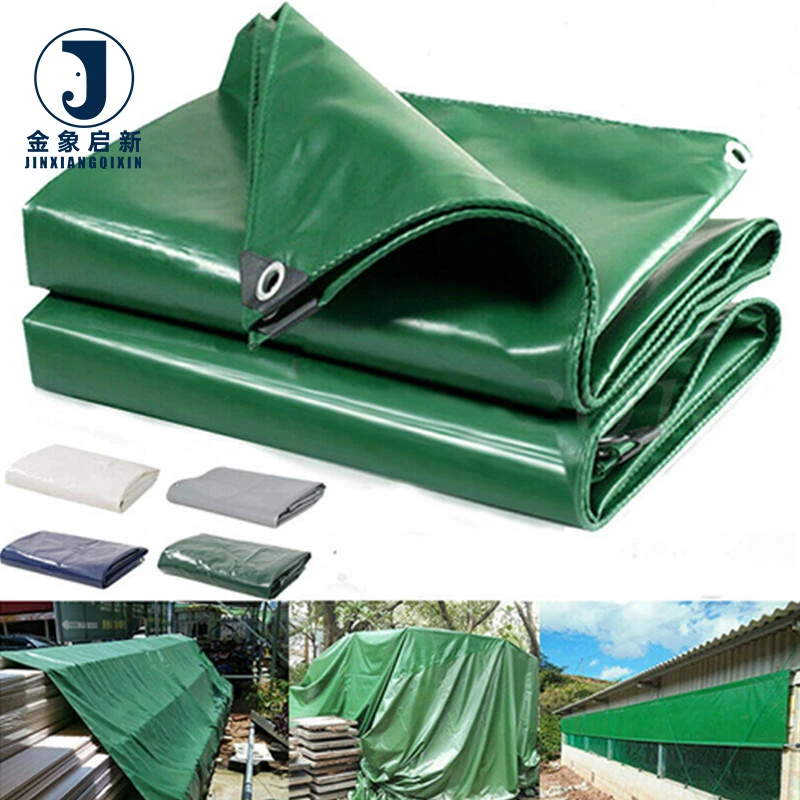
Proven Process Control — Deep coating weight management across three full production lines keeps GSM consistent from the first roll to the last in every fleet order.
Technical Specifications
| Parameter | Value |
|---|---|
| Product Type | PVC Coated Tarpaulin Fabric |
| Coating Method | Knife-coated PVC |
| Base Fabric Denier | 500D–2000D (varies by grade) |
| Weight Options | 400–500 GSM (medium), 700–1000 GSM (heavy-duty), 1100–1500 GSM (super heavy) |
| Total Thickness | 0.35–0.45 mm (medium), 0.70–1.0 mm (heavy-duty), 1.2–1.5 mm (super heavy) |
| Tensile Strength (Warp) | 1500–3000 N/5cm (grade-dependent) |
| Tensile Strength (Weft) | 1200–2800 N/5cm (grade-dependent) |
| Roll Width Options | 2 m, 4 m, 6 m, 6 ft, 8 ft, 10 ft, 12 ft |
| Roll Length Options | 100 yards, 100 meters, or custom |
| Surface Finish | Glossy or matte (available per grade) |
| Treatment Options | Anti-UV treatment available — confirm the grade required for your market; flame retardant grades available — confirm the grade required for your market |
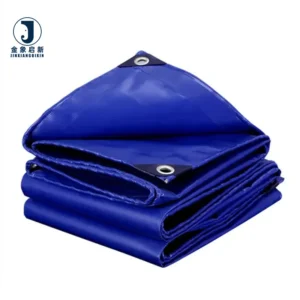
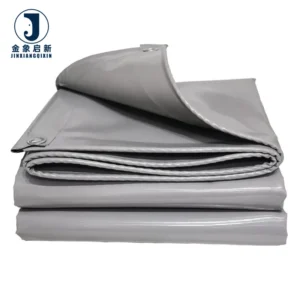
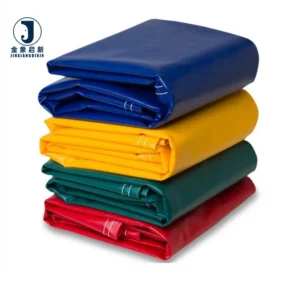
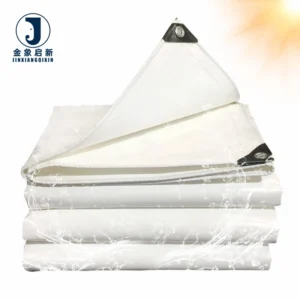
| Color Options | Blue, Blue/Orange, Green, Grey, Black, Clear, Grey/Green, Orange, or custom |
| Edge Reinforcement | PP rope reinforced hem |
| Eyelet Spacing | Galvanized eyelets every 3 ft or 1 m, reinforced plastic corners |
| Waterproof | Yes |
| Anti-Mildew | Yes |
| Certifications | ISO, CE |
Application Suitability
| Application | Exposure & Requirement |
|---|---|
| Truck and trailer top covers | Continuous UV exposure, wind-driven rain, road debris impact, repeated flexing at tie-down points |
| Side curtain fabric for fleet vehicles | Constant folding and unfolding, abrasion against load edges, high-speed wind load during transit |
| Flatbed load protection | Direct contact with irregular cargo shapes, tie-down strap tension, weather exposure on long-haul routes |
| Farm and construction machinery covers | Outdoor storage, dust and moisture ingress, puncture risk from sharp equipment edges |
| Membrane and tensioned structures | Sustained tensile load, UV and thermal cycling, architectural appearance requirements |
Why a Generic-Size PVC Coated Tarpaulin for Truck and Transport Costs More Than the Fabric Itself
A cover that does not match your trailer dimensions wastes material, flaps in transit, and fails at the seams before the fabric itself reaches its service life.
When fleet operators order cut-to-size tarps based on generic catalogue dimensions rather than exact trailer measurements, the excess material creates drag pockets at highway speed. The cover lifts, the hems bear load they were not designed for, and eyelets tear through the reinforced edge within the first months of use [NEED_CITE: relationship between cover fitment and hem failure rate on transport tarps]. On the other side, a cover that is too small leaves cargo exposed at the rear or sides, defeating the purpose of the investment. The real cost is not the price per square metre — it is the replacement labour, the delayed dispatch, and the cargo claim.
How Trailer-Specific Fitment Changes the Failure Pattern
When a PVC coated tarpaulin for truck and transport is cut to the exact trailer model, the load transfers evenly across the eyelets and reinforced hem. The fabric sits flat against the load profile, eliminating the air pockets that cause high-speed flutter. Reinforced plastic corners align with the trailer frame contact points, and the PP rope hem carries the tie-down tension along its full length rather than concentrating stress at a single overstretched eyelet. This fitment approach is standard practice for OEM side curtain production, and it applies equally to aftermarket replacement covers for flatbed and curtain-sider fleets.
Seam Integrity Under Road-Condition Flex Cycles
The weakest point on any truck cover is the welded seam, not the fabric body. During transit, the cover flexes every time the load shifts, the vehicle corners, or wind gusts hit the side curtain. If the weld temperature, dwell time or pressure does not match the specific coating thickness, the seam peels open under repeated flex cycles while the surrounding fabric remains intact [NEED_CITE: weld peel strength versus tensile strength in PVC coated fabric]. Seam behaviour is a function of coating chemistry and thickness — a heavy-grade knife-coated fabric demands different welding parameters than a medium-grade material, and the fabricator must confirm those settings before full production begins.
Reading the Specification Sheet Beyond the GSM Number
GSM tells you the weight per square metre, but it does not tell you how that weight is distributed between the base fabric and the coating. A 900 GSM material built on a 1000D high-density polyester scrim with a thinner coating layer will outperform a 900 GSM material loaded with filler-heavy coating on a 500D open-weave base in both tensile and tear resistance. The base fabric denier and weave density determine how the fabric resists tear propagation once a puncture occurs — critical at tie-down points and trailer frame contact zones. Knife coating produces a mechanical bond between the PVC and the polyester yarn, giving higher peel strength at the weld line compared to lamination. For fleet covers exposed to daily flexing, this bond strength directly affects how long the seams hold before delamination begins.
What Happens When Colour Consistency Breaks Down Across a Fleet Order
A logistics company ordering replacement covers for twenty trailers expects every panel to match when parked side by side at the depot. When colour varies between rolls in the same production batch, the mismatch becomes visible the moment the covers are installed — not in the warehouse under fluorescent light, but outdoors in direct sunlight where the difference is obvious to every driver and client who sees the fleet [NEED_CITE: colour consistency standards for coated fabric batch production]. This is not a cosmetic complaint. It signals inconsistent coating formulation between production runs, which can also mean variation in UV stabiliser loading, plasticiser ratio, and flame-retardant additive concentration across the order.
Why Transport Fleets Source From This Production Facility
Three full production lines with 36 sets of professional equipment handle bulk roll orders and cut-to-model covers without pushing lead times beyond what was quoted. A 10-person R&D team develops samples matched to specific trailer dimensions, confirming fitment before the full order enters production. Every roll passes dedicated QA/QC inspection at each production stage, with 100 percent pre-shipment inspection catching GSM deviation, colour shift, and coating defects before dispatch. Custom widths and lengths are produced without the prohibitive minimums that block smaller fleet orders. Material specification sheets and test documentation ship with every consignment, giving fleet compliance officers the paperwork they need for audit.
Documentation & Verification
- GSM weight check per roll against the quoted specification, recorded before dispatch
- Test reports for UV and flame retardant grades included with shipment where applicable
- Material specification sheet stating base fabric denier, coating type, and colour reference
- Pre-shipment inspection record covering every roll in the order
- Roll packing list and certificate of origin for customs clearance
- ISO and CE certification documents for fleet compliance files
Fabrication, Handling & Storage
- Heat weld parameters must match the specific coating thickness — heavy-grade knife-coated fabric demands higher dwell time than medium-grade
- PP rope hem reinforcement distributes tie-down load; eyelet spacing at 1 m intervals prevents point-load tearing on side curtains
- Store rolls horizontally on pallets to avoid permanent creasing through the PVC coating layer
- Unroll in temperatures above 5 °C to prevent cracking of the PVC surface at the fold line
- Clean glossy surface finishes with mild detergent; abrasive cleaners damage the coating film
- Field repairs on heavy-grade fabric require compatible PVC weld patches, not adhesive tape
What to Include in Your Enquiry
Specify the truck or trailer model, the cover type needed — top cover, side curtain, or full wrap — and the route climate your fleet operates in. If your market requires fire classification for transport covers, state the grade so the correct formulation is quoted. Confirm whether you need rolls for your own fabrication line or finished cut-to-size covers with eyelets and hems. If colour matching to an existing fleet is required, provide a reference sample or RAL number so the production team can confirm consistency before the order runs.
Frequently Asked Questions
Q: How do you confirm the right cover size for my specific trailer model?
A: We request the trailer make, model, and year along with the cover type — top, side curtain, or full wrap. Our R&D team produces a sample based on those exact dimensions for your approval before the full order enters production. This eliminates the generic-size problem where excess fabric creates wind drag or insufficient coverage leaves cargo exposed.
Q: Can you provide test reports for anti-UV and flame-retardant claims?
A: Where applicable, test reports for the specific UV and flame-retardant grades are included in the shipment documentation. We state the grade on the quotation so you can verify it meets your market or site requirements before production begins, rather than discovering a gap after the material arrives.
Q: What happens if welded seams fail before the fabric does?
A: Weld seam integrity depends on matching heat, pressure, and dwell time to the coating thickness of the specific grade. We confirm welding parameters during sample development so the seam strength matches the fabric tensile rating, preventing the join from splitting under road flex cycles while the surrounding material remains intact.
Q: How do you guarantee colour consistency across multiple rolls in one order?
A: Every roll in a fleet order is produced from the same coating batch and inspected side by side before dispatch. Any roll showing visible colour deviation is rejected during the 100 percent pre-shipment inspection, so all covers installed on your trailers match when parked together in daylight.
Q: What lead times and minimums apply to custom widths and colours?
A: Custom widths, lengths, and colours are available without the prohibitive minimums that block smaller fleet replacement orders. Lead times depend on the specific grade and treatment combination requested — we confirm the schedule at quotation stage so you can plan your fleet cover replacement without guesswork.