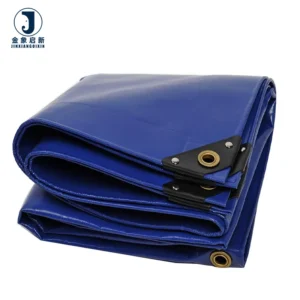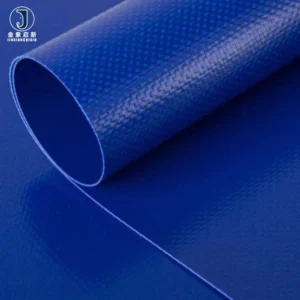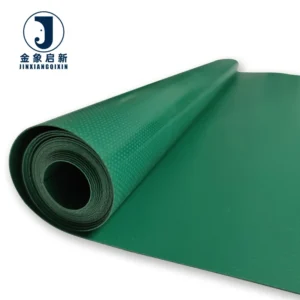
Coating Consistency — Every roll undergoes in-process weight verification to ensure the PVC coating matches the specified GSM across the entire batch.
Technical Specifications
| Parameter | Value |
|---|---|
| Product Type | PVC Coated Tarpaulin |
| Material | PVC Coated Warp Knitted Fabric |
| Style | Plain Woven |
| Feature | Waterproof |
| Feature | Anti-Static (test basis not stated — confirm grade required for your market) |
| Feature | Tear Resistant |
| Application Grade | Industrial / Heavy-Duty |
| Customization | Colors |
Application Suitability
| Application | Exposure & Requirement |
|---|---|
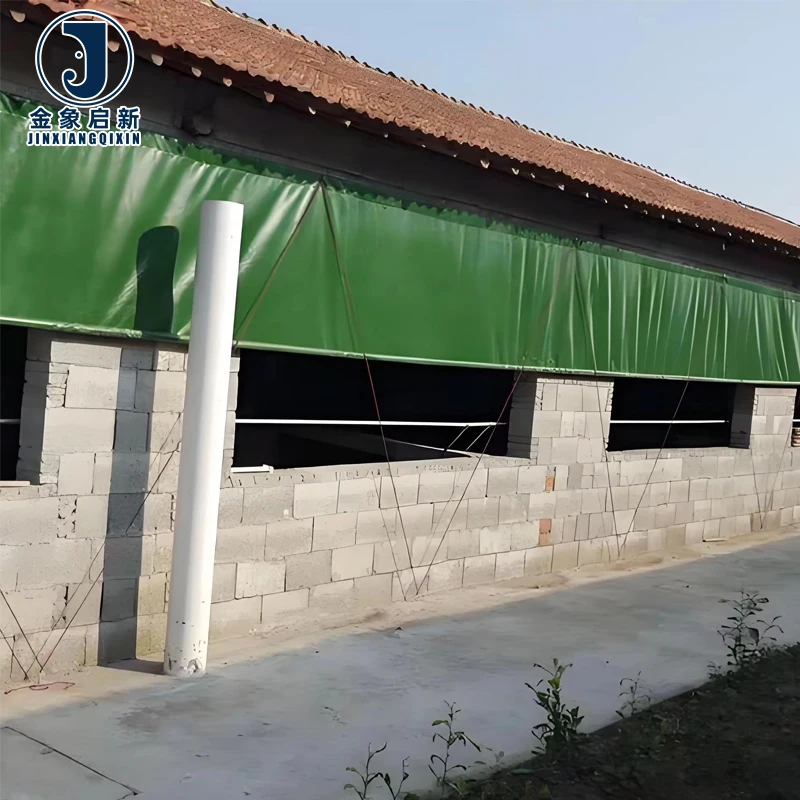
| Broiler and chicken farm tent enclosures | High humidity, ammonia-rich air, frequent washing, static charge risk in enclosed spaces |
| Pig and sheep shelter covers | Wind load, animal contact, UV exposure, physical abrasion from livestock movement |
| Agricultural equipment and feed stockpile protection | Rain ingress, ground moisture, prolonged outdoor exposure, mechanical handling |
Why Farm Covers Fail When the Coating Is Too Thin
GSM alone does not guarantee the cover will survive a full season of livestock housing exposure.
I spent years working with fabricators in African markets who stitched truck covers and side curtains from roll stock. The pattern was always the same: a roll arrives with a stated weight, but the coating feels inconsistent from one end to the next. When a poultry farmer uses that material for a broiler tent, the thin spots are where moisture first penetrates, and static buildup concentrates at the weakest coated areas [NEED_CITE: relationship between coating uniformity and anti-static performance in PVC fabrics]. For a PVC Coated Tarpaulin Roll for Farm Cover, verifying the actual coating weight against the quoted GSM is the single most important step before cutting begins.
How Warp Knitted Construction Holds Up Under Livestock Conditions
The warp knitted base fabric in this PVC coated tarpaulin provides multi-directional tear resistance, which matters when wind catches a farm tent or when livestock push against shelter walls. Unlike simple woven structures that tear along a single thread line, the interlocking loop pattern of warp knitting distributes stress across adjacent yarns, slowing tear propagation.
Anti-Static Treatment in Enclosed Poultry Environments
Enclosed broiler houses generate significant static charge through dust accumulation and dry air circulation. The anti-static PVC coating is intended to reduce charge buildup that can affect ventilation systems and create uncomfortable conditions for livestock. Since anti-static performance depends on verified treatment levels, buyers should request test documentation confirming the specific anti-static grade before committing to a full order [NEED_CITE: test methods for anti-static performance in agricultural PVC covers].
Reading Between the Specs: What Matters for Farm Fabric
The tear resistance of a PVC Coated Tarpaulin Roll for Farm Cover depends on the interaction between the base fabric denier and the coating adhesion. A heavier coating does not automatically mean higher tear strength if the base fabric density is low — the coating can delaminate under stress. Waterproof performance relies on full PVC encapsulation of the warp knitted substrate, leaving no uncoated gaps where water can migrate through capillary action. The plain woven style provides a stable, predictable surface for heat welding, which is the preferred joining method for farm tent panels where stitched seams would create needle holes and potential leak paths.
The Real Cost of Unverified Roll Stock
When a batch of rolls arrives with colour variation between them, the farm operator faces an impossible choice: install mismatched panels that look unprofessional, or reject the entire shipment and delay the build. Coating weight inconsistency across a single roll means some sections are more flexible while others are stiff, leading to uneven tension on the frame. In livestock housing, uneven tension concentrates load on the strongest sections, which then become the first to fail under wind stress [NEED_CITE: causes of premature tarpaulin failure in agricultural structures]. These problems compound because the fabricator has already cut the material before discovering the variation.
Why Sourcing Here Addresses Those Risks
Nearly 30 years of focused production on coated fabrics means the coating weight and adhesion process is controlled at every stage, not left to chance. Three full production lines and 36 sets of equipment allow this PVC Coated Tarpaulin Roll for Farm Cover to be manufactured in volume while maintaining batch-to-batch colour consistency. The 10-person R&D team develops custom colour samples within days, letting buyers verify the shade against existing farm structures before the full production run begins. Dedicated QA/QC inspection at every production stage catches coating weight deviations before the roll reaches the packing area, and 100% pre-shipment inspection means every roll is checked before it leaves the facility.
Documentation & Verification
- Material specification sheet stating confirmed GSM and base fabric construction for each roll
- Anti-static test report documentation available — confirm the grade required for your livestock housing standard
- Colour reference sample matched to your approved Pantone or RAL code before production
- Pre-shipment inspection record confirming coating weight and visual consistency per roll
- ISO and CE certificates verifying the management system behind the production
- Roll packing list with individual roll dimensions and weights for container loading planning
Fabrication, Handling & Storage
- Heat welding is preferred over stitching; set temperature to suit the PVC coating thickness for clean seams
- Store rolls upright on pallets to prevent flat spots that affect unrolling and tension during installation
- Clean with mild detergent; avoid solvents that attack the PVC coating surface and reduce waterproof integrity
- Allow rolls to acclimatise before unrolling in cold conditions to prevent coating stiffness and cracking
- Plan panel cuts to minimise off-cuts and reduce the number of welded joints on the finished farm cover
What to Share When Enquiring
Provide the dimensions of the livestock housing structures you are covering, including the span and height, so we can recommend the most efficient roll width for your cutting layout. Specify the colour you need and whether you require a sample for approval before the full order. If your market or the farm operator has specific anti-static compliance requirements, share those details early so we can confirm the treatment grade and provide matching test documentation. Let us know your annual volume estimate so we can align production scheduling and batch consistency across multiple deliveries.
Frequently Asked Questions
Q: What GSM weight is recommended for poultry farm covers?
A: The appropriate GSM depends on the structure span, local wind conditions, and how long the cover must remain in service between replacements. We recommend sharing your specific farm dimensions and exposure conditions so we can recommend a weight that balances durability with flexibility for your frame design.
Q: How is anti-static performance verified?
A: Anti-static performance is confirmed through test documentation that states the specific grade achieved. We recommend requesting the test report before placing a full order, and we can develop samples for your own verification if your market requires independent laboratory confirmation.
Q: Can I order custom colors with consistent batch matching?
A: Yes, custom colours are available and our R&D team produces samples for your approval before full production. The 100% pre-shipment inspection process checks colour consistency across every roll in your order to prevent the visible variation that occurs when mismatched rolls are installed side by side.
Q: What is the lead time for custom width rolls?
A: Custom width and colour orders involve production scheduling across our lines, and lead times depend on the specification complexity and order volume. We confirm the timeline during the quotation stage so you can plan your fabrication schedule accordingly.