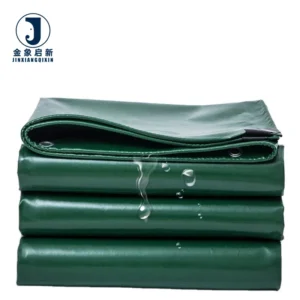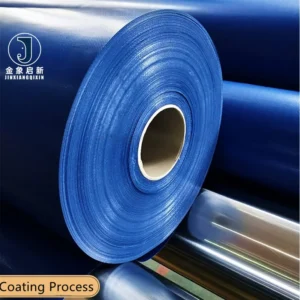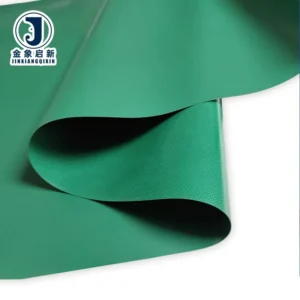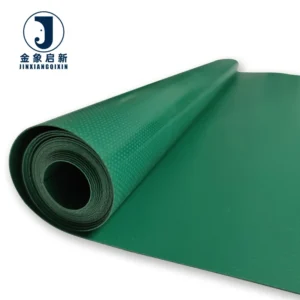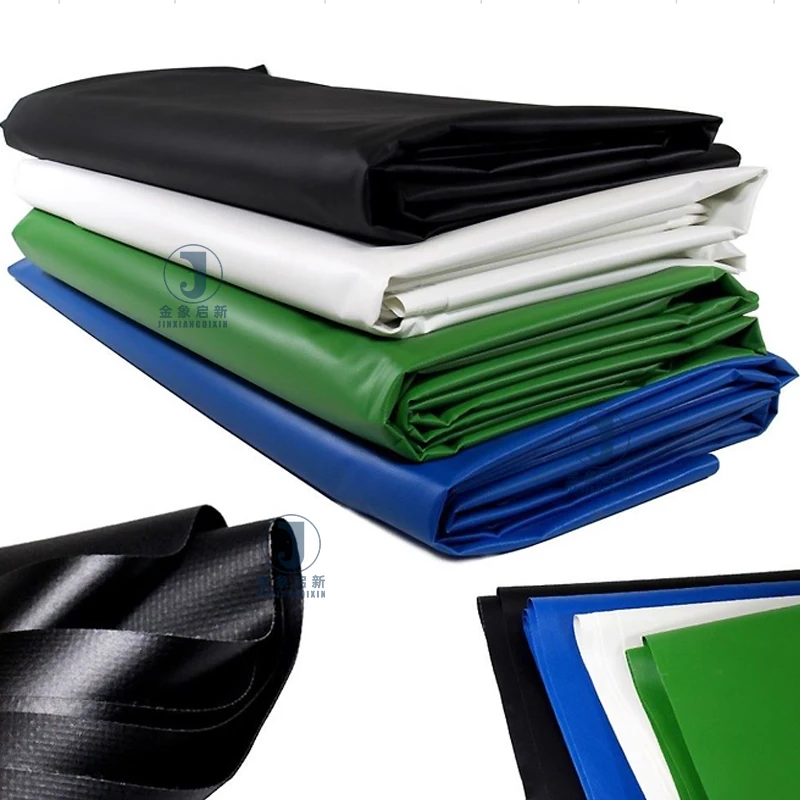
Weld seam integrity over raw fabric strength — Hot-melt coated PVC with a high tenacity polyester base delivers adhesion that holds where the load flexes most, not where it sits still.
Technical Specifications
| Parameter | Value |
|---|---|
| Product Type | PVC Coated Tarpaulin Roll |
| Base Fabric | 100% high tenacity polyester yarns |
| Coating Technology | Laminated & Hot-melt Coating |
| Key Features | Waterproof, anti-mildew, cold crack resistant |
| Tearing Strength | Outstanding tearing strength for welding (test basis not stated) |
| Weather Resistance | Good weather resistance (source value — verify against manufacturer catalog) |
| Special Treatments Available | Flame retardant, anti-static, anti-cold, anti-mildew, 3P (grades to be confirmed per order) |
| Color Fastness | Best color fastness (source value — verify against manufacturer catalog) |
| Flexibility | Good flexibility and adhesion strength |
| Certifications | ISO, CE |
Application Suitability
| Application | Exposure & Requirement |
|---|---|
| Truck side curtain fabric | Constant flexing at load points, road debris abrasion, highway-speed wind loading |
| Trailer load cover | UV and weather exposure, tie-down tension at reinforced edges, repeated roll and fold cycles |
| Transport equipment builder stock | Batch colour consistency across multiple rolls, weld seam strength at fabricated corners |
| Fleet tarpaulin replacement | Match to specific trailer dimensions, cold crack resistance for winter routes |
Why Generic Sizing Destroys PVC Truck Covers on the Highway
A cover cut to a generic size that does not fit the specific trailer model will fail at the corners long before the fabric itself wears out.
I have watched fleet operators go through three sets of truck covers in a single season because the pattern was pulled from a catalogue instead of measured off the actual trailer. The stress concentrates at the rear corner and the bottom hem where the tie-down hooks pull, and the welded seam splits under repeated highway vibration. A PVC coated tarpaulin roll for truck cover aftermarket supplier who understands this will ask for the trailer make, model and year before quoting a single metre of fabric [NEED_CITE: tensile and tear test methods for coated fabrics per ISO 1421].
Hot-Melt Coating and What It Means at the Weld Line
The coating method determines whether the welded seam outlasts the fabric or fails first. Laminated and hot-melt coating bonds the PVC layer into the polyester base yarn rather than sitting on top of it, which gives the heat-sealing process something to grip when the fabric folds and stretches at the trailer corner. This is why tearing strength for welding matters more than raw fabric tensile numbers when you are specifying a PVC coated tarpaulin roll for truck cover aftermarket supplier — the seam is always the weakest link under dynamic load.
Matching Treatment to Route Climate and Cargo Type
A truck running frozen goods through a northern winter corridor needs anti-cold treatment to prevent the PVC from stiffening and cracking at the fold lines. A fleet carrying electronics or grain through humid southern routes benefits from anti-mildew and anti-static treatments applied during coating [NEED_CITE: anti-static testing standards for industrial coated fabrics]. These are not cosmetic additions — they change how the material behaves under the specific thermal and humidity cycles your trailers actually see. Available in flame retardant grades — confirm the grade required for your market and the specific route regulations before placing the order.
Reading the Spec Sheet Beyond the GSM Number
GSM tells you the weight of a square metre of finished fabric, but it says nothing about how that weight is distributed between the base yarn and the coating layer. A roll with a dense polyester base and a thinner hot-melt coat will weld better and resist tear propagation further than a heavier roll that achieves its GSM through thick, soft PVC sitting on a sparse weave. The base fabric denier and the yarn count per centimetre in both warp and weft directions determine how a small puncture stays small or unzips across the entire panel. Cold crack resistance, flexibility and adhesion strength all trace back to the coating formulation and how deeply it penetrates the base fabric, not simply to the total weight on the scale.
The Hidden Cost of Specifying the Wrong Roll for Your Fleet
Ordering a PVC coated tarpaulin roll based on price per kilogram and a target GSM leads to a specific sequence of failures. The cover arrives looking correct, but within weeks the welded hems begin to peel at the corners where the load flexes most. The colour shifts visibly between rolls installed side by side on the same trailer, which the fleet owner notices the first time the truck is parked in sunlight. A batch that lacks the anti-UV or flame retardant treatment claimed on the quotation will not show the problem until the fabric degrades or a site inspector asks for the test certificate [NEED_CITE: flame retardant classification standards for transport coverings]. Every one of these failures traces back to a specification that was not verified before the rolls left the factory.
Why Fabricators and Fleet Buyers Source This Roll Here
The three full production lines run hot-melt coating with process control over coating weight and adhesion, not just total GSM, so the weld seam strength stays consistent from the first roll to the last in your order. The 10-person R&D team develops samples within days for custom width, colour and treatment combinations matched to your specific trailer model and route conditions. Dedicated QA and QC runs at every production stage with 100% inspection before dispatch, catching colour variation and GSM deviation before the rolls are packed. Custom widths and reinforced hem options are produced in-house, eliminating the lead time and minimum-order barriers that typically block fleet-specific sizing.
Documentation & Verification
- Material specification sheet stating base fabric denier, coating type and confirmed GSM per roll
- Test report for flame retardant and anti-static treatments where applicable to your order
- Pre-shipment inspection record covering colour consistency across all rolls in the batch
- ISO and CE certificates supplied with every dispatch
- Roll packing list with individual roll weights and dimensions for receiving verification
Fabrication, Handling & Storage
- Set hot-air welding temperature to match the hot-melt coating formulation — test on a sample offcut from the same roll first
- Reinforce corner patches with an extra layer of the same PVC coated material before welding to handle tie-down point stress
- Store rolls upright on a flat surface to prevent permanent creasing in the PVC coating layer
- Allow rolls to reach ambient temperature before unrolling in cold weather to avoid surface cracking
- Clean finished covers with mild detergent only — solvent-based cleaners can degrade the anti-mildew treatment surface
What We Need to Quote Your Roll Order Accurately
Send us the trailer make, model and year so we can recommend the correct width and confirm whether you need finished covers or roll stock for your own fabrication line. Let us know the climate zones your fleet operates in and any cargo-specific requirements such as anti-static or flame retardant compliance for your market. If colour matching to an existing fleet is required, provide a physical sample or RAL reference so we can confirm batch consistency before production starts.
Frequently Asked Questions
Q: How do you match the tarpaulin to a specific trailer model?
A: We take the trailer make, model and year, then recommend the roll width and cut pattern that accounts for hem allowance and reinforcement zones. This avoids the generic sizing problem where corners fail under highway tension. Samples are developed within days so you can verify fit before full production runs.
Q: What treatment do I need for cold-climate routes?
A: Anti-cold treatment keeps the PVC flexible below freezing so the cover does not crack at fold lines during winter loading and unloading. We also recommend confirming anti-mildew treatment if your trailers move between cold and humid zones, as condensation builds up inside the cover during temperature transitions.
Q: Can you match my existing fleet colour across multiple roll orders?
A: Yes. Provide a physical sample or RAL reference with your inquiry, and we will produce a sample swatch from the same hot-melt coating batch for your approval. Roll-to-roll colour consistency is verified during pre-shipment inspection across the entire order before dispatch.
Q: What GSM grade suits long-haul highway exposure?
A: The right grade depends on the base fabric density and coating formulation, not the GSM number alone. We recommend sending us your route conditions and trailer type so we can specify a roll with the correct balance of weld strength, cold crack resistance and weather resistance for your actual operating environment.
Q: How do you verify anti-static certification before shipment?
A: Where anti-static treatment is specified, the test report is generated from the production batch and included in the dispatch documentation. We confirm the applicable standard with you at the quotation stage so the certificate matches the compliance requirement at your destination market.