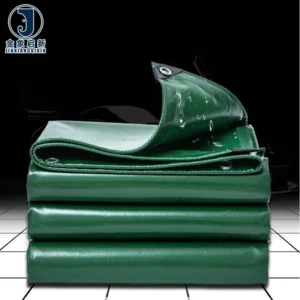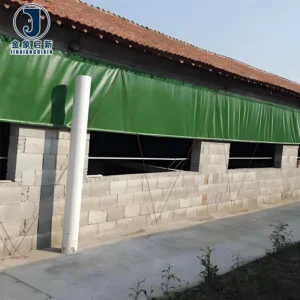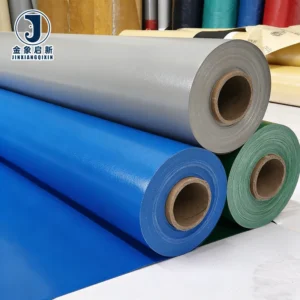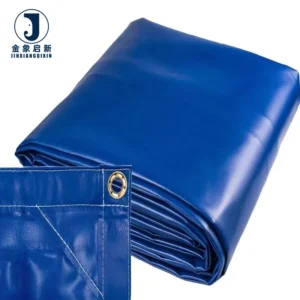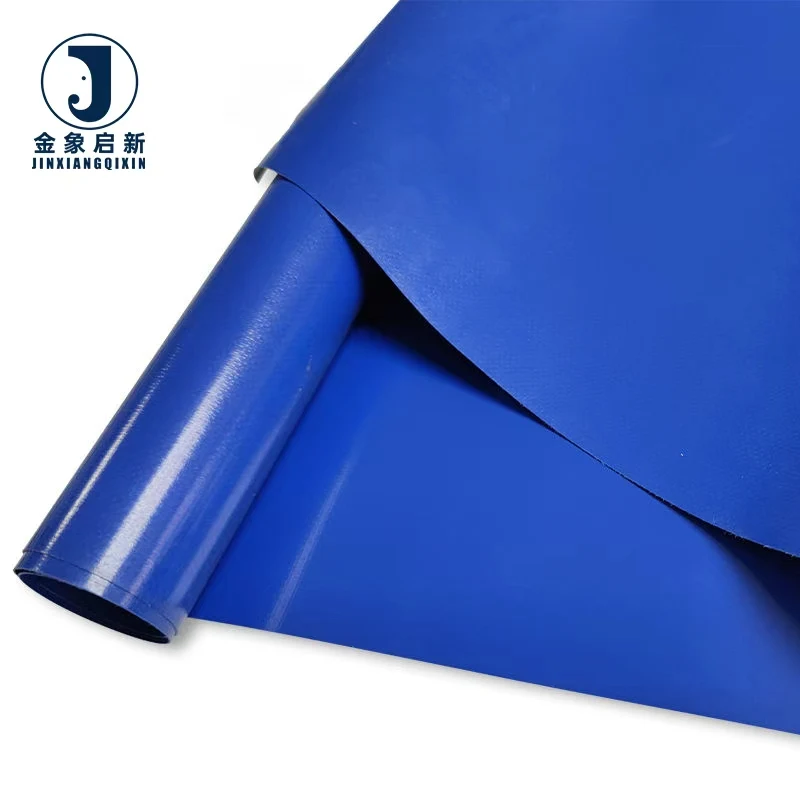
Deep Coating Control — nearly 30 years focused on coated fabric yields strict process control over PVC adhesion to polyester mesh, directly supporting the weight and flex demands of moving freight covers.
Technical Specifications
| Parameter | Value |
|---|---|
| Product Type | PVC Tarpaulin Roll |
| Material | PVC + High-strength polyester mesh fabric |
| Coating Technology | Laminated technology & Hot-melt coating technology |
| Weight Options | 350gsm / 420gsm / 500gsm / 550gsm / 600gsm / 750gsm |
| Total Thickness Options | 0.32mm / 0.35mm / 0.4mm / 0.45mm / 0.5mm / 0.65mm |
| Roll Size | 2m width × 75m length / 2.1m width × 50m length |
| Colour Range | Blue / Red / Yellow / Light Blue / Grey (Customized) |
| Key Features | Cold crack resistance, anti-mildew, waterproof, sunproof, outstanding tearing strength for welding |
| Special Treatments Available | Flame retardant (grade not stated), anti-static (standard not stated), anti-cold, anti-mildew, 3P |
| Standards | ISO, CE |
Application Suitability
| Application | Exposure & Requirement |
|---|---|
| Truck and trailer flatbed covers | Constant road vibration, wind flap at slack points, tie-down strap abrasion, prolonged UV exposure |
| Side curtain fabric for curtain-sider trailers | Highway-speed wind loading, repeated flex cycles at roller tracks, road debris impact |
| Fleet replacement covers | Must match OEM fitment dimensions to prevent wind catch and load shift during transit |
| Tipper and bulk haulage covers | Heavy material load, frequent deployment and retraction, stress concentration at fold lines |
Why Generic-Size Covers Fail on Specific Trailer Models
PVC tarpaulin roll aftermarket supplier stock cut to generic dimensions leaves excess fabric that flaps in highway wind, accelerating seam fatigue and eyelet tear-out at the exact points where load restraint matters most.
When a cover does not match the trailer model, slack areas create pockets that catch air at speed, generating forces that pull hems apart long before the fabric body reaches its service life. Fleet operators replacing covers too frequently often trace the root cause back to fitment, not material quality. The PVC laminated tarpaulin for truck and trailer covers must be cut to the specific vehicle drawing, with eyelet spacing aligned to the chassis tie-down points rather than a standard interval. [NEED_CITE: tensile and tear test methods for coated fabrics per ISO 1421]
Model-Specific Fitment Eliminates Wind Flap
A cover that matches the trailer profile sits flush against the load and chassis rails. This PVC laminated tarpaulin for truck and trailer covers is available in multiple GSM grades so the fabric weight can be matched to route exposure — heavier grades for long-haul highway running, lighter grades for urban distribution where frequent handling demands flexibility over mass.
Reinforcement at the Points That Actually Fail
Tie-down eyelets and hem edges carry the highest concentrated loads during transit. The hot-melt coating technology used in this PVC tarpaulin roll aftermarket supplier range delivers strong PVC-to-mesh adhesion at these stress points, reducing the chance of coating delamination when straps pull against the fabric edge under braking or cornering loads.
Tearing Strength Where the Load Flexes
Welded seams sit at flex points where the load shifts under road conditions. The outstanding tearing strength for welding built into this PVC laminated tarpaulin for truck and trailer covers means the weld line holds through repeated bend cycles. Without this property, seams split open at the first heavy flex event — a failure mode that exposes cargo and forces an unplanned cover replacement mid-route. [NEED_CITE: weld peel strength requirements for PVC-coated polyester in transport applications]
What GSM and Coating Technology Mean for Your Fleet
Weight in GSM alone tells only part of the story. A 550gsm roll built on a loose-weave base fabric will tear more easily than a 500gsm roll on a tighter mesh, because tensile and tear resistance depend on both coating mass and yarn density together. The laminated and hot-melt coating methods used here control how deeply PVC penetrates the polyester mesh, affecting peel strength at weld lines and overall stiffness when the cover is deployed in cold conditions. Cold crack resistance ensures the material remains pliable in low-temperature transport environments rather than becoming brittle at fold points. Thickness options from 0.32mm to 0.65mm correspond to the GSM range, giving fleet specifiers a way to balance cover weight against expected route severity. Anti-mildew treatment prevents biological growth on covers stored damp between deployments.
The Hidden Cost of Specifying on Price Per Kilogram Alone
When procurement decisions focus on the lowest cost per kilogram, the delivered roll often arrives with less coating mass than the quotation stated. The mesh base may be thinner, the PVC layer shallower, and the adhesion between layers weaker — none of which show on a weight check of the finished roll if the base fabric was upsized to hit the target GSM. Covers made from such material fail first at welded seams and eyelet zones, forcing fleet operators into replacement cycles far sooner than expected. Colour inconsistency between rolls in the same batch compounds the problem when multiple covers are installed side by side across a fleet, creating a visibly mismatched appearance that reflects poorly on the transport company. [NEED_CITE: batch-to-batch colour variation tolerance in coated fabric supply]
Why Source This Range Here
Three full production lines and 36 sets of professional equipment support bulk roll output with consistent coating weight across the full width. A 10-person R&D team handles material selection and sample development, producing custom samples within days when a fleet requires a specific GSM or colour matched to existing vehicles. Dedicated QA/QC runs at every production stage with full inspection before dispatch, so GSM and colour are verified against the order specification rather than assumed. The laminated and hot-melt coating process is controlled in-house from raw mesh through to finished roll, meaning adhesion strength and surface finish are managed at source rather than outsourced. Roll sizing is confirmed against vehicle model drawings before production begins, preventing the generic-fit problem that causes premature cover failure.
Documentation & Verification
- Material specification sheet stating exact GSM, base fabric type and coating weight per roll
- Pre-shipment inspection record confirming colour consistency across all rolls in the order
- ISO and CE certificates included with dispatch documentation package
- Roll packing list with individual roll dimensions and net weight for container loading
- Test reports for flame retardant or anti-static grades where applicable and specified at order
Fabrication, Handling & Storage
- Heat-weld parameters should be set to match the laminated coating structure for reliable seam peel strength
- Eyelet spacing must align with vehicle tie-down points; reinforce hem edges at high-load zones
- Store rolls on flat pallets away from direct sunlight to prevent surface marking on the PVC coating
- Allow cold-stored rolls to reach ambient temperature before unrolling to avoid crease damage in anti-cold treated grades
- Use mild detergent for cleaning; avoid solvents that attack the hot-melt PVC surface layer
- Plan cutting layout against the 2m or 2.1m roll width to minimise off-cuts and welded seam joins
What We Need to Quote Accurately
Share the trailer model or cover dimensions, the typical route conditions your fleet operates in, and whether flame retardant or anti-static certification is required at your destination market. Specify the GSM grade and colour preference, along with annual volume, so we can confirm roll availability and lead time. If you need finished covers rather than roll stock, provide eyelet placement drawings for a fitment check before production.
Frequently Asked Questions
Q: How do you verify that delivered rolls match the quoted GSM?
A: Every roll undergoes weight verification at pre-shipment inspection against the stated GSM on your order. The inspection record accompanies the dispatch documentation, so you can cross-check on arrival. If any roll falls outside the agreed tolerance, it is held and replaced before shipment leaves the facility.
Q: Can you cut covers to specific trailer model dimensions?
A: Yes. Provide the vehicle model drawing or exact cover dimensions and eyelet placement requirements. We confirm the cutting plan against your drawing before production and can develop a sample for fitment approval. This prevents the slack fabric and wind flap that cause premature seam failure on generic-size covers.
Q: How is colour consistency controlled across multiple rolls in one fleet order?
A: Colour reference is locked at sample approval stage, and all rolls for a single order are produced in the same batch run. The pre-shipment inspection includes a side-by-side colour check across rolls so any visible mismatch is caught before dispatch.
Q: What flame retardant or anti-static certifications are available?
A: Flame retardant and anti-static treatments are available as special options. The specific grade and test standard depend on your market requirements, so confirm the certification needed for your site or regulatory body at inquiry stage and we will match the treatment and supply the corresponding test report.
Q: What GSM is recommended for long-haul highway covers versus local routes?
A: Higher GSM grades with greater thickness suit long-haul exposure where sustained wind loading and UV demand maximum durability. Lighter GSM grades offer better flexibility for urban routes with frequent cover handling. Share your route profile and we will recommend the grade matched to your operating conditions.