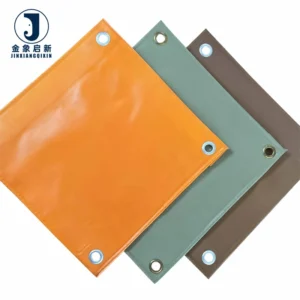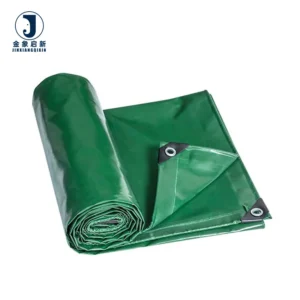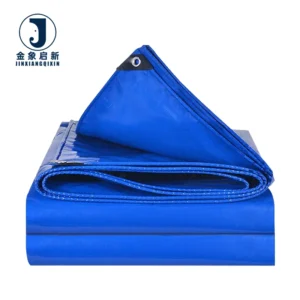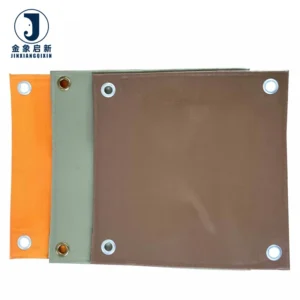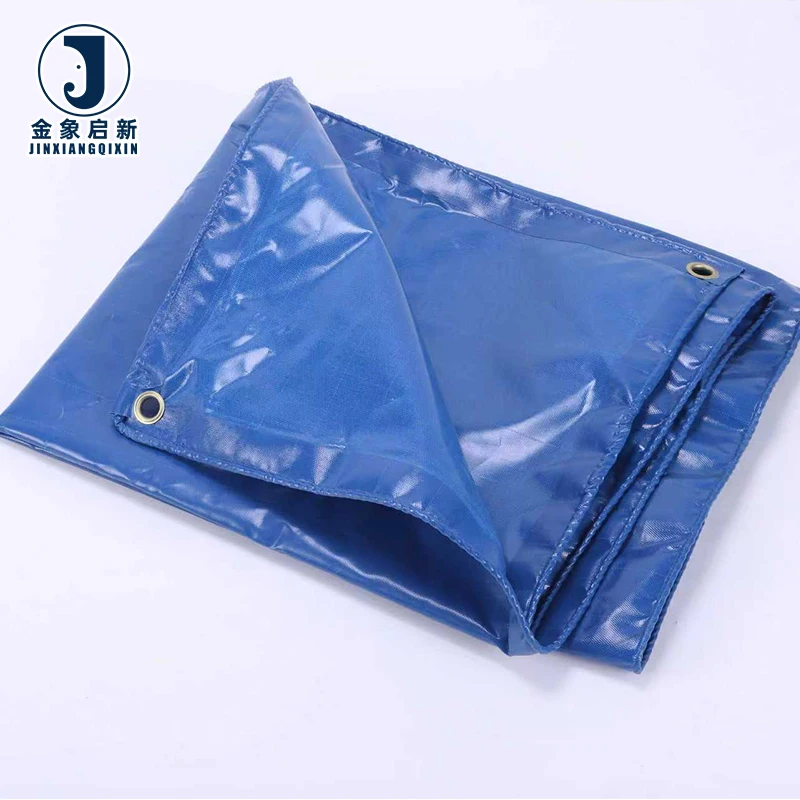
Custom-Cut Fit — we pattern each PVC coated tarpaulin for truck and trailer cover to the specific vehicle model before cutting, so hems and tie-down zones land where the chassis demands.
Technical Specifications
| Parameter | Value |
|---|---|
| Product Type | PVC Coated Tarpaulin |
| Base Fabric | 500D×500D Polyester |
| Coating Material | PVC (Double-Sided) |
| Weight Range | 450-900 g/m² |
| Key Features | Water Resistant, Flame Retardant (grade not stated in source), Waterproof, Anti-UV (test basis not stated in source) |
| Surface Characteristics | Smooth and soft surface with a leather-like texture |
| Repairability | Repairable by hot air welding |
| Standards | ISO, CE (specific grades not stated in source) |
Application Suitability
| Application | Exposure & Requirement |
|---|---|
| Flatbed and curtain-sider truck fleets | Constant road vibration, wind load, UV exposure, model-specific cover dimensions |
| Transport equipment builders | Side curtain fabric with reinforced eyelet zones, OEM-fit dimensions |
| Machinery and equipment haulers | Abrasion-resistant covers for long-distance transit, waterproof sealing |
| Awning and tent fabrication | Weather exposure, structural tension, repeated folding and unfolding |
Why a Generic-Size Cover Fails Before the Fabric Does
A PVC coated tarpaulin for truck and trailer cover that is cut to a generic dimension flexes at the wrong points, concentrating stress on seams that were never meant to bear the load.
When the cover does not match the trailer profile, loose fabric flaps in the slipstream, and the resulting abrasion wears through the coating at contact points long before the polyester base fabric reaches its tensile limit. [NEED_CITE: tensile and tear test methods for coated fabrics per ISO 1421] Fleet operators frequently report that welded seams split first, not because the weld was poorly made, but because the cover was moving against a frame it was never sized to fit. The repair cost and vehicle downtime compound quickly across a mixed fleet.
Pattern-Matched Sizing for Articulated Trailers
Every trailer model has a distinct roof bow spacing, side pillar layout, and curtain track profile. This PVC coated tarpaulin for truck and trailer cover is cut and welded to those exact dimensions, so the fabric sits under even tension rather than sagging or over-stretching at specific bays.
Even tension distribution means the eyelets and tie-down points share the load equally, reducing the chance of a single point tearing out under highway wind load. When the cover fits correctly, hot-air welded seams sit flat against the frame and resist peeling under flex.
Reinforced Zones Where Flex and Abrasion Concentrate
The areas around tie-down straps, curtain runners, and roof bows experience the highest cycle count of bending and contact. [NEED_CITE: fatigue failure mechanisms in flexible coated textiles] Double-sided PVC coating provides abrasion resistance at these contact points, and additional reinforcement patches can be welded in during fabrication to extend service intervals.
Flame retardant treatment is available in multiple grades — confirm the grade required for your market before placing the order. Anti-UV treatment is also offered to extend the material’s resistance to solar degradation during long-haul and outdoor parking exposure.
Reading the Specs: What 500D×500D and Coating Weight Mean on the Road
The 500D×500D polyester base fabric provides the tensile backbone: denier indicates yarn thickness, and when warp and weft are both 500D, the woven grid resists tear propagation in both directions with balanced strength. Coating weight, specified here in a range of 450-900 g/m², determines the thickness of the PVC layer that seals the weave and provides abrasion and waterproof performance.
A higher coating weight adds puncture resistance and stiffness, which suits flatbed covers that must bridge gaps between load items. A lighter coating weight keeps the cover more pliable, making it easier to handle during daily curtain-sider operations. The relationship between base fabric denier and coating weight must be balanced — heavy coating on a light base fabric can crack at the fold, while light coating on a heavy base fabric may abrade through prematurely. [NEED_CITE: coating adhesion and peel strength testing per DIN 53354] Surface texture, described as smooth with a leather-like feel, affects how easily dirt releases during cleaning and how well printed markings adhere if fleet branding is required.
The Hidden Cost of Specifying on Price Per Kilogram Alone
When a cover is ordered solely on the lowest per-kilogram rate, the coating weight often arrives below what the quotation stated, and the material feels noticeably lighter in hand. The shortfall may be only a few grams per square metre per roll, but across an entire fleet order it adds up to a measurable reduction in coating thickness.
Thinner coating means the PVC layer abrades through faster at tie-down points and curtain tracks, exposing the polyester base fabric to moisture and UV. [NEED_CITE: accelerated weathering effects on exposed polyester yarns in coated fabrics] Colour consistency can also drift between rolls when production is rushed to hit a cost target, leaving visible shade variation once covers are installed side by side on adjacent trailers. The result is a fleet that looks uneven and a procurement cycle that repeats sooner than planned.
Why Transport Fleets Source This Cover Here
Three full production lines with dedicated capacity mean bulk fleet orders ship on a confirmed schedule rather than queuing behind unrelated product runs.
The 10-person R&D team develops pattern samples against your trailer drawings within days, so fit is verified before full production begins. Every roll passes through stage-by-stage QA, and 100% pre-shipment inspection confirms that the GSM on the roll matches the value stated on your quotation. Hot-air welding parameters are calibrated to this specific coating formulation, ensuring seams hold at flex points rather than peeling under road vibration. Documentation accompanies every dispatch — from material specification sheets to test reports for flame retardant grades where applicable — so site compliance audits have the paperwork already in hand.
Documentation & Verification
- Weight verification per roll against the stated 450-900 g/m² range before dispatch
- Flame retardant test report provided with shipment where applicable to the specified grade
- Pre-shipment inspection record confirming dimensions match the confirmed trailer model drawings
- Roll packing list and certificate of origin included for customs clearance
- Material specification sheet stating base fabric, coating type, and colour reference
Fabrication, Handling & Storage
- Hot-air weld temperature should match the PVC coating formulation to avoid scorching or under-bonding at seams
- Eyelet spacing must account for the 500D×500D base fabric grid to prevent yarn pull-out under tension
- Store rolls upright on a flat surface to prevent permanent creasing in the PVC coating layer
- Avoid dragging the smooth leather-like surface across abrasive ground during installation
- Clean with mild detergent; solvent-based cleaners may soften the PVC coating and reduce abrasion resistance
- Field repairs are feasible using hot air welding on compatible PVC patch material
What to Include in Your Inquiry
Provide the exact trailer make, model, and year so we can develop a pattern that matches the roof bow spacing and curtain track profile. Specify the flame retardant grade required by your operating region, as available grades vary by market compliance standard. Confirm the target coating weight within the 450-900 g/m² range based on your cover’s daily handling frequency and abrasion exposure.
Frequently Asked Questions
Q: How do you cut covers to fit specific truck and trailer models?
A: We request the vehicle manufacturer’s body drawing or take field measurements of the roof bow spacing, side pillar positions, and curtain track profile. A pattern is developed and a sample cover is produced for fit confirmation before full fleet production begins, ensuring every panel aligns with the chassis structure.
Q: What reinforcement options are available at eyelet and tie-down zones?
A: Additional PVC patches can be hot-air welded behind eyelet rows and tie-down strap contact areas. The patch distributes load across a wider section of the 500D×500D base fabric, preventing individual yarns from bearing the full strap tension and reducing tear-out risk during transit.
Q: How do welded seams perform under load flex and road vibration?
A: Hot-air welded seams on this PVC coating formulation are calibrated to match or exceed the base fabric’s peel strength. When the cover is correctly sized to the trailer model, seams sit flat and flex uniformly, avoiding the concentrated stress that causes premature splitting on ill-fitting generic covers.
Q: How is colour consistency maintained across multiple covers in one fleet order?
A: All rolls for a single fleet order are produced in the same coating batch, and colour is checked against the confirmed reference at each production stage. Pre-shipment inspection verifies shade uniformity roll by roll, so covers installed side by side on adjacent trailers show no visible variation.
Q: What fire retardant grades are available for transport covers?
A: Multiple flame retardant grades are available, and the correct one depends on the compliance standard enforced in your operating region. Specify the required standard at inquiry stage so the appropriate treatment is applied and the matching test report is included with your shipment documentation.