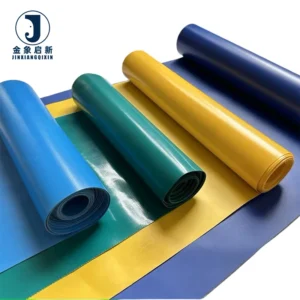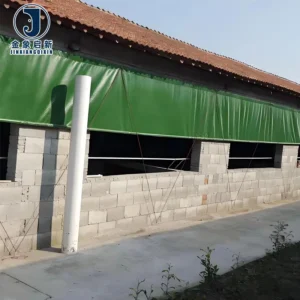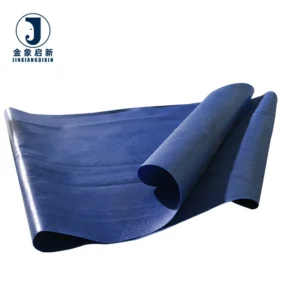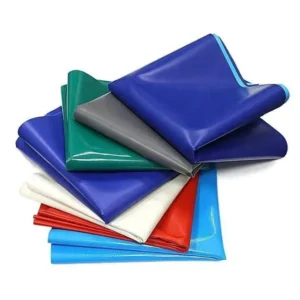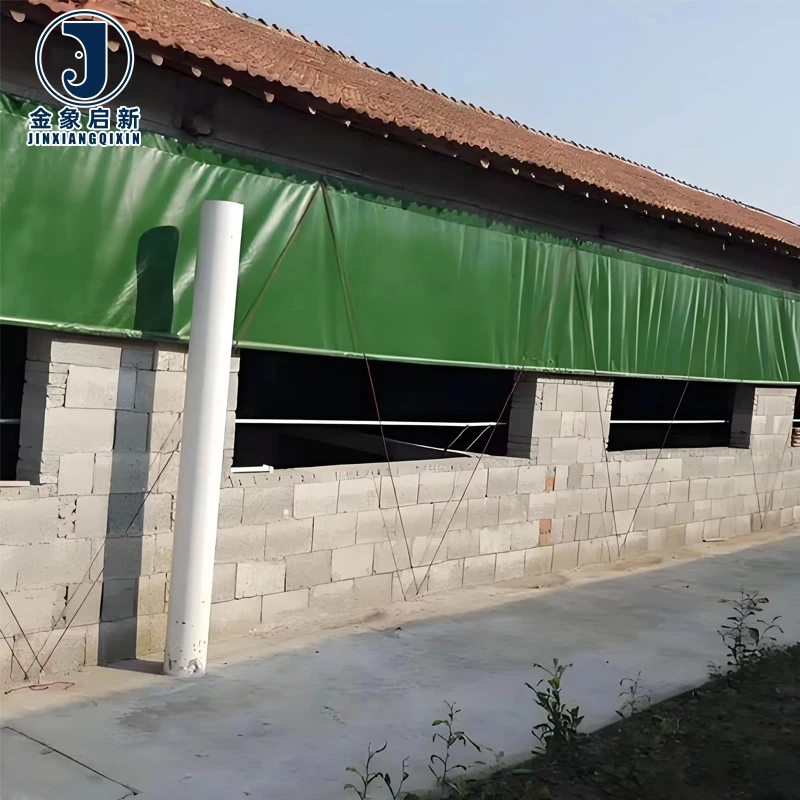
Proven Coating Adhesion Control — nearly 30 years focused on PVC coated fabric with dedicated QA at every production stage, ensuring roll-to-roll consistency for truck and transport cover applications.
Technical Specifications
| Parameter | Value |
|---|---|
| Product Type | PVC Coated Tarpaulin Roll |
| Coating Material | PVC coated |
| Base Fabric | Woven polyester |
| Waterproof Performance | Fully waterproof coated construction |
| Anti-Static Treatment | Available (test basis not stated — confirm certification for your application) |
| Finish | Plain style |
| Color Options | Customizable across the supplier’s color range |
| Assembly State | Supplied in roll stock |
| Certification Framework | ISO and CE certified production facility |
Application Suitability
| Application | Exposure & Requirement |
|---|---|
| Truck and trailer load covers | Constant road vibration, weather exposure, abrasion at flex points during transit |
| Side curtain fabric for transport fleets | Repeated rolling and unrolling, wind load, tie-down stress at reinforced edges |
| Poultry and livestock farm enclosures | Moisture, ammonia exposure, temperature variation, frequent wash-down |
| Agricultural tent and shelter structures | Prolonged outdoor UV exposure, wind load on large unsupported spans |
| Transport equipment builder specifications | Model-specific fitment, abrasion at load contact zones, long service intervals |
Why a Generic Truck Cover Fails Where the Load Flexes Most
A PVC coated tarpaulin for truck and transport covers must be cut to the exact trailer dimensions — generic sizing leaves excess material that flaps, abrades and eventually splits at the stress concentration points.
Transport operators routinely receive covers that were cut to a nominal size rather than measured against the specific trailer model in the fleet. The extra fabric bunches at corners, catches wind at highway speed, and wears through at the tie-down points within months instead of years. The problem is not the fabric itself but the assumption that one cut fits every trailer frame [NEED_CITE: truck cover failure patterns at flex and tie-down zones].
Covering a Moving Load Requires Model-Specific Measurement
Every trailer model has different corner radii, side rail profiles and tie-down rail positions. A PVC coated tarpaulin for truck and transport covers must account for these differences so the fabric sits flush under tension rather than loose and flapping. When fleet operators specify the exact vehicle model, the pattern can be cut to match the frame geometry, reducing the number of stress concentration points and extending the interval between replacements.
Welded Seams at Flex Points Demand Process Control
Where a side curtain folds or a load cover flexes over an uneven surface, the welded seam carries more dynamic stress than the body of the fabric. Heat welding parameters — temperature, pressure and dwell time — must be matched to the specific coating weight and base fabric construction. Inconsistent heat input produces cold welds that peel under load or over-welded zones where the PVC burns through the weave, leaving a brittle joint that fails before the surrounding material [NEED_CITE: heat weld peel strength testing for PVC coated polyester fabrics].
Reading the Specs That Actually Predict Field Performance
Tensile and tear resistance in a PVC coated woven fabric depend on the interaction between base fabric denier, weave density and coating penetration. The woven base provides the structural skeleton; the coating adds waterproofing, abrasion resistance and some dimensional stability. A heavier coating weight does not automatically mean higher tear strength — if the base fabric has a low thread count, the tear will propagate between yarns regardless of how thick the coating is. Buyers specifying for transport cover applications should request the base fabric denier and weave count alongside the total GSM to understand where the strength is actually coming from.
The finish of the PVC surface affects long-term maintenance. A plain style finish allows standard heat welding and accepts most PVC-compatible repair patches. Color consistency between rolls in the same order is critical when covers are installed side by side on adjacent trailers, as any shade variation becomes visible once stretched across the frame.
The Hidden Cost of Batch Color Mismatch Across Rolls
When a transport fleet orders multiple rolls for a batch of identical trailers, any shade variation between rolls becomes obvious once the covers are installed side by side at the depot. This is not a cosmetic issue — fleet branding standards require uniformity, and mismatched panels trigger rework, re-orders and delayed vehicle release. Color matching across a production run depends on consistent pigment dosing and coating temperature, both of which require in-process checks at the coating head rather than only a final visual inspection [NEED_CITE: batch color consistency standards for coated textile production].
Why Procurement Teams Source Truck Cover Fabric Here
Three full production lines and 36 sets of professional equipment provide the capacity to run large roll orders with consistent output scheduling. The 10-person R&D team develops custom color matches and cut-size patterns against specific trailer model drawings before bulk production starts. Every roll passes through dedicated QA/QC inspection at each production stage, with a 100% pre-shipment check that confirms coating weight and color reference against the order specification. Material specification sheets, pre-shipment inspection records and roll packing lists ship with every order, giving the procurement desk a full documentation trail.
Documentation & Verification
- Material specification sheet stating base fabric denier, PVC coating weight and color reference per roll
- Pre-shipment inspection record confirming GSM against the quoted specification before dispatch
- Roll packing list with batch identification for traceability across multi-roll orders
- ISO and CE certificates included in the documentation package per shipment
- Color reference standard documented to verify batch consistency on arrival
Fabrication, Handling & Storage
- Heat weld temperature and dwell time must match the PVC coating weight to avoid cold peel or burn-through
- Cut rolls should be stored upright on pallets to prevent permanent creasing across the woven base fabric
- Unroll and allow PVC coated tarpaulin to relax at installation temperature before tensioning onto frames
- Use PVC-compatible solvent cement for field repairs on the plain style coated surface
- Plan panel layout from roll width to minimize welded seams at high-flex zones on trailer covers
- Avoid dragging the coated surface over abrasive ground during farm enclosure installation
What to Include With Your Inquiry
Provide the trailer make, model and year so the cover pattern can be matched to the frame dimensions. Specify the color reference if fleet branding must be consistent across multiple vehicles. Confirm whether anti-static treatment is required and cite the test standard your application demands. State the roll width preference and estimated annual volume to establish production scheduling.
Frequently Asked Questions
Q: How do I verify the GSM on arrival matches the quotation?
A: Request a pre-shipment inspection record that documents the measured coating weight for each roll in your order. On receipt, cut a measured sample from the roll edge and weigh it on a calibrated scale. Compare the result against the GSM stated on the material specification sheet supplied with the shipment. Any significant deviation should be reported immediately with the batch number from the roll label.
Q: What are the minimums and lead times for custom width or color?
A: Custom width and color orders require a minimum roll quantity that varies with the specification. The R&D team develops a color sample against your reference before bulk production begins. Typical lead times depend on the coating schedule and the number of custom variations in the order. Confirm your required width and color count at inquiry stage for an accurate production timeline.
Q: How should eyelet spacing and hem reinforcement be specified for truck covers?
A: Eyelet spacing and hem reinforcement depend on the tie-down system and wind load the cover will face. Specify the spacing interval and reinforcement method based on your trailer’s tie-down rail configuration. The production team can reinforce hems with additional PVC strips or webbing to distribute load away from the eyelet holes and prevent tearing under tension.
Q: Why do welded seams sometimes fail before the fabric itself?
A: Weld failure usually traces back to heat input that did not match the coating weight. Cold welds peel apart under flex load while over-welded zones become brittle and crack. Request that the heat weld parameters be documented and matched to your specific PVC coating specification. A peel test on sample welds before bulk fabrication confirms the settings are correct.
Q: Will the color stay consistent across multiple rolls in one order?
A: Batch color consistency depends on controlled pigment dosing and coating temperature throughout the production run. Request that a color reference standard be included with your documentation package. On arrival, unroll adjacent panels side by side in natural light to check for shade variation before installation. Any mismatch should be documented with photographs and reported with the batch numbers.