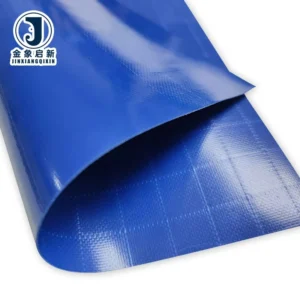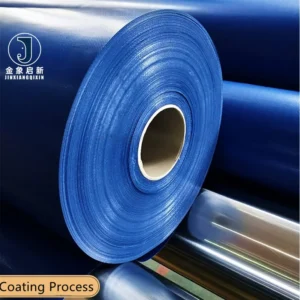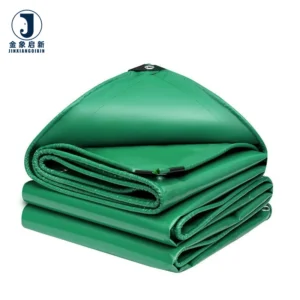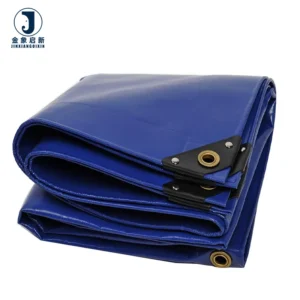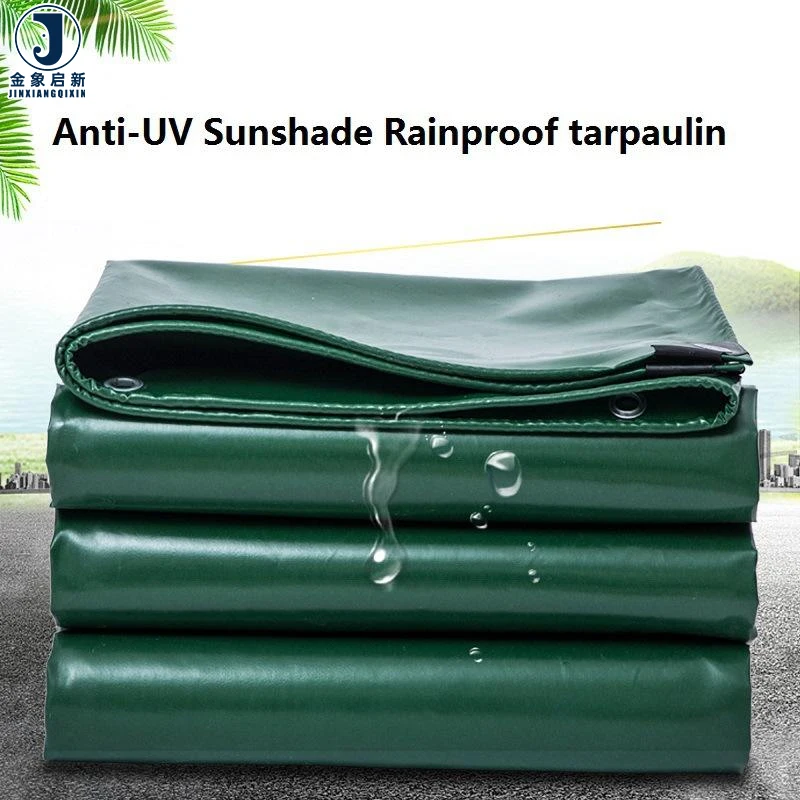
Bulk Capacity with Coating Control — three full production lines maintain GSM consistency across high-volume PVC tarpaulin roll orders for truck and transport cover applications.
Technical Specifications
| Parameter | Value |
|---|---|
| Product Type | PVC Coated Tarpaulin Fabric |
| Base Fabric | High-strength polyester mesh fabric |
| Coating Material | PVC |
| Coating Method | Laminated technology / Hot-melt coating technology |
| Weight Options | 350gsm / 420gsm / 500gsm / 550gsm / 600gsm / 750gsm |
| Thickness Options | 0.32mm / 0.35mm / 0.4mm / 0.45mm / 0.5mm / 0.65mm |
| Color Options | Blue / Red / Yellow / Light Blue / Grey (Customized) |
| Roll Size | 2m × 75m / 2.1m × 50m |
| Key Features | Cold crack resistance, anti-mildew, waterproof, sunproof, color fastness, outstanding tearing strength for welding |
| Treatment Options | Flame retardant, anti-static, anti-cold, anti-mildew (grade not stated) |
| Standards | ISO, CE |
Application Suitability
| Application | Exposure & Requirement |
|---|---|
| Truck side curtains | Constant flexing, road debris abrasion, wind loading, UV and weather exposure |
| Truck awnings and load covers | Tie-down strap tension, sun exposure, rain ingress prevention |
| Cargo ship covers | Salt spray, sustained moisture, heavy wind loads during transit |
| Construction equipment wraps | Site dust, mechanical abrasion, outdoor storage across seasons |
| Trailer roof and side panels | Highway-speed wind pressure, thermal cycling, welded seam stress |
Why Welded Seams Fail Before the Fabric Does on Truck Tarps
Seam failure at flex points is the leading cause of premature truck cover replacement, not fabric wear.
When a PVC tarpaulin for truck and transport flexes under load, the welded seam absorbs concentrated stress. If the coating adhesion to the base fabric is weak, the weld line peels apart long before the body of the fabric shows any sign of degradation. Fleet operators have reported covers splitting along the seam within the first year while the main fabric remains intact [NEED_CITE: tensile and tear test methods for coated fabrics per ISO 1421]. The root cause traces back to the coating method and how well the PVC bonds to the polyester mesh at the molecular level.
Hot-Melt Coating and the Seam Integrity Advantage
Our hot-melt coating technology drives PVC into the polyester mesh under heat and pressure, creating a mechanical bond that resists delamination at the weld zone. When fabricators heat-weld panels together to build a truck cover, the seam strength depends entirely on how well the coating holds to the yarn. Laminated fabrics can separate at the coating-to-mesh interface under repeated flex, while hot-melt coated stock maintains cohesion through the weld line. This is where PVC Tarpaulin Roll aftermarket supplier selection directly impacts the service life of the finished cover.
Cold Crack Resistance Across Seasonal Temperature Shifts
Truck covers experience extreme thermal cycling — sitting in direct sun during summer loading and enduring freezing wind at highway speed in winter. Cold crack resistance ensures the PVC coating remains flexible when temperatures drop, preventing micro-cracks that propagate along fold lines and weld seams. Without this property, a cover that performs well in mild weather becomes brittle and fails at the first hard freeze [NEED_CITE: cold crack test methods for PVC coated fabrics].
Reading GSM and Coating Weight as a System, Not a Single Number
GSM tells you the total weight per square metre, but it does not reveal how that weight is distributed between the base fabric and the coating. A 550gsm fabric with a heavy coating on a light base mesh will have poor tear strength despite its weight. The polyester mesh denier and weave density carry the structural load, while the PVC coating provides waterproofing and weld-ability. Our specification sheets break out base fabric weight and coating weight separately so buyers can assess the actual structural balance. Higher GSM in the base fabric generally translates to better tear propagation resistance, which matters most at stress concentration points like corners, hems, and tie-down attachment zones.
The Hidden Cost of Ordering on Price Per Kilogram Alone
When procurement decisions rest solely on unit price, the result is often lighter base fabric masked by thicker coating to hit the quoted GSM. The material passes the weight check on arrival but tears easily during fabrication or fails at the weld seam once installed on a truck. Colour inconsistency across rolls in the same shipment compounds the problem — two panels installed side by side on a trailer show visible shade differences, forcing the fabricator to reject material and reorder [NEED_CITE: batch colour consistency standards in coated textile manufacturing]. These failures do not appear in the sample approval stage because samples come from controlled stock, while production rolls may follow a different recipe.
Why Fleet Operators and Fabricators Source Here
Our deep process control over coating weight and adhesion means the GSM on the specification sheet matches what arrives at the dock. Three production lines and 36 sets of professional equipment support the volume requirements of fleet orders without compressing lead times. The 10-person R&D team handles custom width, colour matching, and pattern requirements specific to transport branding. Dedicated QA/QC inspection at every production stage catches coating weight drift and colour variation before rolls are packed. Pre-shipment inspection records document that every roll in an order has been checked, not just a sample from the top of the pallet.
Documentation & Verification
- Material specification sheet stating GSM, base fabric denier, and coating weight per product grade
- Weight verification per roll against the stated GSM before dispatch
- Batch colour consistency record across all rolls in a single fleet order
- Test reports for flame retardant or anti-static treatments where applicable — confirm the grade required for your market
- Pre-shipment inspection record covering coating adhesion and visual defect check
Fabrication, Handling & Storage
- Heat-weld temperature and dwell time should match the specific GSM grade and coating method — hot-melt coated stock may require different settings than laminated
- Store rolls upright on pallets to prevent flat-spot compression marks that telegraph through the finished truck cover
- Unroll in moderate temperatures; cold-stiffened PVC can crack if forced open at the fold line during winter handling
- Cut panels with consideration for roll width to minimise cross-welds on large trailer covers and reduce seam failure points
- Clean finished covers with mild detergent only — solvent-based cleaners can degrade the PVC surface and affect re-weldability
What to Include in Your Next Enquiry
Provide the specific truck or trailer model, the panel dimensions required, and whether you need roll stock for in-house fabrication or finished cut-to-size covers with eyelets and hem reinforcement. Specify your target market so we can confirm the appropriate treatment grades for fire safety or environmental compliance. Include annual volume estimates and preferred roll widths to help us recommend the most efficient stocking arrangement for your operation.
Frequently Asked Questions
Q: How is GSM verified on arrival and what documentation supports the quoted weight?
A: Each roll is weighed and measured before dispatch, and the pre-shipment inspection record documents actual GSM against the specification sheet. The material specification sheet breaks down total GSM into base fabric weight and coating weight, so you can verify the structural composition matches what was quoted, not just the total weight.
Q: Can truck covers be cut to fit specific trailer models rather than generic sizes?
A: Yes. The R&D team works from vehicle model dimensions or customer-provided panel drawings to produce cut-to-fit covers. This eliminates the excess material and awkward fold lines that result from forcing a generic size onto a specific trailer, and reduces the number of field-installed welds.
Q: How is colour consistency maintained across multiple rolls in one fleet order?
A: Production runs for a single order use the same coating batch with colour checks at each stage. The pre-shipment record includes a batch colour consistency note, so fabricators can confirm shade uniformity before cutting panels that will be installed side by side on the same vehicle.
Q: What are the hot-melt coating advantages over standard laminated tarpaulin for welded seam durability?
A: Hot-melt coating forces PVC into the polyester mesh under heat, creating a deeper bond than surface lamination. When panels are heat-welded together, the seam resists delamination at the coating-to-mesh interface, which is where most truck cover failures occur under repeated flexing and tie-down load stress.
Q: What documentation comes with shipment?
A: Standard documentation includes the material specification sheet, roll packing list, certificate of origin, and customs support documents. Test reports for specific treatments such as flame retardant or anti-static grades are provided where applicable, along with pre-shipment inspection records.