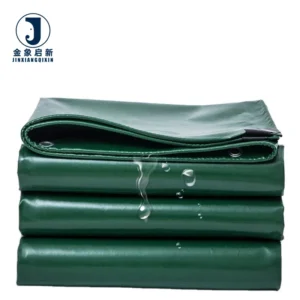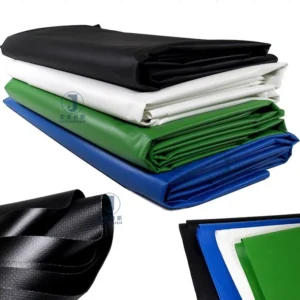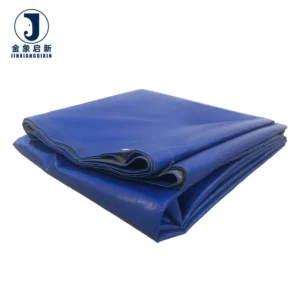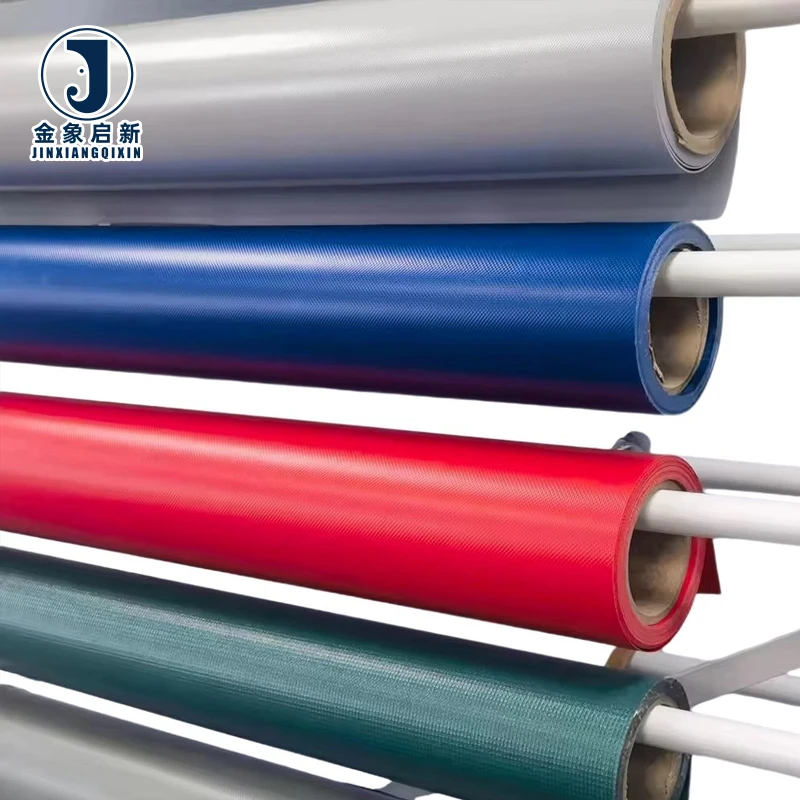
Deep Process Control Over Coating Weight and Adhesion — Nearly 30 years of focused coated fabric production translates into batch-to-roll consistency across full container loads of this 1000D PVC tarpaulin roll stock.
Technical Specifications
| Parameter | Value |
|---|---|
| Product Type | PVC Coated Tarpaulin Roll |
| Base Fabric Denier | 1000D |
| Coating Material | PVC |
| Key Features | Blackout, antibacterial & mildew proof, oil & stain resistance, acid & alkali resistance, anti-oxidation, weather resistance, self-cleaning surface, highly flexible yet crack-resistant |
| UV Treatment | Anti-UV (test basis not stated in source — confirm grade required for your market) |
| Flame Retardant | Flame retardant (grade not stated in source — confirm the grade required for your market) |
| Temperature Resistance | High temperature and cold resistance (range not stated in source) |
| Welding Compatibility | HF, Hot Air, Sewing |
| Standards | ISO, CE |
Application Suitability
| Application | Exposure & Requirement |
|---|---|
| Tent and awning manufacturing | Cut-and-weld production requiring roll-to-roll GSM and colour consistency across large volume orders |
| Tensile and membrane structures | Sustained tensile load, UV exposure, demand for certified flame retardant grades per building codes |
| Portable storage structures | Wind load, weather cycling, flexible deployment and repeated folding |
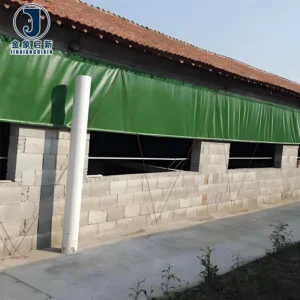
| Shade systems and shadings | Continuous UV exposure, thermal gain control, blackout function for light-sensitive environments |
| Event and exhibition shade tents | Rapid assembly and teardown, frequent transport, visual consistency across panels |
| Airport hangars and stadium architecture | Large-format panels, structural tensile demands, strict fire classification requirements |
Why Roll-to-Roll Consistency Matters More Than Quoted GSM
A stated GSM on the quotation means nothing if the rolls arriving at your factory floor vary in weight, colour, or coating adhesion from one to the next.
When tent and awning manufacturers cut panels from multiple rolls for a single structure, even slight colour drift between rolls becomes visible once installed side by side under natural light. Coating weight variation affects how the material behaves during HF or hot air welding — one roll may seal cleanly at a given temperature while the next scorches or fails to bond. This is not a rare defect; it accounts for a significant share of fabrication rework claims in the coated textile supply chain [NEED_CITE: roll-to-roll GSM variation and its impact on weld consistency in coated fabric manufacturing]. Sourcing PVC tarpaulin roll aftermarket supplier stock requires verification infrastructure, not just a competitive price per kilogram.
Coating Adhesion as the Foundation for Weld Integrity
The base fabric of this PVC tarpaulin roll stock is constructed at 1000D, providing the tensile foundation for large-format panel fabrication. What determines whether a welded seam holds under load is the adhesion between the PVC coating and the yarn surface. When coating adhesion is uneven across a roll, the heat applied during HF or hot air welding can cause delamination at the seam rather than a clean fuse. This product supports all three fabrication methods — HF welding, hot air welding, and sewing — giving manufacturers the flexibility to match the joining method to the structural demands of each project.
Blackout and Surface Performance for Shade Applications
The blackout capability built into this PVC tarpaulin roll serves shade structures and exhibition tents where light transmission must be controlled. Beyond opacity, the self-cleaning surface reduces maintenance cycles on installed structures where dust and pollen accumulation would otherwise degrade appearance and light reflectance. The oil, stain, acid, and alkali resistance listed in the specification address environments where the fabric encounters chemical exposure — agricultural shade structures, industrial storage covers, and coastal installations where salt spray is a constant factor. These are material-level treatments, not surface sprays that degrade after initial weathering [NEED_CITE: long-term durability of integrated coating treatments versus topical finishes in PVC coated textiles].
Reading the Specification Sheet Beyond the GSM Number
The 1000D base fabric denier indicates the linear mass density of the yarns woven into the scrim before coating. Higher denier generally correlates with greater tear resistance, but the weave density and the coating weight together determine the final GSM and the fabric’s behaviour under tension. A 1000D fabric with a loose weave and heavy coating may match the GSM of a tighter weave with a lighter coat, yet the two will perform differently at the seam and under puncture stress. The coating method — whether knife-over-roll, dip, or calender — affects how deeply the PVC penetrates the yarn interstices, which in turn governs peel strength and long-term flexibility in cold conditions. This is why a material specification sheet stating base fabric denier, coating weight, and coating method provides far more predictive value than a GSM number alone. Buyers evaluating PVC tarpaulin roll aftermarket supplier options should request all three data points before approving samples for production.
The Hidden Cost of Skipping Batch Verification Before Fabrication
Accepting a container load of coated fabric without pre-shipment GSM and colour verification can cascade into expensive downstream failures. A tent manufacturer cutting panels from rolls that drift lighter than the quoted specification may find the finished structure under-performs on wind load certification. A shade installer discovering colour inconsistency after panels are welded and hoisted faces a choice between accepting a visibly mismatched canopy or absorbing the cost of replacement material and re-fabrication. Flame retardant grades that arrive without batch-matched test reports may fail site inspection, delaying project handover and triggering contractual penalties. These are not hypothetical scenarios; they represent recurring disputes between fabricators and material suppliers across the coated textile trade [NEED_CITE: common dispute categories in coated fabric procurement for architectural and tent applications].
What This Supply Chain Brings to Roll-Stock Buyers
Three full production lines with 36 sets of professional equipment support bulk roll output with consistent on-time delivery, reducing the risk of project delays caused by material shortages. A dedicated 10-person R&D team handles sample development within days when buyers need to evaluate custom width, colour, or treatment combinations before committing to full container orders. Quality assurance operates at every production stage with 100% pre-shipment inspection, meaning GSM, colour, and coating integrity are verified roll by roll before dispatch rather than sampled statistically. Custom widths and lengths are accommodated without the extended lead times and high minimums that buyers often encounter when requesting non-stock dimensions. The documentation package accompanying each shipment includes material specification sheets, test reports for applicable grades, and packing lists that enable receiving teams to verify roll counts and weights immediately on arrival.
Documentation & Verification
- Material specification sheet stating GSM, base fabric denier, and coating weight per roll
- Flame retardant and anti-UV test reports matched to the specific production batch
- Pre-shipment inspection record confirming 100% roll-by-roll verification before dispatch
- Roll packing list enabling weight and count reconciliation at receiving dock
- ISO and CE certificates covering the production facility and management system
- Certificate of origin and customs documentation for cross-border shipment clearance
Fabrication, Handling & Storage
- HF welding parameters should be set and tested on sample strips from each roll batch before full production runs
- Hot air seam strength depends on consistent coating adhesion — verify peel strength on the first panel of each new roll
- Sewn seams on 1000D base fabric require needle and thread rated for the fabric weight to prevent stitch failure under load
- Store rolls upright on end caps to prevent flat-spotting and permanent creasing of the PVC coating
- Avoid stacking rolls beyond recommended height to prevent compression marks that may telegraph through finished panels
- Clean with mild detergent and soft cloth to preserve the self-cleaning surface treatment without chemical degradation
Requesting a Quotation That Matches Your Project
To receive a specification and sample that aligns with your fabrication needs, share the target application and environmental exposure conditions — particularly whether the finished structure will face sustained UV, wind load, or fire classification requirements. Confirm the roll width and length your cutting tables are set up for, along with the annual volume you expect to draw. If colour consistency across multiple rolls is critical for a single project, state the number of rolls per batch so that production can be scheduled from a single coating run. Specify whether you require roll stock only or finished panels with edge reinforcement and eyelet installation.
Frequently Asked Questions
Q: What GSM and denier options are available for tent and shade structure applications?
A: This product is built on a 1000D base fabric. GSM depends on the coating weight applied, which is configured to your tensile and tear requirements. Request a material specification sheet with your inquiry so that GSM, base fabric, and coating details are documented before sample approval.
Q: Can you supply flame retardant and UV-resistant grades with test reports?
A: Flame retardant and anti-UV treatments are available in various grades. Because different markets and building codes require different classifications, confirm the specific grade or standard your project demands so that matched test reports can be included with your shipment documentation.
Q: How do you ensure colour consistency across multiple rolls in one order?
A: Production for multi-roll orders is scheduled from a single coating batch where possible. Each roll undergoes 100% pre-shipment inspection for colour and coating integrity, and the inspection record accompanies the shipment so you can verify consistency on arrival.
Q: What welding methods are compatible with this fabric?
A: This PVC tarpaulin roll supports high-frequency welding, hot air welding, and sewing. The choice depends on your seam strength requirements and panel geometry. Sample strips from your roll batch should be test-welded to confirm optimal parameters before full production.
Q: What is the minimum order for custom width, colour, or treatment?
A: Minimums vary by the degree of customization requested and current production scheduling. Share your target width, colour reference, and treatment requirements with your inquiry, and the quotation will include the applicable minimum and lead time for your specific configuration.