Deep Process Control Over Coated Fabric — verified through 100% pre-shipment inspection on every PCA duct seam and connection point before dispatch.
Technical Specifications
| Parameter | Value |
|---|---|
| Product Type | Aircraft PCA Air Duct |
| Inner Diameter | 12 Inch |
| Coating Material | PVC |
| Insulation Layer | Built-in aluminum foil bubble film |
| Temperature Range | -30°C to 150°C (source value — verify against manufacturer catalog) |
| Connection Type | Zipper and Velcro link |
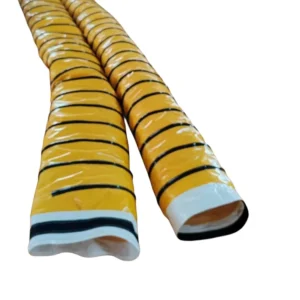
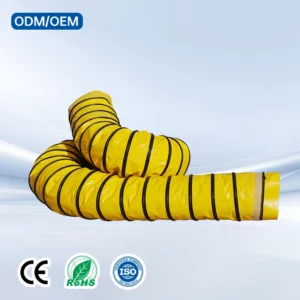
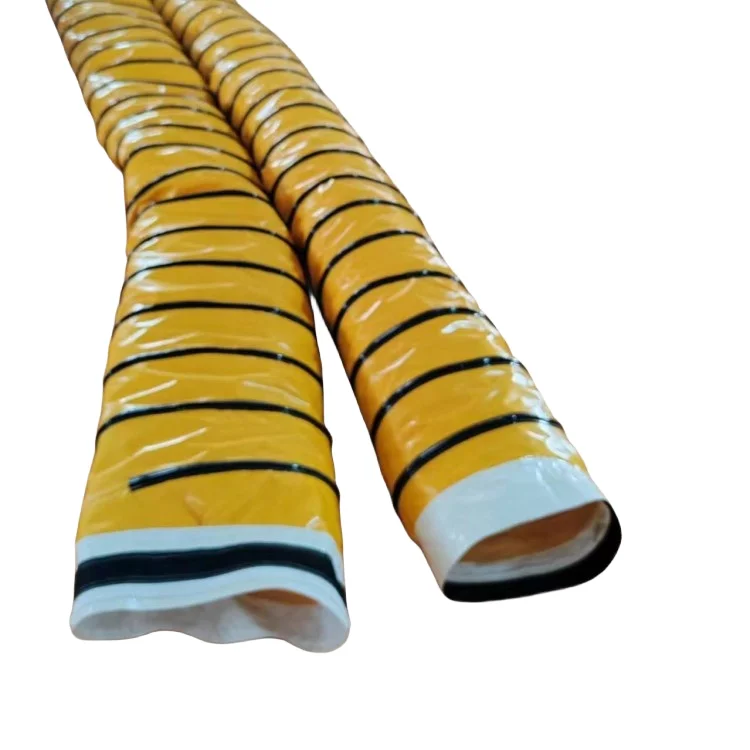
| Outer Color | Yellow-black alternating protective coloring |
| Assembly State | Flexible, foldable |
| Anti-Mildew | Excellent mildew resistance (grade not stated) |
| Waterproof Rating | Water resistant (rating not stated) |
| Flame Retardant Grade | (grade not stated in source) |
| Anti-Static | (not confirmed in source) |
| Weight (GSM) | (not stated in source) |
| Logo Customization MOQ | 100 |
| Pattern Customization MOQ | 100 |
| Certifications | ISO, CE |
Application Suitability
| Application | Exposure & Requirement |
|---|---|
| Airport apron PCA unit to aircraft cabin air transmission | Daily deployment and retraction, jet fuel vapor exposure, ground vehicle traffic, UV and weather |
| Ground air supply equipment connection at aircraft cabin door | Repeated flexing at connection points, thermal stress from conditioned air, high-visibility safety requirement |
| Parked aircraft cold or warm air delivery | Extended stationary exposure to apron conditions, temperature differential across duct wall, mildew risk in humid climates |
Why Certifications Matter More Than Claims on the Apron
Ventilation ducts supplied without the fire-retardant or anti-static certification that airport sites require can halt an entire gate operation the moment an inspector asks for documentation.
Confirm the test report before the duct reaches the apron — not after.
Ground handling teams operate under tight turnaround windows. A duct that arrives without the paperwork the airport authority demands does not just delay one flight; it cascades through the gate schedule. I have seen aviation contractors forced to source emergency replacements at premium cost because the original supplier stated "flame retardant" on the quotation but could not produce a grade-specific test result when the site safety officer requested it. [NEED_CITE: fire safety compliance requirements for ground support equipment on airport aprons]
When specifying a Flexible Air Duct for Aviation Ground Support, the procurement conversation must start with the certification your site requires, then work backward to the material that meets it.
Thermal Integrity Where Conditioned Air Meets Apron Heat
The aluminum foil bubble film insulation layer built into this Aircraft PCA Air Duct serves a specific function: maintaining the temperature of pre-conditioned air as it travels from the PCA unit across the apron to the aircraft cabin interface. On a hot tarmac, the outer PVC shell absorbs solar load while the inner insulation resists thermal transfer, reducing the energy the PCA unit must expend to deliver air at the target temperature.
This construction matters most during summer turnaround operations in high-ambient-temperature regions, where uninsulated or poorly insulated ducts allow conditioned air to warm significantly before reaching the cabin door. The bubble film structure traps still air in discrete cells, creating a thermal barrier that performs across the stated temperature range.
Connection Reliability Under Daily Deployment Stress
The zipper and Velcro link system on this duct addresses a practical reality of apron operations: ground crews need to connect and disconnect rapidly, often in wind, rain, or low-light conditions. A flange-and-clamp connection might offer rigid security, but it costs minutes per hookup that multiply across dozens of daily turns.
The flexible foldable construction means the duct can be collapsed and stowed on the PCA cart between uses, reducing the trip hazard and vehicle damage risk that rigid duct sections create on a crowded apron. The yellow-black alternating outer coloring provides the high-visibility marking that apron safety protocols require for ground support equipment positioned near active taxiways and gate areas. [NEED_CITE: IATA ground support equipment safety marking standards]
How Insulation Construction and Temperature Range Shape Apron Performance
The -30°C to 150°C operating range stated for this duct covers the extremes encountered in aviation ground support: sub-zero winter air being delivered for cabin heating, and hot apron conditions baking the outer shell during summer cooling operations. The PVC coating provides the structural shell, but it is the aluminum foil bubble film layer that determines how much of the conditioned air temperature survives the journey.
Coating adhesion to the base fabric governs whether the outer shell delaminates after repeated flex cycles — a failure mode that shows up first at connection points where the duct bends most sharply. The inner diameter must match both the PCA unit outlet and the aircraft cabin air conditioning interface; a mismatch forces adapters into the system that create turbulence and pressure loss. The absence of a stated GSM value means buyers should request the material specification sheet to understand base fabric weight and its relationship to puncture resistance during handling.
The Cost of Deploying a Duct That Fails Inspection
A PCA duct that cannot produce the fire-retardant or anti-static certification the airport authority requires does not just fail one inspection — it removes that unit from service until a compliant replacement arrives. During that window, the affected gate operates without pre-conditioned air, forcing aircraft to run auxiliary power units longer, burning fuel and increasing emissions on the apron.
Batch-to-batch color inconsistency in the high-visibility outer layer may seem cosmetic until a safety audit flags non-uniform marking across your duct fleet. Welded seams that separate before the fabric itself fails typically indicate insufficient heat control during fabrication, and on an apron duct that flexes at every connection, seam failure dumps conditioned air onto the tarmac. [NEED_CITE: common failure modes in flexible air ducts for aviation ground support applications]
Why Procurement Teams Specify This Duct Through Jinxiang
Three full production lines and 36 sets of professional equipment support bulk capacity with consistent output, meaning replacement ducts ordered months apart maintain the same construction and connection specification.
A 10-person R&D team handles custom diameter, length, and connection type requests, developing samples within days rather than weeks for aviation-specific requirements.
Dedicated QA/QC at every production stage catches seam integrity and zipper/Velcro function issues before the duct ships, not after it fails on the apron.
Deep process control over PVC coating weight and adhesion ensures the outer shell withstands repeated flexing without delaminating from the base fabric.
Full documentation packages travel with every shipment, including the test reports and certificates that aviation site inspectors demand before allowing equipment into operation.
Documentation & Verification
- Material specification sheet confirming PVC coating type, aluminum foil insulation construction, and temperature range
- Fire-retardant and anti-static test reports where applicable, matched to your airport authority requirements
- Pre-shipment inspection record covering seam integrity, zipper function, and Velcro adhesion on every duct
- Certificate of origin and customs documentation for international airport project delivery
- Roll and unit packing list with batch traceability for fleet management records
Fabrication, Handling & Storage
- Heat-seal PVC seams at manufacturer-recommended temperature to prevent delamination at flex points during daily connection cycles
- Inspect zipper and Velcro connection integrity before each deployment, replacing worn sections before they fail mid-turnaround
- Store folded ducts in dry, shaded conditions to preserve the aluminum foil bubble film insulation layer from moisture degradation
- Avoid dragging the PVC-coated outer shell across abrasive apron surfaces to prevent coating scratches and base fabric exposure
- Clean with mild detergent only; solvents may compromise the water-resistant PVC coating and high-visibility color printing
- Verify inner diameter alignment with both PCA unit outlet and aircraft interface before securing connections to prevent air loss
What to Include in Your Inquiry
Specify the aircraft models your ground support fleet services, as cabin door interface dimensions vary and may require non-standard connection adapters. Confirm the fire-retardant or anti-static grade your airport authority mandates so the correct test reports accompany your shipment.
Provide your annual duct replacement volume and preferred delivery schedule to align production slots with your fleet maintenance calendar. If custom branding or high-visibility color specifications apply, state the logo artwork and Pantone references with your inquiry.
Frequently Asked Questions
Q: What fire-retardant or anti-static certifications are available for aviation apron use?
A: Available in flame retardant and anti-static grades — confirm the specific grade required by your airport authority before ordering. Test reports can be supplied for the grades that apply to your market. We recommend sharing your site compliance requirements early in the inquiry so documentation matches your inspection standards.
Q: Can the duct be supplied in custom lengths or non-standard diameters?
A: Yes. Diameter, length, and connection type can be customized for specific aircraft models and PCA unit configurations. Samples are developed within days for custom requirements, allowing your team to verify fitment on the apron before committing to a production run. Logo and pattern customization are available with a minimum order of 100 units.
Q: How is the duct connected to the PCA unit and aircraft?
A: The standard configuration uses a zipper and Velcro link system for rapid assembly and disassembly during aircraft turnaround. This connection method allows ground crews to deploy and stow the duct quickly without tools. If your operation requires flange or strap connections, specify this in your inquiry for custom fabrication.
Q: What is the expected service life under daily apron deployment and UV exposure?
A: Service life depends on deployment frequency, apron surface conditions, UV intensity, and handling practices. The PVC coating provides mildew resistance and water resistance for outdoor exposure, and the yellow-black outer coloring maintains high visibility. Request material specification details to assess suitability for your specific climate and operational intensity.
Q: Is sample evaluation available before committing to a production run?
A: Yes. Samples can be developed within days for custom diameter, length, or connection type requirements. This allows your ground support team to test fitment with your specific PCA units and aircraft interfaces before placing a bulk order. Sample approval is a standard step in our sales process before production begins.