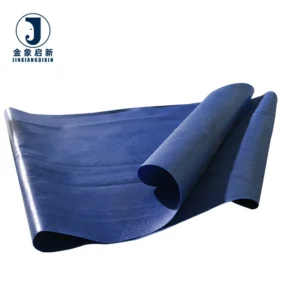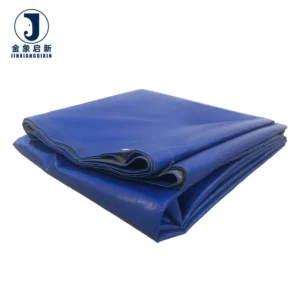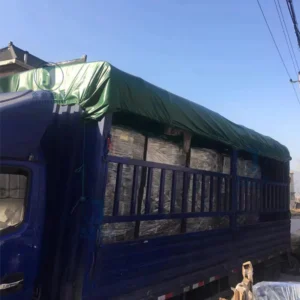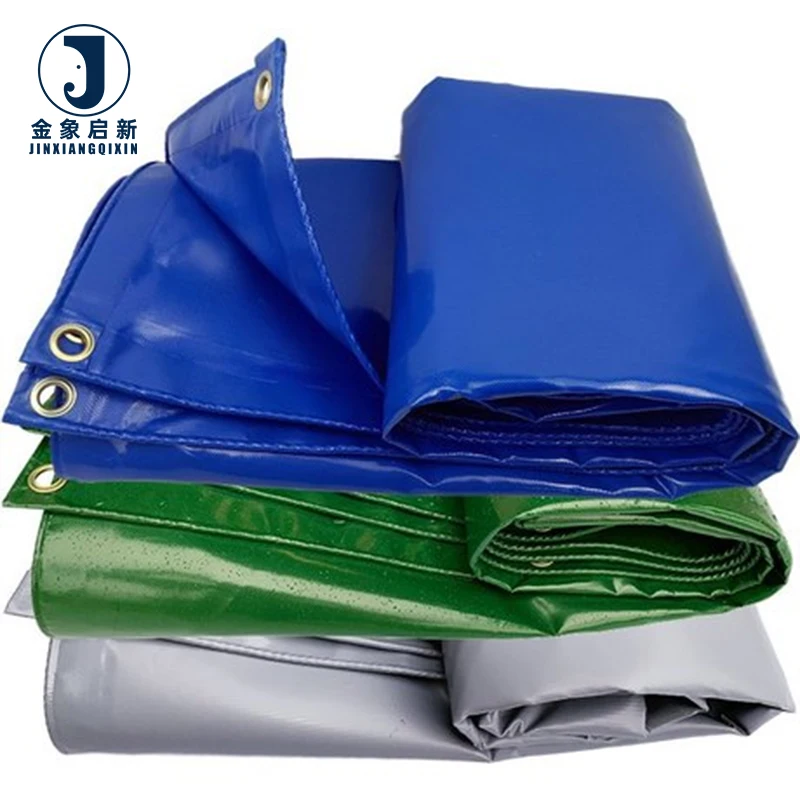
Precision Coating Control — Deep process mastery over lamination and hot-melt coating weight ensures every 650 GSM PVC tarpaulin roll leaves the line with the adhesion and seam integrity that moving-load applications demand.
Technical Specifications
| Parameter | Value |
|---|---|
| Product Type | PVC Tarpaulin Roll |
| Material | 100% high tenacity polyester yarns with PVC coating |
| Weight | 650 GSM |
| Coating Technology | Laminated technology & Hot-melt Coating technology |
| Waterproof | Yes |
| Cold Crack Resistance | Yes |
| Anti-Mildew | Yes |
| Anti-Static | Yes |
| Color Fastness | Best color fastness (source value — verify against manufacturer catalog) |
| Tearing Strength | Outstanding tearing strength for welding |
| Special Treatments Available | Flame Retardant; Anti-Static; Anti-cold; Anti-mildew; 3P Etc. |
| Standards | ISO, CE |
Application Suitability
| Application | Exposure & Requirement |
|---|---|
| Truck side curtain fabric | Constant flexing at roller tracks, road debris abrasion, prolonged UV exposure |
| Custom-fit trailer covers | Wind load at highway speed, tie-down point stress, repeated folding and unfolding |
| Flatbed load protection | Direct weather contact, cargo shift abrasion, strap friction at edges |
| Equipment covers for transport | Vibration-induced fabric fatigue, moisture ingress, handling wear |
Why a Quoted GSM Does Not Guarantee the Cover Will Hold on the Road
A PVC Tarpaulin Roll aftermarket supplier quoting 650 GSM on paper does not tell you whether the fabric will survive the third month strapped over a vibrating trailer load. Coating adhesion and base fabric construction determine real-world durability far more than weight alone.
I have watched heavy-grade coated rolls split along the heat-welded seam while the body of the fabric remained intact. The failure point is almost always where the load flexes most — at eyelets, at hems, and at the transition between reinforced and unreinforced zones. When the coating does not bond deeply into the polyester weave, the seam peels under cyclic stress regardless of how many grams per square metre the spec sheet claims [NEED_CITE: tensile and tear test methods for coated fabrics per ISO 1421]. Fleet operators then face unscheduled downtime, replacement costs, and cargo exposure that no quotation discount can offset.
Hot-Melt Coating and the Welded Seam Advantage
The hot-melt coating process forces PVC into the interstices of the high-tenacity polyester base yarn, creating a mechanical bond that resists delamination during heat welding. For truck side curtains and trailer covers, where panels are joined by high-frequency or hot-air welding, this bond depth is the difference between a seam that lasts and one that peels after a season of flexing. The 650 GSM weight, combined with laminated technology, provides the substrate thickness that fabricators need to dial in consistent weld parameters across the entire roll.
Colour Consistency When Panels Meet in Daylight
A PVC Tarpaulin Roll aftermarket supplier must control pigment dispersion at the coating stage, not just at the mixing stage. When two rolls from the same batch are cut and installed side by side on a trailer, any colour variation becomes immediately visible in direct sunlight. Batch-to-batch colour matching relies on tight control of coating weight, oven temperature profile, and pigment loading — variables that shift when production is rushed or when raw material lots change without recalibration [NEED_CITE: colour measurement standards for coated technical textiles].
What the Numbers Behind 650 GSM Actually Mean
The 650 GSM figure represents the combined weight of the polyester base fabric and the PVC coating on both sides. A higher GSM can come from a thicker coating layer, a heavier base yarn, or simply more filler — and each route produces a very different fabric in practice. When the weight comes primarily from a dense high-tenacity polyester weave, the result is high tensile and tear strength that supports reliable welding. When filler inflates the GSM without adding yarn density, the fabric may feel stiff initially but crack along fold lines once it enters service. The coating technology — here, both laminated and hot-melt — determines how much of that weight translates into usable peel strength at the weld zone. This is why requesting a material specification sheet that breaks down base fabric weight versus coating weight gives a clearer picture than GSM alone.
The Cost of Overlooking Batch Consistency
A roll that measures correct on the first sample but drifts lighter across the production run leaves the fabricator with a trailer cover that fails prematurely on one side while the other side holds. Colour variation between rolls in the same order means the finished truck looks patchwork once installed, triggering rejection by the fleet owner. Anti-static or flame-retardant treatments claimed on the quotation but absent from the test report can shut down a mining or construction site inspection [NEED_CITE: flame retardant classification standards for transport and industrial covers]. These are not theoretical risks — they are the failure modes that drive warranty claims and erode trust between distributor and end user.
Why Fabricators and Fleet Builders Source This Roll Here
Three full production lines and 36 sets of professional equipment allow this PVC tarpaulin roll to run at volume without the coating-weight drift that smaller operations struggle to control. The 10-person R&D team develops custom widths, colours, and sample panels within days, letting fabricators validate weld parameters before committing to a full container. Dedicated QA/QC at every stage includes pre-shipment weight verification against the stated 650 GSM, not merely a certificate on paper. Hot-melt coating capability gives fabricators the peel strength they need for side-curtain welding, while laminated technology supports applications where surface finish matters. ISO and CE certification is backed by documentation that travels with the shipment, not buried in a website footer [NEED_CITE: ISO quality management system requirements for coated fabric manufacturing].
Documentation & Verification
- Material specification sheet stating 650 GSM, polyester base fabric, and coating technology used
- Test reports for flame retardant and anti-static grades where applicable to your route requirements
- Pre-shipment inspection record confirming weight and colour consistency roll to roll
- ISO and CE certificates included with every dispatch for customs and site compliance
- Roll packing list with individual roll weights and dimensions for receiving verification
Fabrication, Handling & Storage
- Hot-air weld temperature must be matched to the hot-melt coating layer to avoid seam delamination on the 650 GSM roll
- Reinforced hem folding should account for the laminated coating stiffness to prevent cracking at fold lines
- Store rolls upright on pallets in a dry area to prevent edge crushing on the high-tenacity polyester core
- Cold-crack resistant formulation allows transport in low temperatures without surface embrittlement or coating damage
- Avoid prolonged direct sunlight on stored rolls to preserve colour fastness before fabrication
- Clean with mild detergent; abrasive solvents may degrade the PVC coating surface over repeated use
Before You Request a Quote
Provide the specific trailer model or equipment dimensions so that the roll width and panel layout can be calculated for minimum waste. Confirm whether your operating route or site requires flame retardant, anti-static, or anti-cold treatment, and specify the standard your market enforces. State your target colour reference, whether branding or pattern printing is needed, and your expected annual roll volume so that batch consistency commitments can be locked in before production begins.
Frequently Asked Questions
Q: How do I verify the GSM on arrival matches what was quoted?
A: Every shipment includes a pre-shipment inspection record with individual roll weights. You can cross-check this against the material specification sheet stating 650 GSM. We recommend weighing a cut sample from the first roll upon receipt and comparing it to the documented value before releasing the batch to your fabrication floor.
Q: Can the roll be supplied with flame-retardant or anti-static certification?
A: Flame retardant, anti-static, anti-cold, and anti-mildew treatments are all available as special options. Confirm the specific grade or standard required for your market or route — such as the fire classification your transport authority mandates — so the correct treatment is applied and documented with the matching test report.
Q: Will colour vary between rolls in the same order once installed?
A: Colour consistency across rolls within the same batch is controlled through tight pigment loading and coating-weight management during production. The pre-shipment inspection record documents this consistency. For large orders spanning multiple production runs, request batch grouping to ensure all rolls for one trailer fleet come from a single coating run.
Q: How are welded seams reinforced to handle flex at tie-down points?
A: The hot-melt coating technology drives PVC into the polyester base weave, creating deep adhesion that supports strong heat-welded seams. For high-flex zones such as tie-down edges and eyelet lines, fabricators should specify reinforced hems and adjust weld parameters to the 650 GSM substrate thickness for maximum peel strength.