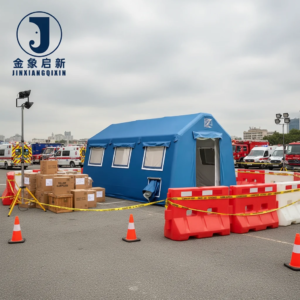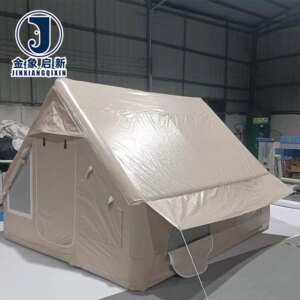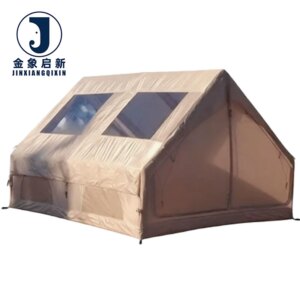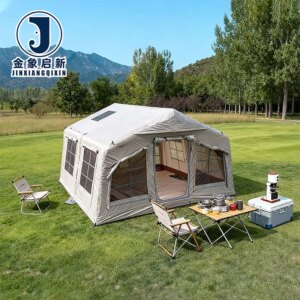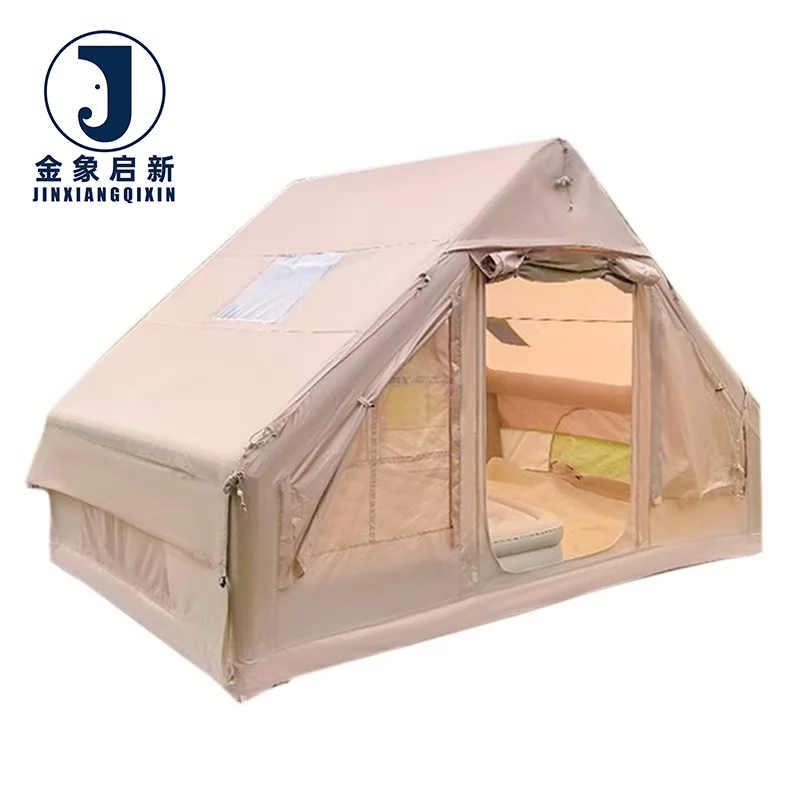
Consistent Roll-to-Roll Output — 3 full production lines and 36 sets of processing equipment ensure batch-to-batch colour, weight, and coating uniformity across large inflatable tent fabric orders.
Technical Specifications
| Parameter | Value |
|---|---|
| Product Type | Inflatable Tent |
| Core Material | PVC tarpaulin |
| Key Performance | Waterproof, tear-resistant, lightweight |
| UV Resistance | Available in UV-resistant grades — confirm the grade required for your market |
| Product Forms | Inflatable structure with quick automatic opening |
| Capacity | 1-2 Person |
| Customization Service | OEM & ODM including sample customization and pattern printing |
| Quality Control | Strict full-process quality inspection with dedicated QA & QC staff |
| Certifications | ISO9001, ISO14001, ISO45001, CE |
Application Suitability
| Application | Exposure & Requirement |
|---|---|
| Commercial temporary shelters and site offices | Repeated setup and breakdown, wind loading, direct sunlight exposure |
| Emergency response and disaster relief structures | Rapid deployment, waterproof integrity, transport weight constraints |
| Outdoor logistics hub auxiliary facilities | Abrasion from ground contact, dust and moisture ingress, daily inflation cycles |
| Inflatable and membrane structure manufacturing | Roll-to-roll colour and weight consistency, welded seam adhesion, fabrication yield |
Why Inflatable Tent Fabric Buyers Must Look Beyond the Stated GSM
GSM tells you how much material is on the roll, not how the inflatable camping tent for truck and transport will perform once welded and pressurised.
Many commercial inflatable structure manufacturers have received fabric rolls that match the quoted weight but fail during heat welding or tear at the seam when the structure flexes under wind load. A heavier coating does not automatically mean better peel strength at the weld line. The base fabric denier, weave density, and coating method together determine whether the material survives repeated inflation cycles on a job site. [NEED_CITE: tensile and tear test methods for coated fabrics per ISO 1421]
Weld Seam Integrity Under Repeated Inflation Cycles
The most common failure point on an inflatable camping tent for truck and transport is not the fabric body but the seam where panels join. PVC tarpaulin used in inflatable structures must withstand continuous peel forces at every weld line as the internal air pressure fluctuates. Our in-house R&D team adjusts coating formulation and thickness so that heat-welded seams reach adhesion levels matched to the fabric’s own tear resistance, reducing the risk of seam splitting during use.
Colour and Weight Uniformity Across Bulk Rolls
When an inflatable structure manufacturer produces multiple units from a single fabric order, visible colour drift between rolls becomes a serious quality rejection. We maintain coating weight and pigment dispersion within tight tolerances across all 3 production lines. Each batch of Inflatable Tent Fabric is inspected before dispatch to confirm that gloss level, colour reference, and GSM remain consistent from the first roll to the last. [NEED_CITE: batch consistency standards for PVC coated fabric production]
How Base Fabric Weave Affects Tear Propagation
The PVC coating provides waterproofing and surface protection, but the base fabric weave determines how a small puncture or cut propagates under stress. A tighter weave with higher denier yarns limits tear spread when the inflatable structure is dragged across rough ground or struck by debris. Selecting the right base fabric construction is as important as choosing the coating weight — a lighter fabric with a denser weave can outperform a heavier one with a looser construction in tear resistance tests.
The Hidden Cost of Specifying on Weight Alone
Purchasing decisions based solely on quoted GSM regularly lead to costly failures on site. Fabric that meets the weight target but uses a lower-grade base fabric will show early tearing at stress points, particularly around inflation valves and anchor attachments. Manufacturers who discover this after fabrication face full rework costs plus damaged client relationships. Requesting tensile and tear test data alongside the GSM figure gives a far more complete picture of how the Inflatable Tent Fabric will behave in real-world deployment. [NEED_CITE: common failure modes in inflatable PVC structures]
Why Fabricators Source This Material Here
Dedicated QA and QC staff inspect every production stage, not just the finished roll, catching coating defects and weave faults before they reach the cutting table. The 10-person R&D team develops custom samples within days, allowing fabricators to validate weld parameters and colour match before committing to full production runs. Full OEM and ODM capability covers pattern printing, custom thickness adjustments, and sizing to match specific inflatable structure panel layouts. Each shipment is backed by documentation that includes material specification sheets and pre-shipment inspection records, supporting tender compliance for commercial and industrial projects.
Documentation & Verification
- Material specification sheet stating coating composition and confirmed GSM per roll
- UV resistance test report where applicable, matched to the batch supplied
- ISO9001, ISO14001, ISO45001, and CE certificates for tender compliance
- Pre-shipment inspection record covering colour, weight, and surface quality
- Certificate of origin and customs documentation for export shipments
Fabrication, Handling & Storage
- Set heat weld temperature and dwell time to match the PVC coating thickness for full peel adhesion
- Store rolls horizontally on padded racks to prevent permanent creasing in the PVC coating layer
- Allow cold-stored rolls to reach ambient temperature before unrolling to avoid coating cracking
- Use mild detergent and soft cloth for cleaning; solvent-based cleaners may degrade the PVC surface
- Plan panel cutting layout to maximise roll yield and minimise offcuts from the available width
What to Include in Your Next Fabric Inquiry
Provide the intended application environment and expected inflation cycle frequency so we can recommend the appropriate base fabric construction and coating weight. Specify any fire-retardant or anti-static certification required by the end-use market. Share your annual volume, target roll width, and whether you need finished panels or full rolls. Request a production sample to confirm colour, weld behaviour, and structural compatibility before placing the bulk order.
Frequently Asked Questions
Q: Can the fabric GSM and coating weight be verified on delivery against the quotation?
A: Yes. Every roll is weighed and inspected before dispatch, and a batch-specific inspection report accompanies the shipment. This report records the actual GSM and coating weight measured at the factory, allowing you to cross-check against the original quotation on arrival.
Q: Are UV-resistance and waterproof test reports provided with each batch?
A: Test reports are supplied where applicable to the grade ordered. Confirm the specific UV-resistance level and waterproof rating required for your market at inquiry stage so the correct grade is produced and documented. Reports are matched to the production batch number.
Q: How is colour consistency maintained across multiple rolls in the same order?
A: Pigment dispersion and coating weight are controlled across all production lines to keep colour within tolerance from roll to roll. Pre-shipment inspection includes side-by-side colour comparison under standard lighting to catch any drift before packing.
Q: What customization options are available for thickness, printing, and sizing?
A: We offer OEM and ODM services including custom fabric thickness, pattern printing, and roll sizing. Submit your panel dimensions, colour reference, and print artwork for sample development. Samples are typically ready within days for your approval before bulk production.
Q: What certifications are included to support commercial tender compliance?
A: ISO9001, ISO14001, ISO45001, and CE certificates are available with each order. Additional fire-retardant or anti-static certification can be provided where the required grade is specified at inquiry. Confirm your project’s regulatory requirements early so documentation is prepared in time.