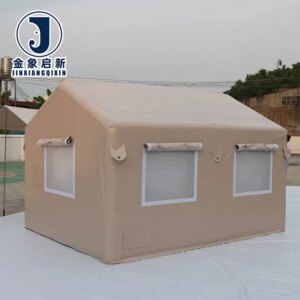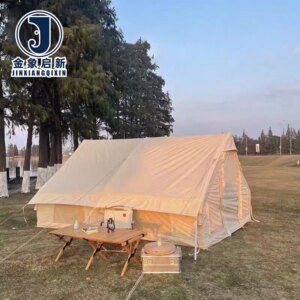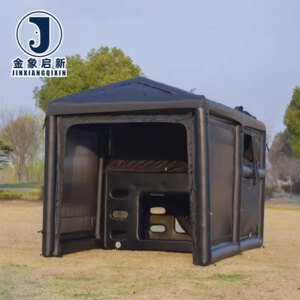
Production Line Consistency — Three full lines maintain batch-to-batch uniformity across inflatable tent fabric orders, ensuring every roll matches the approved sample in weight and coating adhesion.
Technical Specifications
| Parameter | Value |
|---|---|
| Product Type | Inflatable Tent |
| Core Material | PVC tarpaulin |
| Product Forms | 2-8 person capacity, four-season design |
| Construction | Single-layer construction |
| Opening Mechanism | Quick automatic opening |
| Key Performance | Waterproof, windproof, tear-resistant |
| UV Resistance | Available in UV-treated grades — confirm the treatment level required for your deployment climate |
| Customization Service | OEM & ODM (sample customization, pattern printing) |
| Standards | ISO 9001, ISO 14001, ISO 45001, CE |
Application Suitability
| Application | Exposure & Requirement |
|---|---|
| Outdoor event infrastructure | Rapid deployment, repeated assembly cycles, public safety compliance, wind loading |
| Construction site temporary shelters | Continuous weather exposure, abrasion from site debris, crew traffic wear |
| Expedition base camps | Extreme temperature fluctuation, high wind load, remote site logistics constraints |
| Emergency response operations | Immediate setup under pressure, frequent relocation, sanitization between deployments |
Why Inflatable Tent Buyers Still Receive Inconsistent Batches
Certified production lines and documented in-process QA eliminate the guesswork from repeat orders.
Commercial buyers sourcing an inflatable tent for commercial use regularly encounter batches that pass initial inspection but degrade faster than the previous shipment. The root cause is often coating weight variation between production runs — a problem invisible until the structure is inflated on site and the fabric responds differently to wind load. When a fleet operator or event contractor orders replacements months later, the new batch may feel lighter, weld at a different temperature, or show colour shift against the older units still in rotation [NEED_CITE: batch-to-batch GSM variance in PVC coated fabrics]. These inconsistencies compound into premature seam failures, visible mismatching on multi-tent installations, and the need to renegotiate lead times for an entire project mid-season.
Rapid Deployment Meets Four-Season Structural Demand
An inflatable tent for commercial use must deploy in minutes and hold form under sustained wind. The single-layer PVC tarpaulin construction keeps packed weight manageable while the air-beam frame provides rigidity without aluminium poles that bend or corrode. Quick automatic opening allows a two-person crew to erect the shelter without specialised tools, a requirement on construction sites and emergency staging areas where every minute of setup translates to downtime or delayed response.
Customization Without Sacrificing Production Integrity
Capacity adjustments from 2-person to 8-person footprints require different panel geometries and air-beam diameters. The OEM and ODM service covers sizing, pattern printing, and material thickness selection per project specification. Each custom request goes through sample development and client approval before mass production begins, preventing the costly scenario where a full container load arrives with dimensions that do not match the agreed cut sheet.
Reading the Spec Sheet Beyond Surface Claims
Waterproof and windproof ratings on a product label mean little without the test method referenced. PVC tarpaulin achieves waterproofing through continuous coating that fully encapsulates the base fabric, eliminating the pinhole paths that plague laminated alternatives. Tear resistance depends on base fabric denier and weave density rather than coating thickness alone — a heavier coat adds stiffness but does not stop a tear from propagating once the yarn structure is breached. For UV resistance, the treatment chemistry and concentration determine service behaviour under sun exposure, and buyers should request the test basis applicable to their regional climate before confirming the order [NEED_CITE: UV degradation test standards for PVC coated textiles].
The Hidden Cost of Skipping Batch Verification
Accepting a delivery without checking roll-level consistency leads to field failures that surface weeks into deployment. Weld seams may delaminate on tents from one batch while holding firm on another, because the coating formulation shifted slightly between runs. On a multi-unit event site, colour variation between batches becomes visible once tents stand side by side, forcing the operator to rearrange or replace units under client pressure. These are not warranty issues — they are procurement process failures that a documented pre-shipment inspection would have caught before the container left the factory [NEED_CITE: pre-shipment inspection protocols for coated fabric products].
Why Procurement Teams Source Here
Dedicated QA inspection at every production stage catches coating weight drift before rolls reach the cutting table. A 10-technician R&D team handles custom capacity sizing, pattern printing, and sample turnaround within days rather than weeks. Three full production lines provide the capacity to fulfil large-volume orders with consistent on-time delivery across repeated batches. In-process quality checks during coating and finishing ensure that waterproof and windproof performance is verified during manufacture, not assumed at dispatch. Full documentation — from material specification sheets to certification copies — ships with every order for compliance-ready record keeping.
Documentation & Verification
- Material specification sheet stating PVC tarpaulin composition and performance ratings per batch
- Batch-specific inspection report covering waterproof rating and tensile test results
- ISO 9001, ISO 14001, ISO 45001, and CE certificate copies included with shipment
- Pre-shipment inspection record documenting roll-by-roll weight and visual check
- MSDS available upon request for chemical compliance in destination markets
Fabrication, Handling & Storage
- Hot-air welding temperature must match PVC tarpaulin coating formulation — request the recommended range before first production run
- Single-layer construction panels require flat storage without fold creases to prevent permanent coating stress marks
- Deflated tents should be rolled with the coated surface inward to protect against abrasion during transit
- Mild detergent cleaning preserves PVC surface finish — solvent-based cleaners degrade coating adhesion over time
- Field repairs use compatible PVC repair tape applied to clean, dry surfaces for temporary seam reinforcement
Request a Specification Match
Provide your target deployment environment, required capacity range, and any regional compliance standards such as fire classification or UV performance benchmarks. Confirm whether you need finished units with pattern printing or raw fabric rolls for in-house fabrication. Share your projected annual volume and colour references so the sample development phase can begin with accurate parameters.
Frequently Asked Questions
Q: What customization options are available for capacity, printing, and material thickness?
A: The OEM and ODM service covers capacity scaling from 2 to 8 persons, custom pattern printing, and material thickness adjustments. Each variation begins with a sample produced to your specification. Once you approve the sample, mass production follows the same material formula and construction parameters to maintain consistency across the full order.
Q: What test reports and certifications ship with each batch?
A: Every shipment includes a batch-specific quality inspection report covering waterproof rating and tensile strength results. ISO 9001, ISO 14001, ISO 45001, and CE certificate copies are provided as standard documentation. Material specification sheets and MSDS are available upon request for compliance submissions in your destination market.
Q: How does the sample approval process work before production?
A: After receiving your specification requirements, the R&D team develops a sample reflecting your chosen capacity, material thickness, and any custom printing. You review and approve the sample before mass production begins. This step prevents dimensional or material mismatches from reaching the shipping stage.
Q: How is batch-to-batch consistency ensured across repeat orders?
A: Production runs follow documented coating weight and formulation parameters established during sample approval. In-process QA checks at each production stage verify consistency before rolls advance to cutting and assembly. Pre-shipment inspection records are maintained per batch, giving you traceable quality data for every reorder.
Q: What storage and handling practices extend service life between deployments?
A: Store deflated tents rolled rather than folded to prevent permanent crease marks in the PVC tarpaulin coating. Keep units in a dry, shaded environment away from direct UV exposure during off-season storage. Clean with mild detergent before packing to avoid embedded grit abrading the coated surface during the next inflation cycle.