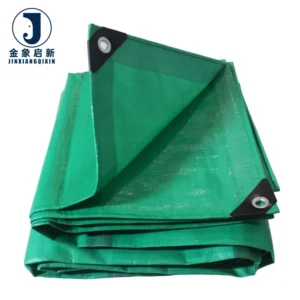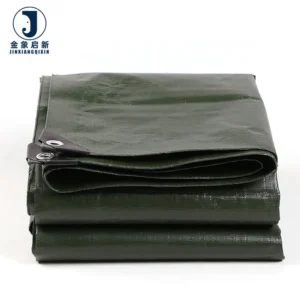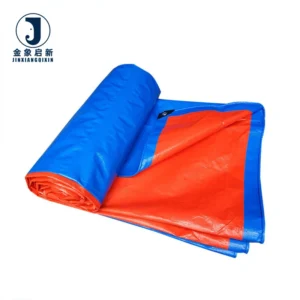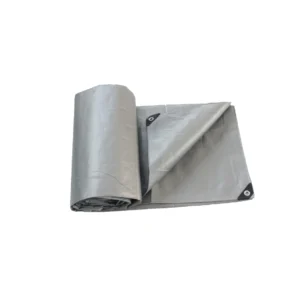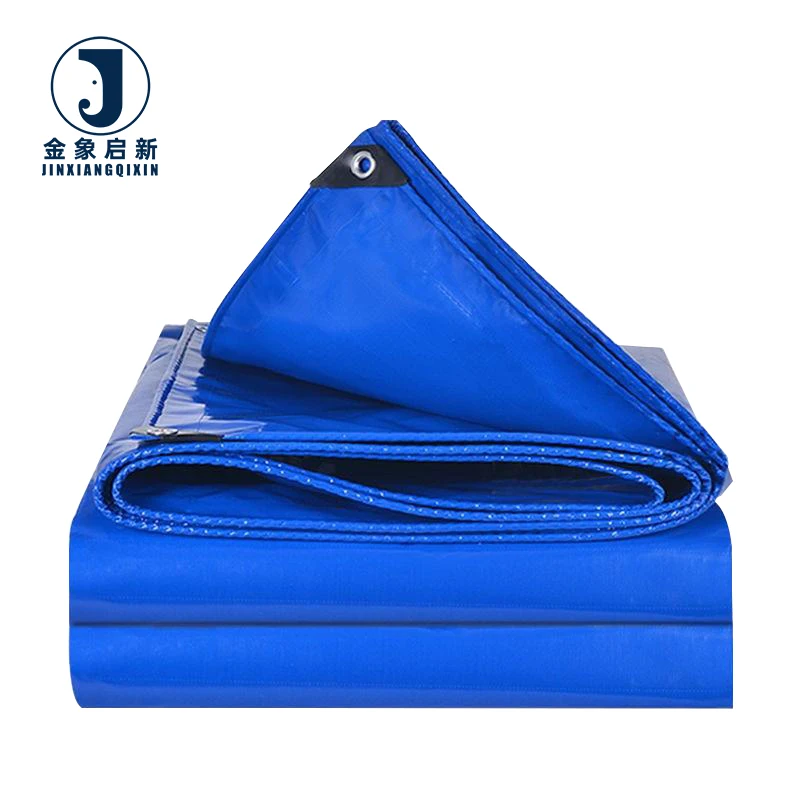
Model-Specific Fitment — every PVC coated truck tarpaulin is cut to your trailer’s exact dimensions rather than shipped as generic sheets, eliminating wind flap and edge abrasion at high-stress tie-down zones.
Technical Specifications
| Parameter | Value |
|---|---|
| Product Type | PVC Coated Tarpaulin |
| Coating Material | PVC |
| Base Fabric | High-strength polyester mesh fabric |
| Weight (GSM) | 350gsm, 420gsm, 500gsm, 550gsm, 600gsm, 750gsm |
| Total Thickness | 0.32mm, 0.35mm, 0.4mm, 0.45mm, 0.5mm, 0.65mm |
| Coating Method | Laminated technology & Hot-melt Coating technology |
| Width Options | 2m, 2.1m |
| Roll Length | 75m (2m width), 50m (2.1m width) |
| Color Options | Blue, Red, Yellow, Light blue, Grey (Customized) |
| Key Features | Waterproof, sunproof, cold crack resistance, anti-mildew, anti-static treatment, outstanding tearing strength for welding, best color fastness |
| Flame Retardant | Available in flame retardant grades — confirm the grade required for your market |
| UV Treatment | Available with UV stabilisation — request test basis for your region’s exposure class |
| Standards | ISO 14001, ISO 45001, CE, RoHS |
Application Suitability
| Application | Exposure & Requirement |
|---|---|
| Flatbed and tipper truck covers | Road weather, wind flap at speed, tie-down strap abrasion, UV exposure across seasons |
| Curtain-side (tautliner) trailers | Repeated flexing at load points, lateral tension from curtain runners, road spray and salt |
| Cargo ship deck covers | Salt-laden air, sustained moisture, heavy wind loads during voyage |
| Transport equipment side curtains | Constant deployment and retraction cycles, friction against cargo edges |
| Fleet replacement covers | Matched to specific trailer model dimensions for direct swap without modification |
Why Generic-Size Truck Covers Fail Prematurely on the Road
A PVC coated tarpaulin cut to a standard sheet size will almost always leave loose edges on a specific trailer model — and those loose edges are where wind gets underneath, flapping the fabric until the hem tears or the eyelets pull through. Fleet operators replacing covers in volume often find that generic-fit material wastes fabric at the overlap and leaves gaps at the corners, forcing field modifications that weaken the reinforcement zones. The PVC coated truck tarpaulin for fleet fitment is cut and welded against the actual trailer drawing, so every panel lands where it should and every eyelet sits at the correct tie-down point [NEED_CITE: wind flap fatigue as a primary failure mode in heavy-duty tarpaulins].
Fitment Accuracy Across Trailer Models
Each PVC coated truck tarpaulin for fleet application is sized against the specific make and model of the trailer it will cover. This means the cover dimensions account for the exact bed length, side height, and corner radii of your rig, rather than a one-size approximation. For curtain-side trailers, the fabric panels are cut to match the runner track spacing so the curtain deploys smoothly without binding or sagging between sections.
Welded Seam Behaviour Under Road Load
The hot-melt coating technology used on this PVC coated tarpaulin produces welded seams that hold comparable tear resistance to the base fabric itself. This matters most at the points where a flatbed cover flexes over shifting cargo or where a tautliner curtain absorbs lateral wind pressure during transit. When the seam strength matches the fabric strength, the cover wears evenly across its surface rather than splitting at the joins first [NEED_CITE: weld seam integrity testing for PVC coated polyester fabrics].
Matching GSM Grade to Route Exposure
Selecting the right weight grade depends on the route conditions and cargo type the fleet operates in. Lighter GSM options suit regional hauls with moderate weather exposure, while heavier grades provide additional resistance for long-distance routes crossing varied climates. The range from 350gsm to 750gsm allows fleet managers to standardise on one material family while adjusting protection level by vehicle assignment. The high-strength polyester mesh base fabric maintains dimensional stability across all available weight options.
How Base Fabric and Coating Work Together on the Road
The total performance of a PVC coated tarpaulin depends on the interaction between the polyester mesh base fabric and the PVC coating applied to it. The high-strength polyester yarns provide the tensile and tear resistance that prevents a small puncture from propagating across the panel, while the PVC coating delivers waterproofing, UV shielding, and the surface properties needed for welding and repair. The coating method — whether laminated or hot-melt — determines the adhesion bond between yarn and coating, which directly affects how well the fabric holds together at welded seams and eyelet reinforcement zones. A coating that delaminates under flex stress will expose the base fabric to moisture and abrasion, accelerating failure at exactly the points that see the most movement during transport. Thicker coating layers add weight and abrasion resistance but also increase stiffness, which can reduce the fabric’s ability to fold and deploy smoothly on curtain-side systems. The available thickness range from 0.32mm to 0.65mm allows specification based on whether the priority is flexibility for repeated deployment or maximum surface protection for static covers.
The Hidden Cost of Specification Mismatches in Fleet Orders
When the GSM stated on a quotation does not match the material that arrives at the depot, the cover will be lighter and thinner than the fleet specification demands — leading to early abrasion wear at tie-down contact points and faster UV degradation across the panel surface. Colour variation between rolls in the same fleet order becomes visible once the covers are installed side by side on adjacent trailers, creating an inconsistent fleet appearance that reflects poorly on the operator. Welded seams that fail before the fabric itself indicate a mismatch between the coating method and the welding parameters used during fabrication — a problem that surfaces weeks after installation rather than at the pre-shipment inspection stage [NEED_CITE: batch-to-batch colour consistency standards for coated fabrics].
Why Transport Fleets Source This PVC Coated Tarpaulin Here
The production process is built around coated fabric with deep process control over coating weight and adhesion, meaning the PVC layer bond to the polyester mesh is verified at each production stage rather than assumed from the raw material specification.
Three full production lines with 36 sets of professional equipment support the volume requirements of fleet orders while maintaining on-time delivery schedules across multiple trailer cover batches.
A 10-person R&D team handles custom sizing against trailer model drawings, pattern development, and sample production — allowing fleet operators to approve the exact material and fitment before full production begins.
Dedicated QA/QC inspection covers every production stage with full pre-shipment verification of seam weld integrity, eyelet pull strength, and colour consistency across all panels in a fleet order.
Samples for custom requirements are developed within days, so procurement teams can evaluate the material against their route conditions before committing to the full production run.
Documentation & Verification
- Material specification sheet confirming GSM, base fabric denier, and coating method for each roll in the order
- Pre-shipment inspection record documenting seam weld integrity and eyelet pull-test results
- UV and flame retardant test reports supplied where treatments are specified, matched to the grade requested
- Colour reference sample retained against the production batch for future re-order matching
- Roll packing list with individual roll weight and dimensions for receiving verification at the depot
Fabrication, Handling & Storage
- Hot-melt coating method supports high-frequency welding — calibrate welder temperature and dwell time to the selected GSM grade before production
- Reinforce eyelet zones with additional PVC patches at tie-down points to distribute strap load across the high-strength polyester mesh
- Store rolls upright on a flat surface to prevent permanent creasing in the 0.45mm and heavier grades
- Allow cold-stored rolls to reach ambient temperature before unrolling to avoid cracking the PVC coating layer
- Clean surfaces with mild detergent only — solvent-based cleaners can degrade the anti-mildew treatment on the coating surface
- Field repairs use the same hot-melt welding process, matching the patch material to the original GSM and coating type
What to Include in Your Enquiry
To provide an accurate specification for your PVC coated truck tarpaulin for fleet use, share the trailer make, model, and bed dimensions for each vehicle type in your fleet. Indicate the primary route conditions — regional or long-haul, and the typical climate exposure range. Specify whether you need finished cut-and-welded covers or roll stock for in-house fabrication, along with the GSM grade and any fire retardant or anti-static certification your operation requires.
Frequently Asked Questions
Q: How is truck cover sizing matched to specific trailer models?
A: We work from the trailer manufacturer’s dimensional drawings or measurements you provide for bed length, side height, and corner profile. Each PVC coated tarpaulin panel is then cut and welded to those exact dimensions, so the cover fits without excess overlap or gaps at the edges.
Q: How is GSM verified on arrival to prevent underweight material?
A: Every roll undergoes weight verification against the stated GSM during pre-shipment inspection, and the inspection record accompanies the shipment. You can cross-check the specification sheet against the physical material on receipt at your depot.
Q: What reinforcement options are available at tie-down and eyelet points?
A: Eyelet zones receive additional PVC patches welded over the high-strength polyester mesh base fabric to distribute strap tension. The patch size and eyelet spacing are specified based on your tie-down configuration and the GSM grade selected.
Q: How is colour consistency maintained across multiple covers in a fleet order?
A: All rolls in a single fleet order are produced from the same coating batch with a retained colour reference sample. The pre-shipment inspection includes a side-by-side colour check across panels before dispatch to confirm visual consistency.
Q: What documentation is provided for UV and flame retardant treatments?
A: Where UV stabilisation or flame retardant grades are specified, we supply the corresponding test report identifying the test standard and the result achieved. These documents are matched to the specific batch and grade in your order.