Process-Controlled Coating Output — nearly three decades of PVC formulation and line management behind every roll, translating into consistent weld seams and dimensional accuracy for transport and site water containment.
Technical Specifications
| Parameter | Value |
|---|---|
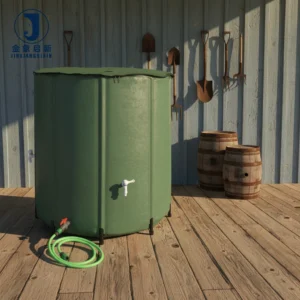
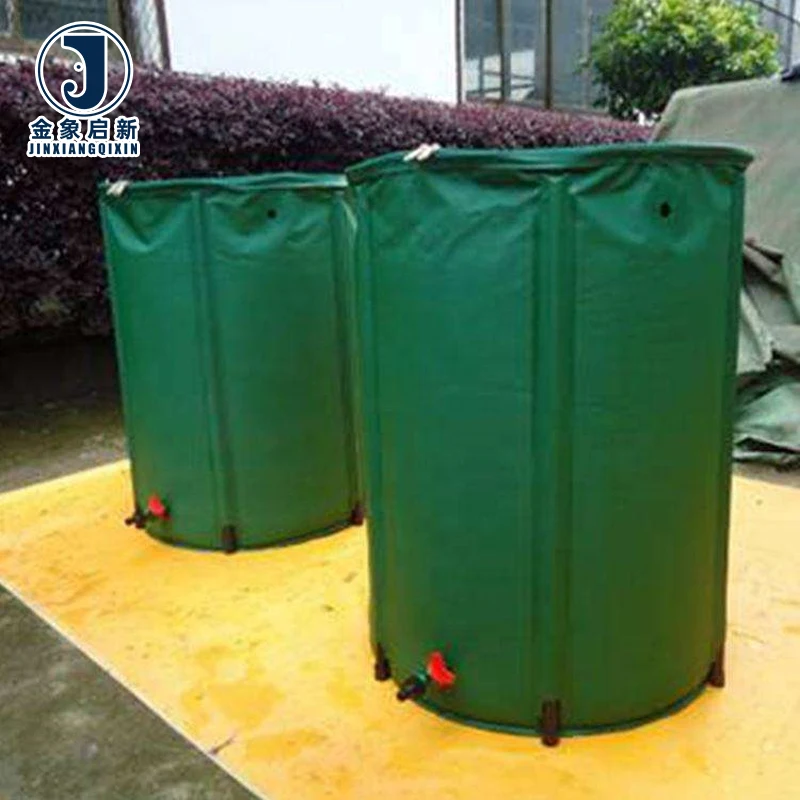
| Product Type | PVC Tarpaulin Water Tank |
| Material | PVC Coated Tarpaulin |
| Capacity | 750L (100L / 225L / 250L / 1000L also available) |
| Waterproof | Fully coated waterproof construction |
| UV Treatment | Available — confirm test basis required for your market |
| Anti-Mildew | Treated for mildew resistance (verify test report on request) |
| Collapsible | Yes — folds flat for transport and storage |
| Standards | ISO, CE certified production |
Application Suitability
| Application | Exposure & Requirement |
|---|---|
| Construction site water storage | Dust suppression demand, forklift and boot traffic, full sun exposure, weekly relocation |
| Agricultural rainwater harvesting | Continuous UV load, standing water contact, seasonal deployment and flat-fold storage |
| Transport fleet portable supply | Vibration during transit, remote site deployment, repeated fill-and-drain cycles |
| Hydroponic reservoir | Constant water immersion between growing cycles, algae and mildew pressure, collapsible storage off-season |
Why a Collapsible Tank Fails When the Weld Seam Is the Weak Link
A water bladder is only as reliable as the seam holding the load at its lowest flex point.
Generic PVC tarpaulin water tanks often split not in the fabric panel but at the weld line where the material folds under the weight of 750L of stored water. When a truck or trailer transports a filled bladder, road vibration concentrates stress at every welded joint. On a construction site, forklifts roll past and workers step on the base edge — exactly where the side panel meets the floor. The PVC tarpaulin water tank aftermarket supplier you choose must demonstrate weld integrity testing, not just fabric strength claims. A coated fabric can carry high tensile numbers yet still delaminate at the seam if the heat-weld temperature or dwell time was wrong for that specific GSM [NEED_CITE: tensile and tear test methods for coated fabrics per ISO 1421].
Covering a Moving Load — Why Tank Fabric Must Survive Transit
A PVC Tarpaulin Water Storage Bladder for transport and site use faces conditions that rigid tanks never encounter. The bladder flexes with every speed bump, shifts in the truck bed on cornering, and compresses against tie-down straps. Jinxiang produces the PVC coated tarpaulin fabric in-house, which means the coating weight and adhesion values are controlled from the dipping stage through to the finished tank weld. This matters because a tank travelling half-full creates a sloshing load that hammers the lower seams repeatedly. The fabric must maintain coating-to-base-fabric adhesion under that cyclic loading without micro-cracking along the weld bead.
Job-Site Deployment — Rapid Set-Up Without Rigid Infrastructure
On a remote construction site or agricultural holding, there is no concrete pad and no plumbing. The PVC tarpaulin water tank arrives folded flat in the back of a utility vehicle, is unfolded onto level ground, and filled from a hose or rainwater downpipe within minutes. Anti-mildew treatment on the fabric surface keeps the stored water from developing biological growth during weeks of standing use. When the project phase ends, the tank is drained, rinsed, and folded back into a compact bundle — something a rigid polyethylene tank cannot match. This collapsible cycle demands a PVC Tarpaulin Water Storage Bladder for transport and site use that resists crease-whitening and coating fracture at fold lines.
Reading the Specs That Actually Govern Tank Performance
Coating weight and base fabric denier work together to define how a PVC tarpaulin water tank behaves under load. A heavier base fabric with high warp and weft density resists puncture from ground debris and limits stretch when the tank is full. The coating method — whether knife-over-roll or dip coating — determines how deeply the PVC penetrates the yarn interstices, which directly affects peel strength at heat-welded seams. Surface finish also plays a role: a matte top coat tends to shed dust and resist algae attachment better than a high-gloss surface in standing-water applications [NEED_CITE: coating adhesion and peel strength testing for PVC tarpaulins]. Capacity options from 100L to 1000L allow buyers to match tank footprint to available site space without over-specifying fabric weight for smaller volumes.
The Hidden Cost of Ordering on Price Per Litre Alone
When a buyer selects a PVC tarpaulin water tank based only on quoted capacity and unit price, the first failure usually appears within the initial fill cycle. A lighter coating applied to cut cost will show pinhole leaks at the weld seams before the fabric panel itself shows any sign of wear. Mildew builds up inside a tank whose anti-mildew treatment was claimed on the invoice but never backed by a test report, forcing the site crew to drain, scrub, and re-fill — losing days of water supply. Batch-to-batch colour variation matters less for water tanks than for architectural fabric, but coating thickness variation across the same roll can create thin spots that split under hydrostatic pressure. These are failures traceable to process control, not to the concept of a collapsible tank itself [NEED_CITE: common causes of coated fabric weld seam failure].
Why Buyers Source This Tank From Jinxiang
Three full production lines and 36 sets of professional equipment give Jinxiang the capacity to run tank fabric and finished tanks concurrently without queue delays. The 10-person R&D team handles pattern development for port fitting placement and custom capacity sizing beyond the standard 100L–1000L range. Coating weight and adhesion are monitored at every stage, so the PVC tarpaulin entering the welding jig matches the specification sheet the buyer approved. A dedicated QA/QC team inspects every tank before dispatch, checking weld seam continuity and port fitting security. Sample development runs within days, letting buyers validate fitment and fabric hand before committing to a production batch.
Documentation & Verification
- Material specification sheet confirming PVC tarpaulin GSM, base fabric denier, and coating weight for the tank panels
- UV and anti-mildew test reports matched to the production batch supplied
- Pre-shipment inspection record covering weld seam continuity and port fitting pull strength
- Certificate of origin and customs documentation for international shipment
- ISO and CE certificates validating production system compliance
Fabrication, Handling & Storage
- Heat-weld seams using temperature and dwell settings matched to the tank fabric’s PVC coating weight to prevent delamination
- Reinforce port fitting openings with additional PVC patches to distribute hose-connection stress across the coated surface
- Store folded tanks flat and avoid stacking heavy items on top to prevent permanent crease damage to the coating
- Deploy on cleared ground free of sharp aggregate to protect the PVC tarpaulin floor panel from puncture
- Clean interior with mild detergent only — solvents can soften the PVC coating and compromise waterproof integrity
- Repair minor field punctures with compatible PVC adhesive patches carried in the site maintenance kit
What to Include in Your Enquiry
Provide the target capacity, site exposure conditions (full sun, chemical contact, temperature range), and whether the tank will be transported filled or empty. Specify any port fitting type and placement required for your hose or pump connection. Confirm the test standards your market requires for UV resistance and anti-mildew performance so the correct treatment grade is applied. If you need a sample to verify fold-flat behaviour and weld seam quality before full order, state this at enquiry stage.
Frequently Asked Questions
Q: How is waterproof integrity verified before each tank ships?
A: Every PVC tarpaulin water tank undergoes 100% pre-shipment inspection. Weld seams are visually checked and seam continuity is verified. Port fittings are inspected for secure attachment. The inspection record accompanies the shipment so the receiving site has documented proof of quality control.
Q: What UV-resistance test basis supports outdoor lifespan claims?
A: UV treatment is available and applied based on the grade required for your market. Jinxiang provides test reports matched to the batch supplied. Buyers should specify the UV test standard their end-use regulation or project specification demands so the correct treatment level is applied during coating.
Q: Can tank dimensions and capacity be customized beyond standard sizes?
A: Yes. The 10-person R&D team develops custom tank patterns for capacities outside the 100L–1000L standard range. Port fitting placement, overall footprint, and height can all be adjusted. Samples are produced within days so buyers can validate dimensions and fabric behaviour before confirming bulk production.
Q: How are seams reinforced to prevent leakage under full load?
A: Seams are heat-welded using temperature and dwell settings calibrated to the specific PVC coating weight of the tank fabric. High-stress areas such as base corners and port openings receive additional welded patches. This prevents the seam from failing before the fabric panel under hydrostatic and transit loads.
Q: What documentation accompanies each shipment for site compliance?
A: Each consignment includes a material specification sheet, applicable UV and anti-mildew test reports, a pre-shipment inspection record, certificate of origin, and ISO/CE certificates. This documentation package supports site safety audits, customs clearance, and project specification verification at the receiving end.