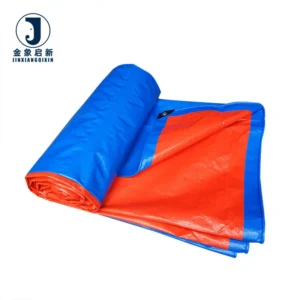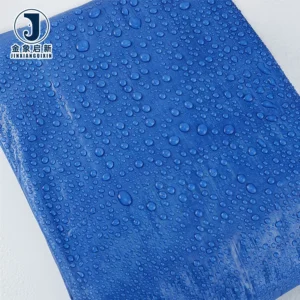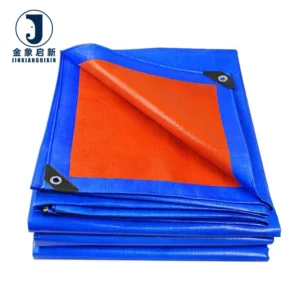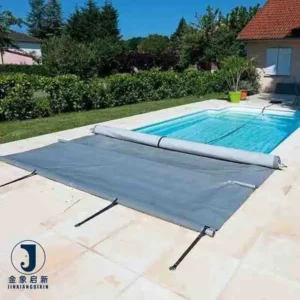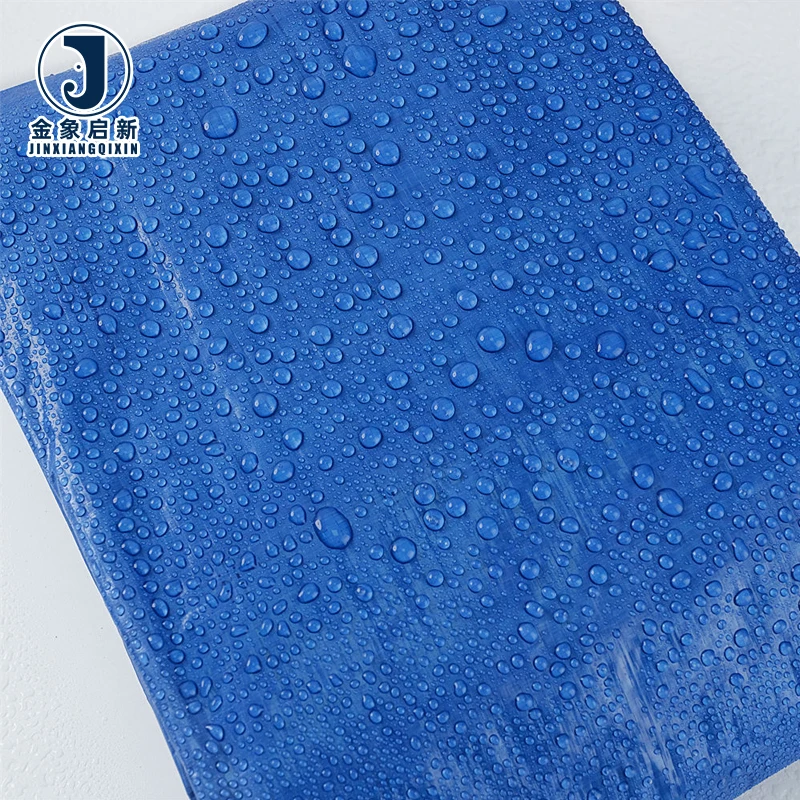
Model-Specific Fitment — PE tarpaulin cut and hemmed to match individual truck and trailer dimensions, backed by 100% pre-shipment inspection and dedicated QA at every production stage.
Technical Specifications
| Parameter | Value |
|---|---|
| Product Type | PE Tarpaulin |
| Material | Polyethylene (PE) |
| Weight (GSM) | 40g~500g/m² (range covers product family — confirm the grade for your application) |
| Mesh Count | 5×5 to 20×20 (lightweight 8×8, medium 10×10, heavy-duty 12×12) |
| Total Thickness | 0.18-0.22 mm (lightweight), 0.22-0.28 mm (medium), 0.30-0.35 mm (heavy-duty) |
| Tensile Strength (Warp/Weft) | Meridian 300-500 / Latitude 250-450 N/5cm (lightweight); Meridian 500-800 / Latitude 400-700 N/5cm (medium); Meridian 900-1200 / Latitude 700-1000 N/5cm (heavy-duty) (test standard not stated) |
| Water Resistance | Double waterproof surfaces, reinforced corners |
| UV Treatment | Anti-UV available (test basis not stated) |
| Center To Center Spacing | 39.4 Inches |
| Size | Custom size |
| Color | Custom color |
Application Suitability
| Application | Exposure & Requirement |
|---|---|
| Truck and trailer top covers | Constant road vibration, wind uplift, UV exposure, tie-down stress at corners |
| Flatbed load protection | Weather exposure during transit, abrasion from load shifting, flex-point fatigue |
| Side curtain fabric for trailers | Repeated rolling and folding, edge wear from track systems, road spray |
| Transport equipment OEM covers | Model-specific fitment, consistent batch colour for fleet branding, eyelet alignment |
Why a Generic-Size Cover Fails a Moving Load
A truck cover that does not match the trailer model leaves edges exposed and concentrates stress at the wrong points.
Fleet operators replacing worn covers often receive tarps cut to a nominal size that does not account for the specific trailer model’s radius, overhang or tie-down rail position. The result is a cover that pulls tight across one corner while sagging at another, creating water channels and accelerating wear at the flex points where the load moves most during braking and cornering [NEED_CITE: tarpaulin failure patterns at tie-down and flex points per ISO 1421 test methods]. When the PE tarpaulin for truck and trailer applications is specified by model rather than by generic dimension, the reinforced corners align with the actual hardware and the eyelet spacing matches the tie-down anchors on the deck.
Dimensional Accuracy Across Trailer Models
Each PE tarpaulin for truck and trailer use is cut to the specific vehicle model’s measured dimensions rather than a standard sheet size. This means the cover accounts for the trailer’s crown, side radius and rear door clearance, eliminating the gaps and over-tension that cause premature tearing at the hem. The R&D team develops a pattern for each model, and samples are produced for fitment verification before bulk cutting begins.
Edge Reinforcement at Tie-Down and Flex Zones
The reinforced corners and double waterproof surfaces are engineered for the specific stress points that occur when a load shifts during transit. Eyelets placed at 39.4 Inches center-to-center align with standard tie-down hardware, distributing the holding force across the hem rather than concentrating it at a single grommet. Where the cover flexes over an uneven load, the material’s tensile rating — meridian 500-800 / latitude 400-700 N/5cm for medium grades — provides the margin needed to resist tear propagation [NEED_CITE: tensile and tear test methods for coated fabrics per ISO 1421].
Mesh Count and GSM Selection for Transport Exposure
The mesh count and GSM grade together determine how the cover handles the combination of wind load, abrasion and UV exposure on the road. Lightweight 8×8 mesh at 80-110 GSM suits short-haul or seasonal use where weight savings matter, while heavy-duty 12×12 mesh at 160-240 GSM is specified for long-haul fleets operating under sustained highway speeds and weather exposure. The thickness range — 0.18-0.22 mm for lightweight through 0.30-0.35 mm for heavy-duty — correlates with the puncture resistance needed when covering loads with sharp edges or protruding hardware. A higher GSM alone does not guarantee better performance if the base fabric denier is insufficient to resist tear spread at the hem line [NEED_CITE: relationship between base fabric denier and tear propagation in PE woven fabrics].
The Hidden Cost of a Mis-Specified Cover
When a PE tarpaulin is ordered by generic dimensions rather than trailer model, the fleet absorbs costs beyond the replacement price. A cover that does not fit correctly requires additional straps or bungees to secure the loose edges, adding loading time at every stop. The misaligned eyelets place uneven load on the hem, causing the welded seams to fail before the fabric itself reaches its rated service life. Colour inconsistency between replacement covers on the same trailer is visible once installed side by side, affecting fleet presentation [NEED_CITE: colour consistency standards for batch-produced PE tarpaulin]. These operational costs accumulate across the fleet long before the material itself is worn out.
Why Transport Fleets Source PE Tarpaulin Here
The 10-person R&D team handles pattern development for specific truck and trailer models, producing fitment samples within days so the fleet can verify dimensions before committing to a production run. Three full production lines and 36 sets of professional equipment support the volume requirements of multi-trailer fleets without extending lead times. Dedicated QA/QC at every production stage ensures that the GSM stated on the quotation is verified on the finished roll before it is cut and hemmed. The 100% pre-shipment inspection catches colour variation between rolls in the same batch, so every cover on a fleet order matches. Custom eyelet spacing and reinforced hem configurations are handled in-house rather than outsourced to a third-party fabricator.
Documentation & Verification
- Material specification sheet stating confirmed GSM, mesh count and colour reference per roll
- Pre-shipment inspection record verifying dimensional accuracy against the trailer model pattern
- Anti-UV test report supplied where treatment is specified for outdoor transport exposure
- Roll packing list with individual cover dimensions and eyelet configuration per item
- Certificate of origin and customs documentation included with each dispatch
Fabrication, Handling & Storage
- Welded seams on PE tarpaulin require heat settings matched to the specific GSM and thickness grade
- Reinforced corners must align with trailer tie-down points; verify pattern before final welding
- Rolls should be stored flat or on cores to prevent crease marks that weaken the PE weave at fold lines
- Eyelet insertion at 39.4 Inches spacing requires consistent punch pressure to avoid rim distortion
- Cleaning with mild detergent preserves the double waterproof surface coating without degrading UV treatment
Specifying Your Cover for Quotation
Provide the exact truck or trailer model, including year and body configuration, so the pattern can be developed to match. Confirm the GSM grade and mesh count needed for your route exposure and load type, along with any colour or fleet branding requirements. Indicate whether you need finished cut-to-size covers with eyelets or roll stock for in-house fabrication.
Frequently Asked Questions
Q: How do you ensure the tarp fits my specific trailer model rather than a generic size?
A: We develop a cutting pattern from the measured dimensions of your trailer model, including crown radius, side profile and rear door clearance. A sample is produced for fitment verification before bulk production begins, ensuring the PE tarpaulin for truck and trailer use aligns with your actual tie-down hardware and load profile.
Q: How is GSM verified on arrival to match the weight stated on the quotation?
A: Every roll undergoes weight verification during the 100% pre-shipment inspection. The actual GSM is recorded on the inspection report and material specification sheet that ships with your order, so you can confirm the PE tarpaulin matches the agreed specification without needing to conduct your own incoming inspection.
Q: What eyelet and reinforced hem options are available for tie-down and flex-point stress?
A: Standard eyelet spacing is 39.4 Inches center-to-center, with reinforced corners at every tie-down point. Custom spacing and additional reinforcement at high-flex zones can be configured during pattern development. The hem construction is matched to the GSM grade to ensure the welded seam does not fail before the fabric itself.
Q: What UV treatment test basis supports the outdoor durability claim?
A: Anti-UV treatment is available for PE tarpaulin specified for extended outdoor transport exposure. The test basis and performance data are confirmed during the quotation stage — request the test report for your specific GSM grade and confirm the UV stability requirement for your operating region before placing the order.
Q: What documentation ships with the order for customs and fleet compliance?
A: Each dispatch includes a material specification sheet, pre-shipment inspection record, roll packing list, certificate of origin and customs support documentation. Where anti-UV or other treatments are specified, the corresponding test reports are included so your receiving team and compliance department have full traceability on the PE tarpaulin for truck and trailer covers.