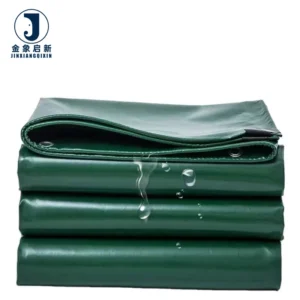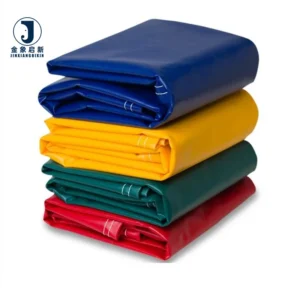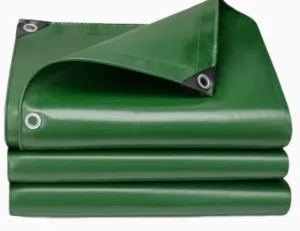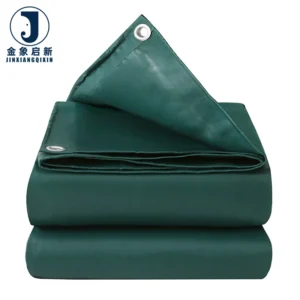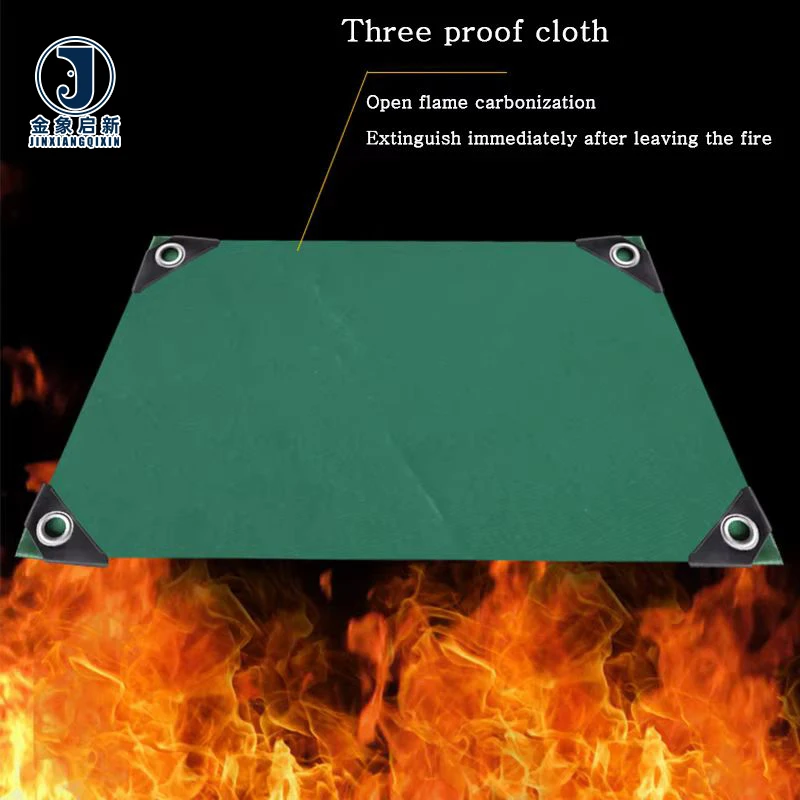
Custom Fit Over Generic Sizes — truck and trailer covers cut to exact vehicle dimensions with reinforced flex points, avoiding the material waste and cargo exposure of off-the-shelf tarps.
Technical Specifications
| Parameter | Value |
|---|---|
| Product Type | PVC Coated Tarpaulin |
| Coating Material | PVC |
| Weight Options | 700gsm / 850gsm / 900gsm |
| Waterproof | Yes, fully coated construction |
| Flame Retardant | Available in flame retardant grades — confirm the grade required for your market |
| Anti-Static | Available in anti-static grades — test basis to be confirmed at inquiry |
| Anti-Cold | Available for low-temperature flexibility |
| Anti-Mildew | Available for humid and marine environments |
| Weather Resistance | Suited to extended outdoor road exposure |
Application Suitability
| Application | Exposure & Requirement |
|---|---|
| Curtain-side truck and trailer loads | Constant flexing at load shift points, road abrasion, high-speed wind load, UV exposure |
| Flatbed cargo protection | Direct sun and rain, tie-down strap friction, wide temperature swings |
| Tipper and bulk haulage covers | Heavy particulate abrasion, repeated folding and unfolding cycles |
| Intermodal container top covers | Prolonged outdoor storage, moisture ingress prevention, stacking load |
Why Generic-Size Truck Covers Fail on Real Fleets
A PVC coated tarpaulin truck cover ordered in a standard size rarely matches the actual dimensions of a specific trailer model. The result is excess fabric that flaps in transit, creating drag, accelerating edge wear, and leaving gaps where water enters.
The cover must match the trailer, not the other way around.
Fleet operators regularly replace covers prematurely because the original was cut to a generic length. Excess material bunches at corners, rubs against itself under vibration, and fails at the folds within months. Meanwhile, short covers leave cargo exposed at the tail or sides, defeating the purpose entirely. Custom-fit cutting to the exact vehicle model eliminates both problems. [NEED_CITE: premature tarpaulin replacement causes in commercial transport fleets]
Covering a Moving Load on Public Roads
A truck cargo cover is not a static shelter. It flexes every time the suspension compresses, every time wind hits it at speed, and every time a strap is tensioned across it. The PVC coated tarpaulin truck cover must absorb these dynamic loads without seam separation or coating crack at the fold lines.
Tie-Down Points and Reinforcement at High-Stress Zones
Eyelet and hem areas concentrate force from straps and bungee cords. Without reinforcement at these points, the fabric tears outward from the hole under repeated road vibration. Reinforced hems and strategically placed tie-down points distribute that load across a wider fabric area, preventing the common failure pattern where the eyelet pulls through before the body of the cover shows any wear. [NEED_CITE: stress concentration at tarpaulin eyelets under dynamic transport loading]
Reading the Weight Grade Against Actual Load Conditions
The three available weight options — 700gsm, 850gsm, and 900gsm — serve different fleet profiles. Lower GSM suits light-duty urban delivery where covers are handled frequently and weight matters. Higher GSM serves long-haul and heavy equipment transport where abrasion resistance and tensile load are the priority. GSM alone does not define strength; the base fabric denier and weave density work together with coating weight to determine tear propagation resistance and tensile performance under strap tension. Selecting the right grade means matching all three variables to the actual transport cycle rather than defaulting to the heaviest option available.
The Hidden Cost of Underspecifying Seam and Weld Performance
A cover that passes visual inspection on arrival can still fail at the welded seams within weeks of road use. The seam is where flex stress concentrates most during transit — the load shifts, the fabric bends, and the weld line experiences repeated peel forces. If the welding temperature or dwell time is not matched to the specific GSM and coating formulation, the bond weakens and delaminates before the face fabric shows any degradation. This failure mode is particularly costly because it cannot be patched in the field; the entire panel must be replaced. Buyers who verify weld peel strength against the specified coating weight before dispatch avoid this outcome. [NEED_CITE: weld seam peel strength testing methods for PVC coated fabrics]
Procurement Backed by Process Control
Coating weight and adhesion are controlled at every stage across three full production lines, ensuring the GSM stated on the quotation is the GSM delivered on the roll.
Each cover is cut to the exact trailer model dimensions provided at inquiry, not from a generic size chart.
A dedicated QA/QC process inspects every unit before shipment, with a pre-shipment record confirming dimensions, weight, and treatment.
The R&D team develops samples within days for custom sizing, colour, and treatment combinations, allowing fleet operators to verify fit before committing to a full production run.
Documentation & Verification
- Material specification sheet stating base fabric, coating weight, and treatment details per item
- Weight verification per roll or cut piece against the stated GSM before dispatch
- Test reports for flame retardant and anti-static grades where specified at inquiry
- Pre-shipment inspection record confirming dimensions match the trailer model supplied
- Packing list with roll or piece count and certificate of origin for customs clearance
Fabrication, Handling & Storage
- Heat-weld seams using parameters matched to the selected 700gsm, 850gsm, or 900gsm coating weight
- Reinforce all eyelet positions with additional PVC patches to distribute strap load
- Store rolls upright on end cores to prevent flat-spot creasing of the coated surface
- Allow cold-stored covers to reach ambient temperature before unfolding to avoid coating crack
- Clean with mild detergent only; solvent-based cleaners degrade the PVC topcoat finish
- Repair minor field damage with compatible PVC adhesive patches matched to the coating grade
What We Need to Quote Accurately
Provide the exact trailer make, model, and year along with measured cover dimensions. Specify the operating environment — long-haul highway, urban multi-drop, or off-site construction access — and indicate whether flame retardant or anti-static certification is required for your market. Confirm whether you need finished covers with hems and eyelets, or roll stock for your own fabrication.
Frequently Asked Questions
Q: How do I measure my trailer for a custom-fit truck cover?
A: Measure the overall length along the roof line, the width at the widest point including any protrusions, and the drop from the roof edge to the bottom of the cargo area. Provide the trailer make and model as well — we cross-reference body dimensions to catch discrepancies between your measurements and the manufacturer’s specification before cutting.
Q: What test documentation comes with flame retardant or anti-static grades?
A: Test reports specific to the grade supplied are issued with the shipment. For flame retardant covers, the report references the standard tested against. Anti-static grades are supplied with surface resistivity measurements. Confirm the compliance standard required in your destination market at the inquiry stage so the correct grade is specified.
Q: How is GSM verified on arrival against the quoted specification?
A: Every roll and cut piece is weighed before dispatch and recorded on the pre-shipment inspection report. You can verify on arrival using a calibrated scale and a measured sample area. The material specification sheet included with the shipment states the target GSM, base fabric weight, and coating weight separately.
Q: What reinforcement is applied at eyelets and high-flex seam areas?
A: Eyelet positions receive additional PVC reinforcement patches bonded to both sides of the fabric before the metal ring is set. Welded seams at panel joins are overlapped and heat-fused at parameters matched to the coating weight, with extra reinforcement at corners where strap load concentrates during transit.
Q: How is colour consistency maintained across multiple covers in one order?
A: All covers in a single production run are coated from the same batch of compound, and colour is checked against the reference standard at the coating stage. Rolls and cut pieces from different production batches are not mixed within one order. If your fleet requires covers delivered across multiple orders over time, we retain the colour reference for exact matching on repeat runs.