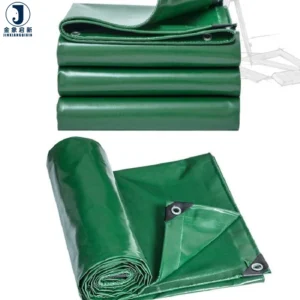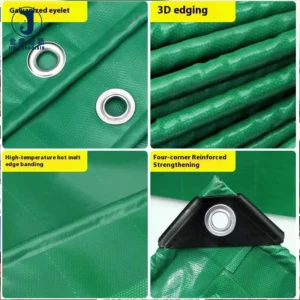
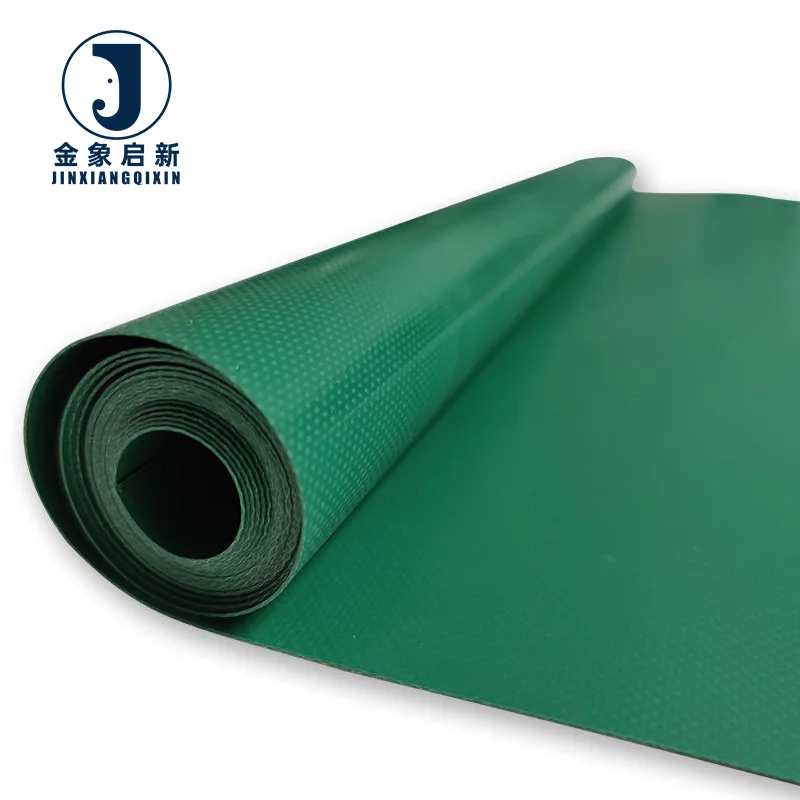
Fleet-Fitment Engineering — heat-sealed seamless edge wrapping and 3cm enlarged aluminum alloy eyelets resist pull-out under wind load and road vibration on moving transport covers.
Technical Specifications
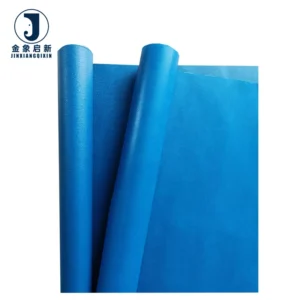
Product Type | PVC Coated Tarpaulin Roll
| Parameter | Value |
|---|---|
| Base Fabric | Polyester |
| Yarn Count Options | 500D×840D / 500D×1000D / 1000D×1000D / 1000D×1300D / 1300D×1300D / 1000D×2000D |
| Available GSM Grades | 350 / 400 / 420 / 500 / 600 / 650 / 750 / 900 |
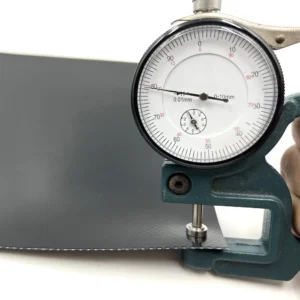
| Thickness Range | 0.29 mm – 0.65 mm |
| Mesh Count | 30×19 / 20×20 / 30×15 |
| Tensile Strength (Warp) | 1650 N – 3900 N |
| Tensile Strength (Weft) | 1600 N – 3500 N |
| Coating | Double-sided PVC |
| Surface Finish | Smooth, leather-like texture |
| Edge Treatment | High-temperature heat-sealed seamless edge wrapping |
| Reinforcement | All-sides reinforced corners |
| Eyelet | 3 cm enlarged aluminum alloy buttonhole |
| Rope | 5 mm thick, without splicing |
| Key Features | Waterproof, anti-UV (test basis not stated), flame retardant (grade not stated) |
| Packaging | Roll packing / Bale packing / Carton |
| Certification | ISO, CE |
Application Suitability
| Application | Exposure & Requirement |
|---|---|
| Truck side curtain | Constant flexing at fold lines, road debris abrasion, sustained UV and rain exposure |
| Full trailer cover | Tie-down tension at eyelets, wind flutter, thermal cycling on highway runs |
| Flatbed load cover | Point-load puncture risk from cargo edges, UV degradation, strap friction |
| Machine and equipment transport cover | Abrasion during loading and unloading, condensation buildup, multi-trip reuse |
| Transport equipment fabrication | Custom cutting to vehicle model dimensions, welding and seaming during assembly |
Why Generic-Size Truck Covers Fail at the Flex Point Within Months
A cover cut to a generic template does not match the specific trailer model — excess material flaps, stress concentrates at the wrong eyelet, and the weld line tears before the fabric does.
Fleet operators installing side-by-side rolls across a fleet often discover colour variation between batches only after the covers are fitted, making replacement rolls visually inconsistent and difficult to source from the same dye lot. When the GSM stated on the quotation does not match the material on arrival, the lighter fabric stretches further under load, accelerates fatigue at the tie-down points, and shortens service life across the entire fleet [NEED_CITE: fleet maintenance records on tarpaulin replacement frequency].
Heat-Sealed Seams Engineered for Load Flex Points
PVC coated tarpaulin for truck and transport applications must survive repeated bending where the cover meets the trailer frame. The high-temperature heat-sealed seamless edge wrapping used on these rolls prevents the glue-line cracking and loose-edge separation that stitched or cold-bonded seams develop under continuous flex. On a moving truck, the seam is the first component to fail — not the base fabric — and welded construction keeps the joint integrity aligned with the tensile capacity of the polyester scrim.
Tie-Down Reinforcement Matched to Road Vibration
The 3 cm enlarged aluminum alloy eyelets are set into all-sides reinforced corners, distributing pull-out force across a wider fabric area rather than concentrating it at a single puncture point. The 5 mm rope runs without splicing, ensuring tie-down tension transfers evenly along the hem rather than creating stress peaks at rope joints. For fleet operators specifying PVC coated tarpaulin rolls for side curtains and full covers, this reinforcement detail determines whether the eyelet survives a full service cycle or tears out during the first heavy-wind run [NEED_CITE: tie-down load distribution standards for transport covers].
Reading the Specification Beyond GSM
GSM alone does not predict how a transport cover will perform under load. Tensile strength is governed by the interaction between base fabric denier, weave density and coating adhesion — a 650 GSM roll built on 1000D×1300D yarn with a 20×20 mesh count carries substantially different structural capacity than a 650 GSM roll on a lighter scrim. The double-sided PVC coating must bond to the polyester base at a peel strength sufficient to resist delamination when the cover flexes repeatedly; coating method and weight directly control this bond. Surface finish — smooth and leather-like on these rolls — affects how dirt and road film accumulate, which in turn influences cleaning frequency and the long-term UV exposure of the coating surface.
The Hidden Cost of Selecting the Wrong Grade
When the quoted GSM does not match the delivered material, the lighter fabric deflects further under cargo weight, accelerates fatigue cracking at the weld line, and forces premature fleet-wide replacement. Flame retardant and anti-UV claims without a stated grade or test basis leave transport operators unable to demonstrate compliance at highway inspection points, risking load rejection or regulatory penalty [NEED_CITE: transport compliance documentation requirements for flame retardant covers]. Batch colour variation between rolls installed side by side signals inconsistent coating weight, which often correlates with uneven tensile performance across the fleet.
Procurement Backed by Process Control
Three full production lines and 36 sets of coating and finishing equipment support bulk roll output with consistent coating weight across the width and along the length of each roll. A dedicated 10-person R&D team develops custom width, colour and print samples within days, allowing fleet operators to confirm fitment and appearance before committing to production volumes. Dedicated QA/QC at every production stage with 100% pre-shipment inspection ensures that the GSM, colour reference and treatment claims on each roll match the material specification sheet supplied with the shipment. Roll packing lists with batch references enable full traceability from the production line to the fleet installation bay.
Documentation & Verification
- Material specification sheet stating GSM, base fabric denier, coating type and colour reference per roll
- Pre-shipment inspection record confirming weight and coating thickness against the quotation
- Roll packing list with batch reference for colour and weight traceability across the container
- UV and flame-retardant test reports matched to the specific grade quoted
- ISO and CE certificates covering the manufacturing facility and process
Fabrication, Handling & Storage
- Heat-seal welding parameters must be matched to the double-sided PVC coating thickness to avoid under-bond or scorch on the leather-like surface
- Store rolls upright on pallets in a shaded, ventilated area to prevent permanent creasing and surface blocking in the 0.29–0.65 mm thickness range
- Unroll at ambient temperature above 5 °C to avoid micro-cracking in the PVC coating during cold-weather fabrication
- Clean with mild detergent only — solvent-based cleaners degrade the smooth surface finish and reduce anti-UV treatment effectiveness
- Cut custom covers to vehicle model dimensions with a minimum 50 mm hem allowance for eyelet reinforcement placement
Specifying the Right Roll for Your Fleet
To receive an accurate quotation and sample, provide the truck or trailer model dimensions, the intended application (side curtain, full cover, flatbed tarp), the target GSM grade and any flame-retardant or anti-UV compliance requirement for your market. Indicate whether you need roll stock for in-house fabrication or finished covers with eyelet spacing matched to your tie-down system. Sample development and colour confirmation are completed before bulk production begins.
Frequently Asked Questions
Q: How do I verify the GSM on arrival matches the quotation for transport-grade tarpaulin?
A: Request the pre-shipment inspection record and material specification sheet with each roll. Weigh a known area of the sample — typically 100 mm × 100 mm — and compare against the stated GSM. The roll packing list includes batch reference numbers that allow you to trace each roll back to the production and inspection records.
Q: Can roll width and colour be matched consistently across a full container load?
A: Yes. Production is planned so that all rolls in a single shipment come from the same coating batch, ensuring colour and weight consistency. The roll packing list documents batch references, and 100% pre-shipment inspection verifies each roll against the specification before dispatch.
Q: What flame-retardant or anti-UV documentation is needed for highway transport compliance?
A: Confirm the specific grade required by your market or fleet operator — for example, B1 per DIN 4102 or M2 per NFPA 701 — and request the matching test report with the quotation. Claims without a stated grade or test basis cannot be verified at inspection.
Q: How are welded seams specified for high-flex truck cover applications?
A: Heat-sealed seamless edge wrapping is standard on these rolls, designed to prevent glue-line cracking at fold points. For side curtains and covers with frequent flex cycles, specify reinforced hem width and eyelet spacing to distribute load away from the weld line.
Q: What is the lead time and minimum order for custom width or printed rolls?
A: Custom width, colour and print are developed through the R&D team with samples completed before bulk production. Typical lead times run multiple weeks depending on width, colour and volume — confirm specifics at inquiry stage.