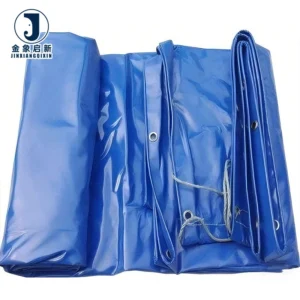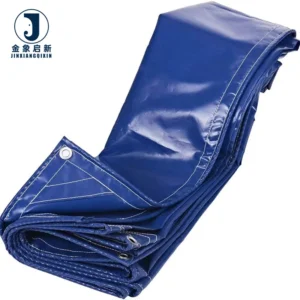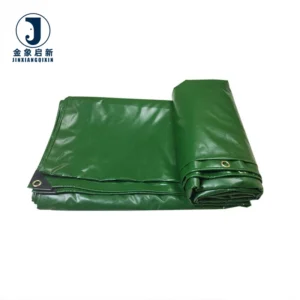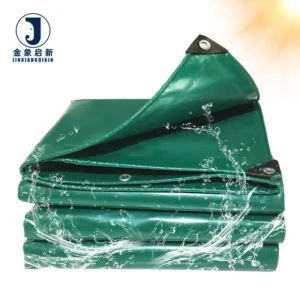
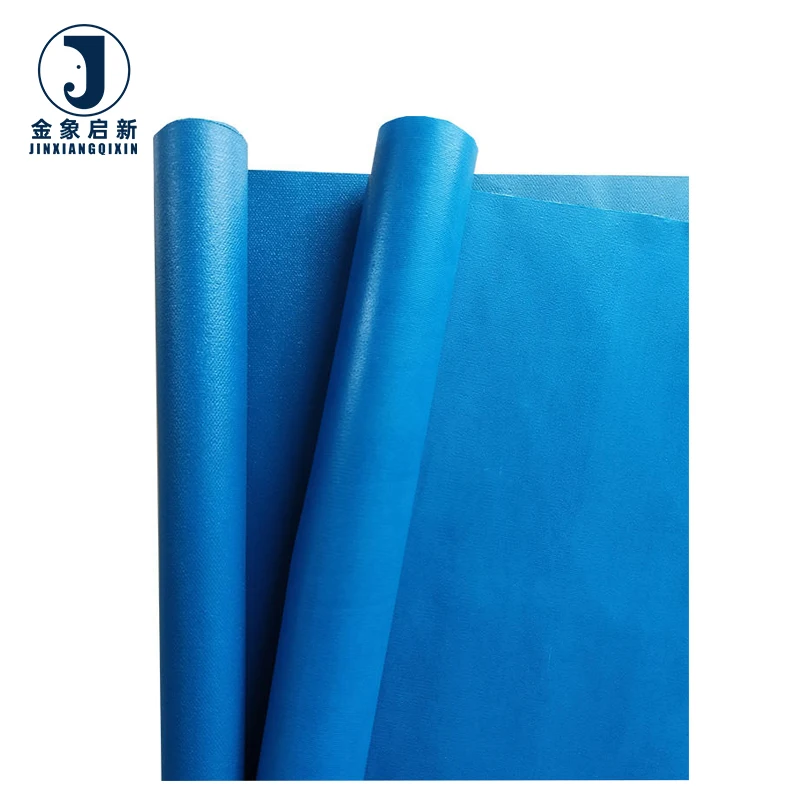
Production Precision — Three full production lines with 36 sets of equipment ensure this PVC coated tarpaulin meets exact custom sizing for truck and trailer models, eliminating generic-fit waste.
Technical Specifications
| Parameter | Value |
|---|---|
| Product Type | PVC Coated Tarpaulin |
| Weight (GSM) | 500gsm / 600gsm |
| Coating Material | PVC |
| Waterproof | Yes |
| High Strength | Yes |
| Flame Retardant | Available (grade not stated in source) |
| Anti-Static | Available (standard not stated in source) |
| Anti-Cold | Available |
| Anti-Mildew | Available |
| Outdoor Life Assurance | 1-3 years (test basis not stated in source) |
| Standards | ISO, CE (referenced in company profile) |
Application Suitability
| Application | Exposure & Requirement |
|---|---|
| Truck side curtains | Constant flexing at load points, road abrasion, wind flutter, weather exposure |
| Flatbed cargo covers | Direct UV exposure, tie-down tension at eyelets, rain and road spray |
| Trailer roof sheets | Pooling water, thermal expansion, installation tension across wide spans |
| Fleet vehicle wraps | Abrasion from loading docks, repeated folding and unfolding, colour consistency |
Why Generic Sizing Fails Fleet Operators Covering Moving Loads
A PVC coated tarpaulin for truck and transport that does not match the specific trailer model wastes material and leaves cargo exposed at the edges.
Fleet operators who order generic-sized covers often find excess fabric that flaps in transit, creating aerodynamic drag and premature wear at the tie-down points. Covers cut too small leave the load vulnerable to weather and road spray. [NEED_CITE: aerodynamic drag and fuel consumption from poorly fitted truck tarps]. When the cover does not align with the trailer’s structural rails, the grommets miss the anchor points, forcing drivers to improvise with ratchet straps that cut into the fabric edge. This mismatch generates early returns and warranty claims that erode margin for transport equipment builders.
Exact Model Fitment Over Generic Dimensions
PVC coated tarpaulin for truck and transport applications demands dimensional accuracy tied to specific vehicle chassis codes. A side curtain that is even slightly oversized will bunch at the buckles, while an undersized panel stresses the welded seams during closure. Our R&D team works from trailer model drawings or physical measurements to develop a pattern that accounts for the fabric’s behaviour under tension.
Reinforcement at the Flex and Tie-Down Zones
The points where a truck cover flexes most — typically at the rear door hinges and along the roof bow — are where generic covers fail first. We position reinforced hems and additional welding at these high-stress zones based on the fleet operator’s route profile. [NEED_CITE: weld seam failure analysis on coated fabric truck curtains]. This targeted reinforcement extends service intervals without adding unnecessary weight to the entire cover.
Reading GSM Beyond the Quotation Sheet
The stated weight of 500gsm or 600gsm reflects the combined mass of the base polyester fabric and the PVC coating layers. However, two fabrics at the same GSM can perform very differently depending on the yarn denier and weave density of the base cloth. A 600gsm fabric built on a coarse, low-density weave will tear more easily than one on a tighter weave with slightly less coating mass. The coating method — whether knife-over-roll, dip, or calender — also determines how deeply the PVC penetrates the base fabric, which directly affects peel strength and the durability of heat-welded seams. Fleet buyers should request the base fabric specification alongside the GSM to understand what they are actually receiving.
The Hidden Cost of Colour Drift Across Rolls
When a fleet operator orders multiple rolls of PVC coated tarpaulin for truck and transport use to cover a mixed vehicle fleet, colour variation between rolls becomes immediately visible once the covers are installed side by side on adjacent trailers. This inconsistency forces the buyer to either accept a patchwork appearance or reject the entire batch. Batch colour consistency requires controlled pigment dosing and coating temperature across the production run. [NEED_CITE: colour measurement standards for coated textiles]. Without documented colour references and in-line checks, a second-order placed months later may not match the first.
Why Source Truck Covers Through This Production Setup
Deep process control over coating weight means the 500gsm or 600gsm stated on your quotation is verified against the roll you receive, not a production average. Three full production lines running 36 sets of professional equipment support custom widths and lengths for specific trailer models without the extended lead times typical of made-to-order coated fabric. A 10-person R&D team handles pattern development and material selection, delivering samples within days so you can confirm fitment before committing to a production run. Dedicated QA/QC inspection at every stage, with 100% pre-shipment checks, catches seam defects and coating inconsistencies before the rolls leave the facility.
Documentation & Verification
- Material specification sheet stating GSM, base fabric denier, and coating weight per roll
- Test reports for flame retardant and anti-static grades where specified in the order
- Pre-shipment inspection record confirming custom dimensions and reinforcement placement
- Roll packing list with individual roll weights and batch numbers for traceability
- Certificate of origin and customs documentation for international fleet procurement
Fabrication, Handling & Storage
- Heat-weld seams at temperatures matched to the 500gsm or 600gsm coating thickness to prevent delamination
- Store rolls horizontally on padded racks to avoid permanent creasing in the PVC coating
- Allow cold-stored rolls to reach ambient temperature before unrolling to prevent coating micro-cracking
- Use compatible PVC adhesive for field repairs on the coated surface rather than solvent-based cements
- Plan cutting layouts to minimise off-cuts when working with custom-width rolls for trailer panels
What to Include in Your Enquiry
Provide the specific truck and trailer model codes or dimensional drawings so we can develop a cover pattern that matches your fleet. Specify which flame retardant or anti-static grades your target market requires, along with the annual volume and colour references if brand consistency matters across your vehicles. Indicate whether you need finished covers with eyelets and hems, or roll stock for your own fabrication facility.
Frequently Asked Questions
Q: How do I specify exact truck and trailer model dimensions for custom covers?
A: Send the trailer manufacturer’s chassis code or a dimensioned drawing showing the overall length, width, and height of the cargo area, plus the positions of existing tie-down rails and buckle straps. Our R&D team uses this to develop a pattern and produces a sample for your fitment check before production begins.
Q: What flame retardant grades are available and which markets do they comply with?
A: Flame retardant treatment is available, but the specific grade must be confirmed against your market’s requirements. Provide the standard your end-user or local regulation demands — such as a national fire code or transport safety regulation — and we will match the treatment and supply the corresponding test report with your shipment.
Q: How is anti-static performance measured and certified for hazardous cargo?
A: Anti-static treatment is available for sensitive cargo transport. The relevant test standard depends on the classification of the hazardous materials being carried. Specify the standard or certification body your operation requires, and we will confirm the treatment level and documentation before production.
Q: What eyelet spacing and hem reinforcement options work best for tie-down systems?
A: Eyelet spacing and hem reinforcement depend on the tie-down hardware your fleet uses and the tension applied during securing. Provide details of your strap or rope system and the load profile, and we will recommend spacing and reinforcement that distributes stress across the PVC coated tarpaulin without pulling through the fabric edge.
Q: How do you control colour consistency across multiple rolls in the same order?
A: We establish a colour reference at the sample approval stage and monitor pigment dosing and coating temperature throughout the production run. Each roll is checked against the reference before packing. For orders placed months apart, we retain the batch formula to match subsequent runs to your original specification.