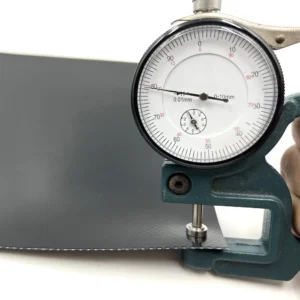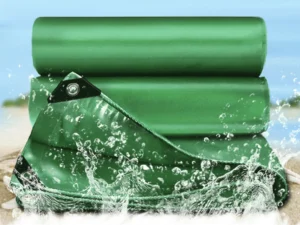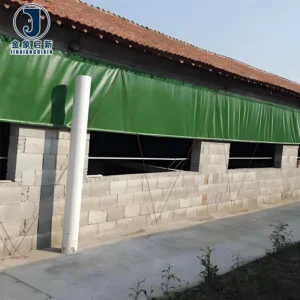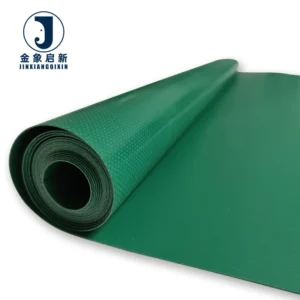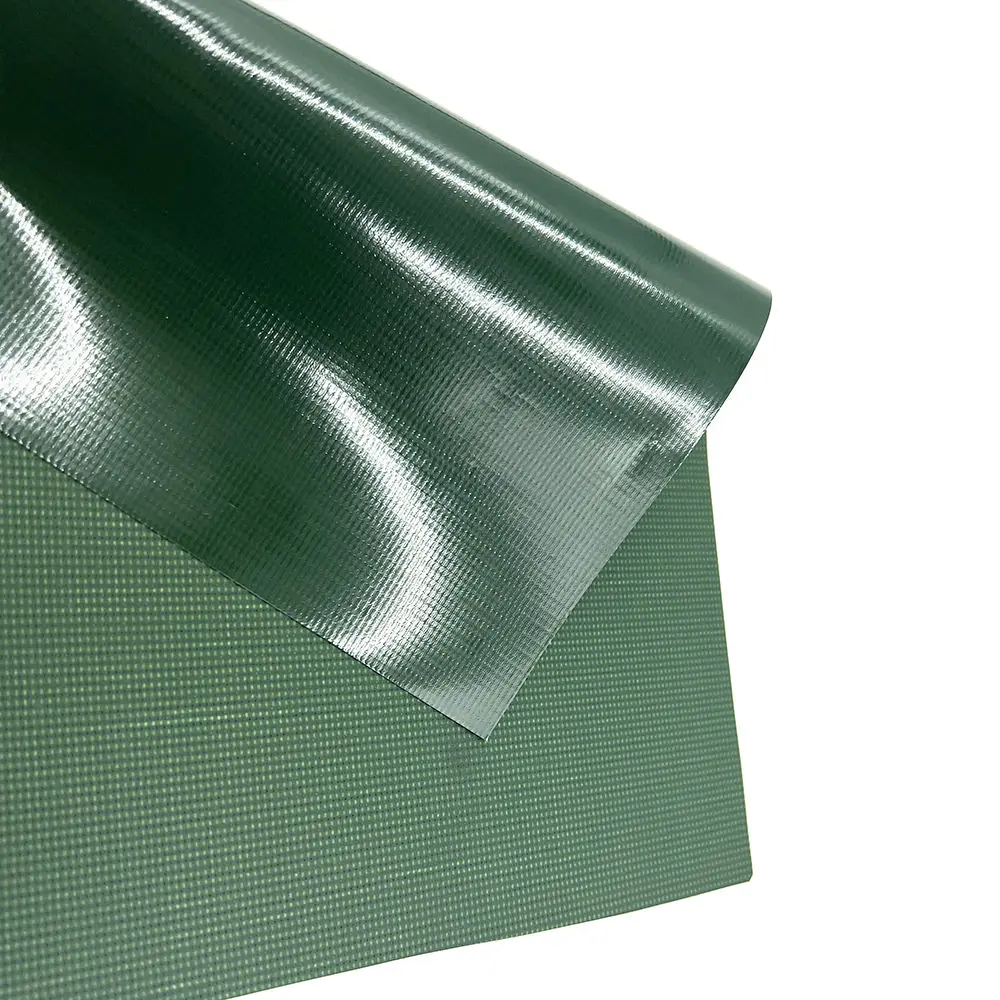
Proven Coating Control — Three full production lines maintain consistent PVC adhesion across every roll of green knife coated tarpaulin destined for truck and trailer covers, with 100% pre-shipment inspection verifying weight and coating integrity before dispatch.
Technical Specifications
| Parameter | Value |
|---|---|
| Product Type | PVC Tarpaulin Roll |
| Coating Method | Knife Coated |
| Coating Material | PVC |
| Color | Green |
| Waterproof Rating | Waterproof (grade not stated in source) |
| UV Treatment | UV resistant (test basis not stated in source) |
| Flame Retardant Grade | Fire retardant (grade not stated in source) |
| Anti-Mildew | Mildew proof (grade not stated in source) |
| Oil & Stain Resistance | Stated |
| Acid & Alkali Resistance | Stated |
| Welding Options | HF, Hot Air, Sewing |
| Tensile Strength | Excellent (standard not stated in source) |
| Tear Strength | Excellent (standard not stated in source) |
| Peeling Strength | Excellent (standard not stated in source) |
| Temperature Range | High temperature and cold resistant (values not stated in source) |
| Surface Finish | Self-cleaning, highly flexible, resistant to cracking |
| Key Features | Anti-oxidation, antibacterial treatment |
Application Suitability
| Application | Exposure & Requirement |
|---|---|
| Truck side curtain fabric | Constant flexing at load points, road abrasion, UV and weather exposure, tie-down tension at eyelets |
| Flatbed trailer covers | Direct sunlight, rain ingress prevention, load securing with straps, repeated folding and unfolding |
| Curtain-side trailer fabrication | Precise panel sizing to trailer model, welded seam integrity at hinge and track zones, fleet colour matching |
| Transport equipment replacement covers | Fitment to specific vehicle dimensions, resistance to diesel and oil splash, cold-weather flexibility |
Why Generic Sizing Fails on Moving Loads
Trailer covers must match exact vehicle dimensions or the fabric fails at stress points long before the coating reaches end of life.
When a PVC knife coated tarpaulin for truck and transport cover is cut to a generic template rather than a specific trailer model, the excess material flaps under highway speeds while tight zones concentrate stress at eyelets and welded hems. Fleet operators replacing worn covers often discover that the previous supplier used a one-size template, resulting in seam separation within months. The correct approach begins with a sample developed against the actual trailer drawing, confirming fit before any roll stock is cut [NEED_CITE: tensile and tear test methods for coated fabrics per ISO 1421].
Seam Engineering at Flex Points
The points where a truck cover flexes most — around load tie-downs, curtain track edges, and corner radii — demand welding methods matched to the stress profile. This green PVC knife coated tarpaulin supports high-frequency welding, hot air welding, and conventional sewing, giving fabricators the latitude to specify seam construction by zone. High-frequency welding produces a homogeneous bond that distributes load across the full seam width, critical for side curtain panels that open and close daily. Hot air welding suits field repairs and on-site panel modifications where HF equipment is unavailable.
Weather Exposure on Long-Haul Routes
Fleet vehicles crossing climate zones subject their covers to cycles of UV exposure, rain, road salt, and temperature fluctuation within a single journey. The UV resistant and anti-oxidation treatment on this PVC knife coated tarpaulin for truck and transport cover is formulated to sustain performance under continuous road and weather exposure. Confirm the specific UV test standard required by your target market, as regional regulations vary. The self-cleaning surface reduces dirt accumulation on fleet covers, cutting the maintenance interval between wash-downs [NEED_CITE: UV degradation test standards for PVC coated polyester fabrics].
How Coating Method and Base Fabric Interact
Knife coating deposits PVC directly onto the base fabric under controlled blade pressure, producing a uniform coating weight that penetrates the weave for strong mechanical adhesion. This method yields higher peel strength than lamination, which is why knife coated construction is preferred where welded seams must match the fabric’s own tensile capacity. The self-cleaning finish and crack-resistant formulation ensure the coating remains intact when the cover is folded in cold conditions or stretched across irregular loads. Oil, stain, acid, and alkali resistance further protect the surface in industrial transport environments where diesel splash and chemical residues are routine. Available in fire retardant grades — confirm the grade required for your market before specifying, as compliance frameworks differ across transport jurisdictions.
The Cost of Overlooking Weld Compatibility
A common failure on truck covers is seam separation occurring before the fabric itself shows wear. This happens when the welding method does not suit the coating formulation or when heat settings are calibrated for a different PVC grade. Hot air welds that run too cool leave a partial bond that peels under flexing, while excessive heat scorches the coating and weakens the base fabric. Specify the welding parameters early and request sample welds tested for peel strength before committing to a full production run. Batch-to-batch colour variation between rolls can also force rework if panels from different rolls end up on the same trailer [NEED_CITE: peel strength testing methods for heat-welded PVC seams].
Why Fabricators Source This Material Here
The 10-person R&D team develops samples matched to specific trailer model dimensions within days, allowing transport equipment builders to confirm fit before bulk ordering. Three full production lines and 36 sets of professional equipment support roll stock availability with consistent coating weight across the order batch. Every roll undergoes dedicated QA/QC at each production stage, with 100% pre-shipment inspection verifying that the GSM on the roll matches the quotation. ISO and CE certified processes govern coating application, and the near-30-year focus on coated fabrics ensures process parameters are tuned for transport-grade durability rather than general-purpose tarpaulin.
Documentation & Verification
- Material specification sheet stating coating method, colour reference, and treatment options per roll
- Pre-shipment inspection record confirming coating weight matches quoted GSM before dispatch
- UV and fire retardant test reports available where applicable — request for your market’s standard
- Certificate of origin and customs documentation supporting international transport shipments
- Roll packing list detailing roll count, dimensions, and net weight per consignment
Fabrication, Handling & Storage
- Set HF welding power and dwell time to match the knife coated PVC formulation; verify with sample peel tests
- Reinforce eyelet zones with additional PVC patches before punching to distribute tie-down strap loads
- Store rolls upright on pallets in shaded, ventilated areas to prevent flat-spot deformation of the coating
- Allow cold-stored rolls to reach ambient temperature before unrolling to avoid surface cracking
- Use mild detergent for cleaning; avoid solvent-based products that may attack the self-cleaning surface
- Plan panel cutting layout to minimise off-cuts and keep welded seams away from maximum flex zones
What to Include in Your Inquiry
Provide the specific trailer model or vehicle dimensions so the sample can be developed to your exact fitment requirements. State the welding method you intend to use in production, along with any fire retardant or UV compliance standards your destination market requires. Confirm whether you need roll stock for your own fabrication line or finished covers with eyelets and reinforced hems already installed.
Frequently Asked Questions
Q: How do I specify a truck cover that fits my exact trailer model?
A: Submit the trailer drawing or dimensional template with your inquiry. The R&D team develops a physical sample from the green PVC knife coated tarpaulin matched to those dimensions, typically within days. Approve the sample fit before bulk production begins, ensuring panel sizes, eyelet positions, and hem reinforcements align with your trailer hardware.
Q: Which welding method is best for high-stress seam areas on truck covers?
A: High-frequency welding produces the strongest bond for side curtain panels subject to daily flexing, creating a homogeneous seam that distributes load evenly. Hot air welding works well for field repairs and modifications. Request sample welds from this PVC tarpaulin roll tested for peel strength to confirm the method suits your production equipment.
Q: Can I get consistent colour across multiple rolls in one shipment?
A: Yes. Production runs for a single order are scheduled to maintain batch consistency across all rolls. The pre-shipment inspection verifies colour alignment against the approved reference. Specify your Pantone or RAL reference at inquiry stage and request a roll colour check before dispatch to eliminate panel mismatch on assembled trailers.
Q: Do you supply test reports for UV and flame-retardant claims?
A: UV and fire retardant test reports are available where applicable to the grade ordered. Confirm the specific standard your market requires — such as regional transport fire codes — when placing the inquiry. Reports are issued against the production batch, not generic product data, giving your compliance team traceable documentation.