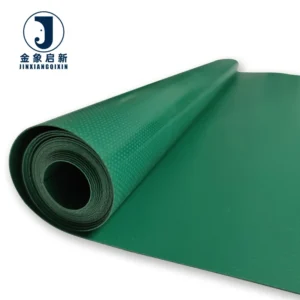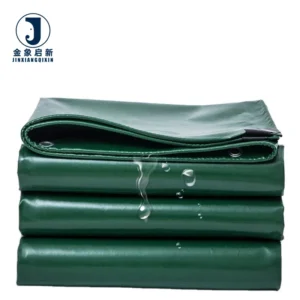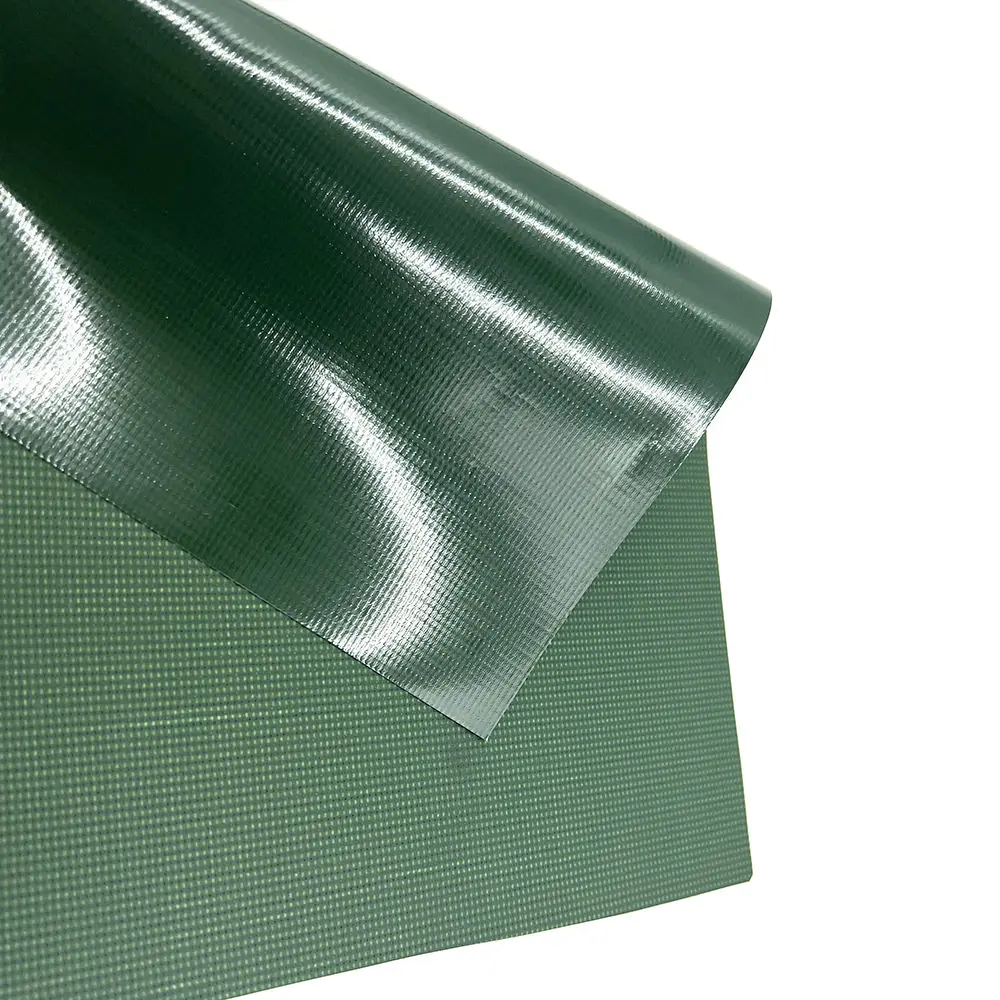
Process-Controlled Coating — Every roll of green PVC knife coated tarpaulin for truck cover and transport applications undergoes in-process QA at each coating stage to maintain weight and adhesion consistency before dispatch.
Technical Specifications
| Parameter | Value |
|---|---|
| Product Type | PVC Coated Tarpaulin Roll |
| Coating Method | Knife coated |
| Coating Material | PVC |
| Color | Green |
| Fire Retardant | Available in flame retardant grades — confirm the grade required for your market |
| UV Resistance | Available with anti-UV treatment — request test basis for your climate zone |
| Anti-Mildew | Antibacterial and mildew proof |
| Oil and Stain Resistance | Yes |
| Acid and Alkali Resistance | Yes |
| Temperature Resistance | High temperature and cold resistant |
| Welding Options | HF, Hot Air, Sewing |
| Finish | Self-cleaning surface |
Application Suitability
| Application | Exposure & Requirement |
|---|---|
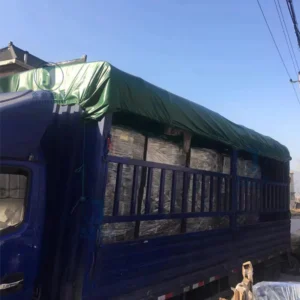
| Curtain-side trailer covers | Constant flexing at load points, road debris abrasion, sustained UV and rain exposure |
| Flatbed truck top covers | Direct weather contact, tie-down strap pressure, wind-driven flapping fatigue |
| Transport equipment wraps | Yard storage exposure, chemical splash from cargo, repeated handling and folding |
| Airport hangar tensile structures | Large-span wind load, UV degradation at altitude, fire compliance for aviation zones |
| Stadium architectural membranes | Permanent outdoor tension, public fire safety codes, colour visibility at scale |
Why Welded Seam Failure Outpaces Fabric Failure on Truck Covers
A truck cover rarely fails in the field of the fabric — it fails where two panels meet and the load flexes hardest.
When a curtain-side trailer navigates a roundabout or hits a braking zone, the side panels experience cyclic tension that concentrates at every welded or sewn joint. If the PVC knife coated tarpaulin for truck cover and transport use does not bond fully through the coating layer during HF or hot-air welding, the seam peels before the base fabric reaches its tear limit [NEED_CITE: tensile and tear test methods for coated fabrics per ISO 1421]. Fleet operators then face roadside repairs, cargo exposure, and trailer downtime that costs more per incident than the fabric itself.
Coating Adhesion as the Foundation for Durable Seams
Knife coating forces PVC paste into the interstices of the base fabric under controlled blade pressure, producing a mechanical lock between coating and yarn that directly supports weld integrity. When HF or hot-air energy is applied at the seam, the PVC layers from both panels melt and fuse into a continuous bond rather than sitting on top of the weave. This PVC knife coated tarpaulin for truck cover and transport applications relies on that through-thickness adhesion to keep seams flexible in cold weather and stable under summer heat, preventing the brittle cracking that laminated fabrics can show after repeated thermal cycles.
Flex Fatigue Across Curtain-Side and Flatbed Panels
A curtain-side trailer panel may flex thousands of times per journey as the load shifts and the suspension articulates. The self-cleaning surface of this fabric reduces dirt accumulation that can act as an abrasive paste at fold lines, while the antibacterial and mildew-proof treatment prevents biological attack in humid operating climates [NEED_CITE: DIN EN ISO 846 test methods for plastics against fungi and bacteria]. For flatbed top covers, the acid and alkali resistance guards against chemical residues from industrial cargo that might otherwise degrade the PVC coating at contact points over time.
Reading GSM in Context — What the Number Actually Tells You
Grams per square metre captures the combined weight of base fabric and coating, but it does not by itself predict how the material will behave under the cyclic load of a moving truck. Base fabric denier and weave density determine how a tear propagates once the surface is punctured by road debris or a mishandled tie-down hook. Knife coating adds adhesion strength that supports welding performance, yet a high GSM achieved mostly through thick coating with a light base fabric can still tear easily at stress points. The balance between yarn count, weave tightness, and coating weight is what makes a PVC knife coated tarpaulin for truck cover and transport loads genuinely durable across long-haul routes, and that balance is documented in the material specification sheet provided before production begins.
The Cost of Overlooking Specification Alignment Before Dispatch
When a logistics fleet receives rolls where GSM has not been independently verified against the quotation, covers may be fabricated from lighter material than designed, showing premature wear at high-abrasion zones within the first season of service. Missing fire-retardant certificates can halt a trailer at a compliance checkpoint, forcing a full cover replacement while cargo sits idle [NEED_CITE: regional fire classification requirements for transport textiles]. Colour variation between rolls in the same order becomes visible once panels are installed side by side on a multi-trailer fleet, triggering rework that delays vehicle release.
Why Sourcing This Fabric Through Jinxiang Supports Your Fleet Requirements
Nearly 30 years of focused coated fabric production gives the process team deep control over coating weight and adhesion parameters on every run. Three full production lines with 36 sets of professional equipment allow bulk roll orders to ship on schedule without compromising in-process quality checks. A 10-person R&D team handles material selection, custom width and length, and sample development so that a trial panel can confirm fit on your specific trailer model before full production begins. Dedicated QA and QC at every coating stage, with full inspection before shipment, catches weight drift and colour shift before rolls leave the facility. Sample turnaround within days supports urgent fleet replacements or new vehicle model launches.
Documentation & Verification
- Material specification sheet confirming coating method, base fabric denier, and colour reference for every roll
- Pre-shipment inspection record verifying GSM and coating weight against your purchase order
- Fire retardant and UV test reports matched to the batch being shipped, available on request
- Roll packing list detailing individual roll dimensions and net weight for container loading planning
- ISO and CE certificates plus certificate of origin for customs clearance in your destination market
Fabrication, Handling & Storage
- HF and hot-air welding both supported — calibrate dwell time to the knife coated PVC thickness for full-thickness fusion
- Reinforce eyelet zones with additional fabric patches where tie-down straps concentrate load on the green PVC surface
- Store rolls upright on end-caps in a dry, shaded area to prevent flat-spot creasing on the self-cleaning finish
- Unfold cold-weather rolls gradually to avoid cracking; the cold-resistant formulation needs time to reach flexibility
- Use mild detergent without solvents to maintain the self-cleaning surface and preserve acid and alkali resistance
What We Need to Quote Accurately
Provide the specific truck or trailer models the covers must fit, along with the operating climate range and any fire compliance codes that apply at your destination. Confirm whether you require rolls in stock width or custom-cut panels with finished edges and eyelets. If colour matching across a multi-vehicle fleet is critical, share your RAL or Pantone reference so we can prepare a sample roll for approval before production.
Frequently Asked Questions
Q: How is GSM verified on arrival and what does your pre-shipment inspection cover?
A: Each roll is weighed and measured during our pre-shipment inspection, with results recorded against your purchase order specification. The inspection report accompanies the shipment so you can cross-check on receipt. If any roll falls outside the agreed tolerance, we flag it before dispatch rather than letting it reach your warehouse.
Q: Which welding method is best for truck cover seams at flex points?
A: HF welding produces the strongest continuous bond for curtain-side panels that flex repeatedly under load. Hot-air welding suits field repairs and smaller fabricators without HF equipment. Sewing with sealed thread is used for non-structural hems and edge reinforcements. We recommend testing your preferred method on a sample panel before full fabrication.
Q: Can the cover be cut and finished to fit my specific trailer model?
A: Yes. Our R&D team works from your vehicle dimensions or CAD drawings to produce custom-cut panels with hemmed edges, eyelet placement, and reinforcement patches at known stress points. A sample panel is developed within days so you can verify fit on the actual trailer before we release the full order to production.
Q: What UV resistance test basis applies to this fabric for long-term road exposure?
A: UV treatment grades are available and confirmed by test report on request. The applicable test standard depends on your regional climate classification and expected service exposure. Specify your destination market and expected outdoor duration so we can match the correct treatment level and supply the supporting documentation.
Q: How do you control colour consistency across rolls in the same truck cover order?
A: Every production run uses a single prepared batch of PVC paste, and in-process QA checks colour at each coating stage against the confirmed reference. The pre-shipment inspection includes a visual comparison of all rolls in the order before packing, and the inspection record documents this check so you have traceability when panels are installed side by side.