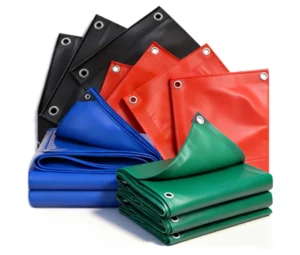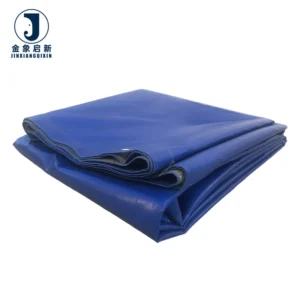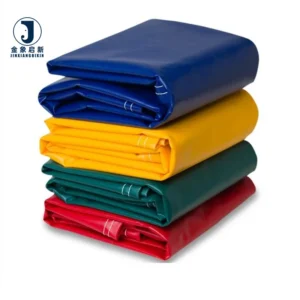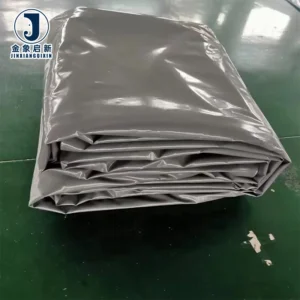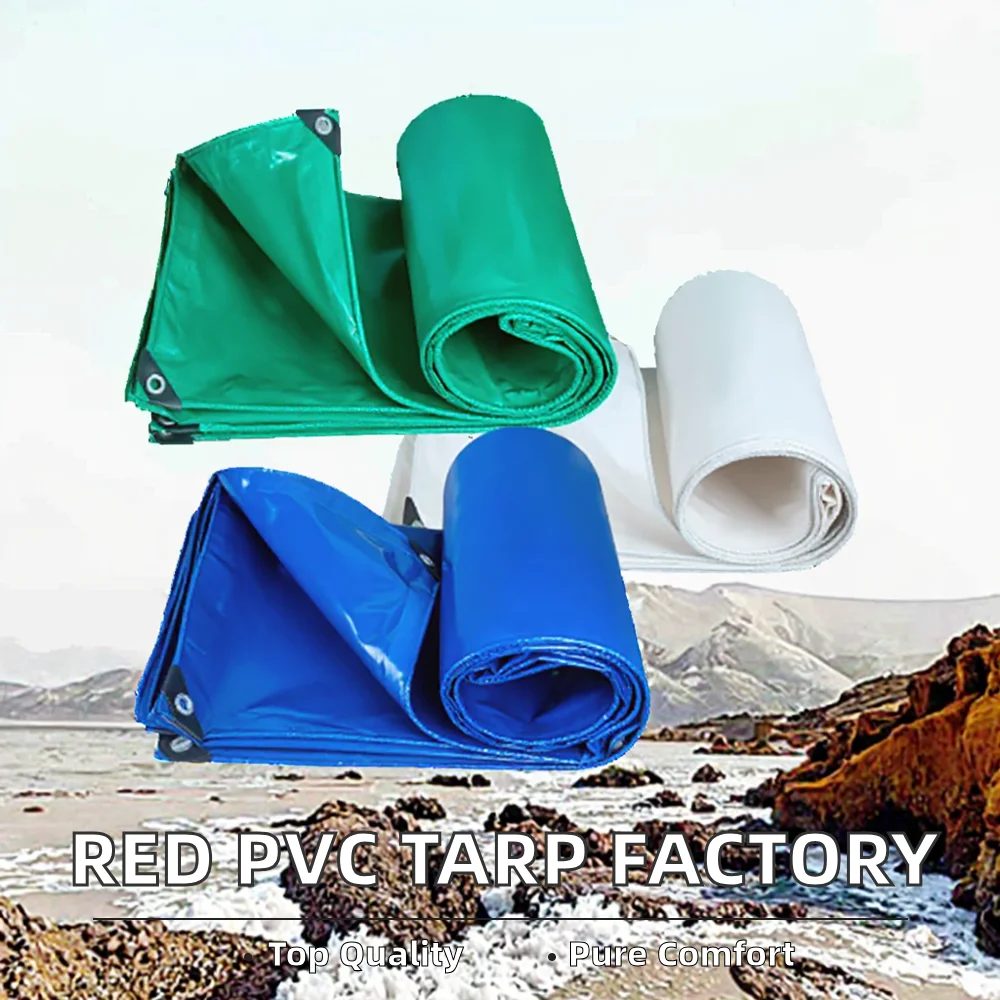
Deep Process Control — Knife coating lines calibrated for consistent PVC adhesion across the full roll width, verified roll-by-roll before dispatch.
Technical Specifications
| Parameter | Value |
|---|---|
| Product Type | PVC Coated Tarpaulin |
| Coating Material | PVC |
| Coating Method | Knife Coated |
| Base Fabric | 1000×1000 Denier |
| Weight | 420 g/m² |
| Waterproof | Yes |
| Oilproof | Yes |
| Tear Resistance | Tear-Resistant (test basis not stated in source) |
| Flame Retardant Grade | (grade not stated in source — confirm requirement) |
| Anti-Static | (standard not stated in source — confirm requirement) |
| Anti-UV Treatment | (test basis not stated in source) |
| Anti-Cold Treatment | Available |
| Anti-Mildew Treatment | Available |
| Weather Resistance | Suited to extended outdoor exposure |
| Color | Black Back / Custom options |
| Custom Size | Available |
| Standards | ISO, CE |
Application Suitability
| Application | Exposure & Requirement |
|---|---|
| Truck and trailer side curtains | Constant flexing at road speed, wind load, abrasion from tie-down straps, UV and road spray exposure |
| Flatbed load protection | Direct weather exposure, wind uplift forces, contact with sharp-edged cargo |
| Outdoor tents and awnings | Prolonged sun exposure, rain pooling, frame abrasion at stress points |
| Equipment and machinery covers | Standing water, dust ingress, fuel and hydraulic fluid contact |
| Banner and signage panels | Print surface adhesion, wind load on large-format installations |
Why Generic Truck Cover Dimensions Cause Weather Ingress on Your Fleet
A cover cut to a standard size leaves gaps at corners and seams where road spray and driven rain penetrate.
Fleet operators ordering PVC coated tarpaulin for truck and trailer covering often specify only length and width, without accounting for the specific trailer model’s corner radius, tie-down rail position, or curtain runner profile. The result is a cover that fits loosely at the edges, flaps in transit, and allows water to channel directly onto the cargo [NEED_CITE: fitment tolerances for side curtain trailers and load securing standards]. Generic dimensions also ignore the reinforcement zones where straps and buckles concentrate stress, leading to premature tearing at exactly the points the cover is secured.
Sizing to the Trailer Model Before the Fabric Is Cut
Every trailer manufacturer uses slightly different corner profiles, header rail heights, and side curtain track systems. When a PVC coated tarpaulin for truck and trailer covering is cut to the exact vehicle model rather than a generic rectangle, the hem line sits flush against the body, eliminating the gap where wind-driven rain enters. This approach also positions eyelets and D-rings to align with the trailer’s existing load anchorage points, so the cover tensions evenly without localized stress.
Reinforcement Zones Where Road Vibration Concentrates
The areas around tie-down straps, curtain buckles, and the lower hem experience the highest cyclic loading during transit. On a standard cover without targeted reinforcement, these zones develop micro-tears that propagate along the weft yarns. Knife-coated PVC construction allows additional fabric layers or webbing strips to be heat-welded into these high-stress zones during fabrication, distributing the load across a wider area of the base fabric rather than concentrating it at a single eyelet or seam [NEED_CITE: seam strength test methods for coated fabrics per ISO 1421].
Reading the Specification Beyond the Weight Claim
A 420 g/m² PVC coated fabric with a 1000×1000 denier base achieves its tear resistance through the combination of yarn thickness, weave density, and coating penetration. Knife coating forces the PVC compound into the interstices of the woven base, locking the yarns in place and preventing them from pulling apart under load. A lighter base fabric with the same stated GSM would rely on thicker coating to reach the target weight, which can make the material stiffer and more prone to cracking in cold conditions. The denier count and weave structure are therefore as important as the coating weight when evaluating how the material will perform under road vibration and flexing.
What Happens When Batch Consistency Is Not Controlled
When multiple rolls in a single fleet order vary in colour or coating weight, the differences become visible once panels are installed side by side on adjacent trailers. A roll that is lighter than specified may also have reduced coating adhesion, causing the PVC layer to delaminate at welded seams before the base fabric itself fails [NEED_CITE: coating adhesion and delamination failure modes in PVC tarpaulin]. For fleet operators managing a uniform corporate appearance across dozens of vehicles, colour drift between production batches forces rework or partial replacement that disrupts the entire covering schedule.
Sourcing From a Facility That Controls the Full Coating Line
The production facility runs three full knife-coating lines with 36 sets of professional equipment, allowing concurrent production of multiple colour and specification variants without line changeover delays. A dedicated ten-person R&D team develops custom sizing patterns and sample panels matched to specific trailer models before the bulk order is confirmed. Every roll undergoes inspection at each production stage, with a 100% pre-shipment check verifying weight, colour, and coating integrity against the order specification. This level of process control ensures that the PVC coated tarpaulin for truck and trailer covering you receive matches the sample you approved.
Documentation & Verification
- Material specification sheet stating 420 g/m² weight, 1000×1000 denier base, and coating method for each roll
- Test report for flame retardant grade matched to destination market requirements
- Pre-shipment inspection record with weight verification per roll before dispatch
- Colour reference sample retained and compared against production batch
- Certificate of origin and customs documentation for cross-border shipment
- ISO and CE certificates confirming management system compliance
Fabrication, Handling & Storage
- Heat-weld seams at temperatures suited to knife-coated PVC to prevent coating burn-through on the 420 g/m² material
- Reinforce eyelet zones with additional PVC patches to distribute tie-down strap loads across the 1000×1000 denier base
- Store rolls vertically on end caps to prevent flat-spot deformation of the coated surface
- Allow cold-stored rolls to reach ambient temperature before unrolling to avoid coating micro-cracking
- Use mild detergent without solvents when cleaning the oilproof surface to preserve coating integrity
- Plan cutting layout to minimize welded seams across the roll width and reduce waste
Before You Request a Quotation
Provide the specific truck or trailer make and model so the cover pattern can be matched to the actual vehicle dimensions rather than a generic rectangle. Indicate the operating climate and whether the cargo requires flame retardant or anti-static certification for your destination market. Specify the annual roll quantity and whether you need finished covers with eyelets and hems or roll stock for your own fabrication.
Frequently Asked Questions
Q: How is truck cover sizing matched to a specific trailer model rather than generic dimensions?
A: We request the trailer manufacturer, model, and production year to obtain the exact corner radius, header rail height, and curtain track profile. The cover pattern is then cut to these dimensions, ensuring the hem sits flush and eyelets align with the vehicle’s load anchorage points. This eliminates the gaps that allow weather ingress on generic-sized covers.
Q: Which flame retardant grade applies to my destination market and how is it verified on delivery?
A: Flame retardant requirements vary by jurisdiction — European markets may require classification per EN 13501-1, while North American applications reference NFPA 701 or local building codes. Specify your target market in the inquiry, and the corresponding test report is supplied with the shipment, confirming the grade achieved on the production batch.
Q: How are welded seams reinforced at the points where the load flexes most during transit?
A: High-stress zones around tie-down straps and lower hems receive additional PVC patches or webbing strips that are heat-welded into the seam during fabrication. This distributes cyclic loading across a wider area of the 1000×1000 denier base fabric, preventing micro-tears from propagating along the weft yarns.
Q: How is colour consistency maintained across rolls in a single fleet order?
A: All rolls in a fleet order are produced in the same coating run using a single batch of compounded PVC. A retained colour reference is compared against each roll during pre-shipment inspection. Any roll falling outside the tolerance band is rejected before dispatch, ensuring panels installed side by side show no visible variation.
Q: What options are available if my application requires anti-static treatment?
A: Anti-static treatment is available as an option — specify the standard or surface resistivity range required for your operating environment. The applicable test report is then generated from the production batch and included in the shipment documentation for your site compliance records.