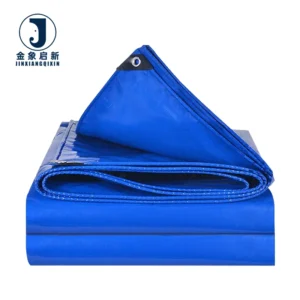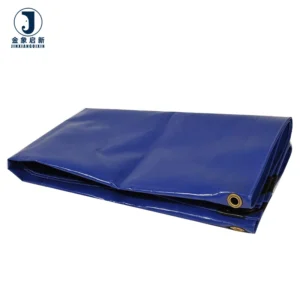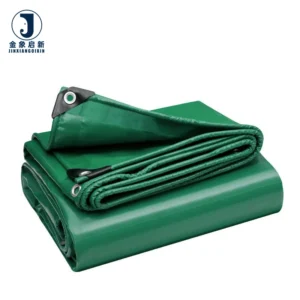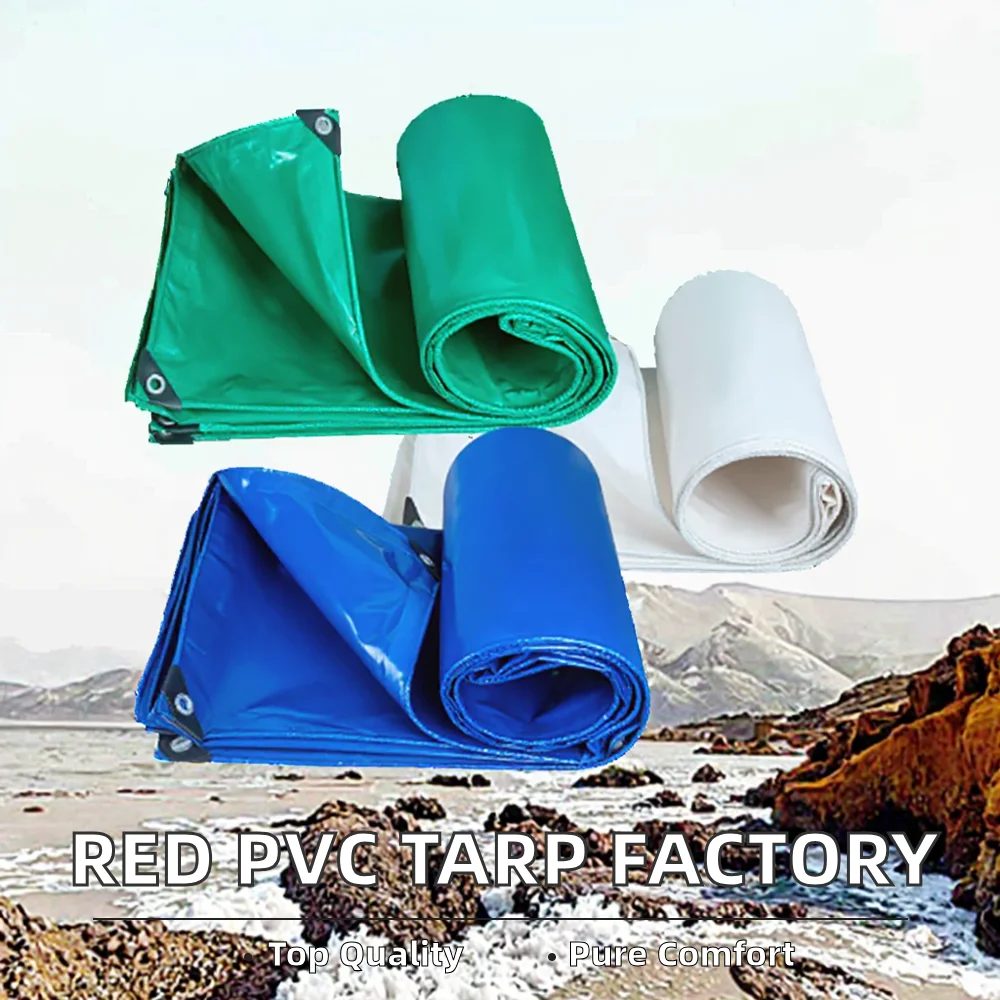
Precision-Fit Transport Covers — Truck and trailer operators receive cut-to-model tarpaulin panels with documented GSM verification, eliminating the material waste and seam failures caused by generic sizing.
Technical Specifications
| Parameter | Value |
|---|---|
| Product Type | PVC Coated Tarpaulin Roll |
| Base Fabric Denier | 1000×1000 |
| Coating Method | Knife Coated |
| Coating Material | PVC |
| Waterproof | Yes |
| Oilproof | Yes |
| Tear-Resistant | Yes (test basis not stated in source) |
| Flame Retardant | Available (grade not stated in source) |
| Anti-Static | Available (standard not stated in source) |
| Anti-Cold Treatment | Available (grade not stated in source) |
| Anti-Mildew Treatment | Available (grade not stated in source) |
| Anti-UV | Yes |
| Outdoor Service Life | 3–5 years (source value — verify against manufacturer catalog) |
| Custom Sizing | Available |
Application Suitability
| Application | Exposure & Requirement |
|---|---|
| Truck side curtain | Constant flexing at load points, road debris abrasion, sustained UV exposure |
| Trailer load cover | Tension from tie-downs, wind flap fatigue, water ingress prevention |
| Flatbed transport cover | Direct weather contact, mechanical wear from cargo shifting, repeated folding |
| Fleet vehicle cover | Prolonged outdoor parking, UV and rain exposure, dust and oil contamination |
Why a Generic-Size PVC Coated Tarpaulin for Truck and Transport Fails Before the Fabric Does
The cover fails at the seam, not the panel — and generic sizing is usually the root cause.
When a truck cover is cut to a generic dimension rather than the specific trailer model, the fabric sits under uneven tension. At the points where the load flexes during transit — typically the rear quarter and the tie-down anchors — that uneven tension concentrates stress on the welded seams. The seams split long before the PVC coated tarpaulin for truck and transport reaches the end of its material life. I have seen entire fleet cover replacements triggered by seam failure on a fabric that still had years of service potential left. The cost is not just the replacement roll; it is the downtime, the exposed cargo, and the repeat fitting. [NEED_CITE: tensile and tear test methods for coated fabrics per ISO 1421]
Knife Coating and What It Means for Trailer Cover Durability
The knife coating process applies PVC directly to the 1000×1000 denier base fabric under controlled blade pressure, forcing the coating compound into the weave structure. This produces a mechanical bond between the PVC layer and the yarn, which directly affects how the fabric behaves when it is heat-welded at the seams. A PVC coated tarpaulin for truck and transport that has been knife coated holds its weld line under flex stress because the coating does not delaminate from the base fabric at the weld point.
Custom Cut-to-Model Sizing for Fleet Fitment
Transport equipment builders and fleet operators specify covers by trailer model — side curtain, flatbed, tipper — because each geometry places tension on the fabric differently. A cover cut to exact model dimensions maintains even tension across the panel, which keeps the welded seams within their design load. This PVC coated tarpaulin for truck and transport is available in custom widths and lengths so the fabricator can cut panels that match the trailer frame without excess material that flaps in transit or creates drag. [NEED_CITE: DIN 4102 fire classification for building materials]
Reading the Specifications That Matter for Road Exposure
The 1000×1000 denier base fabric provides the structural backbone: yarn count in both warp and weft directions determines how the fabric resists tear propagation when a puncture or cut occurs under road debris impact. Knife coating ensures consistent coating weight across the full roll width, which matters when multiple panels are welded together for a large trailer side curtain — uneven coating weight leads to inconsistent weld strength panel to panel. The anti-UV treatment protects the PVC compound from photodegradation during long-haul exposure, though the specific grade should be confirmed against the target market’s sunlight intensity and expected service duration. Flame retardant and anti-static options are available in grades to be confirmed for regulated transport environments such as ADR-classified cargo or airport ground operations.
The Hidden Cost of Specifying on GSM Alone
A common procurement shortcut is to compare suppliers purely on stated GSM, then accept the roll without verification on arrival. When the delivered fabric is lighter than the quoted GSM, the coating layer is thinner than designed, and the welded seams carry less PVC compound to form a strong bond. In a truck cover application, that shortfall shows up as seam separation at the flex points within the first season of service. Batch colour inconsistency across rolls in the same order is a separate problem: when two panels installed side by side on a trailer show a visible shade difference, the fleet operator faces a cosmetic rejection even though the fabric is mechanically sound. Both issues trace back to production-stage QA gaps, not to the material specification itself. [NEED_CITE: pre-shipment inspection standards for coated textile rolls]
What This Supply Source Brings to Transport Cover Procurement
Three full production lines with 36 sets of professional equipment support bulk roll output with maintained coating consistency across the run. The 10-person R&D team handles material selection and custom sizing development, producing samples within days so transport equipment builders can validate fitment before committing to a production order. A dedicated QA/QC process runs at every production stage, with 100% inspection before shipment covering GSM verification, coating adhesion, and dimensional accuracy per roll. Nearly 30 years of focused coated fabric production provides the process control depth that keeps roll-to-roll colour and weight within tolerance across a multi-container order.
Documentation & Verification
- Material specification sheet confirming base fabric denier, coating method, and colour reference per roll
- GSM weight verification record checked against quoted value before dispatch
- Test reports for UV and flame retardant grades matched to target market compliance requirements
- Pre-shipment inspection record documenting dimensions, seam integrity, and surface condition
- Roll packing list with batch identification for traceability across the order
Fabrication, Handling & Storage
- Heat-weld knife coated PVC at manufacturer-recommended temperature to maintain adhesion to the 1000×1000 base fabric
- Reinforce tie-down eyelet zones with additional PVC patches to distribute load across the denier weave
- Store rolls upright on end caps to prevent flat-spot creasing on the coated surface
- Allow cold-stored rolls to reach ambient temperature before unrolling to avoid coating crack at low flex
- Cut panels with allowance for welded hem folds to maintain custom sizing accuracy after fabrication
- Use PVC-compatible solvent cleaners to preserve the anti-UV and anti-mildew surface treatment
What to Include in Your PVC Coated Tarpaulin for Truck and Transport Inquiry
Specify the trailer model or exact cover dimensions so the panel can be cut to fitment rather than generic size. State the target market and any fire safety or anti-static compliance requirements that apply to your transport operation. Confirm whether you need roll stock for your own fabrication or finished cut-and-welded panels ready for fleet installation.
Frequently Asked Questions
Q: How do I verify the GSM of the PVC coated tarpaulin on arrival matches what was quoted?
A: Request a pre-shipment inspection record that documents the measured weight per square metre for each roll in your order. On receipt, take sample cuts from the roll interior — not the outer wrap — and weigh them against the stated GSM. Any deviation beyond standard coating tolerance should be flagged before the fabric enters fabrication, because a lighter coating affects weld strength at the seams.
Q: How does custom sizing work for a specific truck or trailer model?
A: Provide the trailer model designation or exact panel dimensions including hem and eyelet allowances. The R&D team develops a sample panel cut to those dimensions so you can validate fitment on the actual vehicle before the full production run. This avoids the waste and tension problems that come from adapting a generic-size cover to a specific trailer frame.
Q: What flame retardant grades are available for transport safety regulations?
A: Flame retardant treatment is available in multiple grades — confirm the specific classification required by your market, such as the standard applicable to your cargo type or transport jurisdiction. Test documentation for the selected grade is supplied with the shipment so you can present it during compliance audits or vehicle inspection.
Q: How is colour consistency maintained across multiple rolls in one order?
A: Rolls within a single production run are matched against a colour reference stated in the material specification sheet. The QA process checks shade consistency between rolls before dispatch. For large fleet orders spanning multiple containers, batch identification on the packing list lets you trace each roll back to its production run for colour matching.
Q: What reinforcement options exist at welded seams and tie-down points?
A: Welded seams on knife coated PVC fabric benefit from additional PVC strip reinforcement at high-stress zones where the load flexes during transit. Eyelet points can be reinforced with patches that spread the tie-down load across a wider area of the 1000×1000 denier base fabric, reducing the risk of tear-out under tension.