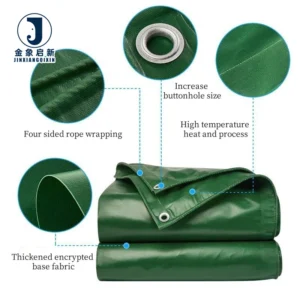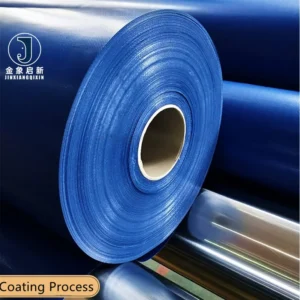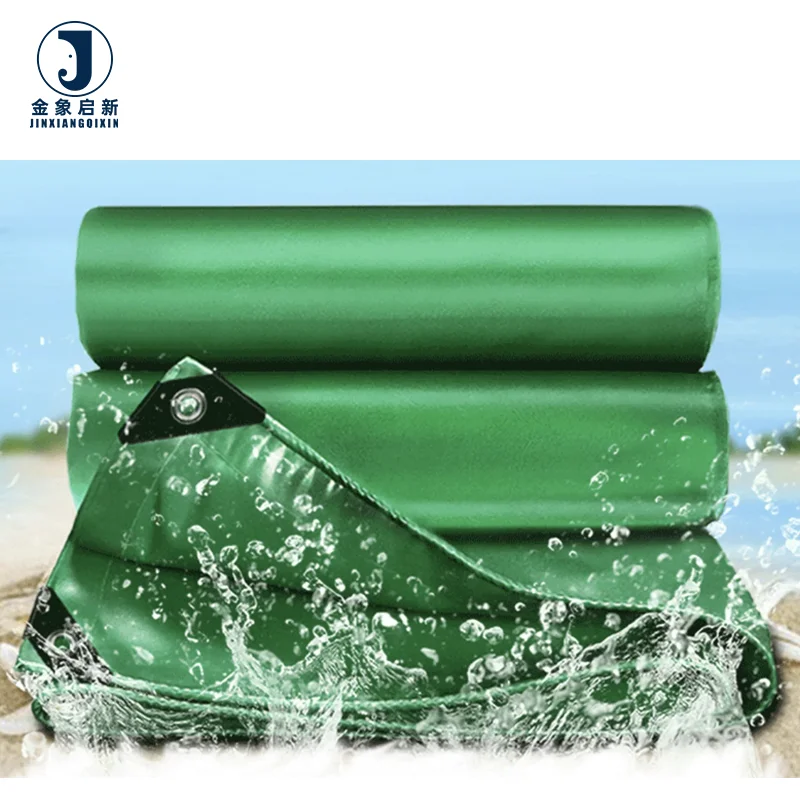
Coating Weight Mastery — Deep process control over PVC coating adhesion and GSM accuracy ensures the fabric you receive matches the specification sheet, roll after roll.
Technical Specifications
| Parameter | Value |
|---|---|
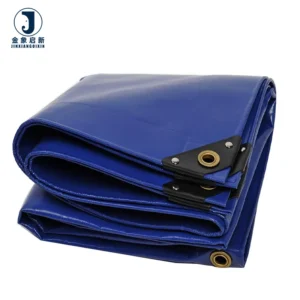
| Product Type | PVC Tarpaulin Roll |
| Base Material | High-strength polyester mesh fabric with PVC coating |
| Coating Technology | Laminated technology & Hot-melt Coating technology |
| Weight Range | 350gsm / 420gsm / 500gsm / 550gsm / 600gsm / 750gsm |
| Total Thickness | 0.32mm / 0.35mm / 0.4mm / 0.45mm / 0.5mm / 0.65mm |
| Base Fabric Denier | 500D×500D / 500D×1000D / 840D×840D / 1000D×1000D / 2000D×2000D (varies by grade) |
| Mesh Count | 20×20 / 18×25 / 30×17 / 18×18 / 23×24 / 15×15 / 30×30 (varies by grade) |
| Roll Width | 2m / 2.1m |
| Roll Length | 75m (for 2m width) / 50m (for 2.1m width) |
| Color Options | Blue / Red / Yellow / Light blue / Grey (Customized) |
| Waterproof | Fully waterproof coated construction |
| UV Treatment | Sunproof (test basis not stated in source) |
| Cold Crack Resistance | Stated — suitable for low-temperature road exposure |
| Anti-Mildew | Treated |
| Anti-Static | Available — confirm the grade required for your application |
| Key Features | High tenacity polyester yarns, outstanding tearing strength for welding, best color fastness |
Application Suitability
| Application | Exposure & Requirement |
|---|---|
| Flatbed truck cover | Constant road vibration, wind uplift at speed, tie-down strap abrasion at contact points |
| Trailer side curtain | Repeated flexing at load shift zones, lateral abrasion against cargo edges, weather exposure at highway speeds |
| Cargo ship deck cover | Saltwater spray, UV exposure during ocean transit, heavy wet loads on fabric surface |
| Truck awning and canopy | Overhead sun exposure, pooling rainwater, frequent deployment and retraction stress |
| Goods yard cover | Ground moisture, wind flap fatigue, forklift contact and accidental puncture risk |
Why Your Truck Cover Fails at the Weld Line Before the Fabric Does
Seam integrity depends on base fabric construction and coating adhesion, not just the fabric’s tensile rating.
Fleet operators replacing worn covers often find the welded seam splits first — typically at the flex zone where the load shifts during braking or cornering. The coating must bond firmly enough to the polyester base that heat welding creates a continuous molecular join rather than a surface melt that peels under repeated stress. A PVC Coated Truck Tarpaulin for truck and trailer cover application lives or dies by how well the hot-melt coating penetrates the mesh structure. When adhesion is weak, the weld becomes the weakest point in the entire assembly [NEED_CITE: tensile and tear test methods for coated fabrics per ISO 1421].
How Base Fabric Denier Dictates Road Durability
The polyester mesh underneath the PVC coating carries the structural load. A 500D×500D base fabric suits lighter covers for enclosed trailers where the fabric mainly shields against rain and dust. Stepping up to 1000D×1000D or 2000D×2000D increases the yarn mass at each crossover point, which directly improves tear propagation resistance — critical for flatbed truck covers where wind gets underneath and stresses the fabric in unpredictable directions. The PVC Coated Truck Tarpaulin for truck and trailer cover range spans these denier options to match the mechanical demand of each fleet application.
Coating Adhesion and What It Means for Welded Seams
Hot-melt coating technology forces liquid PVC into the polyester mesh under heat and pressure, creating a mechanical lock between coating and yarn. Laminated technology bonds pre-formed PVC films to the base fabric. Both methods produce waterproof results, but they behave differently when welded. Hot-melt coated fabric tends to yield stronger welds because the coating has already penetrated the mesh, giving the welding heat a more uniform material to fuse. For side curtain applications where vertical welds carry the load of the entire curtain panel, this distinction matters [NEED_CITE: hot-melt versus laminated coating adhesion behavior in welded joints].
Reading GSM and Denier Together, Not in Isolation
A 650GSM fabric with a 1000D×1000D base will behave very differently from a 650GSM fabric built on 500D×500D yarn. The first concentrates more coating weight on a heavier yarn structure, yielding stiffness and puncture resistance. The second puts more coating on a lighter mesh, producing flexibility at the cost of tear strength. Thickness alone — say 0.5mm — does not tell you whether that thickness comes from a dense base fabric or a thick coating layer on thin yarn. For truck and trailer covers, the denier-to-GSM ratio determines whether the material resists abrasion from cargo straps or whether it simply flexes without damage at tie-down points. Mesh count further refines this: a tighter weave like 30×30 distributes load across more yarn intersections, while an open weave like 15×15 relies more heavily on coating thickness for waterproofing integrity.
The Hidden Cost of Specifying by GSM Alone
A cover that arrives lighter than the quoted GSM is the most common complaint in coated fabric procurement. But even when the weight is correct, a mismatch between base fabric denier and the intended application leads to early failure. A 500gsm cover made with 500D yarn and heavy coating may pass the weight check yet tear at the eyelet reinforcement when a loaded flatbed hits crosswind on a motorway. Fleet operators then face unplanned downtime, replacement costs, and potential cargo damage claims — all traceable to a specification that listed GSM without confirming the base fabric construction underneath [NEED_CITE: coated fabric specification practices and field failure correlation].
Why Procurement Teams Source This Range Here
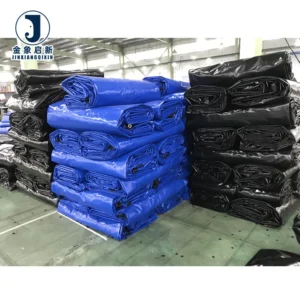
Three full production lines and dedicated coating equipment maintain consistent GSM across every roll in your order — verified before dispatch, not assumed from production settings.
The R&D team develops samples within days when you need a specific width, colour, or base fabric denier matched to your trailer model drawings.
Every roll undergoes 100% inspection before shipment, with coating weight and colour checked against the batch reference to eliminate roll-to-roll variation that becomes visible once covers are installed side by side on a fleet.
Hot-melt coating parameters are controlled to ensure weld compatibility — the fabric arrives ready for heat welding without delamination at the seam.
Cold crack resistance and anti-mildew treatment are built into the coating formulation for year-round road exposure, not applied as an afterthought.
Documentation & Verification
- Material specification sheet stating exact GSM, base fabric denier, mesh count, and coating method for each grade ordered
- Pre-shipment inspection record confirming weight verification per roll against the stated GSM before dispatch
- Colour consistency check across all rolls within the same production batch
- ISO and CE certificates included in the documentation package for customs clearance
- Roll packing list with individual roll dimensions and weight for container loading verification
Fabrication, Handling & Storage
- Hot-air welding at manufacturer-recommended temperatures suits both hot-melt and laminated PVC coating structures
- Reinforced hems at tie-down points should account for the specific GSM and denier of the selected grade
- Store rolls upright on pallets to prevent permanent creasing across the 2m or 2.1m width
- Allow cold-stored rolls to reach ambient temperature before unrolling to avoid coating crack at low flexibility
- Use mild detergent for cleaning — solvent-based products may degrade the PVC surface finish
- Plan cutting layouts to maximise yield from the 75m or 50m roll length and minimise waste at panel joins
What to Include in Your Enquiry
Share your trailer model drawings or the exact flatbed dimensions so the cover can be sized to your fleet rather than cut from generic patterns. Specify the road conditions and climate your vehicles operate in — this determines whether cold crack resistance or UV treatment takes priority in grade selection. Confirm whether you need rolls for your own fabrication facility or finished covers with eyelets and welded hems ready for deployment.
Frequently Asked Questions
Q: How is GSM verified on arrival — what inspection documentation do you provide?
A: Each roll ships with a pre-shipment inspection record showing the measured weight against the stated GSM. The material specification sheet included in the documentation package details the base fabric denier, mesh count, and coating method so you can cross-reference what arrives with what was quoted. Any deviation is flagged before dispatch.
Q: Can you cut truck covers to my specific trailer model dimensions?
A: Yes. Provide your trailer model drawings or exact bed dimensions including any protrusions, side rails, or tailgate configurations. The R&D team develops a cutting pattern matched to your vehicle, with eyelet placement and hem reinforcement positioned at the tie-down points your fleet actually uses.
Q: How do you ensure colour consistency across multiple rolls or covers in the same order?
A: All rolls within a single order are produced from the same coating batch. A colour consistency check is performed across rolls before shipment, comparing each against the batch reference. This prevents the visible variation that appears when covers from different production runs are installed side by side on adjacent vehicles.
Q: What eyelet spacing and hem reinforcement options are available for truck covers?
A: Eyelet spacing and hem construction are configured to your tie-down system. Heavier grades like 600gsm and 750gsm support closer eyelet spacing with reinforced welded patches behind each eyelet. The hem fold and weld width are scaled to the fabric thickness to prevent the edge from peeling under strap tension during transit.
Q: How are welded seams reinforced at flex points where the load shifts during transport?
A: At known flex zones — typically where the cover bends over load edges or where tie-down straps cross the fabric — additional coating layers or reinforcing strips can be welded behind the main seam. The hot-melt coating structure allows these reinforcements to fuse with the base material rather than sitting on the surface where they would delaminate under repeated movement.