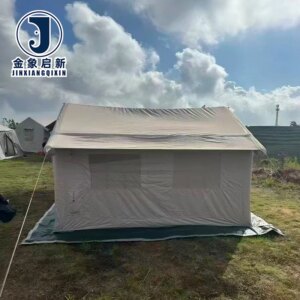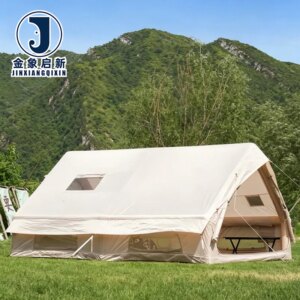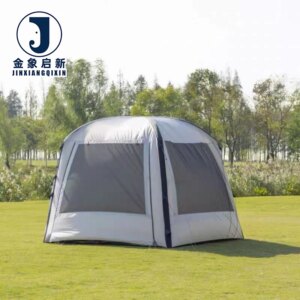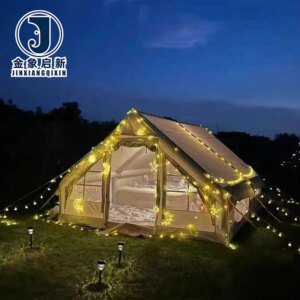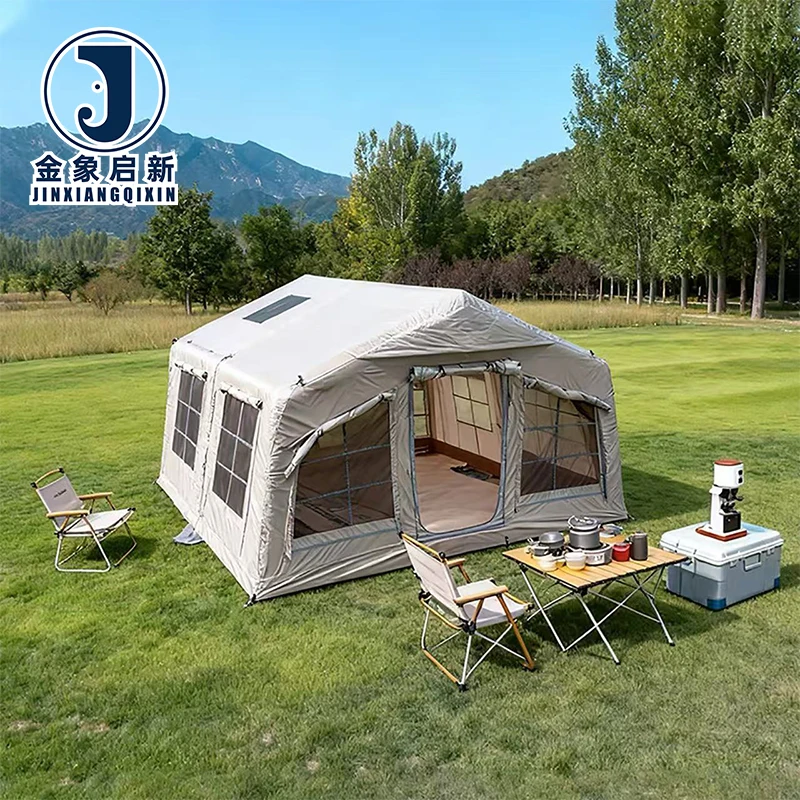
Custom Engineering Depth — Every inflatable tent fabric order is backed by a 10-technician R&D team that validates dimensions, coating weight, and weld behaviour before bulk production begins.
Technical Specifications
| Parameter | Value |
|---|---|
| Product Type | Inflatable Tent Fabric |
| Core Material | PVC tarpaulin |
| Waterproof Construction | Fully coated, impermeable surface |
| UV Resistance | UV-resistant treatment available — confirm grade required for your market |
| Fire Retardancy | Fire-retardant grades available — specify standard required (e.g., DIN 4102, NFPA 701) |
| Anti-Static Treatment | Available on request — confirm applicable standard before order |
| Tear & Tensile Performance | Tear-resistant PVC-coated construction |
| Customization Scope | OEM & ODM: sample customization, pattern printing, material selection, product design |
| Quality System | ISO 9001, ISO 14001, ISO 45001, CE certified production |
| Production Facility | 9,180 m² with 3 full production lines and 36 processing units |
Application Suitability
| Application | Exposure & Requirement |
|---|---|
| Construction site temporary shelters | Wind load, rain ingress, UV exposure, fire safety compliance on site |
| Commercial glamping resorts | Guest-facing aesthetics, repeated inflation cycles, seasonal weather endurance |
| Outdoor event facilities (festivals, exhibitions) | High-visibility branding, rapid deploy and teardown, crowd safety standards |
| Vehicle maintenance and loading bay shelters | Proximity to vehicle exhaust, thermal fluctuation, mechanical contact abrasion |
Why Fire-Retardant Claims Fail at the Gate Without a Verified Grade
A fire-retardant label means nothing unless the test standard matches the jurisdiction where the inflatable tent fabric will be deployed.
I have watched site inspectors reject entire shelter installations because the fabric supplier provided a generic certificate that did not reference the local fire classification. The inflatable tent fabric sat in a container while the contractor scrambled for documentation or, worse, sourced replacement material at a premium. [NEED_CITE: fire classification standards for temporary structures vary by jurisdiction] This mismatch is not a paperwork error — it is a specification gap that originates when the buyer assumes "fire retardant" is a universal property rather than a tested grade aligned to a named standard such as DIN 4102 B1, NFPA 701, or M2. Confirming the exact standard before sampling eliminates this exposure entirely.
How Truck-Adjacent Shelters Define Material Requirements
Fleet operators and transport equipment builders specify inflatable shelters that sit inches from diesel particulate, hydraulic fluid mist, and road salt carried in on trailer wheels. The inflatable tent fabric must resist chemical contact that degrades lesser coatings over repeated inflation seasons. PVC tarpaulin’s closed-surface construction prevents fluid absorption, allowing site crews to wash down the structure between deployments without driving contaminants into the base fabric.
Weld Integrity at the Flex Zones of Inflatable Structures
Every inflatable tent cycles between pressurised rigidity and deflated collapse. The seam welds at tube junctions and corner gussets endure concentrated stress each time the structure inflates. Our production lines use high-frequency welding calibrated to the specific coating weight of the PVC tarpaulin in use, ensuring the weld bond matches the parent material’s peel strength rather than becoming the first point of failure. [NEED_CITE: high-frequency welding parameters for PVC-coated polyester]
Reading the Specifications That Actually Govern Inflatable Tent Durability
Coating weight and base fabric denier work together to define how the inflatable tent fabric behaves under load. A heavier coating improves abrasion resistance and waterproof integrity, but only if the underlying polyester yarn has sufficient denier and weave density to carry tensile loads without stretching. A fabric with a high GSM but a loose base weave will feel substantial in hand yet tear readily once a puncture initiates. Conversely, a tight weave with insufficient coating will abrade through at contact points within a single season. Specifying both parameters — and requesting a cross-section sample — gives you a reliable predictor of field performance rather than a single number that obscures the real construction.
The Cost of Specifying on Price Per Roll Instead of System Performance
When buyers focus solely on roll cost, the common shortcut is accepting a lighter coating weight that passes visual inspection but fails under sustained UV exposure or wind-driven rain. The inflatable tent fabric arrives looking identical to the approved sample, yet within months the surface chalks, the weld lines crack at flex points, and the structure loses pressure faster than the blower can compensate. [NEED_CITE: coating weight deviation and premature field failure in PVC tarpaulins] Batch-to-batch colour drift compounds the problem when multiple shelters are deployed on one site, forcing the contractor to replace entire sets rather than individual panels.
Why Fabricators and Contractors Source Here
Our 10-technician R&D team develops samples against your exact structure dimensions and performance requirements before any bulk commitment is made. Three full production lines provide the capacity to deliver container-volume orders on schedule without splitting production across subcontracted facilities. Every roll undergoes dedicated QA and QC inspection at each production stage, not just a final visual check before packing. In-house pattern printing allows branding and colourway specification to be locked at the coating stage, eliminating the registration drift common when printing is outsourced post-production. ISO 9001 and CE certified processes provide the documentation trail that commercial glamping insurers and construction site auditors require.
Documentation & Verification
- Material specification sheet confirming base fabric denier, coating type, and GSM for each batch produced.
- Fire-retardant test report matched to the specific standard and batch number of your inflatable tent fabric order.
- Pre-shipment inspection record with weight verification and visual audit of every roll.
- Colour reference confirmation across all rolls in a multi-roll dispatch to prevent on-site mismatch.
- Certificate of origin and customs documentation for cross-border procurement and port clearance.
Fabrication, Handling & Storage
- Set high-frequency welder dwell time to match the PVC tarpaulin coating thickness for full fusion at seams.
- Store rolls vertically on end-caps to prevent flat-spot creasing that transfers into the inflated structure surface.
- Use PVC-compatible plasticiser cleaners only — solvent-based agents will strip the surface coating layer.
- Allow cold-stored rolls to acclimatise before unrolling to prevent coating micro-cracking at low temperature.
- Plan panel cutting layout to minimise transverse welds across the primary load axis of the inflatable tubes.
Before You Request a Quote
Provide the intended application environment, including whether the inflatable tent fabric will face permanent outdoor exposure or seasonal deployment and teardown cycles. State the fire-retardant or anti-static standard required by your local jurisdiction or site insurer. Confirm the roll width, colour reference, and whether pattern printing or branding is needed so the sample phase reflects the final production specification.
Frequently Asked Questions
Q: Can you supply fire-retardant certificates accepted by European and North American insurers?
A: We provide fire-retardant test reports aligned to specific standards such as DIN 4102 or NFPA 701. Confirm which classification your site insurer or local authority requires before sampling, so the test report delivered with your inflatable tent fabric batch matches the compliance framework you must satisfy.
Q: What is the minimum order for a custom width or colour?
A: Custom widths and colour references are produced on dedicated runs. Minimum quantities depend on the specific GSM and coating construction selected. Request a quotation with your required dimensions and colour reference so we can confirm the applicable minimum and lead time for your inflatable tent fabric order.
Q: How do you guarantee seam weld strength on inflatable structures?
A: High-frequency welding parameters are calibrated to the exact coating weight and base fabric of the PVC tarpaulin in production. Weld samples are peel-tested during the sampling phase, and in-process QA verifies bond integrity on every production run to prevent seam failure at the flex zones of inflatable tubes.
Q: Can I get a sample roll before committing to a bulk order?
A: Sample development is handled by our R&D team and typically covers your specified GSM, colour, and treatment requirements. Approving a physical sample before bulk production ensures the inflatable tent fabric meets your fabrication and performance expectations across coating adhesion, weld behaviour, and surface finish.
Q: What documentation ships with each batch?
A: Every dispatch includes a material specification sheet, pre-shipment inspection record, colour confirmation across rolls, applicable fire-retardant or UV test reports, certificate of origin, and ISO or CE certificates. This documentation package supports compliance audits and customs clearance for your inflatable tent fabric shipment.