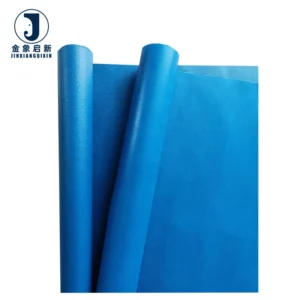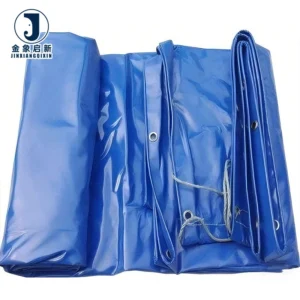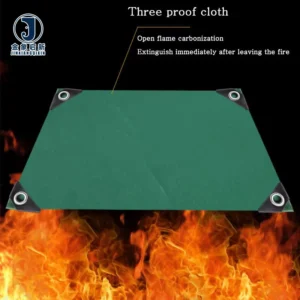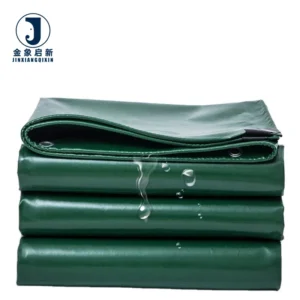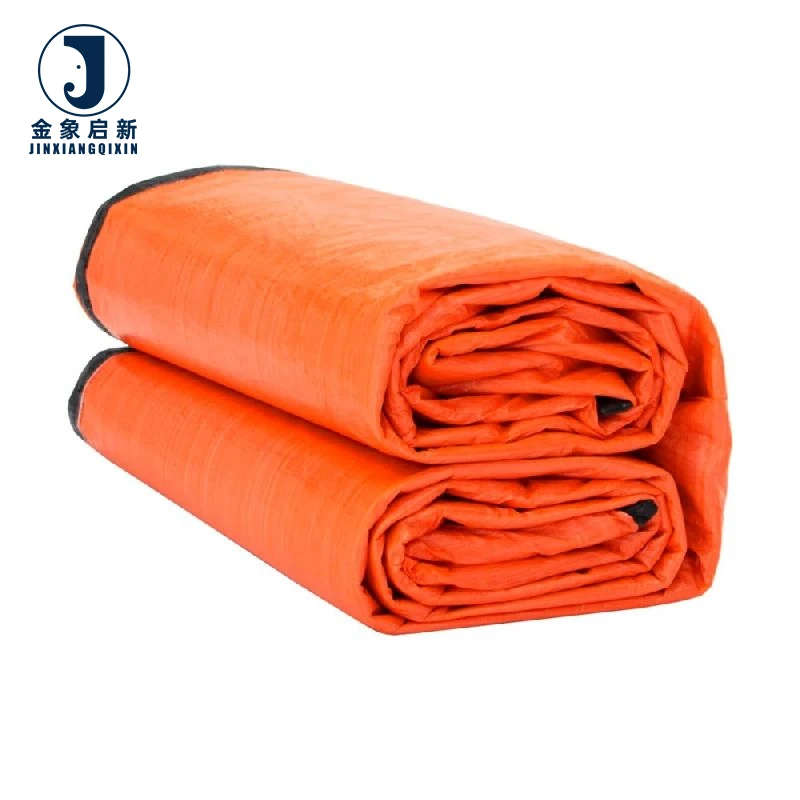
Deep process control over coating weight and adhesion — three full production lines ensure every insulated PE tarpaulin panel maintains consistent closed-cell foam core density and waterproof outer layer bonding from first piece to last.
Technical Specifications
| Parameter | Value |
|---|---|
| Product Type | Insulated PE Tarpaulin / Concrete Curing Blanket |
| Size Options | 6ft x 24ft, 8ft x 25ft, 12ft x 20ft, 12ft x 24ft |
| Thickness Options | 2x2mm, 3×1.5mm, 1x4mm, 5mm, 6mm, 8mm, 12mm |
| Structure | PE cloth + closed cell PE foam core + PE cloth |
| Coating Material | PE |
| Color Options | Orange, Black, White, Silver, Customized color |
| Grommet Configuration | Aluminum grommets, hole distance 61cm and 91.5cm |
| Edge Finish | Reinforcement stitch, rust-proof brass grommets around all finished stitched edges |
| Waterproof | Yes (surface fabric waterproof) |
| UV Treatment | UV treatment built into base fabric (test basis not stated) |
| Mildew Resistance | Yes |
| Wind Resistance | Medium to high winds |
| Temperature Application | Low temperature environments, heated enclosures |
Application Suitability
| Application | Exposure & Requirement |
|---|---|
| Cold-weather transport coverage — flatbed and trailer loads | Road vibration, tie-down stress at grommet points, prolonged weather exposure during transit |
| Heated enclosure insulation on active construction sites | Wind load, temperature differential across panel, repeated installation and removal cycles |
| Concrete curing blanket for slab pours | Ground moisture contact, low-temperature thermal retention requirement, abrasion from substrate |
| Vertical wind barrier hanging from scaffold | Sustained lateral wind force, grommet and edge stress, UV and rain exposure |
| Snowy and rainy weather outdoor equipment coverage | Prolonged moisture contact, freeze-thaw cycling, mechanical handling during deployment |
Why Grommet Spacing Decides Whether Your Insulated PE Tarpaulin Survives the First Haul
A tarp that tears at the tie-down point has failed before it even covered the load.
Most insulated covers are specified by thickness and thermal performance, but the grommet layout determines whether the panel stays attached under road vibration and crosswind. Grommets placed too far apart concentrate the tie-down load on fewer points, pulling the reinforcement stitch through the PE cloth layer. On a 12ft x 24ft panel exposed to sustained highway speeds, the difference between 61cm and 91.5cm spacing changes the load distribution across the entire edge. Fleet operators who have watched tarps detach mid-transit know this is not a marginal concern — it is the primary failure mode. [NEED_CITE: tie-down load distribution on transport tarpaulins per EN 12195]
Tie-Down Reinforcement Built for Road Vibration and Wind Load
The Insulated PE Tarpaulin for Truck and Transport Covering is fitted with rust-proof brass grommets set into reinforced stitched edges. The aluminum grommet rings provide a hard anchor that resists deformation when ratchet straps are tensioned, while the surrounding reinforcement stitch spreads the load across a wider area of the PE cloth face. This construction addresses the most common failure point on any transport cover — the junction where the tie-down hardware meets the fabric. Panels are available in standard dimensions up to 12ft x 24ft, with grommet spacing at 61cm or 91.5cm to match different trailer anchor configurations.
Thermal Insulation Meets Mechanical Durability at the Flex Point
The three-layer structure places a closed cell PE foam core between two waterproof PE cloth faces. This sandwich construction provides thermal separation while maintaining flexibility for folding and deployment on-site. When an insulated panel flexes over a load edge or drapes across an uneven surface, the outer PE cloth absorbs the abrasion while the foam core resists compression. Thicker grades such as 8mm and 12mm offer greater thermal retention for concrete curing and heated enclosure use, while lighter grades like 1x4mm serve wind screening and short-duration transport coverage. The key is matching the thickness to the exposure — overspecifying adds weight and handling difficulty without improving performance in the actual operating condition.
How the PE Foam Core and Outer Cloth Layer Work Together
The closed cell PE foam core does not absorb water, which is critical when the insulated PE tarpaulin for truck and transport covering is deployed in snow, rain, or ground contact during concrete curing. Open-cell foams wick moisture through the panel, reducing thermal performance and adding dead weight. Closed cell structure also means the core retains its insulating capacity even after repeated compression from stacking, rolling, and tie-down pressure. The outer PE cloth layers are waterproof on both sides, so moisture is shed at the surface rather than reaching the core. UV treatment is built into the base fabric rather than applied as a surface coating, which means abrasion from handling and folding does not strip the protective layer. [NEED_CITE: closed cell versus open cell foam thermal performance in wet conditions]
What Happens When Panel Dimensions Do Not Match the Trailer or Enclosure
A generic-size cover that falls short of the trailer bed leaves an exposed gap where wind and moisture penetrate the load. A panel that is too large creates loose fabric that flaps under road airflow, accelerating abrasion at the grommets and edges. For heated enclosures on construction sites, undersized panels leave gaps at joints that compromise the thermal seal, forcing the heating system to work harder. The cost of a mis-sized tarpaulin is not the price of the panel — it is the cost of the damaged load, the failed concrete cure, or the extended heating fuel bill. Available sizes span from 6ft x 24ft to 12ft x 24ft, and custom dimensions can be developed with sample approval before full production.
Why Here for Your Insulated Transport Covers
Three full production lines with 36 sets of professional equipment handle bulk orders of insulated PE tarpaulin for truck and transport covering without splitting batches across different machines — every panel in your order passes through the same line with the same process settings. The 10-person R&D team develops cut-to-size panels and custom grommet layouts against your trailer drawings, producing samples within days so you can verify fitment before committing to production volume. Dedicated QA/QC runs at every production stage, with 100% inspection before dispatch checking grommet count, stitch integrity, and panel dimensions against your order specification. Nearly 30 years of coated fabric production experience means the process controls for PE lamination and foam bonding are established routines, not experimental runs.
Documentation & Verification
- Material specification sheet stating PE foam core density, outer layer weight, and total thickness for each panel
- Pre-shipment inspection record confirming grommet count, spacing, and reinforcement stitch quality
- Roll and panel packing list with dimensions and piece count for container loading verification
- ISO and CE certificates held on file for compliance documentation
- Certificate of origin and customs support documentation for international shipment
Fabrication, Handling & Storage
- Reinforcement stitch at all edges accepts standard sewing repair if field damage occurs on the PE cloth face
- Brass grommets at 61cm or 91.5cm spacing align with ratchet strap and bungee tie-down hardware
- Closed cell PE foam core tolerates rolling and folding for transport without permanent compression damage
- Waterproof PE surface cleans with mild detergent — solvent-based cleaners may degrade the base fabric UV treatment
- Panels should be stored flat or loosely rolled to avoid crease lines that become crack initiation points in cold weather
Request a Specification Match for Your Fleet or Site
Provide the trailer bed dimensions or enclosure opening measurements, the lowest operating temperature you expect to encounter, and your tie-down system’s anchor point spacing. If your site requires flame-retardant certification, state the grade or standard your local authority specifies so we can confirm availability. Let us know whether you need standard panel sizes from the available range or custom-cut panels with sample approval before production.
Frequently Asked Questions
Q: How do I choose the right thickness for concrete curing versus general enclosure use?
A: Concrete curing typically requires thicker grades such as 8mm or 12mm to retain hydration heat during low-temperature pours, where thermal loss directly affects slab strength development. General enclosure and wind barrier applications can use lighter grades like 1x4mm or 5mm, which reduce panel weight and handling effort while still providing thermal separation. Specify based on your lowest expected ambient temperature and the heat source inside the enclosure.
Q: Can grommet spacing and panel size be customised to my trailer or scaffold layout?
A: Yes. Standard grommet spacing is available at 61cm or 91.5cm, but custom layouts can be developed to match your specific anchor point configuration. Panel dimensions beyond the standard range are produced with sample approval, so you can verify fitment on the actual trailer or scaffold frame before full production. Provide drawings or measurements with your inquiry.
Q: How does the insulated tarpaulin perform in sustained sub-zero temperatures and high wind?
A: The closed cell PE foam core retains its insulating capacity at low temperatures because the cell structure does not collapse or absorb moisture. The waterproof PE outer layers resist wind-driven rain and snow penetration. Brass grommets with reinforcement stitching maintain tie-down integrity under wind load, though grommet spacing should be matched to the expected wind speed and panel size.
Q: Is flame-retardant certification available for sites that require it?
A: Flame-retardant grades are available — confirm the specific grade or standard required for your site or market with our team before ordering. Test documentation can be provided where applicable. The standard insulated PE tarpaulin range does not include a stated flame-retardant grade, so this must be specified as an additional requirement during the inquiry stage.
Q: What information do I need to provide for a custom-size insulated tarpaulin order?
A: Provide the exact panel dimensions needed, the thickness grade you have selected, grommet spacing preference, and the quantity required. If the panels are for a specific trailer model or enclosure frame, include drawings or photographs showing the tie-down arrangement. Samples are developed within days for approval before production begins.