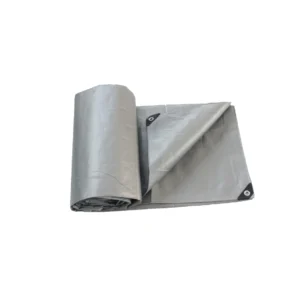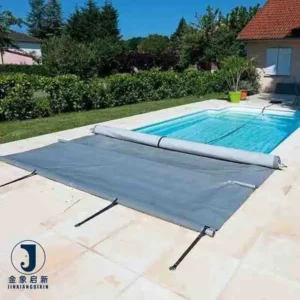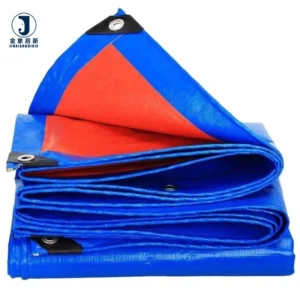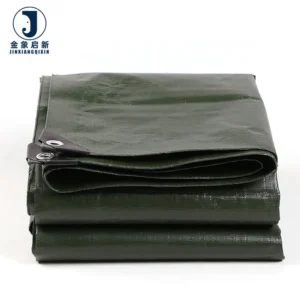
Deep process control — Every roll of PE Tarpaulin for truck and transport is weighed and recorded against the stated GSM before dispatch, eliminating the gap between quotation and delivery.
Technical Specifications
| Parameter | Value |
|---|---|
| Product Type | PE Tarpaulin |
| Material | HDPE weaving with LDPE lamination on both sides |
| Weight (GSM) | 50gsm ~ 220gsm (range covers product family — confirm the grade for this item) |
| Thickness | 0.2-0.4mm / 8 mil-16 mil |
| Mesh Count | 6×6 to 14×16 weave (mapped to specific GSM grades) |
| Coating Method | Laminated |
| Roll Width | 6ft, 8ft, 10ft, 12ft / 2m, 4m, 6m |
| Roll Length | 100 yards, 100 meters, or custom |
| Finished Sizes | 2x2m to 8x10m (and corresponding ft sizes) |
| Eyelet & Hem | PP rope reinforced hem, galvanized eyelets every 3ft or 1m, reinforced plastic corners |
| Color | Blue, Blue/Orange, Green, Grey, Black, Clear, Grey/Green, Orange, or custom |
| UV Treatment | Available (test basis not stated in source) |
| Waterproof | Yes (washable) |
| Mildew & Aging | Mildew proof and anti-aging claimed |
| Assembly State | Tarpaulin rolls or finished cut sizes |
Application Suitability
| Application | Exposure & Requirement |
|---|---|
| Flatbed truck and trailer load covers | Highway weather, wind lift, tie-down tension at eyelets, road abrasion at flex points |
| Side curtain replacement fabric | Constant flexing during opening and closing, UV exposure, lateral wind load on curtain tracks |
| Container and boat transit covers | Salt spray, prolonged sun exposure, mechanical abrasion from cargo shifting during transit |
| Equipment and machinery wraps | Outdoor storage exposure, dust and moisture ingress, irregular surface contact points |
Why Generic-Sized Truck Covers Cost Fleets More Than Custom Fitment
A cover that matches your trailer profile eliminates the flapping, abrasion and water ingress that generic dimensions cannot prevent.
Most transport operators buy PE Tarpaulin for truck and transport covers in standard cut sizes that leave excess fabric pooling on the load or fall short at the tie-down rails. The loose material flaps at highway speed, accelerating wear at the hem and splitting the welded seams where the load flexes most. [NEED_CITE: tarpaulin failure points under dynamic wind load on moving vehicles]
Matching Weave Density to Fleet Duty Cycles
The HDPE woven base fabric determines how the PE tarpaulin handles sustained tie-down tension and point loads from cargo edges. Lower mesh counts suit short-haul, light-duty covers, while higher weave densities provide the tear resistance needed for long-distance flatbed operations where the cover endures hours of vibration and wind stress.
Reinforcement at the Points That Fail First
Galvanized eyelets set at regular intervals distribute tie-down strap force across the PP rope reinforced hem, preventing the eyelet from pulling through the fabric under tension. Reinforced plastic corners address the highest stress zones where diagonal strap angles concentrate load. [NEED_CITE: eyelet pull-through resistance testing methods for coated fabrics] This reinforcement system keeps the PE Tarpaulin for truck and transport secured to the vehicle through variable road conditions.
How GSM and Weave Density Work Together on the Road
GSM alone does not define how a cover performs under highway conditions. A 100gsm fabric with a 10×10 weave distributes load differently from a 100gsm fabric with an 8×8 weave and heavier yarn. The tighter weave resists tear propagation when a sharp cargo edge presses against the fabric, while the looser weave may offer greater flexibility for draping over irregular loads. LDPE lamination on both sides seals the HDPE weave, preventing water ingress through the fabric structure while maintaining the flexibility needed for daily folding and deployment by drivers.
What Happens When Specification Gaps Reach the Fleet
A cover quoted at one GSM but delivered lighter will tear at the hem under standard tie-down tension within weeks of service. Colour variation between rolls in a single fleet order becomes visible once the covers are installed side by side on adjacent trailers, undermining the fleet’s professional appearance. Welded seams that fail before the fabric itself indicate a process mismatch rather than a material defect. [NEED_CITE: seam strength requirements for transport tarpaulins under cyclic loading] UV treatment claimed without a supporting test report leaves the buyer exposed when the fabric becomes brittle after a single season of highway sun exposure.
Why Operators Source PE Tarpaulin Covers Through This Channel
Three full production lines and dedicated equipment sets support bulk fleet orders with consistent roll-to-roll quality, so replacement covers ordered months apart match the originals in weight and colour. The 10-person R&D team develops cut-size samples within days, allowing fleet operators to trial fitment on a specific trailer model before committing to a production run. Dedicated QA/QC runs at every production stage with 100% inspection before shipment, catching GSM deviations and weave inconsistencies before they reach the dispatch bay. ISO and CE certification underpins the documentation pack, providing the compliance traceability that fleet auditors and insurance assessors require.
Documentation & Verification
- Weight verification per roll against the stated GSM before dispatch
- Material specification sheet stating base fabric, coating and colour reference
- Test report for UV treatment where claimed, tied to the production batch
- Pre-shipment inspection record confirming weave density and eyelet spacing
- Certificate of origin included for customs clearance on cross-border shipments
Fabrication, Handling & Storage
- Heat-weld seams rather than stitch to maintain waterproof integrity of the LDPE lamination
- Set eyelet spacing no wider than 1m for highway-speed tie-down loads on flatbed covers
- Store rolls horizontally on pallets to prevent permanent creasing in the HDPE weave
- Avoid dragging finished covers across abrasive surfaces to protect the LDPE coating layer
- Clean with mild detergent and water to preserve the UV treatment on the laminated surface
Preparing Your Cover Specification
Provide the exact trailer make, model and body dimensions so the cut size eliminates excess fabric that flaps at speed. Specify the route climate and expected sun exposure duration so the appropriate UV treatment grade is selected and documented. Confirm eyelet spacing and hem reinforcement requirements based on your strap configuration and typical load types.
Frequently Asked Questions
Q: How do you verify GSM and weave density on arrival against the quoted specification?
A: Every roll is weighed and measured during the pre-shipment inspection, and the results are recorded on the inspection report you receive with your documentation pack. This record states the actual GSM, weave density and thickness for each roll, allowing you to cross-check against your purchase order specification on receipt.
Q: What eyelet spacing and hem reinforcement do you recommend for high-speed highway use?
A: For highway-speed transport, galvanized eyelets at 1-metre intervals with PP rope reinforced hems distribute tie-down strap force evenly and resist pull-through under sustained wind load. Reinforced plastic corners are added at the four stress concentration points where diagonal straps create the highest point loads on the fabric.
Q: Can truck covers be cut to the exact dimensions of a specific trailer model?
A: Yes, the R&D team develops a sample cut to your trailer profile within days, allowing you to verify fitment before bulk production proceeds. This eliminates the excess fabric that causes flapping and premature wear on generic-sized covers.
Q: How do you control colour consistency across multiple covers in one fleet order?
A: A physical colour swatch is locked as the production reference before the order runs, and the specification sheet included with your shipment states the colour reference used. This prevents the visible variation that occurs when rolls from different production batches are installed side by side on adjacent vehicles.
Q: What is the lead time and minimum for custom cut sizes and colours?
A: Lead time and minimum depend on the specific cut dimensions, colour selection and order volume. Provide your trailer dimensions and quantity requirement, and the quotation will confirm the production schedule and any custom-run minimums applicable to your specification.