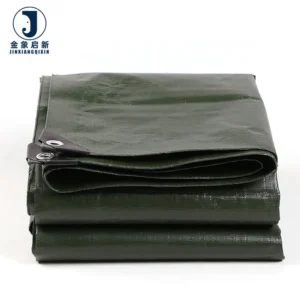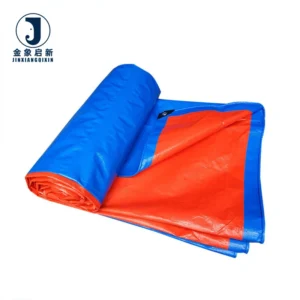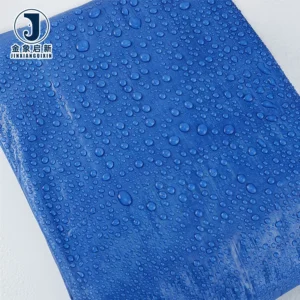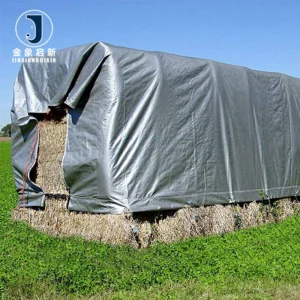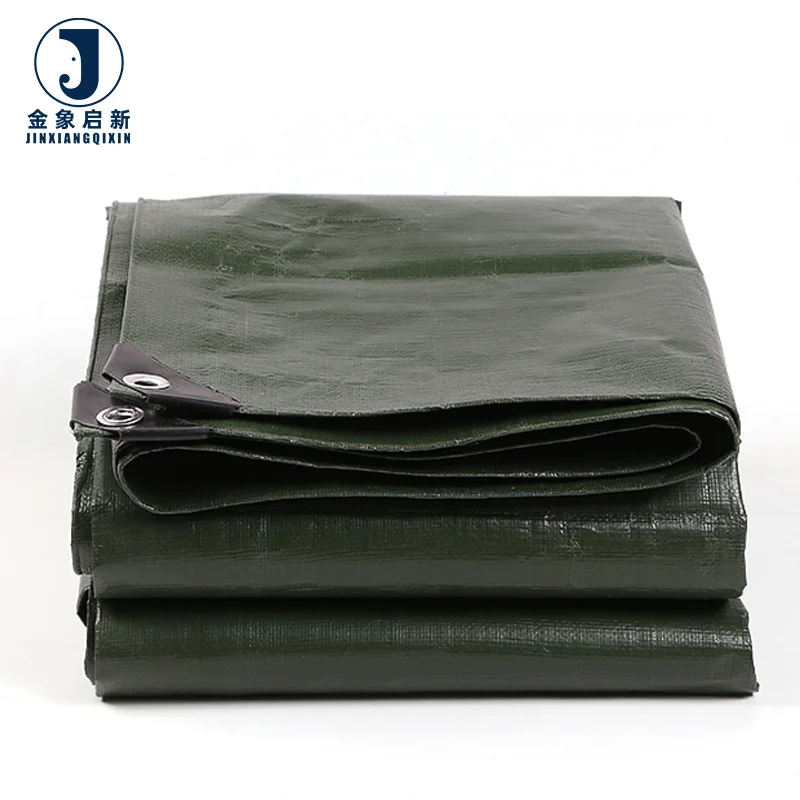
Proven Coating Expertise — Nearly three decades of focused coated fabric production delivers verified material consistency that transport operators rely on for moving load protection.
Technical Specifications
| Parameter | Value |
|---|---|
| Product Type | PE Tarpaulin |
| Thickness Options | 5 / 10 / 12 / 16 / 20 Mil |
| Coating Material | Polyethylene (PE) |
| Waterproof Rating | Fully Waterproof |
| Flame Retardant | Available in fire retardant grades — confirm the grade required for your market |
| UV Treatment | Anti-UV treatment available — test basis to be confirmed per order |
| Wind Resistance | Yes |
| Mildew Resistance | Mildew-Proof |
| Abrasion Resistance | Abrasion-Resistant |
| Key Features | Waterproof, Windproof, Mildew-Proof, Abrasion-Resistant |
Application Suitability
| Application | Exposure & Requirement |
|---|---|
| Truck and trailer load covers | Constant road vibration, flex at tie-down points, UV and rain exposure during transit |
| Car covers in yard storage | Prolonged sun exposure, wind uplift, dust and moisture ingress prevention |
| Tent and temporary shelters | Outdoor weather cycling, ground moisture, wind loading on fabric panels |
| Cargo protection on flatbeds | Highway-speed wind abrasion, water ingress risk, load shifting friction |
| Transport equipment side curtains | Repeated flex cycles, road debris impact, temperature fluctuation |
Why Generic-Sized PE Tarpaulin Covers Fail on Specific Trailer Models
We cut every Heavy Duty PE Tarpaulin for truck and transport to your exact vehicle dimensions, not a standard sheet size.
Fleet operators regularly receive covers that claim to fit a trailer model but leave gaps at the corners or drag on the ground. The problem compounds at highway speed where loose fabric flaps, abrades against itself and tears at the eyelet line. A cover that is even slightly oversized creates pooling points for water, while an undersized one leaves cargo exposed to road spray and wind-driven rain. Sourcing PE tarpaulin aftermarket supplier options that match specific trailer geometry eliminates these failure modes before the first trip [NEED_CITE: fitment tolerance standards for transport covers].
Dimensional Accuracy for Every Trailer Configuration
Transport fleets operate mixed vehicle types, and a Heavy Duty PE Tarpaulin for truck and transport must account for the differences between a standard curtain-sider and an extendable flatbed. Each Mil thickness from 5 to 20 behaves differently under tension, and the eyelet spacing must correspond to the tie-down rail positions on the specific chassis. Our R&D team develops cut patterns based on your vehicle drawings, ensuring the hem line sits flush against the load edge without excess material that would catch wind or pool water during transit.
Road Exposure Demands More Than Basic Waterproofing
Long-haul routes subject PE tarpaulin covers to conditions that go beyond simple rain protection. Abrasion from road debris, UV degradation from continuous sun exposure and thermal cycling between night and day all affect material integrity over time. The mildew-proof formulation prevents biological growth when the cover is folded and stored damp, while the abrasion-resistant surface maintains its protective function even where the fabric contacts sharp-edged cargo [NEED_CITE: UV degradation test methods for polyethylene tarpaulins]. Fire retardant grades are available for operators whose route or cargo type demands compliance with transport fire safety requirements — confirm the specific grade needed for your jurisdiction before placing your order.
Reading the Thickness Specification Correctly
The 5 through 20 Mil range serves distinctly different transport protection roles. Lighter 5 Mil sheets suit short-term yard storage and dust covers where weight and pack-down size matter. The 12 and 16 Mil grades handle regular over-the-road use, balancing tear resistance with the flexibility needed for daily folding and deployment. At 20 Mil, the material provides maximum puncture resistance for heavy machinery and steel coil transport where load contact points generate concentrated stress. Thickness alone does not determine field performance — the base fabric weave density and the coating adhesion method together define how the PE tarpaulin resists tear propagation once a puncture initiates.
The Cost of Selecting the Wrong Mil Grade
Specifying a 10 Mil cover for a load that generates high point stress typically results in puncture failures within the first weeks of service. Conversely, over-specifying a 20 Mil cover for light cargo adds unnecessary weight that slows daily handling and increases fatigue for the crew deploying it. The visible consequence is premature replacement cycles that were entirely preventable at the specification stage. Batch inconsistency between rolls compounds the problem when different sections of the same trailer cover show different wear patterns after identical exposure [NEED_CITE: premature tarpaulin failure rates in fleet operations]. Matching the Mil grade to the actual load profile and route conditions eliminates both under-performance and wasteful over-specification.
What Sets This Supply Source Apart
Our three full production lines handle volume orders of Heavy Duty PE Tarpaulin for truck and transport without compromising the dimensional accuracy that fleet fitment requires. A dedicated 10-person R&D team develops custom cut patterns and reinforcement layouts based on your vehicle specifications rather than defaulting to generic sheet sizes. Quality control inspection at every production stage catches coating inconsistencies before they reach the finishing line, and 100 percent pre-shipment inspection means the material you receive matches the Mil thickness stated on your order. Samples for custom dimensions and treatment verification are developed within days, giving you physical confirmation before full production commits.
Documentation & Verification
- Material specification sheet confirming Mil thickness, base fabric weave and PE coating details per grade
- UV treatment and fire retardant test reports provided where applicable to your market requirements
- Pre-shipment inspection record documenting 100 percent QC check against stated specifications
- Roll packing list with individual roll identification for traceability through to installation
- Certificate of origin and customs documentation for cross-border shipment clearance
Fabrication, Handling & Storage
- Heat welding parameters vary by Mil thickness — confirm temperature and dwell time before joining PE tarpaulin panels
- Reinforced hem construction required at eyelet positions to distribute tie-down load across the fabric
- Store rolls upright on pallets to prevent permanent creasing that weakens the PE coating layer
- Allow cold-stored PE tarpaulin to acclimatise before unfolding to avoid low-temperature cracking at fold lines
- Use mild detergent only — solvent-based cleaners degrade the anti-UV treatment on the coating surface
- Field repairs on punctures require compatible PE patch material matched to the original Mil grade
Inquiry Direction for Fleet Procurement
Provide your trailer model numbers and the number of vehicles in each configuration so we can develop accurate cut patterns with appropriate eyelet spacing. Specify whether fire retardant certification is required for your operating jurisdiction and which compliance standard applies. Confirm your annual volume and preferred dispatch schedule so production can be planned around your fleet rotation.
Frequently Asked Questions
Q: How can I verify the Mil thickness matches what was quoted when the PE tarpaulin arrives?
A: Request the material specification sheet with your order, which states the target Mil grade and the measurement method. We conduct 100 percent pre-shipment inspection and provide a documented inspection record. On receipt, you can measure the material at multiple points across the roll to confirm consistency against the stated value before putting the Heavy Duty PE Tarpaulin for truck and transport into service.
Q: What fire retardant grade is available, and does it meet transport safety regulations?
A: Fire retardant treatment is available in grades suited to transport applications, but the specific compliance standard varies by jurisdiction and cargo type. Provide the regulation your market requires so we can confirm the applicable grade and supply the corresponding test report. This ensures your PE tarpaulin covers pass any compliance audit without delay.
Q: What is the expected durability of the anti-UV treatment under continuous road exposure?
A: Anti-UV treatment is applied to resist degradation from sunlight exposure during outdoor and transit use. The test basis and expected service life depend on the specific grade selected and the intensity of UV exposure in your operating region. Request the UV test report applicable to your order to evaluate suitability against your route conditions.
Q: Can eyelet spacing and hem reinforcement be customised for my specific trailer model?
A: Yes. We develop cut patterns based on your vehicle dimensions and tie-down rail positions. Eyelet spacing, reinforced hem width and corner patch details are all specified to match your trailer configuration, ensuring the PE tarpaulin secures properly without excess material or loose edges that could flap at highway speed.
Q: Do you supply finished cut-to-size covers or only standard sheet sizes for fleet orders?
A: We supply both. For fleet fitment, custom cut sizes matched to your trailer models eliminate on-site trimming and ensure consistent coverage across your vehicle range. Standard sheet sizes remain available where operators prefer to cut and configure covers in-house. Specify your preference and quantities during the quotation stage.