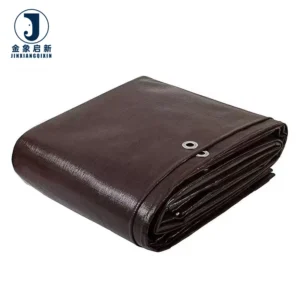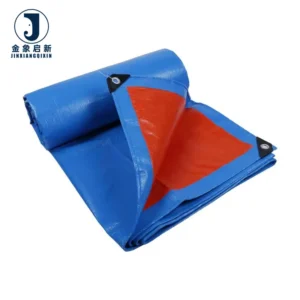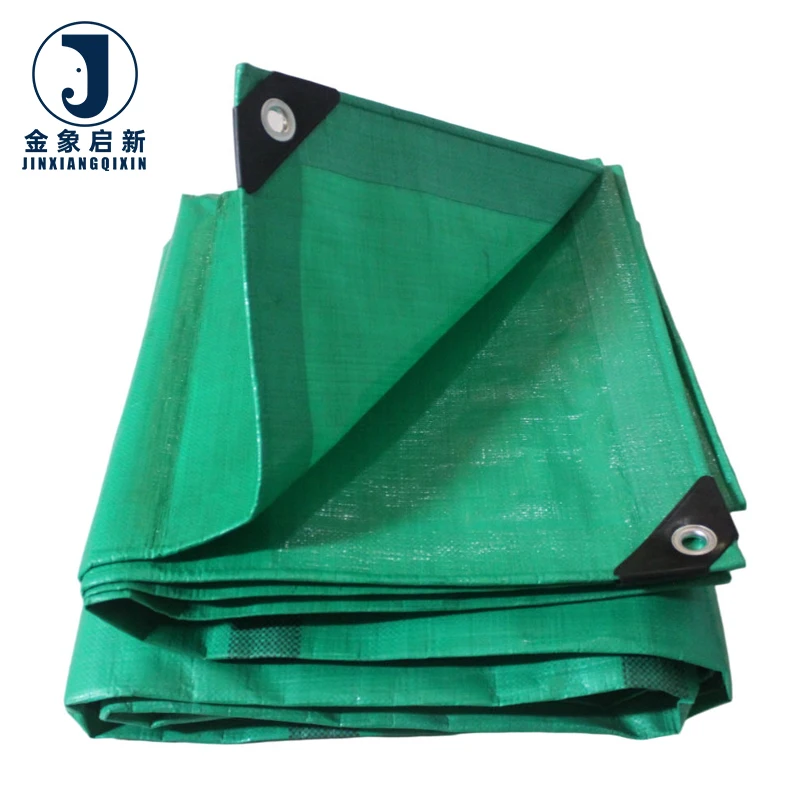
Precision-Fit Truck Covers — Every PE Tarpaulin for Truck and Trailer is sized to the vehicle’s exact dimensions, with reinforced hems and eyelets placed where tie-down straps actually land.
Technical Specifications
| Parameter | Value |
|---|---|
| Product Type | PE Tarpaulin |
| Material | HDPE weaving with LDPE lamination on both sides |
| Coating Method | Laminated |
| Weight (GSM) | 50gr/m2 ~ 220gr/m2 available (range covers product family — confirm the grade for this item) |
| Total Thickness | 0.2-0.4mm / 8 mil-16 mil / Custom |
| Roll Width | 6ft, 8ft, 10ft, 12ft or 2m, 4m, 6m |
| Roll Length | 100 yards, 100 meters, or as per buyer’s wish |
| Finished Tarpaulin Sizes | 2x2m, 3x3m, 3x5m, 4x4m, 4x5m, 4x6m, 4x8m, 4x10m, 5x5m, 5x6m, 5x8m, 5x10m, 6x6m, 6x8m, 6x10m, 8x10m |
| Edge Reinforcement | All four edges reinforced with PP rope in hem |
| Eyelets | Galvanized eyelets every 3ft or 1 meter interval |
| Corner Reinforcement | Reinforced plastic corners |
| Color | Blue, Blue/Orange, Green, Grey, Black, Clear, Grey/Green, Orange, or custom color |
| Key Features | Waterproof, washable, tear resistant, weather proof, mildew proof, acid and alkali resistance, UV treatment available (test basis not stated in source) |
| Standards | ISO, CE (referenced in company profile, specific product certification not confirmed in source) |
Application Suitability
| Application | Exposure & Requirement |
|---|---|
| Flatbed truck load covering | Highway wind uplift, rain ingress at seams, tie-down strap abrasion at flex points |
| Curtain-side trailer fabric | Repeated rolling and flexing, road spray, UV exposure during multi-day transit |
| Construction equipment transport | Dust and debris impact, puncture risk from sharp edges, secure tie-down under vibration |
| Agricultural bulk haul covers | Moisture from organic loads, prolonged sun exposure, frequent deployment and removal |
| Intermodal container top sheets | Crane handling stress at eyelets, weather exposure during yard storage |
Why Generic-Size Covers Fail on Specific Trailer Models
A tarpaulin that does not match your trailer’s exact deck dimensions will shift under highway wind, exposing cargo at the edges and misaligning eyelets with the chassis tie-down rails.
Fleet operators ordering standard cut sizes frequently discover that a cover sitting a few inches short on one side leaves a gap where road spray penetrates the load. Eyelets that do not line up with the trailer’s lashing points force drivers to improvise with bungee cords, which cannot sustain the tension required at highway speeds. When the cover is oversized instead, loose fabric flaps in the slipstream, accelerating wear at the hem and generating noise complaints during night deliveries [NEED_CITE: aerodynamic drag and fabric flutter on unsecured tarpaulin edges]. The PE Tarpaulin for Truck and Trailer solves this by cutting to the vehicle model’s measured dimensions before reinforcement and eyelet installation begin.
Cut-to-Model Sizing for Fleet Consistency
Transport fleets running mixed trailer types — flatbeds, curtain-siders, and low-loaders — need covers that swap between identical units without adjustment. Our PE Tarpaulin for Truck and Trailer is finished to the exact deck length, width, and drop of each trailer model in your fleet. This eliminates the practice of folding excess material under the load, which creates water channels where rain pools and eventually seeps through to the cargo below.
Eyelet Placement Aligned to Chassis Lashing Points
Galvanized eyelets are installed at 3ft or 1-meter intervals, but the starting offset from each corner can be adjusted so that eyelets align directly with the trailer’s built-in lashing rings. Reinforced plastic corners absorb the concentrated load at the four high-stress points where ratchet straps exert the greatest downward force during cornering and braking.
Hem Reinforcement for Sustained Road Vibration
The PP rope sewn into the hem on all four edges distributes tie-down load across a broader fabric area, preventing the edge from cutting through under constant tension. On long-haul routes where the load flexes over uneven surfaces, this reinforcement prevents the hem from separating before the body of the fabric reaches its service limit [NEED_CITE: hem separation failure mode in transport tarpaulins under cyclic loading].
What GSM, Lamination, and Weave Density Mean for Load Security
The HDPE woven base fabric provides the tensile backbone of the tarpaulin. Weave density — the count of tapes per unit width in both warp and weft — determines how well the fabric resists tear propagation when a puncture occurs from a sharp cargo edge. The LDPE lamination on both sides seals the woven structure, making the material fully waterproof and preventing moisture from wicking through the yarns. Weight in GSM reflects the combined mass of base fabric and coating; a heavier grade typically indicates a denser weave or thicker lamination, but GSM alone does not define tear performance. Two fabrics at the same GSM can differ substantially in strength depending on whether the weight comes from dense HDPE tapes or from excess coating fill. Specifying both the GSM and the intended application allows us to recommend a grade where the balance of weave density and lamination thickness matches the flex and abrasion demands of your specific route profile.
The Cost of Underspecifying for Highway Exposure
A cover specified at the lighter end of the GSM range for a long-haul flatbed may survive initial deployment but develop pinholes at the flex points where the load shifts during braking. Once the LDPE lamination cracks at these stress concentrations, water reaches the cargo within the first heavy rain. Eyelets pulled through unreinforced fabric at high-tension tie-down points leave ragged holes that cannot be field-repaired without replacing a section of the hem. Batch colour inconsistency across a fleet order becomes visible when covers from different production runs sit side by side on parked trailers, signalling poor quality control to the fleet operator’s clients [NEED_CITE: visual batch colour variation complaints in multi-unit fleet tarpaulin orders]. UV treatment without supporting test documentation leaves the buyer unable to verify that the anti-aging additives are sufficient for the expected outdoor exposure duration on their specific routes.
How Production Control Reduces Fleet Procurement Risk
Three full production lines and 36 sets of professional equipment allow this facility to run dedicated batches for fleet orders without interleaving unrelated production that could introduce colour drift. A 10-person R&D team develops samples within days, confirming custom sizing and reinforcement layout against the buyer’s trailer drawings before bulk production begins. Dedicated QA/QC at every stage — incoming HDPE yarn inspection, post-lamination weight check, finished eyelet pull-test — catches deviations before they reach the packing stage. Pre-shipment inspection covers 100% of finished covers, not a statistical sample, so every unit that ships has been individually checked for dimension, eyelet integrity, and hem straightness.
Documentation & Verification
- GSM verification record per roll confirming delivered weight matches quoted specification
- Custom dimension confirmation sheet showing measured length, width, and drop against trailer model drawing
- UV treatment test report provided where applicable — confirm test basis required for your market
- Pre-shipment inspection log covering eyelet pull strength, hem seam integrity, and surface condition
- Roll packing list with individual cover identification for fleet inventory tracking
- Certificate of origin and customs documentation for cross-border shipment
Fabrication, Handling & Storage
- Heat-seal parameters depend on the LDPE lamination thickness — confirm temperature and dwell time before production runs
- PP rope hem requires a specific stitch density to prevent rope migration under cyclic strap tension
- Galvanized eyelets must be set with sufficient washer compression to grip the laminate without crushing the HDPE weave
- Store rolls flat or vertically on end; horizontal stacking on uneven surfaces can create permanent crease marks in the LDPE coating
- Deploy covers in cold weather gradually — allow the material to reach ambient temperature before tensioning straps to avoid brittle cracking at eyelet points
- Field repairs on HDPE/LDPE laminated fabric require compatible PE repair tape applied to a clean, dry surface
What to Include in Your Next Enquiry
Provide the trailer make, model, and deck dimensions along with the tie-down rail configuration so that eyelet spacing and cover drop can be matched to your chassis. Specify the GSM range or end-use exposure — long-haul highway, short-distance construction, or yard storage — to receive a grade recommendation. Indicate whether you need finished covers or roll stock, and whether UV treatment documentation is required for your market’s compliance framework.
Frequently Asked Questions
Q: How do I specify custom tarpaulin dimensions for a specific truck or trailer model?
A: Provide the trailer manufacturer’s deck length, width, and side drop measurements, plus photos or drawings of the lashing rail layout. We use these to position eyelets at intervals that align with your chassis tie-down points and to size the cover with sufficient overlap to prevent edge gaps under wind load.
Q: What eyelet spacing and hem reinforcement options are available for moving loads?
A: Standard galvanized eyelets are set every 3ft or 1 meter, with the starting offset adjustable to match your trailer’s lashing rings. All four edges include PP rope reinforcement inside a folded hem. Reinforced plastic corners are added at the four stress-concentrated points where ratchet straps exert peak downward force.
Q: How can I verify that the quoted GSM matches the material I receive?
A: Request a GSM verification record with your order, which documents the measured weight per square meter of the delivered rolls or finished covers. Our pre-shipment inspection includes individual weight checks, and you can perform a cut-sample verification on receipt to confirm the specification was met.
Q: What UV test data is available to confirm outdoor lifespan on transport routes?
A: UV treatment is available as an option — confirm the test standard required by your market when placing the enquiry. We provide test documentation where applicable, and the test basis should match the exposure conditions your fleet encounters, including latitude, altitude, and typical daily sun hours on your routes.
Q: How do you ensure colour consistency across multiple covers in a fleet order?
A: All covers in a single fleet order are produced from the same HDPE batch and LDPE lamination run. The 100% pre-shipment inspection includes a visual colour comparison between units to identify any variation before packing, ensuring that covers installed side by side on parked trailers present a uniform appearance.