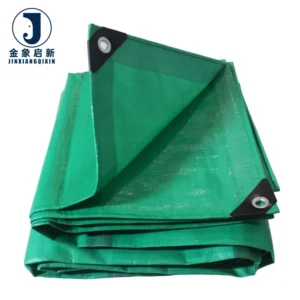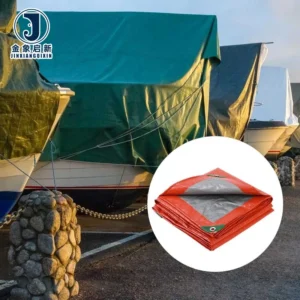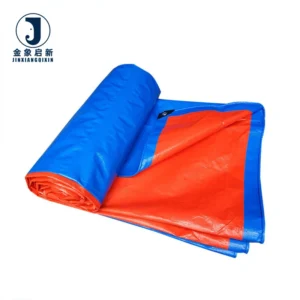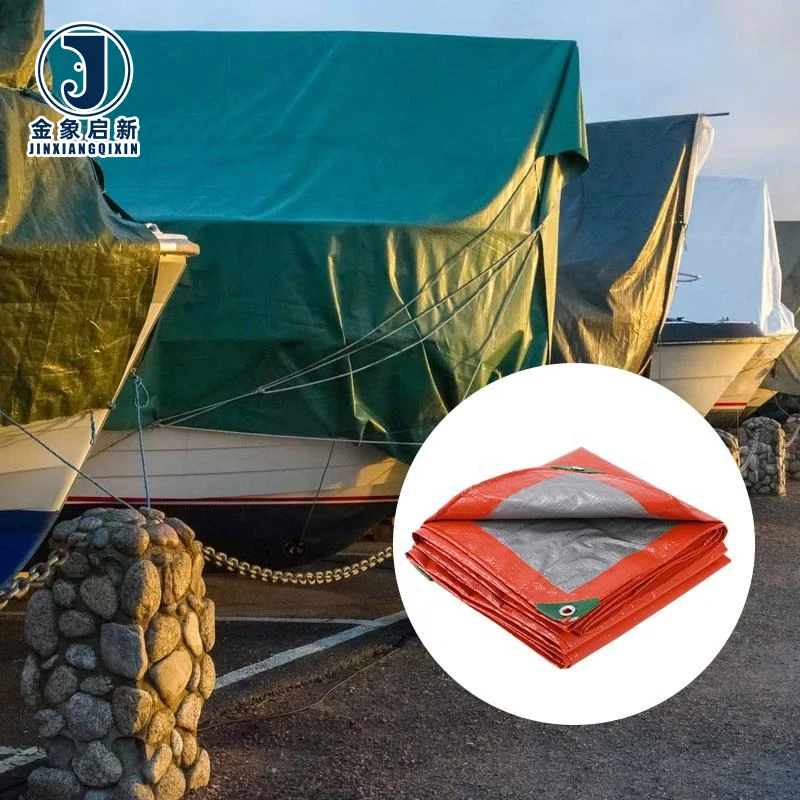
Precision-Cut Fitment — custom PE tarpaulin covers sized to specific trailer beds, eliminating the wind-flap and tie-down wear caused by generic off-the-shelf dimensions.
Technical Specifications
| Parameter | Value |
|---|---|
| Product Type | PE Tarpaulin |
| Material | Polyethylene (HDPE woven fabric laminated with LDPE) |
| Construction Option | 3-layer (1 fabric + 2 coating) or 5-layer (2 fabric + 3 coating) |
| Weight Range | 40–500 g/m² (confirm grade for application) |
| Thickness | 0.18–0.35 mm |
| Knitting Density | 8×8 / 10×10 / 12×12 / up to 20×20 |
| Tensile Strength | Meridian 300–1200 N/5cm, Latitude 250–1000 N/5cm (test basis not stated in source) |
| Grommet Spacing | 39.4 Inches (center to center) |
| Surface | Double waterproof surfaces |
| Treatment | UV resistant, anti-aging, mildew proof (test basis not stated in source) |
| Size | Custom size available |
| Color | Custom color available |
| Key Features | Reinforced rustproof grommets, reinforced corners, double waterproof surfaces |
Application Suitability
| Application | Exposure & Requirement |
|---|---|
| Flatbed trailer load cover | Constant wind load, road vibration, flex abrasion at tie-down zones, UV exposure |
| Curtain-side truck enclosure | Repeated rolling and folding, lateral wind pressure, daily handling stress |
| Temporary logistics yard storage | Prolonged UV and rain exposure, pallet abrasion, frequent removal and re-draping |
| Construction equipment transport cover | High wind uplift on highway transit, dust ingress, debris impact |
| Agricultural freight haul | Moisture ingress risk from organic loads, moderate UV, seasonal use cycles |
Why Generic Sizing Costs More Than Custom-Cut PE Tarpaulin for Truck and Transport
A cover that fits the trailer bed exactly stays put under highway wind loads; one that doesn’t will fail at the grommets within the first month.
Every fleet operator has replaced tarps that looked right on the quotation but flapped loose on the first motorway run. The excess material catches wind, creates a parachute effect, and concentrates force on the corner grommets until they tear through the fabric. Custom cut-to-model dimensions remove that slack, distributing tie-down tension evenly across the reinforced hem [NEED_CITE: wind uplift forces on poorly fitted truck tarpaulins during highway transit].
Tie-Down Points Built Around Your Rigging System
Standard grommet spacing works for general-purpose covers, but transport loads demand tie-down points aligned with the trailer’s anchor rails. PE tarpaulin sheets for fleet use are produced with grommet placement matching your specific ratchet strap configuration. The reinforced corners add extra material layers at the four highest-stress zones, preventing the tear propagation that starts when a loaded strap pulls against a single-layer edge.
Construction Grade Matched to Route Severity
Not every haul requires the same fabric weight. Short-distance yard transfers may only need a 3-layer lightweight PE tarpaulin for truck and transport use, while long-haul interstate routes expose covers to sustained high-speed wind and roadside debris. The 5-layer option introduces an additional woven HDPE ply that substantially raises tear resistance and prevents crumble-through at high-abrasion contact points. Selecting the right layer count for the route profile avoids both under-protection and unnecessary material cost [NEED_CITE: relationship between PE tarpaulin layer count and tear propagation resistance in transport applications].
Reading GSM, Density, and Layer Count Together
Weight per square metre alone does not predict how a cover will perform on a moving truck. A 200 g/m² sheet with a 12×12 knit and 5-layer lamination will outlast a 240 g/m² sheet with an 8×8 knit and 3-layer build, because the tighter weave distributes load across more yarns before a tear can propagate. Coating thickness from the LDPE lamination adds waterproof integrity but contributes less to tensile strength than the base HDPE fabric. When specifying PE tarpaulin for truck and transport duties, the knitting density and layer construction together tell you more about real-world durability than the weight figure on the quotation.
The Hidden Cost of Specifying on Weight Alone
A cover that matches the quoted GSM but uses a looser knit and thinner coating will look correct on the scale yet fail prematurely at flex points. Fleet operators who specify only by weight often see grommet pull-through and corner tearing within the first cycle of heavy weather, while the rest of the fabric remains intact. This mismatch between stated weight and actual construction balance is a recurring complaint across the transport sector [NEED_CITE: buyer reports of PE tarpaulin GSM matching quoted weight but early structural failure at tie-down points]. Asking for knitting density and layer count alongside GSM prevents this gap.
What We Build Into Every Transport Cover
Three full production lines and 36 sets of professional equipment allow bulk fleet orders to ship on schedule without splitting production across external workshops. The 10-person R&D team develops cut patterns from your trailer drawings, producing physical samples for fitment trials before the main run starts. Dedicated quality control checks every roll at coating, lamination, cutting, and grommet stages, with 100 percent pre-shipment inspection focused on hem integrity and grommet spacing accuracy. Custom colour matching and pattern printing for fleet branding are handled in-house, keeping batch consistency across all covers in one order.
Documentation & Verification
- Material specification sheet stating confirmed GSM, knitting density, and layer construction per roll
- Pre-shipment inspection record covering grommet spacing, hem reinforcement, and dimensional accuracy
- UV and anti-aging treatment verification data provided with the shipment
- Certificate of origin and customs documentation for international fleet supply chains
- Roll packing list with individual cover dimensions for receiving check
Fabrication, Handling & Storage
- Heat-seal parameters must be adjusted to the chosen layer construction; 5-layer builds require higher dwell time than 3-layer sheets
- Grommet setting force should match the LDPE coating thickness to avoid crushing the surrounding laminate
- Store rolls flat in shaded staging areas; direct sun on stacked rolls softens the LDPE surface and creates permanent crease marks
- Unfold covers fully before fitting in cold weather, as stiff LDPE lamination can crack if flexed while below freezing
- Clean with mild detergent only; solvents degrade the anti-aging treatment on the double waterproof surfaces
What We Need to Quote Your Fleet Order Accurately
Provide the trailer make, model, and bed dimensions so the cut pattern accounts for overhang, tail-gate clearance, and side curtain overlap. Confirm your tie-down rail layout and strap spacing so grommet placement aligns with your existing rigging hardware. Let us know the typical route profile and weather exposure so we can recommend the appropriate layer construction and knitting density for the cover’s working life.
Frequently Asked Questions
Q: How do I specify the right size for my trailer model?
A: Provide the trailer make, model, bed length, width, and any side curtain or tail-gate overlap requirements. Our R&D team produces a cut drawing for your approval before production begins, ensuring the PE tarpaulin for truck and transport use matches the exact load bed without excess material that creates wind flap or grommet stress.
Q: What is the difference between 3-layer and 5-layer for truck cover use?
A: A 3-layer construction uses one HDPE fabric ply laminated with two LDPE coatings, suitable for lighter-duty and shorter-haul applications. The 5-layer option adds a second fabric ply and an extra coating layer, substantially improving tear resistance and crumble protection for long-haul routes with sustained high-speed wind exposure and heavy cargo contact.
Q: Can grommet spacing be customized to match my tie-down rigging?
A: Yes. The standard 39.4-inch center-to-center spacing can be adjusted to align with your trailer’s anchor rail configuration. Reinforced corners and additional intermediate grommets are added at high-stress zones to distribute strap tension and prevent pull-through during transit.
Q: What GSM grade is recommended for long-haul highway exposure?
A: Heavy-duty grades in the upper weight range with a 12×12 knitting density and 5-layer construction are generally specified for long-haul highway use. The exact grade depends on your route conditions and cargo type. Request a material recommendation based on your specific trailer model and operating environment before placing the order.
Q: How is colour consistency maintained across multiple covers in one fleet order?
A: All covers within a single fleet order are produced from the same LDPE coating batch with in-line colour monitoring at the lamination stage. Pre-shipment inspection includes a side-by-side visual check against the approved colour reference to ensure uniform appearance across every cover before dispatch.