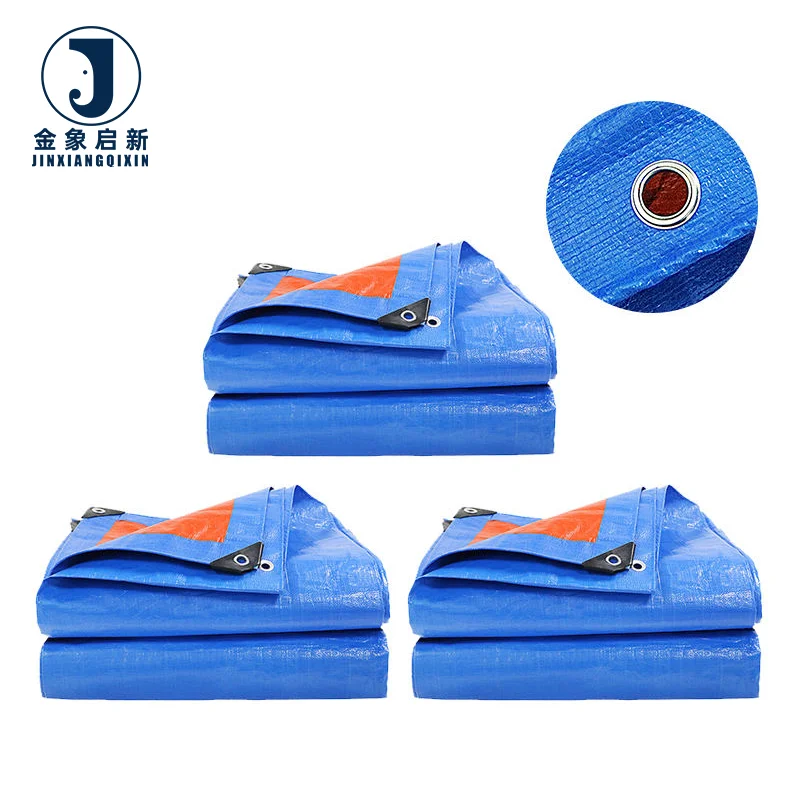
Proven Process Control — Nearly 30 years focused on coated fabric production, with dedicated QA/QC at every stage ensuring HDPE woven PE tarpaulin meets stated GSM and knitting density before dispatch.
Technical Specifications
| Parameter | Value |
|---|---|
| Product Type | PE Tarpaulin |
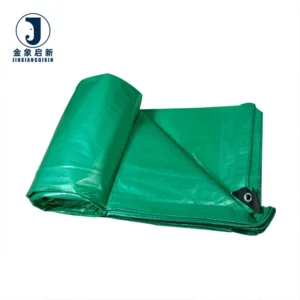
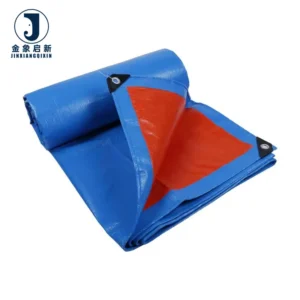
| Material | HDPE weaving with LDPE lamination on both sides |
| Weight (GSM) | 80-110 (lightweight) / 120-150 (medium-sized) / 160-240 (heavy-duty) |
| Thickness | 0.18-0.22 mm (lightweight) / 0.22-0.28 mm (medium-sized) / 0.30-0.35 mm (heavy-duty) |
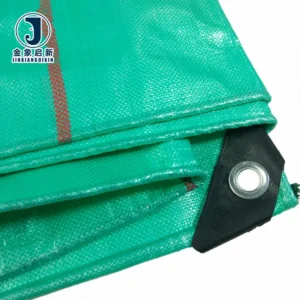
| Knitting Density | 8×8 (lightweight) / 10×10 (medium-sized) / 12×12 (heavy-duty) |
| Tensile Strength (Meridian/Latitude) | 300-500 / 250-450 N/5cm (lightweight); 500-800 / 400-700 N/5cm (medium-sized); 900-1200 / 700-1000 N/5cm (heavy-duty) (test standard not stated in source) |
| Roll Width | 6ft, 8ft, 10ft, 12ft, 2m, 4m, 6m |
| Roll Length | 100 yards, 100 meters, or custom |
| Edge Reinforcement | PP rope in hem on all four edges |
| Eyelets | Galvanized, every 3ft or 1 meter interval |
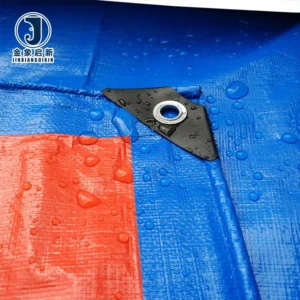
| Corners | Reinforced plastic corners |
| UV Treatment | Available (test basis not stated in source) |
| Key Features | Waterproof, mildew proof, anti-aging, tear resistant |
Application Suitability
| Application | Exposure & Requirement |
|---|---|
| Truck and trailer load covering | Constant road vibration, UV exposure, wind uplift at highway speed, flex-point abrasion at tie-downs |
| Transport fleet side curtains | Repeated rolling and unrolling, lateral wind load, abrasion against cargo edges |
| Logistics and freight protection | Rain and moisture ingress, dust contamination during multi-day transit, secure tie-down anchoring |
| Flatbed and low-loader coverage | Direct cargo weight bearing, pooling water on flat surfaces, frequent handling at loading bays |
Why Generic-Sized Truck Covers Fail in Fleet Operations
PE tarpaulin for truck and trailer loads must match the exact dimensions of the vehicle to prevent load shift and wind damage.
Fleet operators often source truck covers based on a standard size chart, only to find the tarpaulin drapes poorly over the specific trailer model. Excess fabric flaps in transit, creating friction points that wear through the LDPE lamination within weeks. Covers that fall short leave cargo edges exposed to rain and road spray. When a PE tarpaulin for truck and trailer applications is cut to the precise vehicle dimensions, these failure modes disappear — but this requires the manufacturer to work from the trailer drawing, not a generic size list [NEED_CITE: dimensional tolerance requirements for transport tarpaulins in commercial fleet operations].
Model-Specific Sizing for Every Trailer Configuration
Each truck and trailer model has distinct deck dimensions, headboard heights, and tailgate profiles. A PE tarpaulin cut for a standard flatbed will not accommodate the raised sides of a curtain-sider or the tapered rear of a refrigerated unit. By supplying PE tarpaulin for truck and trailer use in custom-cut finished sheets, the cover seats properly over the load, with eyelets aligning to the vehicle’s existing tie-down points.
Reinforced Edges Where the Load Flexes Most
The hem of a truck cover absorbs the highest stress during transit, particularly at corners and where ratchet straps cross the fabric. All four edges of each finished PE tarpaulin are reinforced with PP rope sewn into the hem, distributing tie-down load across a broader area rather than concentrating it at a single eyelet. Galvanized eyelets are spaced at 3ft or 1-meter intervals, matching standard strap spacing on most commercial trailers [NEED_CITE: tie-down spacing standards for cargo securement in road transport].
Weight Grades Matched to Haul Type
Not every transport load demands the same fabric weight. Lightweight 80–110 g/m² grades suit short-haul, fair-weather distribution runs where minimal cover weight reduces handling fatigue. Medium 120–150 g/m² covers serve regional freight with mixed weather exposure. Heavy-duty 160–240 g/m² PE tarpaulin handles long-haul and open-deck transport where sustained wind load and road abrasion demand higher tensile strength and puncture resistance.
How Knitting Density and GSM Together Define Cover Strength
The knitting density — the number of HDPE yarns per unit area in the woven base — determines how load is distributed across the fabric when a strap pulls on an eyelet. An 8×8 weave at 90 g/m² will resist strap pull differently than a 12×12 weave at the same weight, because the tighter weave spreads point load across more yarn intersections. GSM alone indicates total material mass but does not reveal whether that mass comes from thicker yarns or denser weaving. Tensile strength values across the three tiers reflect this combination: the heavy-duty 12×12 grade achieves meridian tensile strength of 900-1200 N/5cm because both yarn density and coating mass contribute to load-bearing capacity. For fleet buyers, specifying the knitting density alongside GSM prevents receiving a cover that is technically the correct weight but structurally unsuited to the tie-down forces encountered in transit [NEED_CITE: relationship between HDPE weave density and tensile performance in laminated tarpaulins].
Dual-Side LDPE Lamination and Waterproof Integrity
The HDPE woven base provides the structural skeleton, but waterproof performance depends on the LDPE lamination applied to both sides. Single-side lamination leaves the woven face exposed, allowing capillary water ingress through the yarn intersections during prolonged rain. Double-side lamination encapsulates the weave entirely, so water sheets off the surface rather than penetrating the fabric structure. This also protects the HDPE yarns from UV degradation, since the LDPE layer acts as a barrier between sunlight and the structural fibers.
The Cost of Overlooking Edge and Eyelet Specifications
A common field failure occurs not in the fabric body but at the hem and eyelet line. When PP rope reinforcement is omitted, the concentrated load from a ratchet strap cuts through the hem within a single trip. Eyelets punched at too-wide intervals leave unsupported fabric between anchor points, which billows and fatigues under wind load. Galvanized eyelets resist corrosion from road salt and rain, but if the base metal is not adequately coated, rust stains the tarpaulin and weakens the eyelet grip on the fabric. These failures typically appear after the first few uses, forcing early replacement and unplanned downtime for the fleet [NEED_CITE: common failure modes at tarpaulin edge reinforcement and eyelet zones in transport applications].
Why Source PE Tarpaulin from Jinan Jinxiang
Deep process control over HDPE weaving and LDPE lamination ensures the GSM and knitting density stated on the quotation match the delivered product. Three full production lines and 36 sets of professional equipment support bulk roll and finished-sheet output with consistent lead times. A 10-person R&D team handles model-specific sizing, custom eyelet spacing, and sample development within days rather than weeks. Dedicated QA/QC runs at every production stage, with 100% pre-shipment inspection verifying dimensions, weight, and edge reinforcement before dispatch. Custom widths, colours, and printed branding are available without the long lead times and high minimums often associated with non-standard orders. ISO and CE certified processes underpin all production, providing traceable documentation for fleet compliance records.
Documentation & Verification
- Material specification sheet confirming HDPE base fabric, LDPE lamination, knitting density and stated GSM for each roll
- Pre-shipment inspection record verifying finished sheet dimensions against the trailer model drawing
- UV treatment test report provided where anti-UV grades are specified in the purchase order
- Roll packing list with individual roll weight and GSM for batch traceability
- Certificate of origin and customs documentation supporting international freight clearance
Fabrication, Handling & Storage
- Hot-air welding parameters must account for LDPE lamination thickness to achieve full seam adhesion without burning through the HDPE base
- Galvanized eyelets should be set with reinforced plastic corner patches at all four corners to handle peak strap load
- Store rolls horizontally on pallets to prevent permanent creasing of the LDPE lamination surface
- Unfold finished sheets in moderate temperatures; cold-stiffened LDPE may crack if forced open below freezing
- Clean with mild soap and water; solvent-based cleaners can degrade the LDPE lamination layer
- When cutting sheets from roll stock, plan the layout to minimize off-cuts and maintain eyelet alignment with the weave direction
Requesting a Quotation
To specify the correct PE tarpaulin for truck and trailer coverage, provide the trailer model or exact deck dimensions, preferred GSM tier, and eyelet spacing requirement. Indicate whether you need finished cut sheets or roll stock, along with colour and any printed branding. Share your annual volume and destination market so we can align production scheduling and documentation to your compliance requirements.
Frequently Asked Questions
Q: How do I verify the GSM of PE tarpaulin matches my order on arrival?
A: Each shipment includes a pre-shipment inspection record and roll packing list stating the measured GSM per roll. On receipt, you can cut a measured sample and weigh it on a calibrated scale to confirm. Our QA process checks GSM at multiple production stages, so discrepancies at delivery are rare. If any variance is found, the inspection documentation provides the traceability needed for resolution.
Q: Can I specify custom size and eyelet spacing for my trailer model?
A: Yes. Provide the trailer model drawing or exact deck dimensions including headboard height and tailgate profile. Eyelet spacing can be set at intervals matching your existing tie-down hardware, rather than the standard 3ft or 1-meter spacing. Finished sheets are cut, hemmed with PP rope reinforcement, and punched to your specification before dispatch.
Q: What UV treatment options are available and how are they verified?
A: UV treatment is available as an option across all GSM tiers to extend outdoor service life. The specific treatment level and test basis depend on the grade selected and the destination market requirements. Request the UV test report when placing your order so the claim is documented and verifiable against your local compliance standards.
Q: Should I order PE tarpaulin in rolls or as finished cut sheets?
A: Roll stock suits buyers with in-house fabrication capability who cut and weld to their own patterns, offering lower unit cost and flexible sizing. Finished cut sheets are ideal for fleet operators who need ready-to-install covers with hemmed edges, eyelets, and reinforced corners. Roll format also allows batch colour consistency checks before any fabrication work begins.
Q: How are the edges and eyelets reinforced for tie-down durability?
A: All four edges of each finished sheet are hemmed with PP rope sewn inside, distributing strap load across the full hem width rather than a single stitch line. Galvanized eyelets are punched at regular intervals and reinforced with plastic corner patches at all four corners, where tie-down forces concentrate most during transit and wind loading.