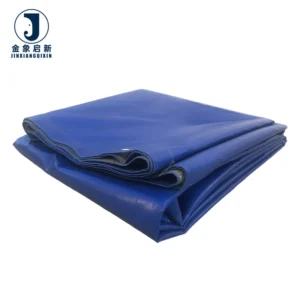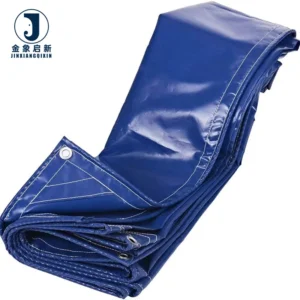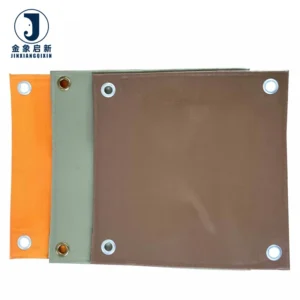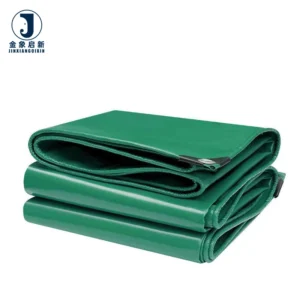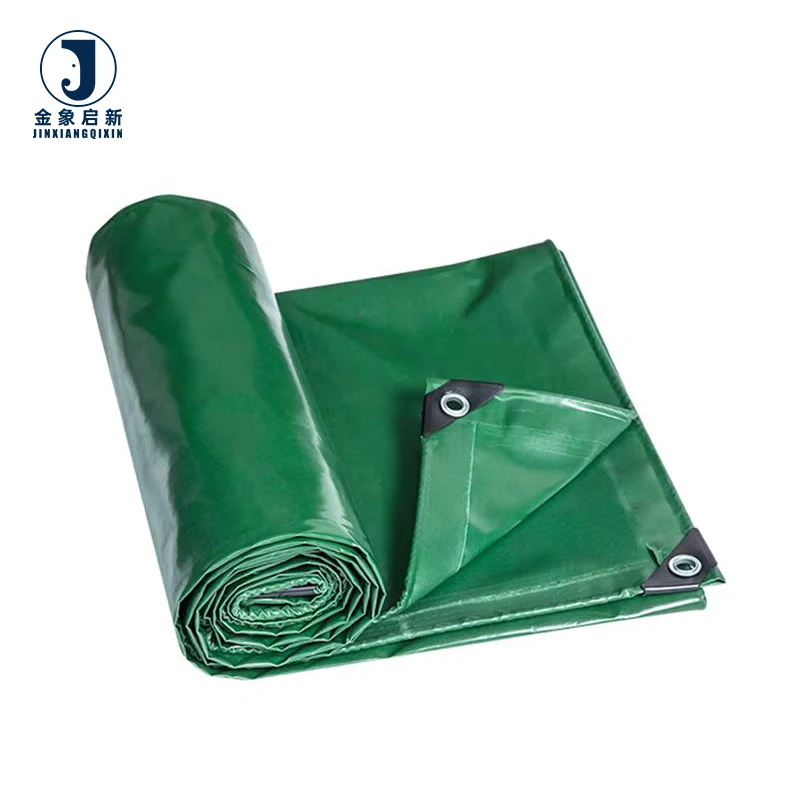
Precision Coating Weight Control — verified GSM on every roll before dispatch, built for fleet operators who cannot afford cover failure at the flex point.
Technical Specifications
| Parameter | Value |
|---|---|
| Product Type | PVC Coated Tarpaulin Roll |
| Base Fabric Denier | 1000×1000 |
| Coating Material | PVC |
| Coating Method | Knife Coated |
| Weight | At least 450 GSM |
| Waterproof | Yes |
| Oilproof | Yes (standard not stated in source) |
| Tear Resistance | Claimed tear-resistant (test standard not stated) |
| UV Treatment | Anti-UV available (test basis not stated) |
| Color Option | Black back |
| Custom Size | Width and length available to order |
| Roll Format | Available |
Application Suitability
| Application | Exposure & Requirement |
|---|---|
| Truck side curtain | Constant flexing at load points, road abrasion, tie-down tension cycles, weather exposure |
| Flatbed trailer top cover | Direct UV and rain exposure, wind load stress, repeated tensioning and release |
| Fleet vehicle cover | Outdoor parking, UV and precipitation, fitment to specific vehicle contours |
| Transport equipment housing | Prolonged outdoor storage, dust and moisture ingress prevention, mechanical contact |
Why Knife Coating Matters When the Seam Fails Before the Fabric
A truck cover that splits at the welded seam was never engineered for road flex.
Fleet operators see it repeatedly: the PVC coated tarpaulin for truck and transport use holds up across the panel, but the heat-welded joint gives way where the load shifts and the fabric bends. The failure is not the material itself — it is the adhesion between coating and base fabric at the weld line. Knife coated construction forces PVC into the woven structure rather than laminating a film on top, producing a bond that survives the thermal cycle of heat sealing without delaminating. [NEED_CITE: tensile and tear test methods for coated fabrics per ISO 1421]
Adhesion at the Weld Line Under Road Vibration
When a trailer flexes over uneven road surfaces, the side curtain fabric absorbs cyclic stress at every tie-down point and corner radius. PVC coated tarpaulin for truck and transport applications must maintain coating-to-yarn adhesion through thousands of these flex cycles. Knife coating achieves this by pushing the PVC compound through the weave under blade pressure, locking the coating into the base fabric structure. The result is a weld zone where the seam strength approaches the base fabric strength, reducing the likelihood of joint failure under operational load.
Withstanding Abrasion at Contact and Flex Points
Truck covers experience concentrated wear where the fabric contacts the trailer frame, load edges, and tie-down hardware. The 1000×1000 denier woven base provides the structural backbone that resists tear propagation when surface abrasion eventually penetrates the coating layer. A tear in a moving-load cover does not stay small — it travels along the weave under wind load and vibration. The dense yarn construction in this PVC coated tarpaulin for truck and transport use limits how far a puncture or cut can spread before repair is made. [NEED_CITE: coated fabric tear propagation behaviour under cyclic mechanical stress]
Reading the Specification Beyond the GSM Number
Weight in GSM tells you how much material is on the roll, but it does not tell you how that weight is distributed between base fabric and coating. A heavy coating on a light base fabric produces a stiff material that cracks at fold points. A light coating on a heavy base fabric leaves yarns exposed to moisture ingress. The 1000×1000 denier base paired with knife coating at a minimum of 450 GSM targets the balance point where the woven structure carries the mechanical load and the PVC coating provides the environmental seal. The black back option serves a functional role on installed truck covers — controlling light transmission through the fabric and maintaining a uniform appearance across the fleet when panels are viewed from below or at an angle.
What Happens When the Roll Specification Does Not Match the Trailer
A generic-size truck cover forces the installer to stretch or gather fabric at the edges, creating stress concentrations that accelerate seam failure. Colour variation between rolls in the same order becomes visible once installed side by side on adjacent trailers, requiring rework or panel replacement. Anti-UV treatment claimed without a supporting test result leaves the fleet operator guessing when the cover begins to chalk and embrittle after months of road exposure. These are not material defects — they are specification and verification gaps that surface only after the cover is in service. [NEED_CITE: pre-shipment inspection standards for coated fabric colour consistency]
Why Sourcing This Fabric Here Reduces Fleet Downtime
Three full production lines and 36 sets of professional equipment support bulk roll output with consistent coating weight across the production run. The 10-person R&D team handles custom width, length, and reinforcement specification — not as an afterthought, but as a core part of the quotation process. A dedicated QA/QC process inspects every roll before shipment, checking GSM against the stated value and verifying coating adhesion. Samples are developed within days when custom sizing or treatment confirmation is needed before committing to a fleet-wide order. Custom-fit covers are produced to specific trailer model dimensions, eliminating the generic-size mismatch that causes premature edge failure. [NEED_CITE: ISO 9001 quality management requirements for coated textile manufacturing]
Documentation & Verification
- Material specification sheet stating minimum 450 GSM, 1000×1000 base fabric, and knife coating method
- Pre-shipment inspection record confirming roll weight and coating adhesion per batch
- UV treatment test report provided where anti-UV grade is specified on the purchase order
- Roll packing list with individual roll dimensions for container loading verification
- Certificate of origin and customs documentation for cross-border fleet supply
Fabrication, Handling & Storage
- Heat-seal temperature must match the knife coated PVC compound — test weld on a roll sample before production runs
- Eyelet placement at tie-down points should be reinforced with additional PVC patches to distribute load across the 1000×1000 base fabric
- Store rolls upright on a flat surface to prevent permanent creasing in the coating layer
- Allow cold-stored rolls to reach ambient temperature before unrolling to avoid coating micro-cracking
- Clean installed covers with mild detergent only — solvent-based cleaners can soften the PVC coating surface
- Plan cutting layout to minimise cross-grain seams on long trailer side curtains, preserving flex-point integrity
What to Include in Your Enquiry
Provide the trailer or vehicle model, the panel dimensions required, and whether you need rolls for in-house fabrication or finished covers with eyelets and hem reinforcement. Specify the operating environment — particularly UV exposure duration and any flame-retardant grade required by your market or site regulations. Confirm the colour requirement and whether multiple rolls must match for side-by-side installation.
Frequently Asked Questions
Q: How do I confirm the GSM on arrival matches the truck cover specification I ordered?
A: Request the pre-shipment inspection record that documents the measured weight per square metre for each roll in your order. On receipt, you can verify by cutting a measured sample from the roll edge and weighing it against the stated minimum of 450 GSM. Discrepancies should be reported before fabrication begins.
Q: Can this tarpaulin be cut and welded to fit my specific trailer model dimensions?
A: Yes. The knife coated PVC construction supports heat-seam welding, and custom width and length are available to match specific truck and trailer models. Provide the exact panel dimensions and seam layout so the cover is fabricated to fit without stretching or gathering at the edges.
Q: What anti-UV test documentation comes with the material?
A: Anti-UV treatment is available, and a test report is provided where the treatment is specified on the order. Confirm the exposure conditions and any performance standard required by your fleet maintenance policy or regional regulation so the correct grade can be selected and documented.
Q: How is colour consistency maintained when I order multiple rolls for one fleet?
A: Rolls within a single production run are manufactured from the same coating batch, and a roll-to-roll colour consistency check is part of the pre-shipment inspection. If your order spans multiple production runs, request colour reference samples before dispatch to verify match across batches.
Q: What reinforcement options are available at eyelet and hem positions?
A: Reinforcement patches and additional coating layers can be applied at eyelet positions and hem edges to distribute tie-down load across the 1000×1000 base fabric. Specify the tie-down spacing and hardware type when ordering so the reinforcement layout matches your fleet’s load-securing system.