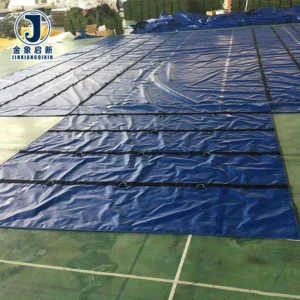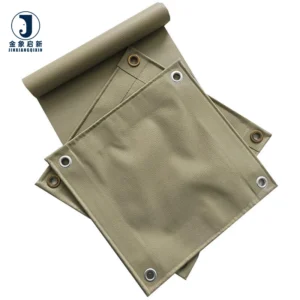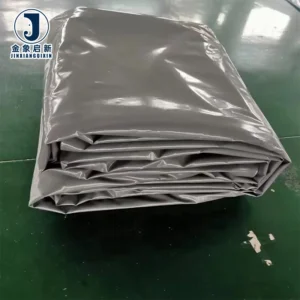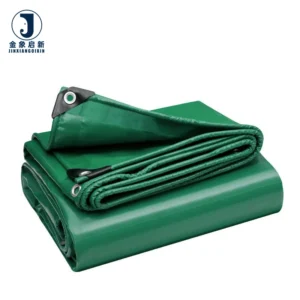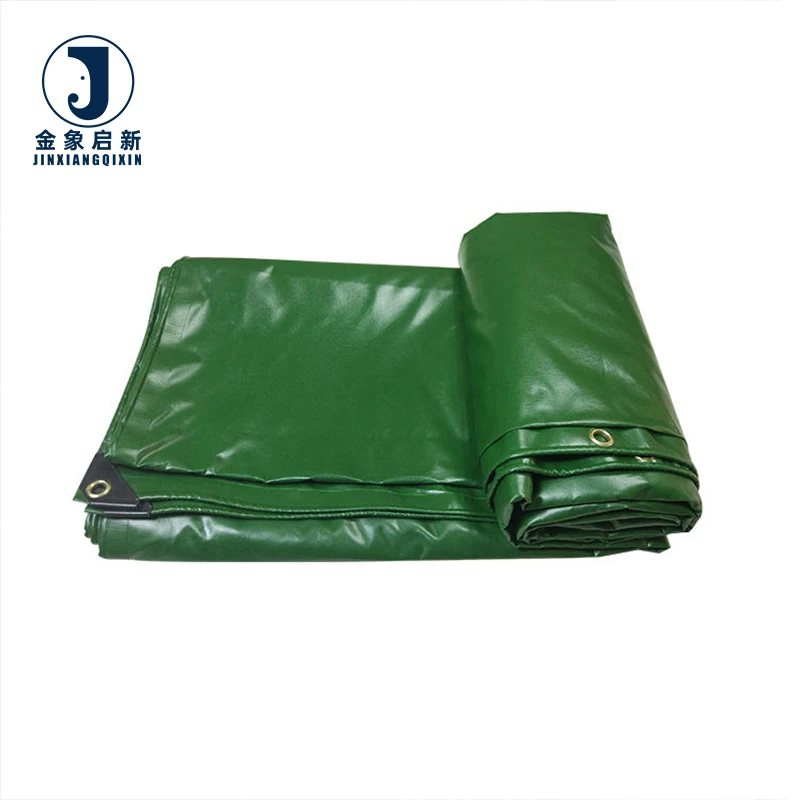
Proven Coating Control — Three dedicated production lines maintain strict PVC coating weight and adhesion consistency across every roll of truck tarpaulin we produce, ensuring your fleet covers meet spec without surprises on arrival.
Technical Specifications
| Parameter | Value |
|---|---|
| Product Type | PVC Coated Tarpaulin |
| Base Fabric | High-strength polyester mesh fabric |
| Coating Material | PVC |
| Coating Method | Laminated technology & Hot-melt Coating technology |
| Weight Options | 350gsm / 420gsm / 500gsm / 550gsm / 600gsm / 750gsm |
| Thickness Options | 0.32mm / 0.35mm / 0.4mm / 0.45mm / 0.5mm / 0.65mm |
| Roll Width | 2m / 2.1m |
| Roll Length | 75m (for 2m width) / 50m (for 2.1m width) |
| Custom Sizing | Cut to customer specification or sold by roll inventory |
| Color Range | Blue / Red / Yellow / Light blue / Grey (Customizable) |
| Waterproof | Fully waterproof coated construction |
| UV Treatment | UV Stable (test basis not stated — confirm grade for your market) |
| Flame Retardant | Available upon request (grade not stated — specify required standard) |
| Anti-Mildew | Yes |
| Anti-Static | Anti-Static treatment (standard not stated — confirm for your application) |
| Cold Crack Resistance | Yes (temperature not stated) |
| Colorfastness | Best color fastness (grade not stated) |
| Service Life | 3-7 years under normal circumstances |
| Repair Method | Easy to repair by welding |
| Recyclability | 100% Recyclable |
| Certifications | ISO 14001, ISO 45001, CE, RoHS |
Application Suitability
| Application | Exposure & Requirement |
|---|---|
| Flatbed trailer cover | Highway wind drag, tie-down abrasion, UV exposure across varied climate zones |
| Curtain-side trailer fabric | Constant flexing at folds, road debris impact, repeated roll-up tension cycles |
| Tipper truck tarpaulin | Heavy load contact, abrasive aggregate dust, dynamic load shift stress |
| Dump truck rear flap | Drag from unloading material, puncture risk, thermal expansion in direct sun |
| Cargo ship deck cover | Salt spray exposure, sustained moisture, UV intensity over extended voyages |
Why Generic Sizing Fails a PVC Coated Truck Tarpaulin at the Tie-Down Point
We pattern each cover to the exact trailer model so there is no drag, no gap and no cargo exposure.
A truck cover cut to a generic size that does not fit the specific trailer model wastes material at the edges while leaving critical zones under-tensioned. When the tarp is too loose, wind gets underneath and flaps the fabric against the load, causing abrasion damage that shows up within the first few months. If it is too tight, every tie-down point becomes a stress concentrator, and the PVC coated truck tarpaulin tears at the eyelet before the body of the fabric ever fails. [NEED_CITE: stress concentration factors at fabric tie-down points under dynamic load]
Cut-to-Model Precision for Every Trailer in the Fleet
Each PVC coated truck tarpaulin we produce starts from the vehicle model drawing you provide, not from a standard size chart. Flatbed, curtain-side and tipper trailers all have different corner radii, tail gate profiles and lashing rail positions, so we build a digital pattern for every model in your fleet before any material is cut. This eliminates field modification, reduces waste and ensures the cover sits flush against the load with no exposed edges.
Welded Seams That Hold Where the Load Flexes Most
The failure point on a truck cover is almost always the welded seam at a flex zone, not the fabric itself. Our hot-melt coating technology creates strong adhesion between the PVC layer and the polyester mesh, so when the material is heat-welded on site the bond strength across the seam matches the parent fabric. [NEED_CITE: adhesion strength requirements for welded coated fabric seams per ISO 1421]
Specifying GSM Against Actual Load Exposure
Selecting the correct weight from our range — 350gsm through to 750gsm — depends on how the cover is used rather than how thick the buyer thinks it should be. A curtain-side trailer that flexes thousands of times per day needs a different construction than a static equipment cover, and the base fabric denier matters as much as the coating weight. We supply a material specification sheet stating the exact base fabric, coating weight and total GSM for the grade quoted, so you can verify the PVC coated truck tarpaulin on arrival against what was agreed.
How GSM and Base Fabric Density Work Together
GSM alone does not define strength — it is the combination of base fabric yarn denier, weave density and coating weight that determines tensile and tear performance. A 500gsm fabric with a high-density 1000D mesh will outperform a 600gsm fabric built on a loose 500D weave because the yarn structure carries the load while the PVC coating transfers stress between fibres. Hot-melt coating penetrates the mesh more thoroughly than laminated construction, producing higher peel strength at the weld line, which is critical when a truck cover flexes under wind load every day.
The Hidden Cost of Skipping Model-Specific Patterning
When a fleet operator buys generic-sized covers to save time on specification, the consequences appear on the road within weeks. Oversized fabric catches wind like a sail, increasing fuel consumption and causing premature abrasion where the material rubs against the trailer frame. Undersized covers pull away from the lashing rails, exposing cargo to rain and forcing the driver to improvise with additional straps that concentrate load on a single eyelet. [NEED_CITE: aerodynamic drag increase from poorly fitted truck tarpaulin covers] Both scenarios result in warranty claims and replacement orders that cost more than getting the pattern right the first time.
Why Transport Fleets Specify This PVC Coated Truck Tarpaulin
Our three full production lines run dedicated truck cover grades, so bulk orders maintain roll-to-roll consistency without colour variation between batches. The ten-person R&D team develops a physical pattern and sample for each new trailer model before production begins, eliminating guesswork at the cutting stage. Every roll undergoes 100% pre-shipment inspection covering seam weld integrity, eyelet pull strength and GSM verification, documented in the inspection record that ships with the order. [NEED_CITE: pre-shipment inspection protocol for coated fabric products] We supply UV stability and flame-retardant test reports matched to the grade quoted, so your fleet passes compliance checks at the depot and on the road.
Documentation & Verification
- Material specification sheet stating base fabric denier, coating weight and total GSM for each roll
- UV stability and flame-retardant test reports supplied where applicable, matched to the quoted grade
- Pre-shipment inspection record covering weld integrity, eyelet pull strength and dimensional accuracy
- Roll packing list with individual roll weights and lengths for customs and inventory control
- Certificate of origin and full customs documentation for international dispatch
Fabrication, Handling & Storage
- Heat-weld seams at manufacturer-recommended temperature to match the PVC hot-melt coating bond strength
- Reinforce all tie-down points with additional PVC patches to distribute load across the polyester mesh base
- Store rolls horizontally on pallets to prevent permanent creasing of the 2m or 2.1m width material
- Allow cold-stored rolls to reach ambient temperature before unrolling to prevent coating micro-cracking
- Use mild detergent only — harsh solvents degrade the PVC surface and compromise colorfastness over time
- Field-repair punctures and cuts by heat welding a patch of matching GSM material from offcut stock
Getting the Right Specification for Your Fleet
Tell us which trailer models you need to cover, including the make, year and body type, so we can build an accurate pattern before quoting. Let us know if your route crosses climate zones that require cold-crack resistance or if local regulations mandate a specific flame-retardant grade. If fleet branding is required, provide your Pantone colour reference and logo artwork so we can develop a printed sample for approval. Specify whether you need finished covers with eyelets and reinforced hems or roll stock for your own fabrication shop.
Frequently Asked Questions
Q: How do you cut a cover to fit my specific truck or trailer model?
A: We work from the vehicle manufacturer dimension drawing or a physical measurement template you provide. Our R&D team builds a digital pattern for each model, adds seam allowances and tie-down point locations, then cuts a sample for your approval before bulk production begins. This ensures every PVC coated truck tarpaulin fits flush with no gaps and no excess material dragging on the road.
Q: How is GSM verified on arrival so the material matches what was quoted?
A: Every order ships with a material specification sheet stating the exact base fabric denier, coating weight and total GSM for each roll. Our pre-shipment inspection record documents the measured values taken during production. You can cross-check these against the quotation to confirm the grade delivered matches the grade ordered, eliminating the common problem of material arriving lighter than agreed.
Q: What UV or flame-retardant test reports come with the shipment?
A: Where UV stability or flame retardant treatment is specified in your order, we supply test reports from recognised standards bodies confirming the grade achieved. The reports are matched to the specific batch and grade quoted, so you can present them to fleet compliance officers or site safety managers without requesting additional documentation after delivery.
Q: How do you control colour consistency across multiple covers in one fleet order?
A: All rolls for a single fleet order are coated in the same production run using the same PVC batch, eliminating colour drift between individual covers. We inspect every roll against the approved Pantone or RAL reference under standardised lighting before packing. If your order spans multiple production runs due to volume, we hold a retained sample from the first run to match subsequent batches.