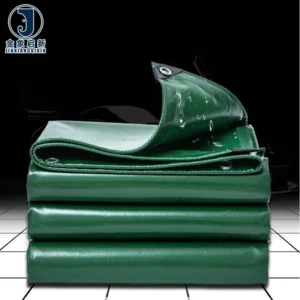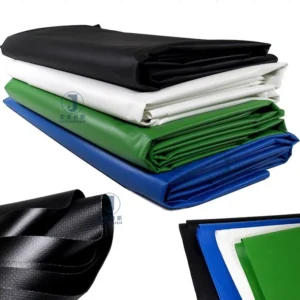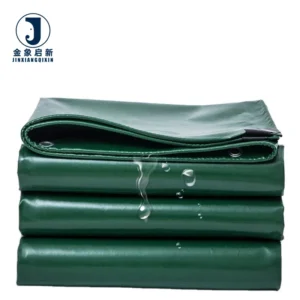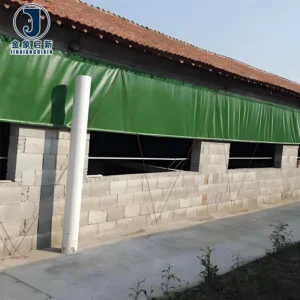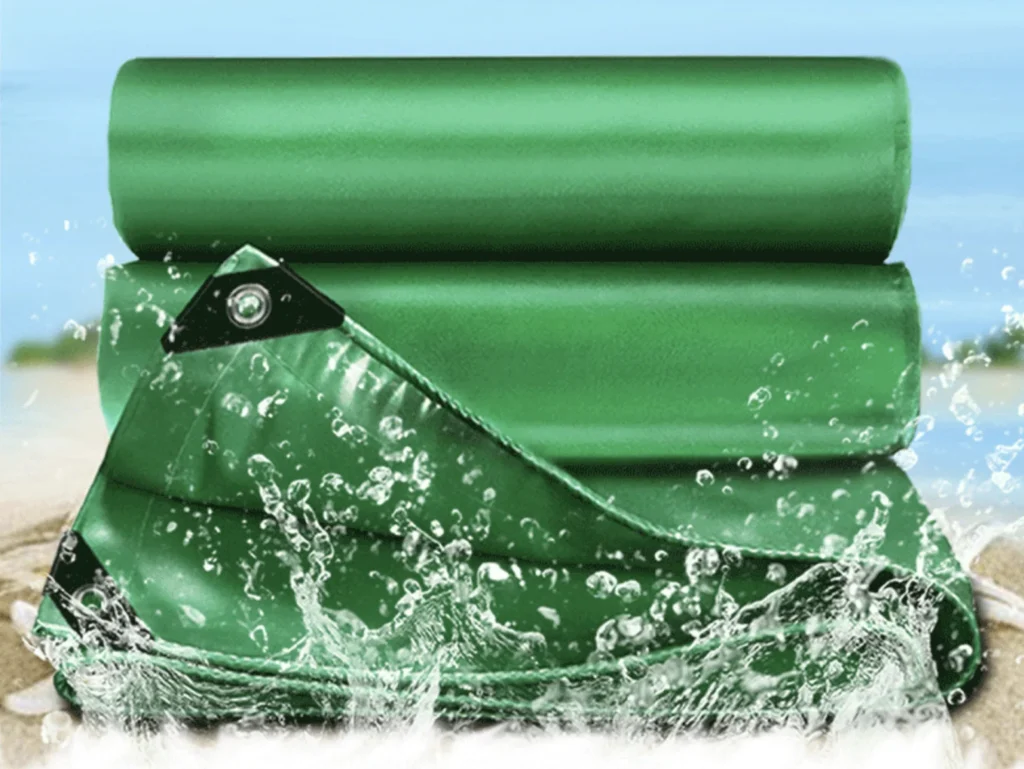
Batch Consistency Control — Every roll of PVC Knife Coated Tarpaulin for Truck Cover and Tent undergoes in-process coating weight verification and 100% pre-shipment inspection to eliminate GSM deviation and colour variation across your order.
Technical Specifications
| Parameter | Value |
|---|---|
| Product Type | PVC Coated Tarpaulin |
| Material Construction | PVC Knife Coated Fabric |
| Coating Method | Knife Coated |
| Treatment Options | Fire retardant, UV resistance, antibacterial, mildew proof, oil and stain resistance, acid and alkali resistance (grades available on request — confirm the specific standard required for your market) |
| Temperature Resistance | High temperature and cold resistance (specific range available upon specification review) |
| Welding Compatibility | HF (High Frequency), Hot Air, Sewing |
| Surface Property | Self-cleaning, anti-oxidation, weather-resistant |
| Flexibility | Highly flexible, resistant to cracking under dynamic load |
| Standards | ISO, CE |
Application Suitability
| Application | Exposure & Requirement |
|---|---|
| Truck and trailer side curtain covers | Constant flexing at load points, road debris abrasion, prolonged UV and weather exposure, requirement for weld integrity at stress seams |
| Outdoor tent and shade structure fabric | Tensile load across spans, UV degradation resistance, water ingress prevention, repeated assembly and folding cycles |
| Portable storage and airport hangar covers | Large-format span tension, wind load stress, long-term weathering, fire safety compliance in aviation environments |
| Tensile and stadium architectural structures | Permanent tensile stress, environmental exposure, aesthetic surface consistency, membrane welding precision |
| Inflatable and membrane structures | Air-pressure induced stress, fold-line durability, rapid deployment abrasion |
What Happens When the Weld Fails Before the Fabric Does
Seam failure at flex points is rarely a fabric problem — it is a coating adhesion and welding mismatch.
I have seen heavy-grade coated rolls fail at the weld line while the body fabric remains intact, particularly on truck side curtains where the load flexes during transit. The weld becomes the weakest link because the coating formulation or thickness does not match the heat and pressure profile of the fabricator’s equipment [NEED_CITE: HF and hot air welding parameters for PVC coated polyester fabrics]. This PVC Knife Coated Tarpaulin for Truck Cover and Tent is engineered with knife coated construction specifically to deliver uniform coating adhesion across the roll, giving fabricators a predictable welding window whether using HF, hot air, or sewing methods.
Welding Versatility Across Fabrication Methods
The PVC Knife Coated Tarpaulin for Truck Cover and Tent supports three distinct joining methods. HF welding produces clean, airtight seams suited to inflatable structures and sealed tent panels. Hot air welding allows continuous linear seams on long truck curtain runs. Sewing with welded tape overlays provides mechanical reinforcement at high-stress tie-down points on transport covers.
Coating Adhesion and Peeling Resistance in Dynamic Applications
Knife coating deposits the PVC compound directly onto the base fabric under controlled blade pressure, forcing the coating into the weave structure rather than sitting on top. This produces higher peeling resistance compared to laminated alternatives. For truck side curtains that flex with every load shift and tent membranes under permanent tensile stress, peeling resistance determines whether the coating delaminates at seams and fold lines over time [NEED_CITE: peel strength test methods for coated fabrics per ISO 1421]. The self-cleaning surface treatment further reduces contaminant buildup that can accelerate coating degradation in outdoor exposure.
Why Knife Coating Matters for Structural and Transport Fabrics
Knife coated construction controls both the coating weight and its penetration into the base fabric weave. The PVC compound fills the interstices between warp and weft yarns, locking the coating mechanically to the substrate. This matters in two ways: first, tensile and tear loads are distributed through the coating-fabric matrix rather than the coating carrying load independently; second, thermal welding creates a homogeneous joint because the coating material is continuous through the fabric cross-section. Fabricators working with HF or hot air equipment will find consistent weld behaviour roll to roll, reducing scrap from weld burn-through or incomplete fusion [NEED_CITE: coating adhesion mechanisms in knife coated PVC textiles]. Available treatment options — including fire retardant, UV resistance, and antibacterial — are compounded into the coating layer during production, so their presence can be verified through standard laboratory testing of the delivered roll.
The Cost of Colour and Weight Inconsistency Across a Multi-Roll Order
When a tensile structure or truck fleet order spans multiple rolls, variation in GSM or colour between rolls becomes visible only after fabrication and installation. A truck operator with ten trailers covered in side-by-side panels of slightly different shade faces a re-order or a reputation hit. A membrane structure contractor cutting panels from rolls with different actual weights gets uneven tension behaviour across the finished canopy. These problems surface after cutting, welding, and installation — making rework expensive and often impossible without scrapping fabricated panels [NEED_CITE: batch consistency requirements in architectural textile procurement].
Why Source This PVC Coated Tarpaulin from Jinxiang
- Coating process control: Three full production lines with 36 sets of professional equipment allow in-process monitoring of coating weight and adhesion at every stage, not just final inspection.
- R&D sample turnaround: A dedicated 10-person R&D team develops custom width, colour, and treatment samples within days, enabling you to verify welding compatibility and colour accuracy before committing to bulk.
- Application-specific QA: Quality checks are staged at coating, curing, and winding, with 100% roll inspection before shipment — catching GSM deviation and surface defects before they leave the facility.
- Fabrication support: Welding parameters for HF, hot air, and sewing are characterised during production, so technical guidance on heat settings and feed rates is available with your order.
- Documentation alignment: Material specification sheets, test reports for applicable treatments, and pre-shipment inspection records ship with your rolls, providing traceability from production batch to your receiving dock.
Documentation & Verification
- Material specification sheet stating GSM, base fabric, and coating weight for each roll
- Fire retardant test report citing the specific grade and standard applicable to your market
- UV resistance test documentation with stated test method and exposure duration
- Pre-shipment inspection record confirming 100% roll-by-roll weight and colour check
- ISO and CE certificates included with shipment documentation
- Certificate of origin and customs support documents for international freight
Fabrication, Handling & Storage
- HF welding: calibrate generator output to the specific PVC Knife Coated Fabric thickness before production runs
- Hot air welding: match nozzle temperature and travel speed to the knife coated layer for full fusion without scorching
- Store rolls upright on pallets to prevent flat-spot creasing across the PVC coated surface
- Allow cold-stored rolls to reach ambient temperature before unrolling to avoid coating micro-cracking
- Clean self-cleaning surfaces with mild detergent only; avoid solvents that attack the PVC topcoat
- Plan cutting layout to minimise off-cuts and align panel seams with the fabric warp direction
Preparing Your Inquiry
To specify the right PVC Knife Coated Tarpaulin for Truck Cover and Tent for your production line, share your target GSM range, required roll width and length, and the welding method your facility uses. If your end-use application has fire safety or UV performance requirements tied to a local building code or transport regulation, state the applicable standard so we can match the treatment formulation. For first orders, request a sample roll to validate colour, hand feel, and welding behaviour on your equipment before confirming bulk volume.
Frequently Asked Questions
Q: How do you ensure colour consistency across multiple rolls in a single order?
A: Each production run uses a single coating batch with in-line colour monitoring. We conduct 100% pre-shipment roll inspection comparing every roll against the approved colour reference. A roll packing list maps each roll to its production batch for traceability, and sample rolls can be sent for your approval before the full order ships.
Q: What fire retardant test reports can you provide with this PVC coated tarpaulin?
A: Fire retardant treatment is available in multiple grades. We supply the test report corresponding to the grade produced, citing the specific test standard. Confirm the fire classification required by your local aviation, construction, or transport authority so we match the correct formulation and documentation to your order.
Q: What is the minimum order for custom widths and colours on this knife coated fabric?
A: Custom widths and colours carry minimums that vary by specification and the production line setup required. Submit your target width, colour reference, and annual volume, and we will confirm the minimum roll quantity and lead time. Sample rolls are available for evaluation before you commit to the full production run.
Q: Which welding method works best for truck side curtain fabrication with this material?
A: Hot air welding is typically preferred for long linear seams on truck side curtains, while HF welding suits shorter sealed joints. The knife coated PVC construction supports both methods with consistent fusion behaviour. We recommend testing weld parameters on a sample piece using your specific equipment before full production.
Q: Can we receive a sample roll before placing a bulk order?
A: Yes. Sample rolls are developed within days, produced to your specified GSM, width, colour, and treatment requirements. Use the sample to verify welding compatibility on your equipment, confirm colour against your reference, and conduct any in-house testing before approving bulk production.