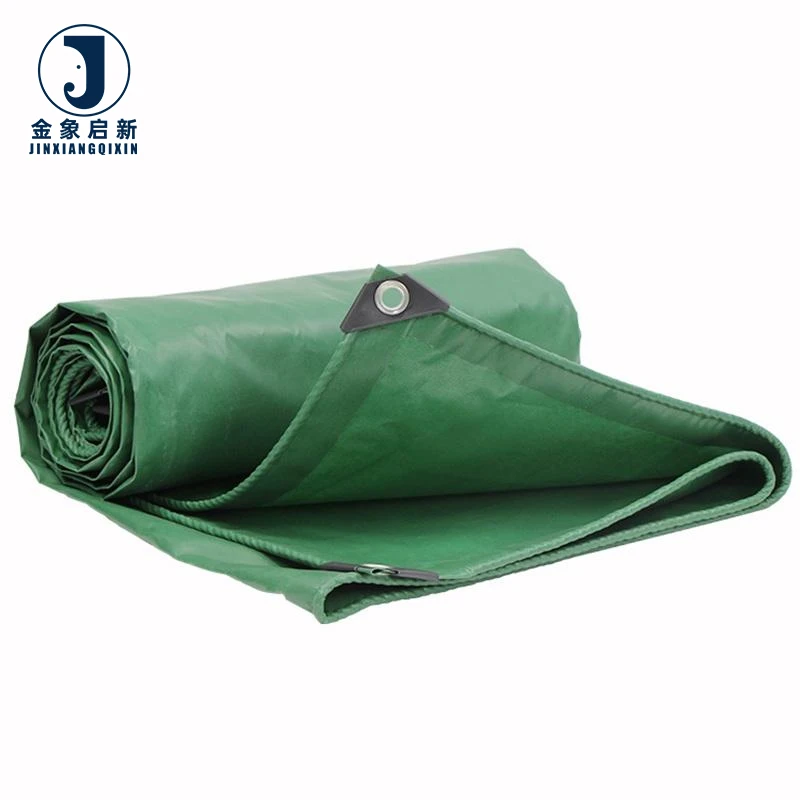
Process-Controlled Coating — nearly 30 years of focused PVC coating production ensures roll-to-roll GSM consistency and verified adhesion strength before dispatch.
Technical Specifications
| Parameter | Value |
|---|---|
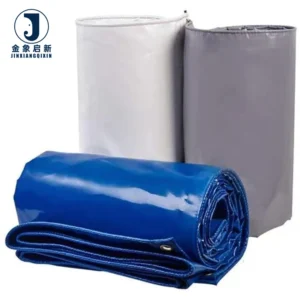
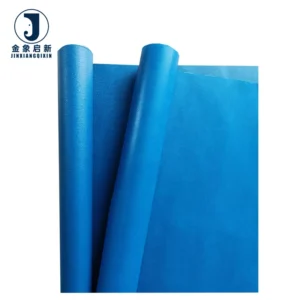
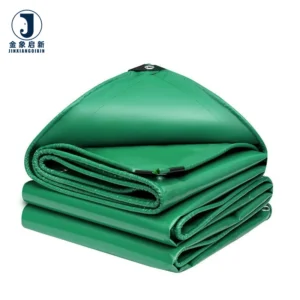
| Product Type | PVC Tarpaulin Roll |
| Material | PVC + High-strength polyester mesh fabric |
| Coating Method | Laminated technology & Hot-melt Coating technology |
| Weight (GSM) | 350gsm / 420gsm / 500gsm / 550gsm / 600gsm / 750gsm |
| Total Thickness | 0.32mm / 0.35mm / 0.4mm / 0.45mm / 0.5mm / 0.65mm |
| Roll Width | 2m / 2.1m |
| Roll Length | 75m (2m width) / 50m (2.1m width) |
| Surface Finish | Glossy or Matte |
| Color Options | Blue, Red, Yellow, Light Blue, Grey (custom colors available) |
| Key Features | Cold crack resistance, anti-mildew, anti-static treatment, fully waterproof, sun protection |
| Standards | ISO, CE |
Application Suitability
| Application | Exposure & Requirement |
|---|---|
| Flatbed truck covers | Road spray, UV exposure, tie-down abrasion at contact points |
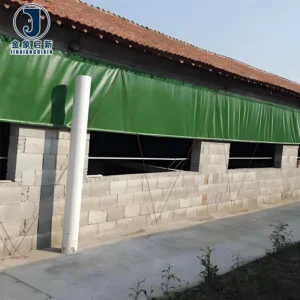
| Side curtain fabric for tautliners | Repeated flexing at fold lines, wind loading, friction against cargo |
| Trailer top and rear flap covers | Direct sunlight, water pooling, mechanical wear from load shift |
| Cargo ship covers | Salt-laden moisture, constant tension, prolonged UV exposure |
| Tent and awning covers | Weather cycling, repeated assembly and disassembly, seam stress |
Why a Generic-Size Cover Fails Where Your Trailer Flexes Most
Trailer-specific cut dimensions eliminate the excess fabric that flaps, abrades, and fails first.
Fleet operators ordering PVC coated tarpaulin for truck and trailer covers often receive generic-sized sheets that leave gaps at the edges or excess material that bounces against the load during transit. That loose fabric concentrates wear at the exact flex points where the trailer frame twists under braking and cornering. The material does not fail because it was too thin — it fails because it was never cut to the vehicle it was supposed to protect. [NEED_CITE: ISO 1421 tensile and tear test methods for coated fabrics]
Model-Specific Sizing That Eliminates Flap Wear
Every truck and trailer model has distinct frame dimensions, corner radii, and tie-down point locations. Our PVC tarpaulin roll stock is cut or supplied in widths that match these dimensions, so the cover lies flat under tension rather than bunching at stress points. When you specify the exact trailer model, the cut pattern accounts for hem allowances and eyelet placement relative to the vehicle’s lashing rails.
Welded Seams Engineered for Transit Flex Cycles
The seam is the first point of failure on any truck cover that experiences repeated load shift. Our hot-melt coating technology creates a bond between the PVC layer and the polyester mesh base fabric that allows high-frequency welding to produce seams with strength approaching the base fabric itself. This matters most at the corners and along the lower edges where the cover flexes every time the trailer encounters uneven road surfaces.
Maintaining Color Consistency Across a Fleet Order
When a logistics company orders PVC coated tarpaulin for truck and trailer covers for an entire fleet, visible color variation between rolls becomes a branding problem the moment two covers are installed side by side. Our QA process verifies color reference against the approved sample at the coating stage, not just at final inspection. Each roll is documented against the order’s color standard so that replacements ordered months later match the original batch. [NEED_CITE: color fastness testing standards for coated textiles]
How GSM and Base Fabric Density Work Together
The six available weight grades — from 350gsm to 750gsm — correspond to thickness values from 0.32mm to 0.65mm, but GSM alone does not determine how the material performs under load. The high-strength polyester mesh base fabric provides the tensile and tear backbone; the PVC coating adds waterproofing, UV screening, and surface durability. A 550gsm roll with a denser base weave can outperform a 600gsm roll with a looser mesh in tear resistance, which is why we provide the base fabric specification alongside the total GSM on every material data sheet.
The choice between laminated and hot-melt coating technology also affects performance at the seam. Laminated construction bonds pre-formed PVC films to the mesh, producing a uniform coating weight across the surface. Hot-melt coating penetrates the mesh more deeply, creating a mechanical interlock that improves peel strength and delivers better results during high-frequency welding — a critical consideration for side curtain fabric that must hold thousands of open-close cycles.
Surface finish selection influences both function and appearance. Glossy surfaces shed water and road grime more readily and accept printed fleet branding with sharper definition, while matte finishes reduce glare and show fewer surface scratches after months of highway use. Both finishes are available across the full GSM range.
The Hidden Cost of Skipping the Sample Approval Stage
Buyers who skip sample development and move straight to bulk production often discover fitment issues only after the full order arrives. A cover that is even slightly off-dimension for the target trailer model will either leave the cargo exposed at the corners or require field modifications that compromise the hem reinforcement. The cost of remaking a single roll is minor compared to the downtime of a grounded trailer waiting for a replacement cover. [NEED_CITE: pre-shipment inspection standards for coated fabric products]
Batch-to-batch color inconsistency is another consequence of bypassing sample approval. Without an approved physical sample held as the production reference, the coating line has no verified standard to match, and the color delivered may drift from what was originally discussed. This is especially problematic when fleet branding colors must align with corporate identity guidelines.
What Makes This Roll Stock Reliable for Fleet Supply
Dedicated QA and QC inspection at every production stage means GSM weight, coating adhesion, and color are verified roll by roll — not just sampled from the first roll off the line. Our 10-person R&D team develops custom widths, colors, and cut patterns specifically for the trailer models you operate, with samples produced within days rather than weeks. Three full production lines and 36 sets of professional equipment provide the capacity to fulfill fleet-scale orders with consistent on-time delivery. The hot-melt coating process is tuned per GSM grade to optimize welding performance at the seams where your covers face the highest stress. Every shipment includes a pre-shipment inspection record so you can verify specifications before the container leaves our facility.
Documentation & Verification
- Material specification sheet stating GSM, base fabric denier, coating weight, and color reference per roll
- Pre-shipment inspection record confirming weight verification and dimensional accuracy against the specified trailer model
- ISO and CE certificates applicable to PVC coated tarpaulin roll products
- Test reports for anti-UV and flame-retardant grades where specified in the order
- Roll packing list with individual roll identifiers for traceability
- Certificate of origin and customs documentation for international shipment
Fabrication, Handling & Storage
- High-frequency welding parameters should be adjusted per GSM grade — 750gsm material requires longer dwell times than 350gsm to achieve full seam penetration
- Store rolls upright on their cores in a shaded area to prevent flat-spot deformation of the PVC coating surface
- Eyelet spacing for truck tie-down systems should be planned against the 2m or 2.1m roll width to minimize offcuts
- Allow cold-stored rolls to reach ambient temperature before unrolling to avoid cracking the PVC coating at low temperatures
- Clean glossy-surface covers with mild detergent only — abrasive cleaners will dull the finish and reduce water runoff performance
- When cutting side curtain panels from 50m or 75m rolls, nest patterns to maximize yield and reduce seam count across the curtain face
Specifying Your PVC Tarpaulin Roll Order
To move forward with a quotation, provide the truck or trailer models you need to cover, the GSM grade and surface finish you prefer, and your annual roll consumption so we can plan production slots accordingly. If your fleet requires custom colors or printed branding, share the Pantone or RAL references and indicate whether you need finished cut covers or roll stock for your own fabrication facility. We recommend requesting a sample cut to your trailer dimensions before committing to bulk production.
Frequently Asked Questions
Q: How is truck cover sizing matched to a specific trailer model and what measurements do you need?
A: We need the trailer make, model, body length, width, and height, plus the position of lashing rails and tie-down points. From these dimensions we develop a cut pattern that accounts for hem allowances and eyelet placement. A physical sample is produced for fitment verification on the actual vehicle before bulk cutting proceeds.
Q: How do you ensure welded seams hold at flex points under load movement?
A: Hot-melt coating technology penetrates the polyester mesh base fabric, creating a mechanical bond that allows high-frequency welding to produce seams approaching the base fabric strength. Welding parameters are calibrated per GSM grade, and peel tests are conducted on seam samples during production runs.
Q: How is batch-to-batch color consistency maintained when ordering multiple rolls for a fleet?
A: An approved physical sample serves as the production color reference for every coating run. Color is verified at the coating stage against this standard, and each roll is documented with its color reference value. This ensures that reorders placed months later match the original fleet covers.
Q: What is the lead time for custom-width rolls and model-specific cut covers?
A: Custom width and color orders require a production run scheduled against current line capacity. Sample development is completed within days, and bulk production follows after sample approval. We provide a confirmed dispatch date at the quotation stage based on your order volume and specification complexity.
Q: What eyelet spacing and hem reinforcement options are available for tie-down systems?
A: Eyelet spacing is customized to match the lashing rail configuration of your specific trailer model. Hems can be reinforced with additional PVC strip welding at high-stress points. We recommend providing your tie-down hardware specifications so eyelet diameter and spacing are optimized for your straps and buckles.