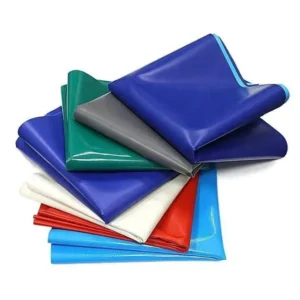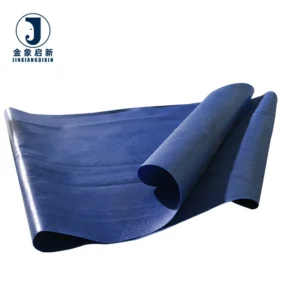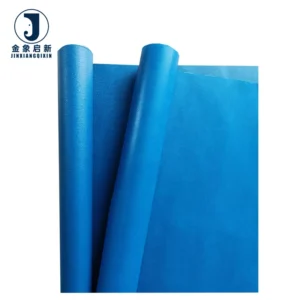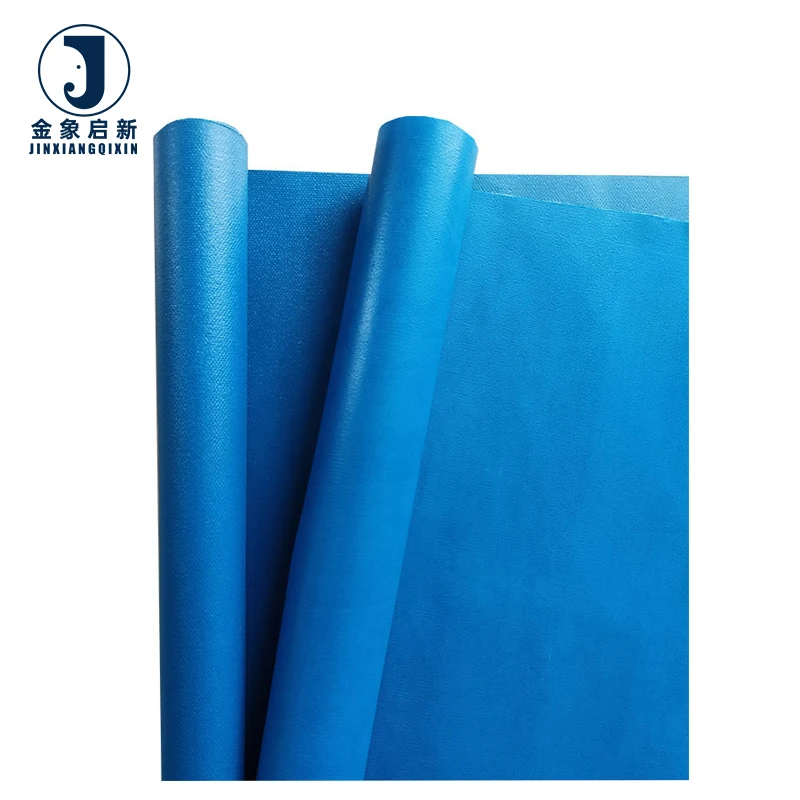
Three Full Production Lines — Bulk PVC coated tarpaulin roll output with hot-melt coating technology, maintaining weight and colour consistency across every roll in a container load.
Technical Specifications
| Parameter | Value |
|---|---|
| Product Type | PVC Coated Tarpaulin |
| Material | PVC + High-strength polyester mesh fabric |
| Weight (GSM) | 350gsm / 420gsm / 500gsm / 550gsm / 600gsm / 750gsm |
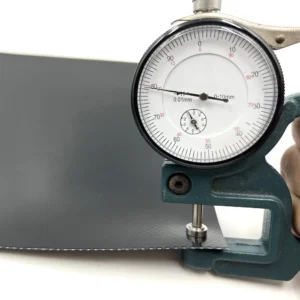
| Total Thickness | 0.32mm / 0.35mm / 0.4mm / 0.45mm / 0.5mm / 0.65mm |
| Coating Method | Laminated technology & Hot-melt Coating technology |
| Roll Width | 2m / 2.1m |
| Roll Length | 75m (for 2m width) / 50m (for 2.1m width) |
| Color Options | Blue / Red / Yellow / Light blue / Grey (Customized) |
| Key Features | Waterproof, Sunproof, Anti-Mildew, Cold Crack Resistance, Anti-Static treatment, Flame Retardant (confirm the grade required for your market) |
| Service Life | 3-7 years under normal circumstances |
| Standards | ISO, CE |
Application Suitability
| Application | Exposure & Requirement |
|---|---|
| Truck and trailer side curtains | Constant flexing at load points, road debris abrasion, UV and weather exposure, weld seam integrity under tension |
| Flatbed load covers and transport awnings | Wind uplift forces, tie-down strap abrasion, rain and snow loading, repeated folding and deployment |
| Construction scaffold enclosure | Wind-driven rain, site dust and chemical exposure, flame retardant compliance for urban sites |
| Temporary industrial equipment covers | Outdoor storage weathering, forklift and handling contact, mildew in humid conditions |
| Agricultural and aquaculture covers | Permanent moisture contact, biological growth, sun exposure over growing seasons |
Why Roll Consistency Matters More Than Quoted GSM for Fleet Fabrication
A truck cover fabricator cannot afford colour variation or weight deviation between rolls in the same shipment.
When a logistics fleet orders side curtain PVC coated tarpaulin for truck and transport fitment across multiple vehicles, every roll must match. A shade difference visible once curtains are hung side by side on adjacent trailers means the fleet operator rejects the batch. Similarly, if one roll in a container lands lighter than the quoted GSM, the fabricator who welded it into a curtain at the specified tension setting discovers seam failure during the first loaded trip. These are not specification debates — they are production stoppages and reputational damage [NEED_CITE: common causes of batch rejection in coated fabric procurement for transport applications].
Hot-Melt Coating Adhesion for Weld Integrity at Flex Points
Truck side curtains flex every time a load shifts during transit, and the welded seams bear that movement directly. The hot-melt coating and laminated technology used on this PVC tarpaulin roll stock produces a bond between the PVC layer and the polyester base fabric that resists delamination under repeated flex cycles. Fabricators welding curtain panels report that strong coating adhesion prevents the coating from lifting at the weld line, keeping the seam as durable as the surrounding fabric.
Colour and Weight Control Across Container-Volume Orders
Fleet fitment projects often require several rolls of the same colour in one order — enough to curtain an entire fleet or cover a full season of replacement demand. Batch-to-batch colour consistency and GSM control are managed through in-process QA at every production stage, with roll-by-roll verification before packing. This level of control matters when a distributor stocks multiple rolls for regional resale or when a transport equipment builder fabricates curtains for a fleet renewal programme spanning several months [NEED_CITE: quality control protocols for roll-to-roll colour matching in PVC coated fabric production].
How GSM and Base Fabric Denier Together Define Tear Performance
The weight range from 350gsm to 750gsm covers applications from light temporary covers to heavy-duty truck and transport use, but GSM alone does not determine tear resistance. The high-strength polyester mesh fabric underneath the coating provides the structural backbone — its yarn denier and weave density govern how a tear propagates once initiated. A 600gsm roll with a dense base fabric will resist tear spread far better than a 600gsm roll with a loose weave and heavier coating. Coating weight and base fabric specification together define the real-world performance at tie-down points and weld seams.
The Cost of Specifying Rolls Without Verified Arrival Weight
A PVC coated tarpaulin for truck and transport application that arrives lighter than quoted creates a cascade of problems. The fabricator sets weld parameters for the expected thickness and finds seams burning through or failing to fuse. The fleet operator discovers the curtain tears at the eyelet line under normal tie-down tension. The distributor who sold the material faces a warranty claim and a damaged relationship with the end user. These outcomes trace back to a single gap: no verified weight check per roll before dispatch [NEED_CITE: field failure analysis of coated fabric covers in commercial transport].
Why Fabricators and Distributors Source Roll Stock Here
Dedicated QA and QC at every production stage means roll-by-roll GSM and colour verification before any PVC coated tarpaulin roll leaves the factory — not spot checks on a sample basis. Three full production lines and 36 sets of professional equipment support container-volume orders with reliable on-time delivery, even when custom widths or colours are specified. A 10-person R&D team handles sample development for specific fleet fitment requirements, producing trial rolls within days rather than weeks. Material specification sheets ship with every order, stating base fabric denier, coating weight, and GSM per batch for arrival verification. Pre-shipment inspection records document 100% inspection before dispatch, giving buyers documented confidence rather than verbal assurance.
Documentation & Verification
- Material specification sheet confirming base fabric denier, PVC coating weight, and stated GSM per roll batch
- UV and flame retardant test reports supplied where applicable to confirm treatment grades for your market
- Pre-shipment inspection record with roll-by-roll weight measurement and colour verification before packing
- ISO and CE certificates included in dispatch documentation for customs and compliance submission
- Roll packing list with net weight, gross weight, and roll dimensions for container loading planning
Fabrication, Handling & Storage
- Hot-melt coated rolls weld cleanly at standard RF or hot-air settings — adjust temperature for the specific GSM grade selected
- Cold crack resistance allows deployment in low-temperature transport environments without coating fracture at fold lines
- Store rolls horizontally on pallets in shaded, ventilated areas to prevent flat-spot deformation on the polyester mesh core
- Anti-mildew treatment supports outdoor storage of fabricated covers, but avoid prolonged ground contact or standing water beneath rolls
- Cut panels with sealed edges to prevent moisture ingress into the base fabric at raw edges during service life
- Match eyelet spacing and hem reinforcement to the chosen GSM grade — heavier grades support wider spacing under tie-down loads
What to Include With Your Enquiry
Specify the truck or trailer models you are covering, whether you need roll stock for your own fabrication line or require cut-to-size finished panels. Confirm the colour reference and whether multiple rolls must match for fleet-wide fitment. State any flame retardant or anti-static compliance your end market requires, along with annual volume and preferred roll width.
Frequently Asked Questions
Q: How is GSM verified on arrival against the quoted specification?
A: Every roll undergoes weight measurement during pre-shipment inspection, and a material specification sheet ships with the order stating the base fabric denier, coating weight, and GSM per batch. Buyers can cross-check arrival weight against this documentation and request a copy of the inspection record before the container is sealed.
Q: What truck and trailer models are covered by custom cut sizes versus roll stock?
A: Roll stock in 2m and 2.1m widths suits fabricators who cut and weld curtains in-house for any trailer model. For operators without fabrication capability, cut-to-size panels can be produced to match specific vehicle dimensions — provide the trailer model, curtain panel measurements, and eyelet placement requirements with your enquiry.
Q: How is batch colour consistency controlled when ordering multiple rolls for fleet fitment?
A: Colour matching is managed through in-process QA checks at the coating stage, with roll-to-roll comparison before packing. When ordering multiple rolls of the same colour for fleet curtain fabrication, specify a Pantone or RAL reference and request the pre-shipment colour verification record to confirm consistency across the batch.
Q: What welding and seam reinforcement options apply at high-flex points on trailer curtains?
A: The hot-melt coating and laminated technology provides strong PVC-to-polyester adhesion that supports clean RF and hot-air welding at flex points. For high-stress areas such as curtain edges and tie-down zones, reinforce welds with additional PVC strip overlays — the coating formulation bonds reliably under standard welding temperatures across the full GSM range.
Q: What documentation ships with each container load of roll stock?
A: Each shipment includes a material specification sheet, roll packing list, ISO and CE certificates, and a pre-shipment inspection record. Where flame retardant or anti-static treatment is specified, the relevant test report accompanies the documentation package for customs clearance and end-user compliance submission.