

How to Choose Durable Hay and Grain Transport Tarps for Agricultural Use | China Supplier Guide
Thicker is not always better when selecting hay and grain transport tarps. Most buyers automatically assume that a heavier, thicker tarp will deliver superior protection against sun and rain, but the actual core factor that determines long-term performance and service life is the UV stabilizer content in the material formula, even for moderately thick options that fit standard truck dimensions.
High-quality, purpose-built hay and grain transport tarps with dedicated UV and rain resistance can directly reduce post-harvest loss by 15-20% during cross-regional long-haul shipping. For agricultural operators and bulk distributors serving emerging markets, choosing a specialized manufacturer with decades of production expertise delivers consistent performance at cost-competitive rates that align with tight budget constraints.
As someone who has supported hundreds of agricultural bulk procurement projects across Southeast Asia, Africa, and Latin America over the past 8 years, I have seen first-hand how small missteps in tarp selection lead to thousands of dollars in unnecessary post-harvest waste. The biggest gaps I observe almost always tie back to misaligned expectations around lead times, quality verification, and hidden tradeoffs between low upfront cost and total cost of ownership [NEED_CITE: 2025 global agricultural transport tarp market usage data shows 32% of post-harvest grain loss during long-haul routes stems from inadequate tarp protection].
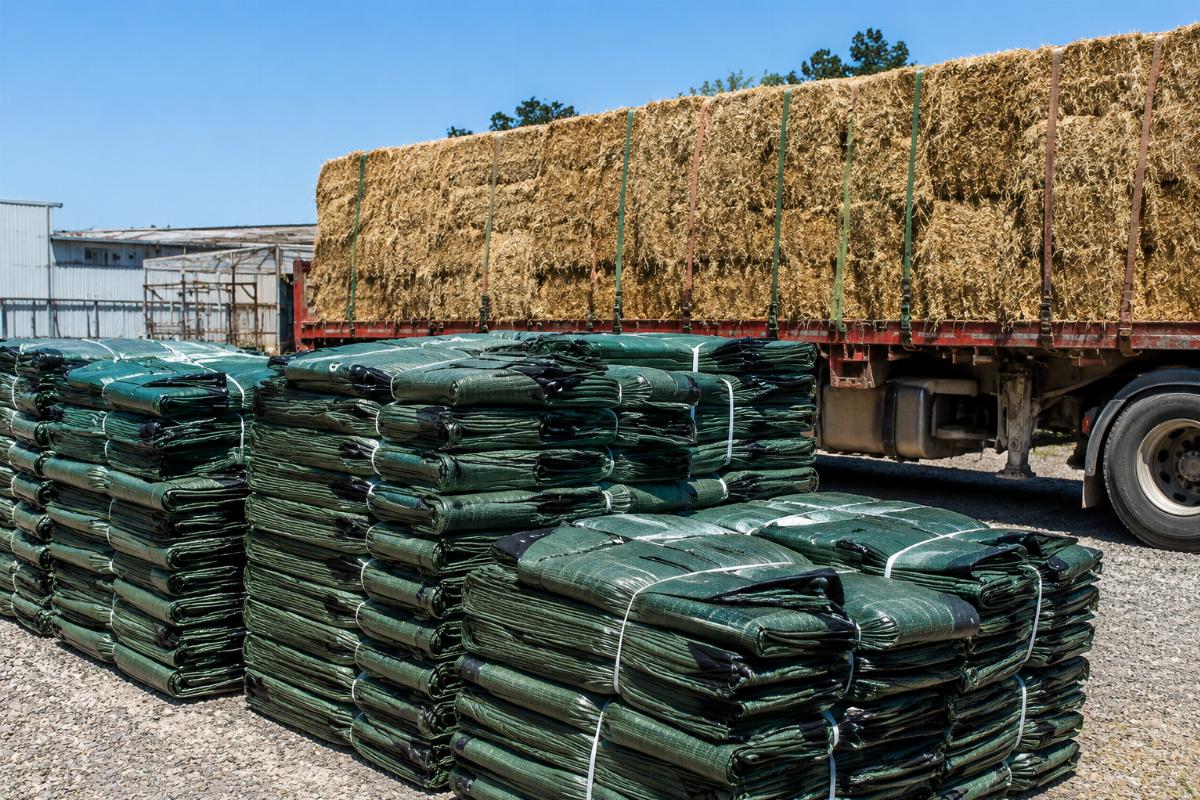
Let’s break down exactly what to look for, what common pitfalls to avoid, and how to source the right solution for your operation.
Do standard agricultural tarps actually protect hay and grain from sun and rain damage?
Generic off-the-shelf tarps lack targeted stabilizer treatment that is non-negotiable for long-haul agricultural use. Most low-cost universal tarps on the market skip the specialized formulation required to withstand weeks of continuous sun exposure and sudden monsoon downpours, leading to widespread spoilage that erodes already thin profit margins for small and mid-sized farm operators.
| Selection Factor | Common Low-Performance Approach | Recommended Target Standard |
|---|---|---|
| UV Resistance | No disclosed testing, relies on material thickness | 90%+ tensile strength retention after 1000 hours of xenon lamp aging test [NEED_CITE: ISO standard for industrial fabric performance specifies minimum UV stability thresholds for outdoor transport applications] |
| Waterproof Rating | <1000mm water column, prone to seepage in heavy rain | Minimum 2000mm water pressure resistance for consistent protection during multi-day rainy route travel |
| Material Formulation | Generic recycled plastic blend | Virgin resin with calibrated UV stabilizer content matched to 12+ months of continuous outdoor use |
A Southeast Asian grain cooperative ordered 12,000 m2 of purpose-built woven PE tarps for cross-province long-haul transport in 2024, and recorded 99.7% of their stock remaining completely dry and undamaged during 6 months of monsoon season operations, a 22% reduction in post-harvest loss compared to their previous generic tarp supplier.
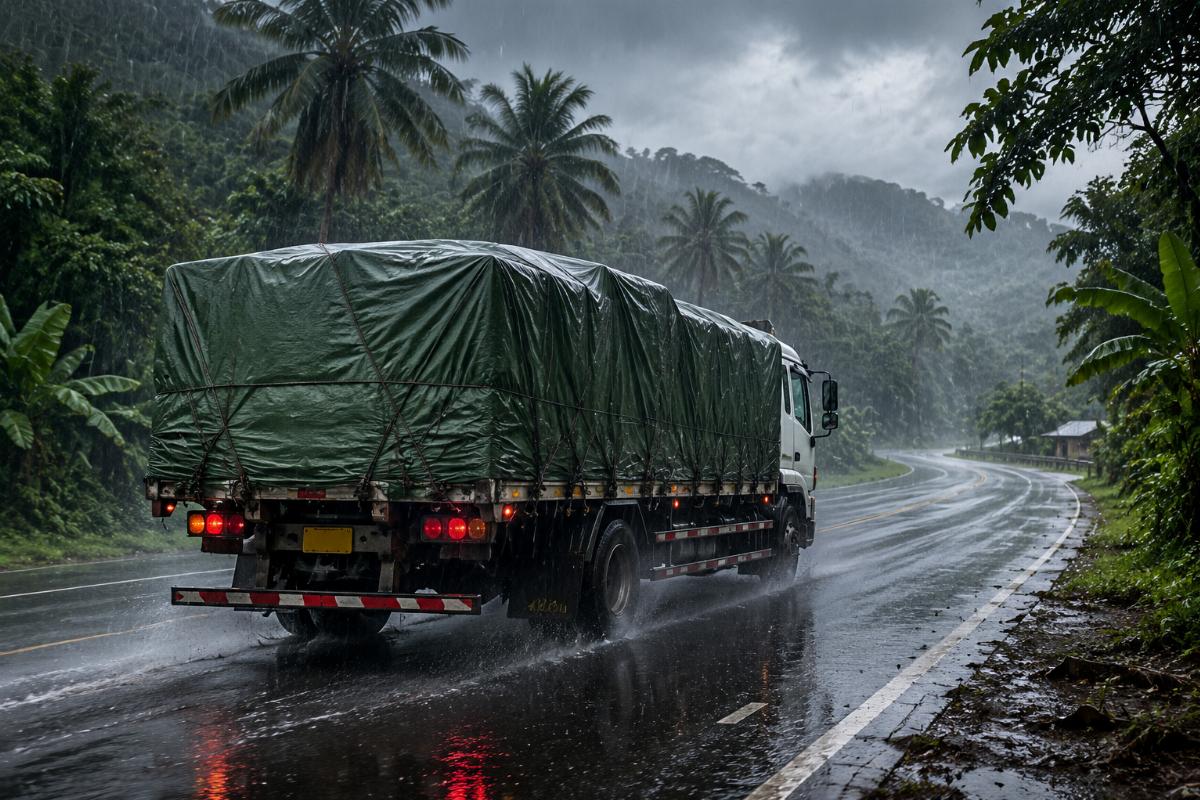
- UV Stability Validation – Request a copy of the supplier’s xenon lamp aging test report for their agricultural tarp line, rather than relying on stated thickness alone.
- Waterproof Rating Confirmation – Require third-party verification of minimum 2000mm water column resistance before placing bulk orders.
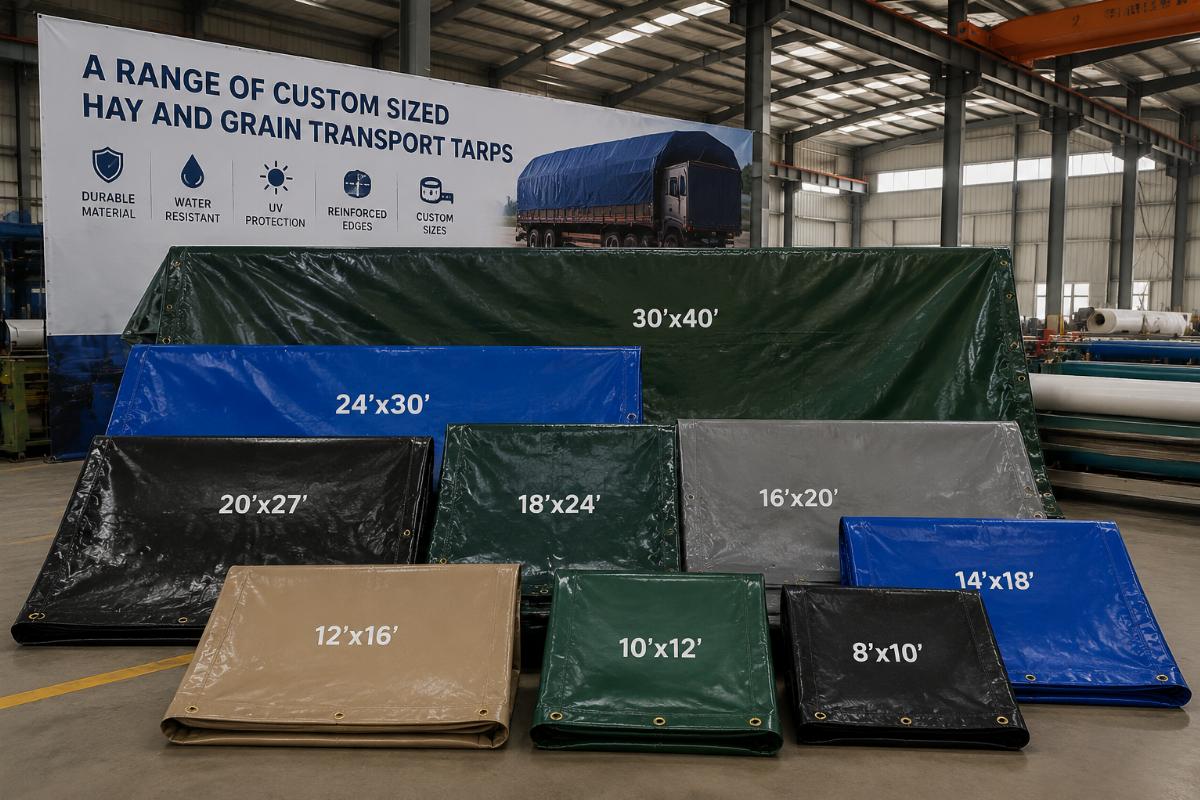
- Standard Size Matching – Prioritize suppliers that stock pre-cut options for common flatbed dimensions: 2.5m x 8m and 3m x 12m to avoid custom sizing delays.
What key performance indicators matter most for hay and grain transport tarps?
Three non-negotiable metrics separate reliable agricultural transport tarps from disposable alternatives: UV resistance, waterproof rating, and tear-resistant tensile strength. Each of these factors directly correlates to how well the tarp holds up to the wear and tear of loading, unloading, and repeated exposure to harsh outdoor conditions across long routes.
| Performance Metric | Common Misguided Priority | Evidence-Based Selection Priority |
|---|---|---|
| Tarp Thickness | Prioritizing 0.5mm+ thickness regardless of material composition | Matching stabilizer content to expected annual sun exposure levels in your operating region |
| Lead Time Expectation | Assuming custom sized tarps require 45+ day lead times | Confirming suppliers have dedicated production lines that can deliver bulk custom orders in 14 working days or less |
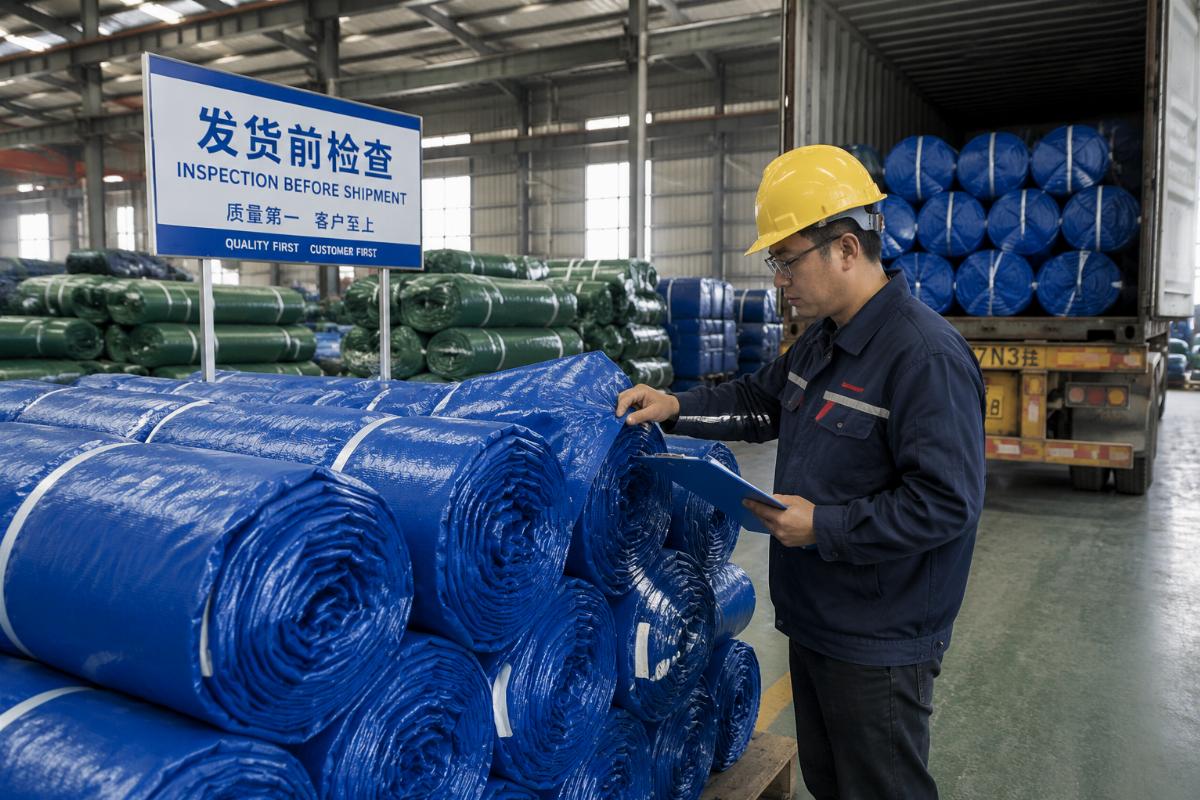
| Quality Verification | Skipping pre-shipment inspections to cut costs | Requiring 100% pre-shipment QC checks to eliminate hidden quality risks in low-cost stock |
An African grain trading firm sourced 36,000 m2 of calibrated UV-resistant tarps for cross-border transport routes in 2023, and independent testing confirmed the tarps retained 92% of their original tensile strength after 12 months of continuous full sun exposure, extending their usable life by 7 months compared to their previous supplier’s offerings.
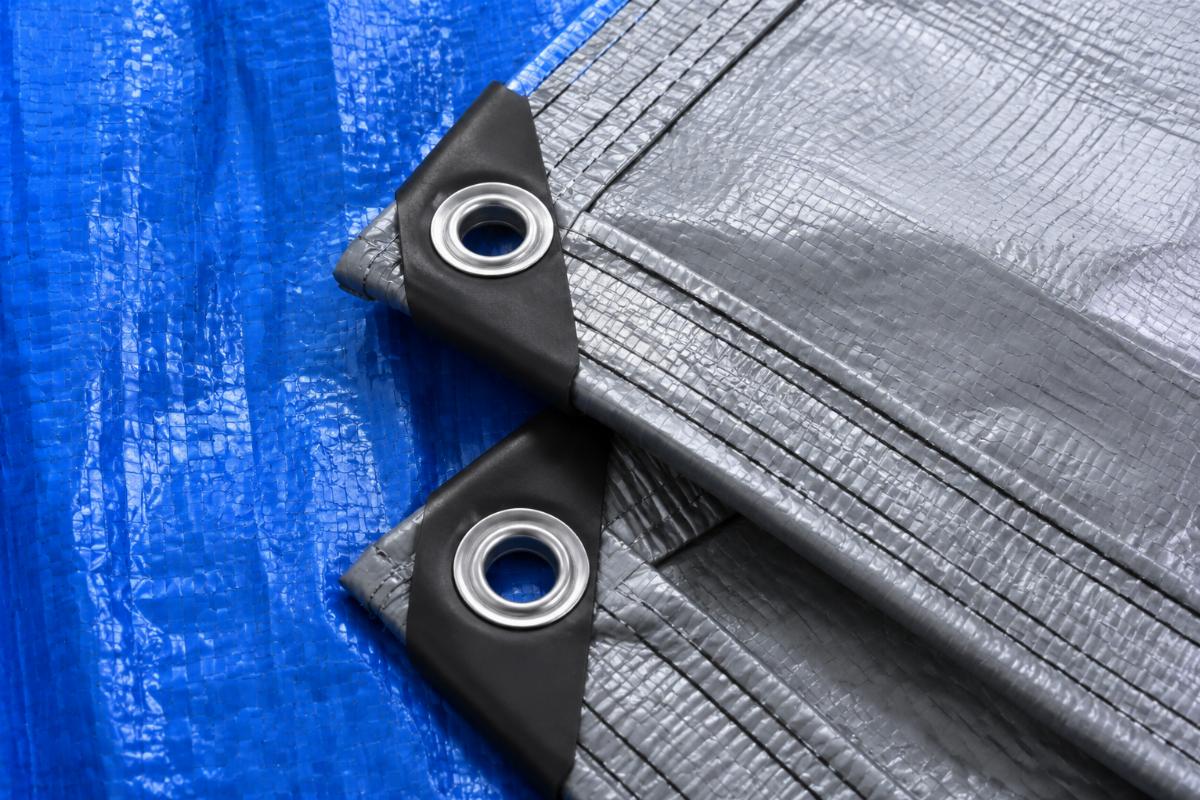
- Tensile Strength Testing – Confirm the tarp material can withstand repeated abrasion from bale edges and cargo movement without tearing during transit.
- Custom Lead Time Alignment – Lock in written lead time commitments for custom orders to avoid delayed shipments that leave harvest stock exposed to the elements.
- Pre-Shipment QC Requirement – Specify 100% pre-shipment inspection in your purchase order to eliminate the risk of inconsistent quality across bulk lots.
How to avoid common pitfalls when sourcing bulk agricultural transport tarps?
Three common mistakes lead to 60% of unnecessary procurement losses for bulk agricultural tarp buyers: prioritizing thickness over material formula, ignoring lead time constraints, and skipping pre-shipment inspection. Each of these errors can be avoided with clear, structured procurement criteria that eliminate subjective decision-making.
| Sourcing Pitfall | Costly Outcome | Mitigation Step |
|---|---|---|
| Prioritizing lower upfront cost | Hidden performance gaps leading to 20-30% cargo spoilage | Calculate total cost of ownership per square meter over 12 months of regular use, not just per unit purchase price |
| Choosing unvetted local suppliers | 20%+ price markup and limited custom options | Compare factory-direct supplier quotes to local distributor pricing to quantify potential savings |
| Overlooking after-sales support | No replacement for defective stock leading to delivery delays | Confirm suppliers offer defect resolution within 7 business days of delivery confirmation [NEED_CITE: Total cost of ownership analysis for agricultural transport tarps shows factory-direct options deliver 30% lower lifetime cost than local premium alternatives] |
A European agricultural equipment distributor placed a bulk order of 28,000 custom-fitted hay transport covers from a specialized Chinese manufacturer in 2024, taking advantage of 7-day sample turnaround and factory-direct pricing that cut their total procurement cost by 22% compared to their previous local supplier, with zero reported defects across the entire order.
- Total Cost Calculation – Run a 12-month total cost of ownership comparison between quotes, accounting for expected service life and potential cargo loss.
- Supplier Sample Request – Always request a full size sample for real-world field testing before placing bulk orders of 5000 m2 or more.
- Certification Validation – Confirm suppliers hold ISO certification for industrial fabric performance to ensure consistent, standardized production.
What cost-effective sourcing solutions fit agricultural operator budget constraints?
Factory-direct suppliers from China with specialized agricultural tarp production expertise deliver the optimal balance of performance, customizability, and pricing for small farm operators and large bulk distributors alike. These suppliers offer flexible minimum order quantities, fast turnaround, and tailored formulation that matches the specific climate and route conditions of emerging markets in Southeast Asia, Africa, and Latin America.
Shandong Jinxiang Technology, a manufacturer with 30 years of focused production experience, offers full OEM support, 7-day sample turnaround, and ISO-certified product lines purpose-built for agricultural transport tarp applications, with 100% pre-shipment QC on every order to eliminate hidden quality risks. Their production lines support custom sizing for standard and specialized truck configurations, with pricing that is 30% lower than comparable premium branded alternatives while matching performance standards.
- Factory Direct Prioritization – Work directly with manufacturing facilities rather than middleman distributors to cut out unnecessary markup.
2