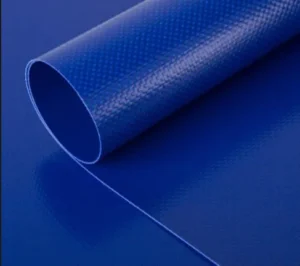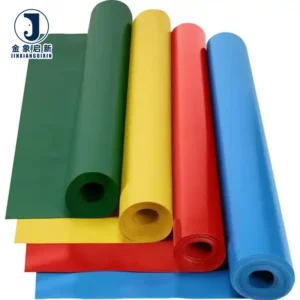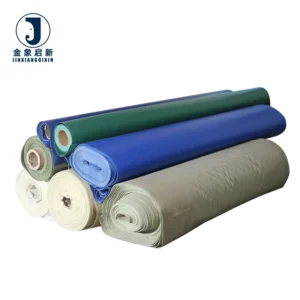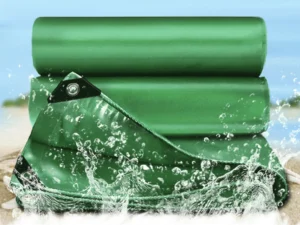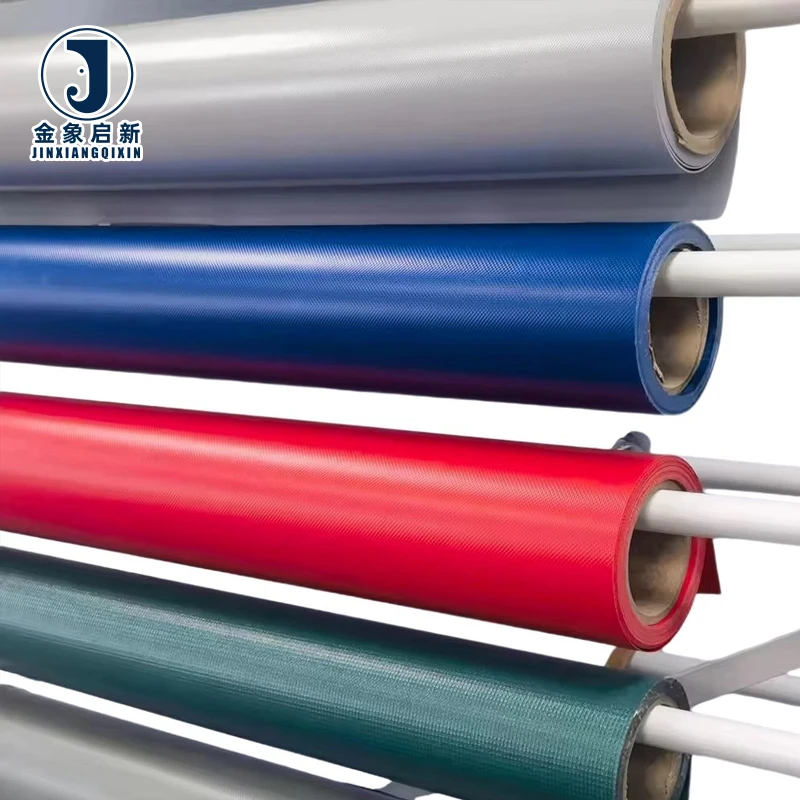
Coating adhesion control — three full production lines maintain consistent PVC bond strength across every roll of 1000D blackout tarpaulin, preventing delamination at flex-critical weld zones.
Technical Specifications
| Parameter | Value |
|---|---|
| Product Type | PVC Tarpaulin Roll |
| Base Fabric | 1000D |
| Coating Material | PVC |
| Blackout Construction | Yes |
| Anti-UV Treatment | Available (confirm grade and test basis required for your market) |
| Flame Retardant | Available (confirm the grade required for your market) |
| Antibacterial & Mildew Proof | Yes |
| Oil & Stain Resistance | Yes |
| Acid & Alkali Resistance | Yes |
| Temperature Resistance | High temperature and cold resistance |
| Anti-Oxidation & Weather Resistance | Yes |
| Flexibility | Highly flexible, resistant to cracking |
| Self-Cleaning Surface | Yes |
| Welding Compatibility | HF, Hot Air, Sewing |
Application Suitability
| Application | Exposure & Requirement |
|---|---|
| Tensile membrane structures | Sustained tension, wind load cycling, UV and rain exposure, aesthetic surface demands |
| Event exhibition shade tents | Temporary erection and dismantling, frequent folding, crowd safety compliance |
| Portable storage structures | Semi-permanent outdoor siting, wind and snow loading, internal climate control |
| Airport hangar fabric walls | Large span coverage, fuel vapour exposure, strict fire classification requirements |
| Shade systems and shadings | Daily UV exposure, thermal expansion and contraction, colour stability over seasons |
| Stadium architectural structures | Permanent installation, high wind uplift, long-term weather resistance, public safety codes |
Why the Spec Sheet Alone Cannot Guarantee Your Truck Cover Will Last
A material data sheet tells you what the fabric was on the day it was tested — not what arrives in your container after a six-week ocean transit.
When fleet operators or truck body builders specify a PVC Coated Tarpaulin Roll for side curtain or load cover fabrication, the quoted GSM often becomes the single point of negotiation. Yet the number printed on the invoice rarely captures how evenly that coating weight was distributed across the base fabric, or whether the PVC layer was applied with enough adhesion to survive thousands of flex cycles at the tie-down and eyelet zones. I have seen heavy-grade coated rolls fail at the weld line long before the body of the fabric showed any wear [NEED_CITE: tensile and tear test methods for coated fabrics per ISO 1421]. The buyer then faces a choice between absorbing the rework cost or disputing the claim with a supplier who has already been paid.
Weld Integrity Under Repeated Load Flexing
Truck and trailer side curtains endure constant mechanical stress every time the curtain is drawn open and pulled shut, compounded by road vibration and wind buffeting at highway speed. This 1000D PVC Coated Tarpaulin Roll supports high-frequency welding, hot air welding, and conventional sewing — giving fabricators the flexibility to choose the joining method that best suits their production line and the curtain’s duty cycle. The base fabric’s denier count contributes to tear resistance at the points where welded seams meet mechanical fasteners, which is where most premature failures originate.
Blackout Construction for Light-Sensitive Cargo
Certain freight categories — photographic equipment, pharmaceuticals, temperature-controlled goods — require complete light exclusion during transit. The blackout PVC construction within this roll stock prevents light transmission through the fabric body, eliminating the need for a secondary liner that would add weight and complicate the welding process. Fabricators working with fleet operators can specify this PVC Coated Tarpaulin Roll as a single-layer solution, reducing material cost and simplifying the bill of materials for each curtain set [NEED_CITE: light transmission testing methodology for coated blackout fabrics].
Understanding the Relationship Between Denier, Coating Weight, and Real-World Durability
The 1000D base fabric designation refers to the linear mass density of the yarns used in the woven scrim — a higher denier generally indicates thicker individual yarns that contribute to tear propagation resistance. However, denier alone does not determine overall strength; the weave density (ends and picks per centimetre) and the coating adhesion value together define how well the PVC layer transfers load across the fabric structure. A knife-over-roll coating process, typical for this class of technical textile, forces PVC plastisol into the interstices of the woven scrim before gelling in a multi-zone oven, creating a mechanical and chemical bond. The self-cleaning surface treatment reduces dirt accumulation that can accelerate UV degradation over extended outdoor exposure. Acid and alkali resistance broadens the roll’s suitability to environments where road de-icing salts or agricultural chemicals may contact the fabric surface, while the anti-oxidation formulation helps maintain flexibility through seasonal temperature swings.
The Hidden Cost of Specifying on Price Per Kilogram Alone
Procurement teams that reduce the PVC Coated Tarpaulin Roll evaluation to a single unit-cost metric expose their fabrication operation to downstream risk. Rolls that arrive lighter than the quoted GSM force the production team to either accept reduced performance or reject the shipment, both of which delay vehicle delivery schedules. Colour drift between rolls in the same container becomes visible once the curtains are hung side by side on adjacent trailers, prompting a fleet operator to demand a full replacement. Anti-UV or flame retardant claims without supporting test documentation can cause a finished curtain to fail a site inspection, leaving the fabricator liable for a complete strip-and-refit. These consequences rarely appear on the original quotation [NEED_CITE: coating weight verification practices for PVC tarpaulin imports].
Why Fabricators Source This Roll Stock From Jinxiang
Process control over coating weight and adhesion is maintained across three full production lines with 36 sets of professional equipment, giving consistent output from the first roll to the last in a bulk order.
A dedicated ten-person R&D team develops samples for custom width, colour, and printing requirements within days, letting fabricators validate material behaviour on their own welding rigs before committing to a production run.
Every roll undergoes QA/QC inspection at each production stage, with 100% pre-shipment examination to verify GSM, colour consistency, and surface integrity before the container is sealed.
Full welding compatibility — HF, hot air, and sewing — is validated in-house so fabricators receive proven parameter guidance rather than trial-and-error on the shop floor.
The documentation package travels with every shipment, ensuring customs clearance and incoming inspection proceed without missing paperwork.
Documentation & Verification
- Material spec sheet confirming 1000D base fabric, PVC coating type, and blackout construction per roll
- Anti-UV and flame retardant test reports provided where grades have been specified at inquiry stage
- Pre-shipment inspection record showing measured coating weight against quoted GSM for each roll
- Roll packing list detailing individual roll dimensions, net weight, and colour reference number
- Certificate of origin and ISO/CE certificates included for customs and site compliance purposes
Fabrication, Handling & Storage
- Set HF welder dwell time and pressure to match PVC coating thickness; test on a scrap piece of 1000D fabric first
- Store rolls horizontally on padded racking to prevent edge crushing that can mark the self-cleaning surface
- Allow rolls to acclimatise to workshop temperature before unrolling to avoid cracking in cold-stiffened PVC
- Use a rotary blade cutter on the 1000D woven scrim to prevent fraying that compromises welded seam alignment
- Clean welding platens between runs to avoid transferring residue onto the blackout PVC surface
What to Include When Requesting a Quotation
Please specify the finished curtain dimensions, the number of vehicles in the fleet, and the trailer make and model so we can advise on optimal roll width and cutting layout. Confirm the fire classification your end-user’s market requires, along with any colour or printing requirements for fleet branding. Let us know whether you need rolls only or finished panels with eyelets and reinforced hems.
Frequently Asked Questions
Q: How do you confirm the GSM on each roll matches what was quoted?
A: Every roll is weighed and measured during pre-shipment inspection, with the recorded coating weight documented against the specification sheet that accompanied your quotation. The inspection record travels with the shipping documents so your receiving team can cross-check on arrival without needing to cut a destructive sample from production stock.
Q: Can I see a test report for anti-UV or flame retardant treatment before committing?
A: Yes — request the specific test standard your market requires at inquiry stage, and the corresponding report will be supplied before sample approval. If your end-user has not yet confirmed the required grade, our R&D team can advise on common classifications and provide documentation for review against your project specification.
Q: What is the minimum order and lead time for custom colours or widths?
A: Minimum quantities depend on the colour and width requested, as shorter runs require dedicated line setup and colour-change procedures. Typical lead times for custom specifications run several weeks from sample approval. Submit your required dimensions and annual volume so we can confirm the production slot and provide a realistic dispatch date.
Q: How is colour consistency maintained across multiple rolls in one order?
A: All rolls within a single production batch are coated from the same plastisol mix and cured under identical oven zone temperatures. The 100% pre-shipment inspection includes a visual comparison of adjacent rolls under controlled lighting, with any roll showing visible deviation pulled and reprocessed before the container is loaded.
Q: Which welding method gives the best seam durability for 1000D fabric?
A: High-frequency welding produces the most uniform bond on PVC-coated polyester because the electromagnetic field heats the coating layer directly, fusing it without degrading the 1000D base yarns. Hot air welding is suitable for field repairs and on-site modifications. Sewing with sealed thread is specified when mechanical fasteners must share the load at high-stress curtain attachment points.