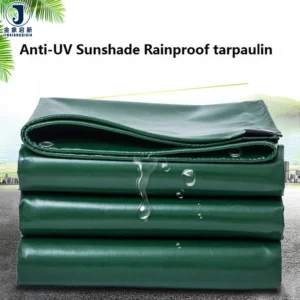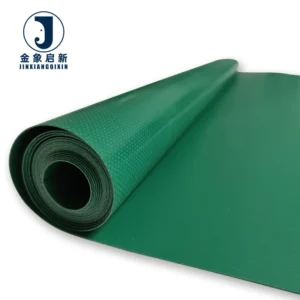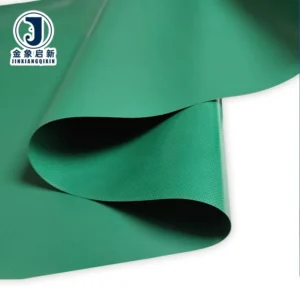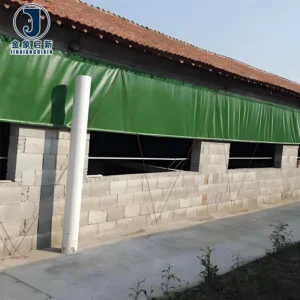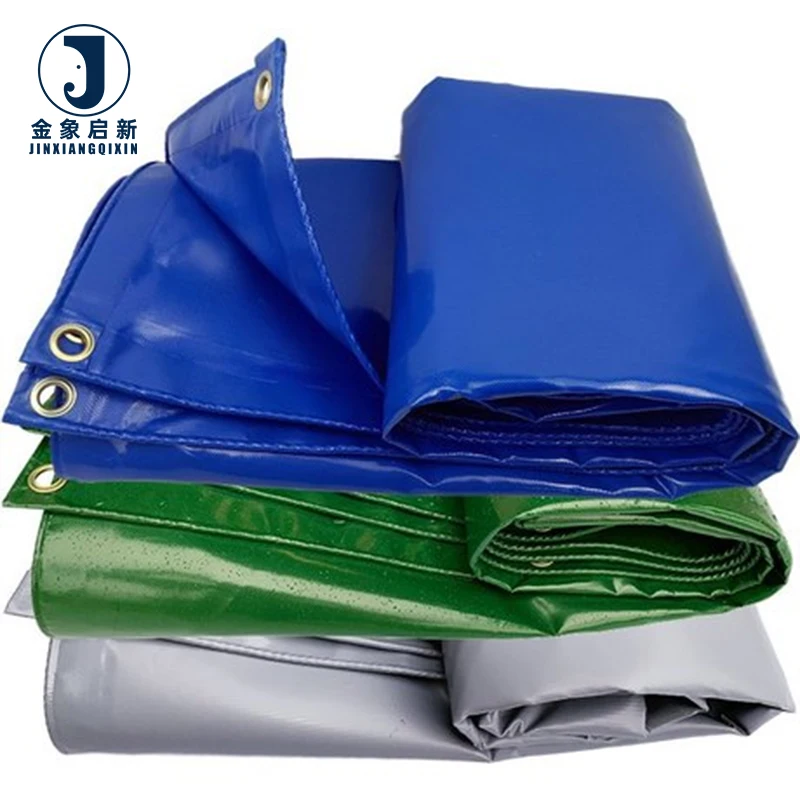
Coating Adhesion Control — Three full production lines with hot-melt and laminated coating capability deliver consistent bond strength between PVC layers and high-tenacity polyester base fabric across every roll.
Technical Specifications
| Parameter | Value |
|---|---|
| Product Type | PVC Coated Tarpaulin Roll |
| Material | 100% high tenacity polyester yarns with PVC coating |
| Weight | 650 GSM |
| Coating Technology | Laminated technology & Hot-melt Coating technology |
| Key Features | Waterproof, cold crack resistant, anti-mildew |
| Available Treatments | Flame retardant (grade not stated — confirm requirement), anti-static (test basis not stated — request report), anti-cold, anti-mildew, 3P |
| Color Fastness | Best color fastness (source claim — verify against batch test) |
| Outdoor Life Expectancy | 3–5 years (source claim — verify against manufacturer catalog) |
| Standards | ISO, CE |
Application Suitability
| Application | Exposure & Requirement |
|---|---|
| Truck and trailer side curtains | Constant flexing at load points, road debris abrasion, rain and UV exposure, tie-down stress at hems |
| Fleet load covers | Daily tension from ratchet straps, wind flap fatigue, fuel and chemical splash contact |
| Transport equipment enclosures | Welded seam integrity at corners, repeated roll-up and unroll cycles, temperature swings |
| Construction site covers | Ground contact moisture, dust ingress, equipment puncture risk, wind uplift forces |
Why Generic-Size Covers Fail Where This Roll Stock Lets You Cut to Fit
Cutting to exact trailer dimensions eliminates the excess fabric that flaps, abrades and ultimately splits at the seam.
Fleet operators who buy pre-cut truck covers often find that generic sizing leaves loose material at the rear corners. That loose fabric flaps in highway wind, fatigues at the weld line, and fails long before the body of the cover shows wear. When a welded seam fails before the fabric does at the point the load flexes most, the entire cover is compromised — and the load beneath it is exposed. Sourcing 650gsm PVC tarpaulin roll for truck and transport applications in roll form allows fabrication to the precise dimensions of each trailer model in a mixed fleet, with reinforcement placed exactly where tie-down hardware meets the fabric. [NEED_CITE: tensile and tear test methods for coated fabrics per ISO 1421]
Laminated and Hot-Melt Coating for Weld-Line Integrity
The combination of laminated and hot-melt coating technology on this 650gsm PVC tarpaulin roll creates a bond between the PVC layers and the polyester base that resists delamination under repeated flex stress. For side curtain applications where the fabric folds and unfolds hundreds of times per week, this adhesion strength prevents the coating from peeling away from the base yarns at the fold line.
Tear Strength at Tie-Down and Flex Zones
High-tenacity polyester yarns give this roll stock the tearing strength needed where ratchet straps and bungee cords concentrate load on a small area of fabric. The base fabric construction distributes point loads across a wider yarn network, reducing the chance of a small puncture propagating into a full-length tear during transit. This matters particularly at the hem and eyelet zones where truck and trailer covers see the highest localized stress. [NEED_CITE: DIN 4102 fire classification for building materials]
Reading Beyond the Weight Number
Weight alone tells a buyer what the fabric weighs per square metre, but the performance of a 650 GSM coated polyester roll depends on how that weight is distributed between base fabric and coating. A heavier coating does not automatically mean higher tear resistance — it may simply add PVC mass without increasing yarn density. The laminated construction here bonds a discrete PVC film to the woven base rather than relying solely on knife-over-coating, which changes the peel strength profile and the behaviour of the material under heat welding. The base yarn denier and the warp-weft density together determine how a tear initiates and whether it arrests or runs. Cold crack resistance and anti-mildew treatment extend usable service across seasonal temperature shifts and humid storage conditions between jobs.
The Cost of Getting the Specification Wrong
Ordering a roll that arrives lighter than the quoted GSM means the fabricated cover will have less coating mass than designed, leading to premature wear at abrasion points and reduced waterproofing under sustained rain. Colour variation between rolls in the same shipment becomes visible the moment two panels are installed side by side on a trailer — a problem that forces rework across an entire fleet livery. Welding parameters set for one coating formulation may not transfer directly to another, and a seam that looks sound on the bench can fail within weeks under road vibration and load flex. [NEED_CITE: pre-shipment inspection standards for coated fabric rolls]
Why Source This Roll Stock Here
Nearly 30 years focused on coated fabric production gives this facility deep process control over coating weight and adhesion consistency, roll after roll. Three full production lines and 36 sets of professional equipment support bulk capacity with on-time dispatch for fleet-scale orders. A 10-person R&D team handles custom width, roll length, colour matching and sample development within days rather than weeks. Dedicated QA and QC at every production stage means every roll passes 100% inspection before shipment, with a pre-shipment inspection record documenting actual GSM, coating weight and visual condition.
Documentation & Verification
- Material specification sheet stating base fabric denier, coating weight and available treatments for each roll
- GSM verification record confirming measured weight matches the quoted 650 GSM before dispatch
- Test report for flame retardant or anti-static treatment provided where the grade is specified on the purchase order
- Roll packing list detailing roll count, individual roll dimensions and net weight per unit
- Pre-shipment inspection record covering visual defects, weld test strips and colour consistency across the batch
- Certificate of origin and customs documentation prepared for cross-border shipment
Fabrication, Handling & Storage
- Heat-weld at temperatures validated for laminated PVC construction — test on an offcut of this 650 GSM roll before production runs
- Space eyelets to distribute tie-down load across the high-tenacity polyester base without pulling through the hem
- Store rolls upright on pallets to prevent flat-spot deformation that shows as visible creasing after unrolling
- Allow cold-stored rolls to reach ambient temperature before unrolling to avoid cracking the PVC coating
- Use PVC-compatible cleaners only — solvent-based products may attack the hot-melt coating bond layer
- Plan cut layouts to minimize offcut waste and reduce the number of welded seams on finished truck covers
What to Include with Your Enquiry
Provide the truck and trailer models in your fleet along with the cover dimensions you need, so roll width and length can be matched to minimize fabrication waste. Specify any fire retardant or anti-static compliance requirements your operating sites demand, including the grade or standard referenced. Confirm your annual roll consumption and whether you need colour consistency across multiple shipments for visible side curtain panels.
Frequently Asked Questions
Q: Can this roll be cut to fit a specific truck or trailer model rather than a generic size?
A: Yes. Roll stock is supplied in custom widths and lengths so fabricators can cut panels to the exact dimensions of each trailer model in a fleet. This eliminates the excess fabric that causes flapping and premature seam failure on generic-size covers. Sample panels can be developed within days for fitment trials before full production.
Q: Are flame retardant or anti-static certifications available with the roll?
A: Flame retardant and anti-static treatments are available, but the specific grade must be confirmed against your site compliance requirements. Request the test report for the treatment grade you need — the documentation is provided with the shipment so that certification can be verified on arrival at your facility or job site.
Q: How is colour consistency maintained across multiple rolls in one order?
A: Every roll in a batch passes 100% pre-shipment inspection that includes visual colour comparison. A pre-shipment inspection record documents the result. For fleet livery applications where panels are installed side by side, confirm your colour reference at the enquiry stage so that all rolls are produced against the same standard.
Q: What is the expected outdoor service life under road and weather exposure?
A: The manufacturer states a service life of 3–5 years under typical outdoor conditions. Actual life depends on UV intensity, mechanical abrasion from load flexing, and cleaning frequency. Cold crack resistance and anti-mildew treatment are included to support performance across seasonal temperature and humidity variations.
Q: Can eyelets and reinforced hems be applied at custom spacing for tie-down systems?
A: Yes. Eyelet spacing and hem reinforcement are configured during fabrication to match the tie-down hardware and strap positions used by your fleet. The high-tenacity polyester base fabric supports concentrated load at eyelet points when spacing and reinforcement are matched to the expected strap tension.