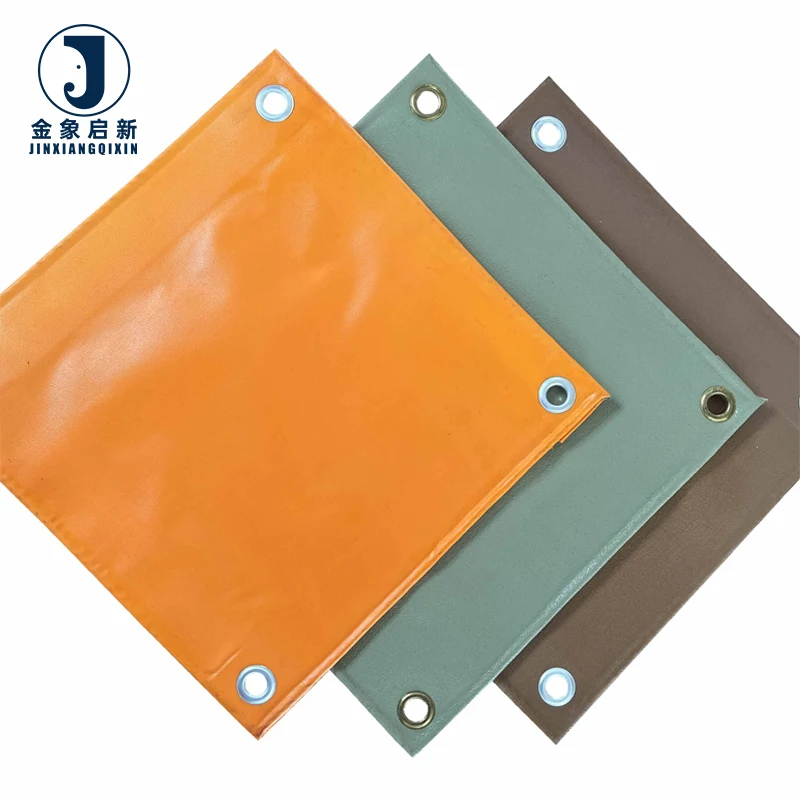
Process Control Over Coating Adhesion — nearly 30 years focused on coated fabric delivers consistent bond strength between polyester base and PVC layers, verified at every production stage before dispatch.
Technical Specifications
| Parameter | Value |
|---|---|
| Product Type | PVC Coated Tarpaulin |
| Base Fabric | 100% high toughness polyester yarn |
| Coating Material | PVC |
| Coating Method | Lamination technology and hot melt coating technology |
| Total Thickness | 0.35–0.45 mm (medium-sized); 0.70–1.0 mm (heavy-duty); 1.2–1.5 mm (super heavy) |
| Weight (GSM) | 400–500 g/m² (medium-sized); 700–1000 g/m² (heavy-duty); 1100–1500 g/m² (super heavy) |
| Base Fabric Denier | 500D (medium-sized); 1000D (heavy-duty); 500D–2000D (super heavy) |
| Tensile Strength | Longitude 1500–2000 / Latitude 1200–1800 N/5cm (medium); Meridian 2000–2500 / Latitude 1800–2200 N/5cm (heavy); Warp 2500–3000 / Weft 2200–2800 N/5cm (super heavy) |
| Cold Crack Resistance | -30°C |
| Waterproof | Yes |
| Mold Proof | Yes |
| Flame Retardant | Treatment available — confirm the grade required for your market |
| Anti-Static | Treatment available — confirm the grade required for your application |
| Printing Option | Printable surface |
| Weather Resistance | 3–5 years outdoor exposure |
| Certifications | ISO, CE |
Application Suitability
| Application | Exposure & Requirement |
|---|---|
| Truck and trailer side curtain | Constant flexing at load points, road abrasion, wind loading, UV and rain exposure |
| Flatbed load cover | Tie-down strap friction, puncture from cargo edges, weather during transit |
| Fleet branding and route identification | Printable surface for graphics, colour fastness under sun exposure, anti-static to reduce dust buildup |
| Curtain-side trailer flex zones | Repeated folding and unfolding, abrasion at roller contact, weld seam integrity under tension |
| Transport equipment protective wrap | Moisture ingress prevention, mold resistance during storage, cold-climate flexibility |
Why a Generic-Size Cover Fails Your Fleet Before the First Trip
Specifying fabric by the roll and cutting to your exact trailer dimensions eliminates the gaps, overlaps, and premature failures that come from off-the-shelf sizing.
A PVC Coated Tarpaulin for Truck and Transport ordered in a standard size rarely matches the real dimensions of a specific trailer model. The result is excess fabric flapping in the wind, creating drag and accelerating wear at the edges, or worse — a cover that falls short and leaves cargo exposed. Fleet operators who order cut-to-fit fabric reduce material waste and remove the stress concentrations that cause generic covers to tear within the first season. [NEED_CITE: common failure modes in truck tarpaulin installations related to improper sizing]
Fabric Cut to Your Trailer, Not the Other Way Around
Every trailer model has different rail heights, roller spacing, and corner radii. This PVC coated tarpaulin is supplied in roll form so that fabricators can cut panels to the precise dimensions of your curtain-side or flatbed fleet. Welded seams are then positioned where the fabric flexes least, not where a generic size forces them. This approach means the PVC Coated Tarpaulin for Truck and Transport fits the load envelope exactly, reducing wind drag and preventing the edge-lift that exposes cargo on highway runs.
Anti-Static Treatment and Printable Surface for Fleet Identity
Dust and road particulate cling to untreated PVC surfaces, dulling printed fleet branding within weeks of operation. The anti-static treatment available on this fabric reduces particulate attraction, keeping logos and route identifiers legible for longer between washes. The printable surface accepts solvent and UV-curable inks, making it suitable for operators who use their fleet as a rolling billboard. [NEED_CITE: anti-static treatment standards for PVC coated fabrics used in transport applications] Confirm the specific anti-static grade required for your route conditions before committing to a production run.
How Coating Method and Base Fabric Denier Shape Real-World Performance
The lamination and hot melt coating technology used here bonds the PVC layers to the polyester base under heat and pressure, producing adhesion strength that matters most at welded seams. When a seam is heat-welded, the coating layers fuse together — if adhesion between coating and base fabric is weak, the weld peels apart under load flex long before the fabric itself fails. The base fabric denier — ranging from 500D in medium grades to 2000D in super heavy grades — determines how well the fabric resists tear propagation once a nick or puncture occurs. Higher denier yarns in the warp and weft create a denser grid that arrests tears before they spread across the panel. Weight in GSM and denier together define the fabric’s structural behaviour: a 700 g/m² fabric with 1000D yarn will handle different loads than a 700 g/m² fabric with lower denier, even though the weight is identical. Cold crack resistance rated to -30°C ensures that the coating remains flexible during winter transport across cold-climate routes, preventing the brittle cracking that compromises waterproof integrity. [NEED_CITE: relationship between coating adhesion strength and welded seam durability per ISO 1421]
What Happens When the Wrong Grade Goes on the Road
Selecting a medium-duty grade for a heavy-haul flatbed application leads to abrasion wear-through at strap contact points within months, not years. Conversely, specifying super heavy fabric for a curtain-side application adds unnecessary weight to every trailer in the fleet, increasing fuel consumption and making manual curtain operation harder for drivers. Colour variation between rolls in the same order becomes visible once panels are installed side by side on adjacent trailers, forcing operators to reject entire shipments or accept a mismatched fleet appearance. Weld seams that fail before the fabric does are often traced to incorrect heat or pressure settings during fabrication — settings that must match the specific coating thickness and GSM of the grade ordered. [NEED_CITE: weld seam failure analysis in PVC coated transport fabrics]
Why Transport Operators Source This Fabric Here
Three full production lines and 36 sets of professional equipment support bulk roll orders with consistent coating weight across every roll in a shipment, reducing the risk of GSM variation that causes uneven wear across a fleet. The 10-person R&D team develops samples within days when a fleet operator needs to confirm colour match, print adhesion, or weld compatibility before authorising a full production run. Dedicated QA/QC at every production stage means each roll is inspected for coating adhesion, surface defects, and colour consistency — not just a random sample from the batch. Full customization in width, length, and surface treatment allows fabricators to order roll stock that minimises cut waste for specific trailer dimensions. ISO and CE certification, combined with pre-shipment inspection records, provides the documentation that fleet procurement teams need for compliance and audit trails.
Documentation & Verification
- Material specification sheet stating GSM, base fabric denier, coating method, and colour reference per roll
- Pre-shipment inspection record confirming coating weight and thickness against the quoted specification
- Test report for anti-static treatment available — request before committing to bulk order
- Roll packing list with batch traceability for colour and production date matching
- Certificate of origin and customs documentation for cross-border shipments
Fabrication, Handling & Storage
- Heat-weld at temperatures matched to the specific coating thickness — 0.35 mm and 1.2 mm grades require different settings
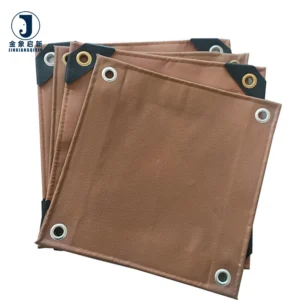
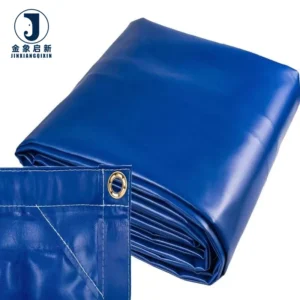
- Reinforce eyelet zones with additional PVC patches to distribute tie-down strap loads across the base fabric
- Store rolls upright on end caps to prevent flat-spot creases that show through printed graphics
- Allow cold-stored rolls to reach ambient temperature before unrolling to avoid coating crack at -30°C threshold
- Use PVC-compatible cleaners only — solvent-based products may degrade the printable surface coating
- Plan cut layout from roll width to minimise offcut waste and position weld seams away from flex zones
What to Include in Your Enquiry
Provide the specific trailer models in your fleet, the operating climate range across your routes, and whether you need roll stock or finished cut-and-welded panels. Specify any anti-static or flame retardant grade required by your market regulations. Indicate your annual roll consumption and colour or print requirements so that batch consistency and lead time can be confirmed before sampling.
Frequently Asked Questions
Q: How can I verify the GSM of each roll matches the quotation before shipment?
A: Every roll undergoes weight verification against the stated GSM during pre-shipment inspection. You receive an inspection record documenting actual weight per roll. On arrival, we recommend spot-checking with a calibrated scale and fabric cutter to confirm consistency across the batch.
Q: How do you control colour variation across multiple rolls in one order?
A: All rolls in a single production run are matched against the confirmed colour reference under controlled lighting. The pre-shipment inspection includes a side-by-side panel comparison. If your fleet requires panels installed adjacent to each other, specify this at enquiry stage so production sequencing accounts for visual matching.
Q: What heat-weld parameters should I use with different thickness grades?
A: Welding temperature, pressure, and dwell time vary between the 0.35 mm medium grade and the 1.2 mm super heavy grade. We provide a fabrication guide with recommended parameters for each thickness. Test welds on sample pieces are advised before committing to full panel production.
Q: What eyelet and hem reinforcement options are available for tie-down applications?
A: Eyelet spacing and reinforcement patch size should match the tie-down load and strap width used in your fleet. Reinforced hems with additional PVC layers distribute stress at the edges where covers flex most. Specify your tie-down system at enquiry so we recommend the appropriate reinforcement configuration.
Q: What is the lead time for custom width or colour orders?
A: Custom widths and colours require dedicated production runs with minimum order quantities that vary by grade. Typical lead times span multiple weeks from sample approval to dispatch. Request a specific timeline at enquiry stage, providing your target width, colour reference, and estimated roll quantity.