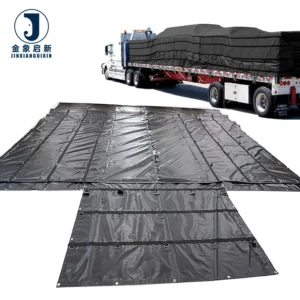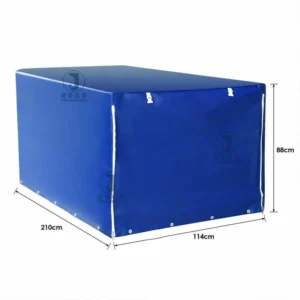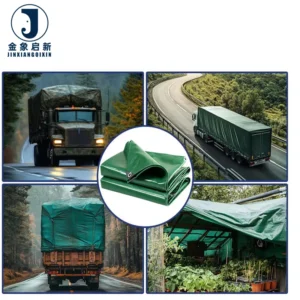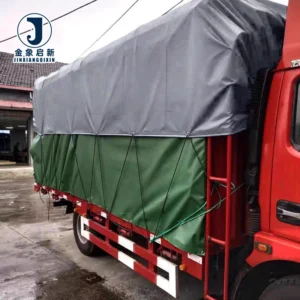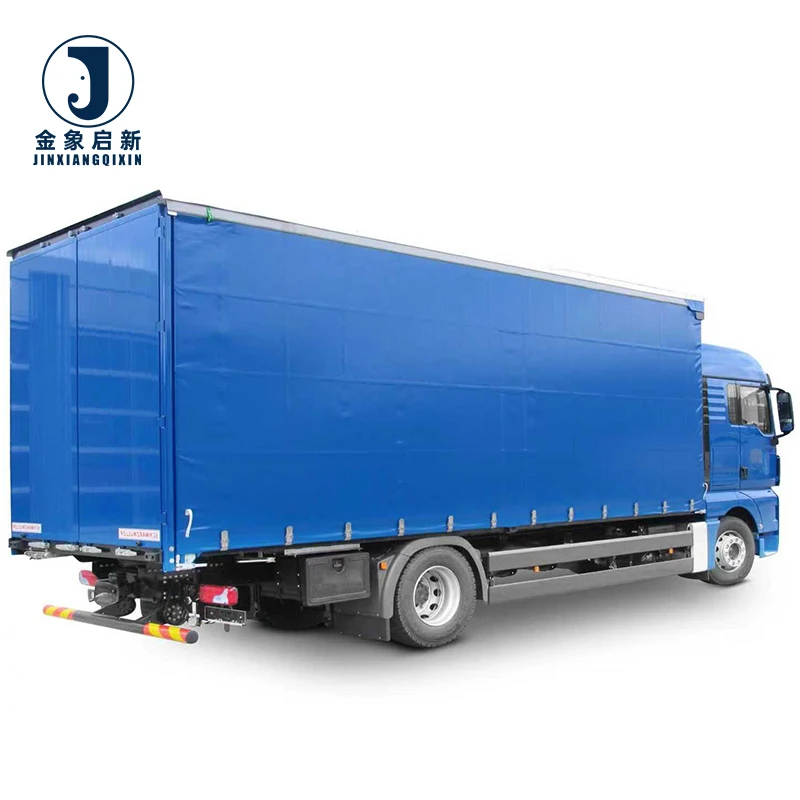
Precision Fitment — Every PVC tarpaulin truck cover is cut to exact trailer model dimensions, backed by in-process QA and 100% pre-shipment inspection to eliminate on-site sizing failures.
Technical Specifications
| Parameter | Value |
|---|---|
| Product Type | PVC Coated Tarpaulin Truck Cover |
| Coating Material | PVC |
| Construction | Double-Faced |
| Water Resistance | Yes |
| Anti-UV Treatment | Yes (grade not stated in source) |
| Flame Retardant | Yes (grade not stated in source) |
| Color Options | Multiple Colors Available |
| Customization | Logo Printing, Pattern Printing, Custom Size |
| Eyelet & Hem Options | Available |
| Certification | ISO, CE |
Application Suitability
| Application | Exposure & Requirement |
|---|---|
| Truck and trailer side curtains | Constant flexing at load points, road debris abrasion, all-weather exposure, tie-down tension |
| Transport fleet load protection | Rain and wind penetration prevention, UV degradation resistance, colour consistency across fleet |
| Advertising truck tarpaulins | Print adhesion and colour fidelity, surface durability against car wash and road grime |
| Vehicle weather protection | Waterproof sealing at seams and hems, low-temperature flexibility for cold-climate routes |
Why a Generic-Size PVC Tarpaulin Truck Cover Fails Your Fleet
A cover that fits the trailer model exactly is worth more than a heavier fabric cut to the wrong dimensions.
Fleet operators often receive truck covers cut to a generic template that leaves gaps at the rear doors or excess fabric bunching at the cab end. That excess catches wind at highway speed, accelerating eyelet pull-out and hem separation. The PVC tarpaulin truck cover specified for your trailer model must account for the exact roof bow spacing, side rail profile, and curtain runner travel — otherwise the fabric works against the hardware rather than with it. [NEED_CITE: dimensional accuracy requirements for side curtain systems on commercial trailers]
Curtain Movement and Flex-Point Engineering
A side curtain on a trailer undergoes continuous articulation every time the load is accessed. The PVC tarpaulin truck cover must flex thousands of times without coating crack or delamination at the fold lines. Double-faced PVC construction distributes stress across both surfaces, reducing the risk of single-side fatigue that plagues lighter single-coated alternatives. Reinforced hems at the top runner and bottom rail absorb the concentrated tension where the curtain meets the hardware.
Tie-Down Loads and Eyelet Reinforcement
Tie-down straps impose point loads that can tear through unreinforced fabric within a single season of daily use. Eyelet placement must align with the strap configuration of the specific trailer model — random spacing leaves unsupported spans that billow and abrade. The available eyelet and hem options allow spacing intervals to match the fleet operator’s existing strap pattern, distributing load across the base fabric rather than concentrating it at a single ring. [NEED_CITE: tensile load distribution around reinforced eyelets in heavy-duty tarpaulin assemblies]
Reading the Specification Sheet Beyond GSM
GSM tells you how much material is on the roll, but not how that weight is distributed between base fabric and coating. A PVC tarpaulin truck cover with a high GSM achieved through heavy coating and thin base fabric will resist puncture but may lack the tensile strength to withstand tie-down tension. Conversely, a heavier base fabric with thinner coating delivers superior tear resistance but may sacrifice weld seam integrity. The base fabric denier and weave density, combined with coating weight, determine the real-world performance envelope. Anti-UV treatment is available — confirm the specific grade required for your operating climate, as exposure intensity varies significantly between northern European routes and Middle Eastern corridors. Flame retardant treatment is also available in various grades — confirm the standard required by your target market before specifying. [NEED_CITE: relationship between base fabric denier, coating weight, and tensile strength in PVC coated fabrics per ISO 1421]
The Hidden Cost of Specification Mismatch
A colour mismatch between rolls in a single fleet order becomes visible the moment two curtains hang side by side on adjacent trailers. Batch inconsistency in coating weight produces panels that age at different rates, with one curtain fading or stiffening ahead of the others. Weld seams that fail before the fabric itself are almost always traceable to incorrect heat or pressure settings during fabrication — the seam is the weakest point when the load flexes most, and a premature weld failure leaves cargo exposed mid-transit. [NEED_CITE: common failure modes in PVC coated fabric welded seams under cyclic loading]
Why Transport Fleets Source This PVC Tarpaulin Truck Cover Here
The 10-person R&D team develops model-specific cutting templates based on your trailer drawings, ensuring the PVC tarpaulin truck cover matches roof bow spacing and runner travel without on-site adjustment. Three full production lines with 36 sets of professional equipment support fleet-scale orders with consistent roll-to-roll output. A dedicated QA/QC protocol inspects every panel before shipment, checking colour match against reference standards, verifying eyelet pull-out resistance, and confirming hem weld integrity at stress points. Sample development runs within days for custom size or print requirements, allowing fleet operators to validate fitment and finish before committing to the full order. Material specification sheets accompany each shipment stating GSM, base fabric construction, coating type, and colour reference for traceability.
Documentation & Verification
- Material specification sheet stating GSM, base fabric denier, coating type, and colour reference for each PVC tarpaulin truck cover order
- Test report for flame retardant and anti-UV grades supplied, matched to the treatment specified at order confirmation
- Pre-shipment inspection record covering dimensional check, colour consistency across rolls, and eyelet reinforcement verification
- ISO and CE certificates available as part of the shipment documentation package
- Roll packing list and certificate of origin included for customs clearance support
Fabrication, Handling & Storage
- Weld seams on double-faced PVC construction require calibrated heat settings to achieve full coating fusion without base fabric damage
- Eyelet installation at tie-down points must include reinforcing patches to distribute point loads across the PVC coated surface
- Store rolls upright on pallets to prevent permanent creasing that weakens the coating at fold lines
- Unroll in ambient temperature conditions to allow stiffened PVC to relax before cutting and fitting to the trailer frame
- Clean with mild detergent only — solvent-based cleaners degrade the PVC coating surface and compromise print adhesion
What We Need to Specify Your PVC Tarpaulin Truck Cover
Provide the trailer manufacturer, model designation, and production year so the cutting template matches the exact hardware layout. Share your fleet’s strap spacing and tie-down configuration to align eyelet placement accordingly. If custom logo or advertising print is required, supply artwork in vector format with Pantone colour references for cross-panel matching. Confirm whether the target market mandates a specific flame retardant grade so the correct treatment is applied during production.
Frequently Asked Questions
Q: How is the truck cover sized to match a specific trailer model?
A: We build a cutting template from the trailer manufacturer’s drawings or physical measurements of the roof bow spacing, side rail profile, and curtain runner travel. Each PVC tarpaulin truck cover is then cut to that template, not to a generic size chart. This ensures the curtain engages with the existing hardware without on-site trimming or stretching.
Q: What eyelet spacing and hem reinforcement options are available?
A: Eyelet spacing is set to match your fleet’s existing tie-down strap configuration, preventing unsupported fabric spans between rings. Hem reinforcement options include additional PVC strip welding at high-tension edges. Confirm your strap pattern and trailer model so we configure the reinforcement layout before production begins.
Q: How is abrasion at flex points addressed in the curtain construction?
A: Double-faced PVC construction provides coating protection on both surfaces where the curtain folds against the load or hardware. Reinforced patches are applied at known wear zones identified from the trailer model profile. This approach extends curtain service life at the points where single-coated fabrics typically fail first.
Q: What flame retardant grade is supplied and does it meet transport safety standards?
A: Flame retardant treatment is available, but the specific grade depends on your target market’s transport safety regulations. Confirm the standard required — such as a national transport authority specification — before placing the order so the correct treatment is applied and documented with a test report.
Q: How are custom logo prints aligned and colour-matched across a fleet order?
A: Artwork is positioned using a template registered to the curtain’s cut dimensions, ensuring the logo sits in the same location on every panel. Pantone references are used for ink mixing, and a pre-production print sample is produced for approval before the full fleet run. This prevents visible variation between trailers parked side by side.