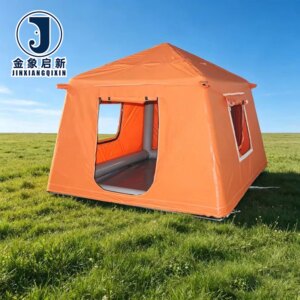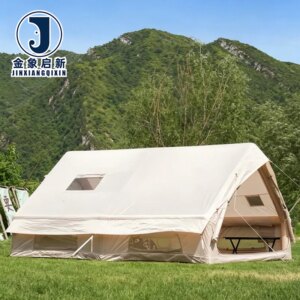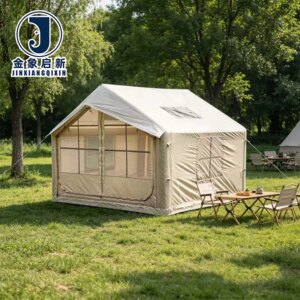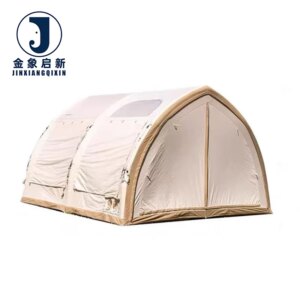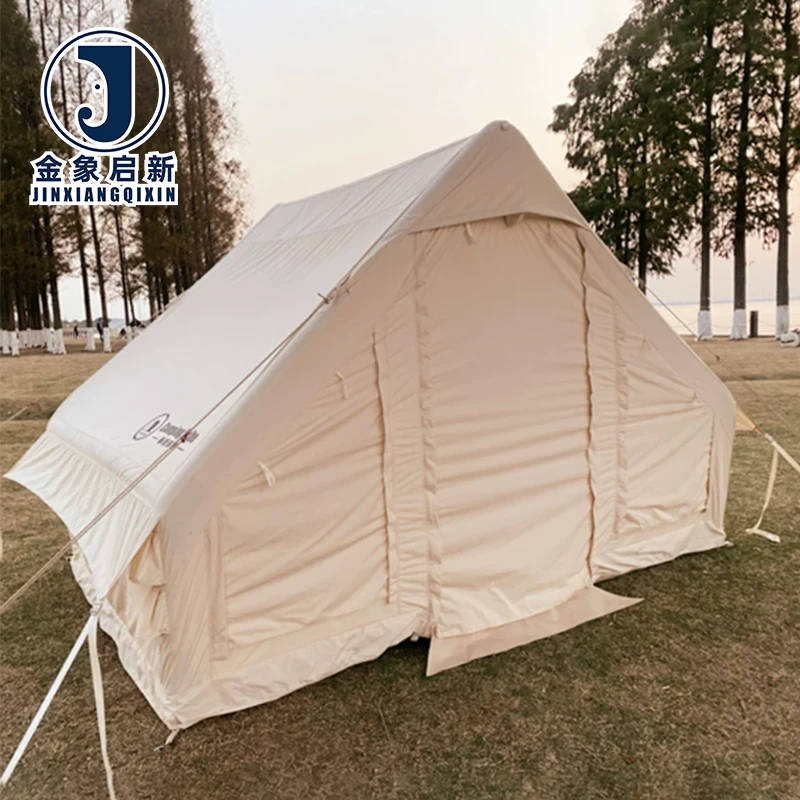
Process Control Over Coating Adhesion — every batch of Inflatable Camping Tent 4-Person Khaki is produced on dedicated lines where coating weight and base fabric adhesion are monitored continuously, ensuring consistent performance for transport-sector inflatable shelters.
Technical Specifications
| Parameter | Value |
|---|---|
| Product Type | Inflatable Tent |
| Core Material | UV Water-resistant PVC Fabric |
| UV Treatment | UPF 50+ (test basis not stated for long-term exposure) |
| Waterproof Rating | Water column ≥ 5000mm |
| Tear Strength | Exceeding 300N per ISO 13934.2 |
| Fabric Thickness Options | 0.3mm–0.8mm |
| Product Form | Single layer inflatable structure |
| Dimensional Accuracy | ±2cm for custom orders |
| Color | Khaki |
| Customization | OEM & ODM, pattern printing, structural design adjustments |
| Sample Lead Time | 7–10 days |
| Mass Production Lead Time | 15–20 days for standard orders |
| Standards | ISO9001, ISO14001, ISO45001, CE |
Application Suitability
| Application | Exposure & Requirement |
|---|---|
| Fleet depot temporary shelters | Constant UV exposure, wind loading, rapid inflation cycles on paved yards |
| Roadside emergency covers | Sudden weather exposure, vehicle proximity abrasion, deployment on uneven ground |
| Construction site modular tents | Dust ingress, equipment contact, prolonged sunlight on temporary works areas |
| Commercial rental inflatable units | High-frequency packing and unpacking, transport abrasion, varied operator handling |
| Emergency response field shelters | Rapid deployment, mixed ground conditions, extended outdoor exposure in all seasons |
Why Inflatable Tent Fabric Custom Orders Fail at the Seam
Inflatable Tent for Truck and Transport deployments rely on heat-sealed seams holding under constant internal pressure, yet many buyers discover seam separation occurs before the fabric itself reaches its load limit. The failure point is almost always where the sealed joint meets the flex zone of the inflatable beam. Seam integrity depends on coating adhesion quality and heat-seal temperature precision, not fabric weight alone.
Procurement teams specify PVC-coated fabric based on thickness or tear numbers, then find that field-deployed inflatable shelters lose pressure within hours because the welded joints cannot handle repeated inflation cycles. This pattern appears repeatedly in transport and construction shelter projects where the inflatable structure is packed, shipped, and redeployed multiple times per season [NEED_CITE: tensile and tear test methods for coated fabrics per ISO 1421].
Coating Adhesion Under Inflation Pressure
The single-layer inflatable structure places continuous outward force on every heat-sealed joint. When Inflatable Tent Fabric custom specifications call for repeated inflation and deflation, the coating must maintain bond strength to the base fabric through thousands of pressure cycles. Our coating process controls the penetration depth of PVC into the woven substrate, which directly governs how well the heat-sealed seam resists peeling under internal pressure.
Dimensional Precision for Fleet-Scale Deployments
Transport operators deploying inflatable shelters across multiple depot locations require dimensional repeatability from unit to unit. A ±2cm tolerance on custom orders ensures that replacement structures fit the same ground anchors and connection points as the original batch. This consistency matters when fleet operators manage Inflatable Tent for Truck and Transport shelter inventories across regional terminals.
Heat-Sealed Seam Engineering for Air Retention
Every inflatable beam joint is heat-sealed rather than stitched, eliminating needle holes that compromise air retention. The tear resistance exceeding 300N per ISO 13934.2 indicates that the base fabric can absorb localized stress concentrations at the seam edges without propagating a tear. For commercial rental fleets that pack and redeploy units frequently, this seam construction extends the service interval between replacements [NEED_CITE: ISO 13934.2 tear testing methodology for coated textiles].
Material Thickness and Structural Behaviour
Fabric thickness options from 0.3mm to 0.8mm allow buyers to balance pack weight against structural rigidity. Thinner grades suit emergency response units where rapid deployment and minimal storage volume take priority, while thicker grades serve construction site shelters that remain inflated for extended periods under wind load. The UPF 50+ treatment (confirm the specific UV test standard required for your market) provides protection during prolonged outdoor exposure, though buyers should verify the rating basis against their regional sunlight intensity data.
The Cost of Overlooking Batch-to-Batch Coating Consistency
When inflatable tent fabric arrives with inconsistent coating weight across rolls, the heat-seal parameters that worked on the first batch produce weak joints on the next. Buyers then face rejected shipments or field failures that trace back to coating variation rather than fabrication error. This problem compounds in commercial rental operations where replacement units must match the performance of existing inventory, and inconsistent material forces operators to recalibrate welding equipment for every delivery [NEED_CITE: coating weight variation effects on heat-seal strength in PVC fabrics].
Why Procurement Teams Source Inflatable Shelters Here
Three full production lines with 36 sets of professional equipment allow simultaneous processing of multiple inflatable tent orders without queue delays during peak demand periods. The 10-person R&D team handles structural design adjustments specific to inflatable beam geometry, not just flat fabric cutting. Dedicated QA and QC staff conduct inspection across 8 critical points including 24-hour pressure retention checks that verify air-holding performance before any unit ships. Pre-production samples are developed within 7–10 days, giving buyers physical confirmation of material behaviour and seam construction before committing to mass production. Digital production records are stored for 5 years with batch test data retrievable by order number, supporting warranty claims and compliance audits.
Documentation & Verification
- Material specification sheet stating PVC coating type, fabric thickness, and color reference per order
- UV and waterproof test reports provided where applicable to stated performance grades
- ISO9001, ISO14001, ISO45001 certificates and CE compliance documentation with shipment
- Pre-shipment inspection record covering seam strength and airtightness verification
- Batch-specific quality data retrievable by order number for five years post-delivery
Fabrication, Handling & Storage
- Heat-seal temperature must match the specific PVC coating thickness selected between 0.3mm and 0.8mm to achieve full joint fusion
- Store inflated test units flat or loosely rolled to prevent permanent crease marks on the khaki PVC surface
- Use compatible PVC adhesive for field repairs on single-layer inflatable beam punctures
- Avoid dragging deflated units across abrasive ground to protect the water-resistant coating surface
- Allow cold-stored fabric to reach ambient temperature before inflation to prevent coating stiffness cracks
What to Include in Your Inflatable Shelter Inquiry
Provide the intended deployment environment, expected inflation frequency, and any regional compliance standards your market requires for temporary structures. Specify whether you need complete inflatable units or fabric rolls for your own fabrication line, along with target dimensions and annual volume estimates. If pattern printing or custom color matching is required, indicate the design files and quantity per variant so we can assess production scheduling.
Frequently Asked Questions
Q: What customization options are available for inflatable tent dimensions and fabric thickness?
A: Fabric thickness is adjustable between 0.3mm and 0.8mm depending on structural rigidity and pack-weight requirements. Custom dimensions are produced to ±2cm accuracy, and structural design adjustments including beam layout and inflation valve placement are handled by the R&D team. OEM and ODM services cover pattern printing and material modifications.
Q: How is UV resistance verified and what does UPF 50+ mean for outdoor service life?
A: UPF 50+ indicates substantial ultraviolet blockage, though the specific long-term exposure test basis should be confirmed against your market requirements. Buyers deploying in high-sunlight regions should request the test report and verify the rating aligns with local UV index data and expected deployment duration.
Q: What quality documentation accompanies each batch for commercial procurement compliance?
A: Each shipment includes a comprehensive quality inspection report with fabric performance test results, seam strength data, and airtightness verification records. ISO9001, ISO14001, and ISO45001 certificates along with CE documentation are provided. Digital batch records remain accessible for five years using the order number.
Q: How are heat-sealed seams tested for airtightness and structural durability?
A: Every production batch undergoes 24-hour pressure retention checks that verify the inflatable structure maintains internal pressure without leakage. Seam strength data is recorded and cross-referenced against the tear resistance baseline exceeding 300N per ISO 13934.2. Inspection covers 8 critical checkpoints from raw material through finished unit.
Q: What is the sample approval process before mass production begins?
A: Pre-production samples are developed within 7–10 days for buyer evaluation of material specification, structural performance, and dimensional accuracy. Once the sample is approved, mass production proceeds with in-process quality checks at each stage. Standard orders typically ship within 15–20 days after sample confirmation.