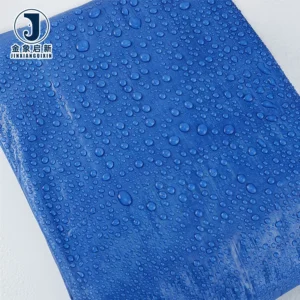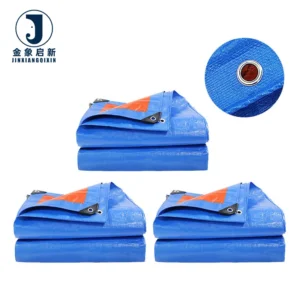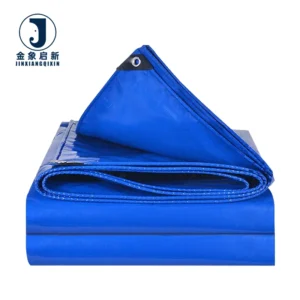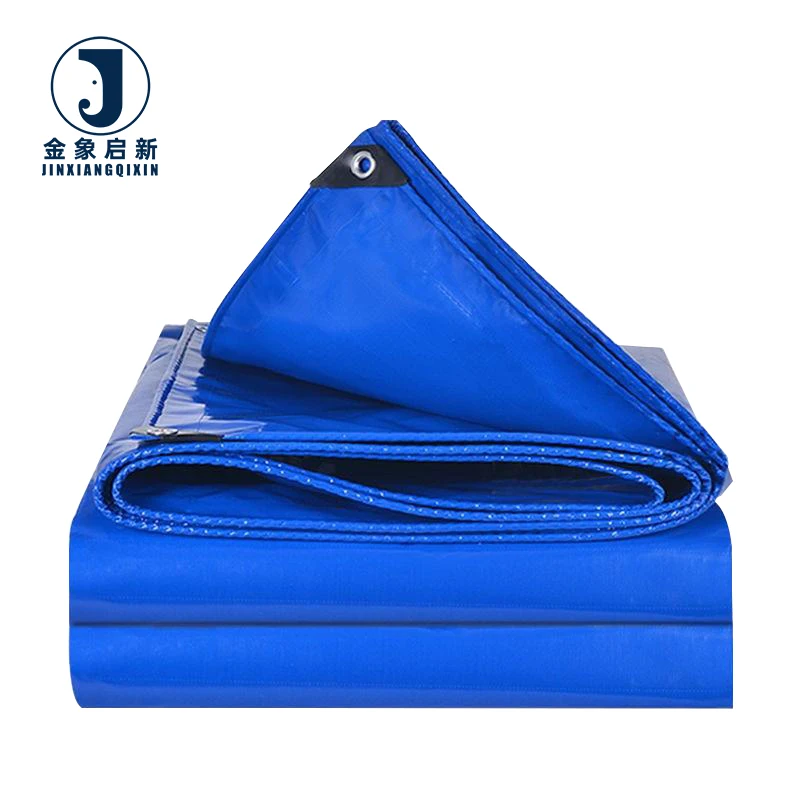
Precision in every roll — our hot-melt coating process locks PVC into high-tenacity polyester mesh with verified GSM at dispatch, ensuring truck cover fabric arrives matching the specification agreed at order.
Technical Specifications
| Parameter | Value |
|---|---|
| Product Type | PVC Coated Tarpaulin |
| Coating Material | PVC |
| Base Fabric | High-strength polyester mesh fabric |
| Coating Method | Laminated technology & Hot-melt Coating technology |
| Weight Options | 350gsm, 420gsm, 500gsm, 550gsm, 600gsm, 750gsm |
| Total Thickness | 0.32mm, 0.35mm, 0.4mm, 0.45mm, 0.5mm, 0.65mm |
| Roll Width | 2m / 2.1m |
| Roll Length | 75m / 50m |
| Colour Range | Blue, Red, Yellow, Light Blue, Grey (custom colours available) |
| Key Features | Cold crack resistance, anti-mildew, anti-static treatment, waterproof, sunproof, colour fastness |
| Flame Retardant | Available in flame retardant grades — confirm the grade required for your market |
| UV Treatment | UV-stabilised formulation — request test report for specific market compliance |
| Anti-Static | Anti-static treatment applied — test basis available on request |
| Welding Performance | Outstanding tearing strength for welding, easy to repair by welding |
| Finish Product Sizing | Custom cut to customer dimensions or supplied as roll stock |
| Service Life | 3-7 years under normal conditions |
| Standards | ISO 14001, ISO 45001, CE, RoHS |
Application Suitability
| Application | Exposure & Requirement |
|---|---|
| Truck side curtain fabric | Continuous flexing at load points, road spray abrasion, wind-driven rain ingress, UV from extended outdoor parking |
| Flatbed cargo cover | Direct sun exposure, tie-down strap friction, repeated fold-unfold cycles, load shift abrasion |
| Trailer roof and rear flap | Standing water during rain, thermal expansion and contraction, high-speed airflow uplift stress |
| Transport equipment OEM build | Consistent batch colour across multiple panels, weld integrity at factory assembly, dimensional accuracy for frame mounting |
| Truck awning and canopy | Overhead UV exposure, occasional pooling water, deployment and retraction creasing |
Why a Generic Truck Cover Size Costing You More Than You Think
A PVC coated tarpaulin for truck cover that does not match the exact trailer dimensions fails first at the edges, not the centre.
When fleet operators source covers cut to a generic size, the excess material flaps in highway wind, accelerating abrasion at the hem. Where the cover is too short, tie-down straps pull the fabric past its designed stress point, and the eyelet zone tears within the first few hundred kilometres. I have seen transport companies replace covers twice a year because the dimensions were close but not exact, turning a single purchase into a recurring cost. [NEED_CITE: fleet cover replacement frequency linked to dimensional accuracy in transport logistics]
A PVC Coated Tarpaulin aftermarket supplier that templates each cover to the specific trailer model — measuring rail-to-rail, accounting for buckle clearance and strap routing — eliminates that failure mode at the source.
Fitment That Follows the Trailer, Not the Other Way Around
Every trailer model carries distinct frame geometry, rail height, and corner radius. Our PVC Coated Tarpaulin for truck cover production starts with the exact vehicle dimensions rather than a standard rectangle. This means reinforcement lands where the load actually flexes, and hems sit flush against the rail instead of bridging a gap that lets water track in.
Reinforcement Where the Load Flexes Most
The highest abrasion on a moving truck cover occurs at the points where the cargo shifts and the fabric presses against the load edge. We position additional coating layers and reinforced hems at these zones. The hot-melt coating process ensures these reinforced areas bond with the base fabric rather than sitting as an added layer that can delaminate under road vibration. [NEED_CITE: flex-point reinforcement methodology for coated transport fabrics]
Decoding GSM, Coating Method and Base Fabric for Truck Cover Selection
GSM alone does not determine how a truck cover performs on the road. A 550gsm fabric with a tight polyester mesh and hot-melt coating will outperform a 600gsm fabric built on a loose weave with simple lamination, because the coating adhesion and yarn density govern tear propagation resistance. Our laminated and hot-melt coating technologies offer distinct trade-offs: lamination provides a cost-effective bond suited to moderate-duty flatbed covers, while hot-melt coating drives PVC deep into the mesh structure for higher peel strength at welded seams — critical for side curtains that flex thousands of times per trip. The available thickness range from 0.32mm to 0.65mm correlates with puncture resistance; lighter loads with smooth cargo suit the lower end, while construction materials and steel coils demand the heavier grades. Roll widths of 2m and 2.1m allow fabricators to panel large trailer sides with minimal horizontal welds, reducing the number of potential failure lines in the finished cover.
The Hidden Cost of Specifying the Wrong Grade
Ordering a 350gsm cover for a long-haul side curtain application may pass the initial budget review, but the lighter fabric cannot absorb the repeated flex-and-recover cycles at highway speed, leading to coating micro-cracks and water ingress within months. Similarly, specifying a flame retardant grade without confirming the test standard accepted at the destination market means the truck may arrive at a depot or port only to be rejected at inspection — a delay that costs more than the fabric price difference. [NEED_CITE: coating micro-crack progression under cyclic flex loading in transport textiles] Colour inconsistency across rolls in the same order becomes visible the moment two panels hang side by side on a trailer, forcing the fleet to either accept a patchwork appearance or reject the batch and wait for replacements.
Why Fleet Operators Source This PVC Coated Tarpaulin Here
Our three full production lines and 36 sets of professional equipment support the batch volumes fleet operators and transport equipment builders require, with on-time delivery that aligns to vehicle build schedules. The 10-person R&D team develops samples matched to your trailer model dimensions within days, so you confirm fit before committing to bulk. Dedicated QA/QC at every production stage, including 100% pre-shipment inspection, catches GSM deviation and colour drift before the rolls leave the factory. Hot-melt coating technology is maintained with calibrated temperature and pressure controls, ensuring consistent adhesion across every metre in the order. Custom widths, lengths and colours are produced without the extended minimums that make small fleet orders uneconomical elsewhere.
Documentation & Verification
- Material specification sheet stating GSM, base fabric construction and coating weight per roll
- UV and flame retardant test reports supplied with shipment where applicable grades are specified
- Pre-shipment inspection record confirming weight, colour consistency and weld integrity
- Roll packing list with individual roll dimensions and net weight for customs clearance
- Certificate of origin and customs documentation prepared for destination market
Fabrication, Handling & Storage
- Hot-air weld at 500-600°C suits the hot-melt coating bond for seam strength at flex zones
- Store 2m and 2.1m rolls upright on pallets to prevent flat-spotting on the coating surface
- Allow cold-stored rolls to reach ambient temperature before unrolling to avoid coating crack
- Use mild detergent on PVC surface; solvent cleaners will degrade the coating adhesion
- Cut panels from 75m rolls with nesting layouts to maximise yield on custom truck cover dimensions
- Field repair by hot-air welding matches the factory seam strength on polyester mesh base
What We Need to Quote Your Truck Cover Accurately
Share the trailer make, model and year, along with the specific panel dimensions or the cover type required — side curtain, flatbed sheet, or full enclosure. Confirm the GSM grade you need and whether flame retardant certification is required for your operating region, along with the test standard your compliance body accepts. Specify colour by RAL reference if batch consistency across multiple fleet covers is critical, and indicate whether you need finished panels with hems and eyelets or roll stock for your own fabrication line.
Frequently Asked Questions
Q: How do you ensure the PVC coated tarpaulin fits my specific trailer model?
A: We template each cover to the exact trailer dimensions you provide, including rail height, corner radius and buckle clearance zones. Before bulk production, we can supply a dimensional drawing or a physical sample panel for your approval. This eliminates the gap and flap issues that generic-sized covers create on the road.
Q: Can you provide test reports for UV and flame retardant treatment?
A: Yes, where flame retardant or UV-stabilised grades are specified, we include the relevant test reports with your shipment documentation. Confirm the test standard your market requires — such as DIN 4102 or NFPA 701 — at inquiry stage so we match the correct grade and testing protocol to your compliance needs.
Q: Will the colour match across multiple rolls in the same fleet order?
A: We control pigment dosing and coating temperature throughout each production run to maintain colour consistency roll to roll. For fleet-wide orders, we allocate all rolls from a single batch and verify colour against your approved sample during pre-shipment inspection before dispatch.
Q: What reinforcement is applied at tie-down and flex points?
A: High-stress zones receive additional coating layers and reinforced hems bonded through our hot-melt process. Eyelet spacing and placement are matched to your strap routing pattern so load forces distribute through the reinforced area rather than concentrating on a single fabric point.
Q: How long does sample development take for a custom truck cover?
A: Our R&D team typically develops custom samples within days of receiving your trailer dimensions and specification requirements. The sample confirms GSM, colour, weld performance and fitment before you commit to the full production run.