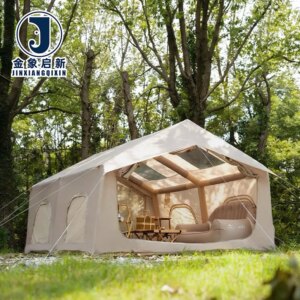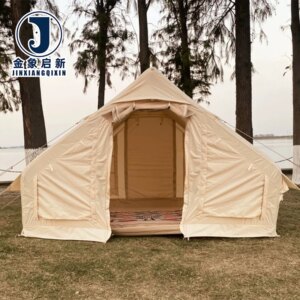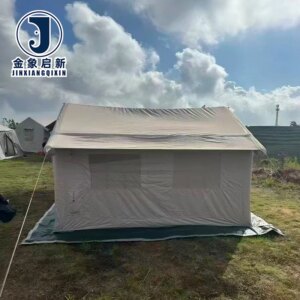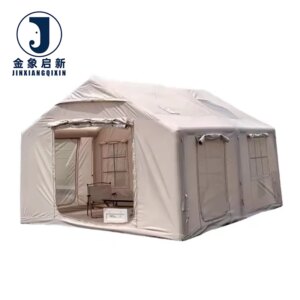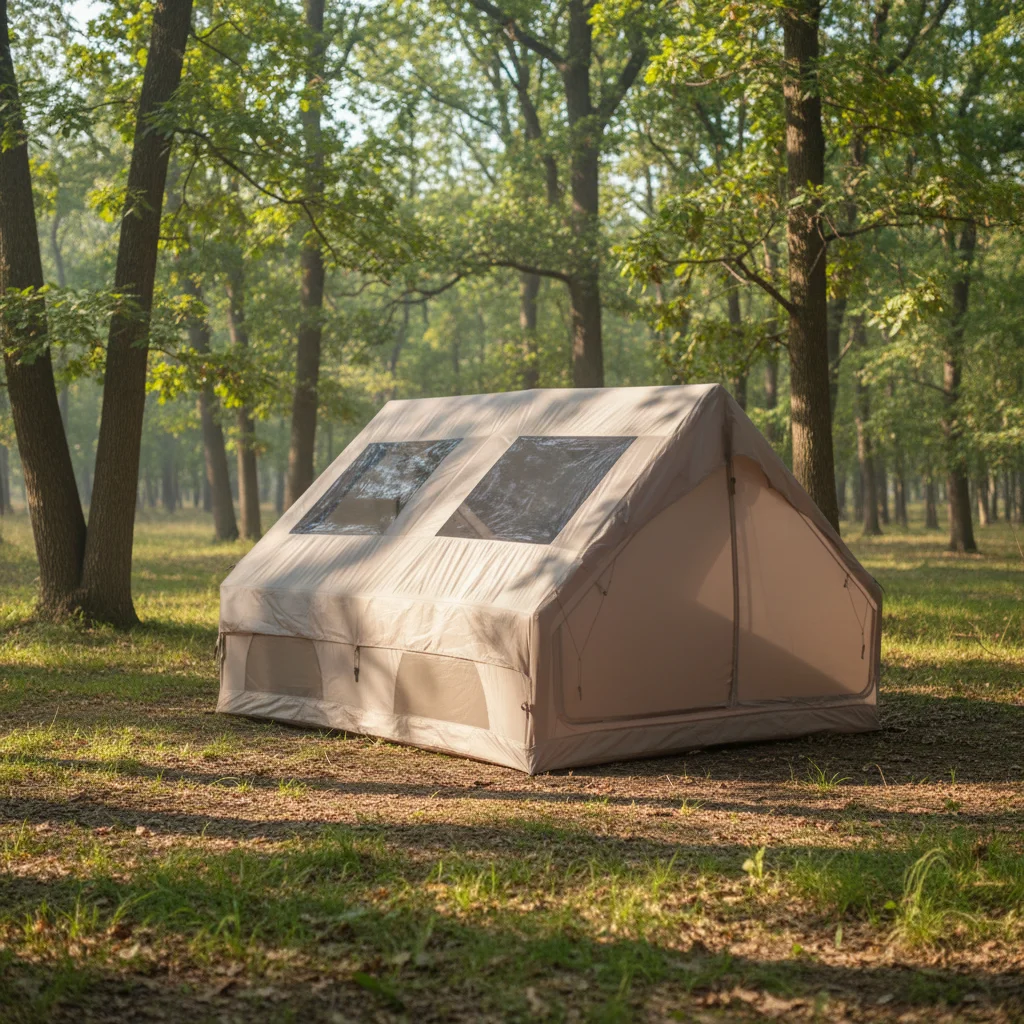
Deep Process Control Over Coating — nearly 30 years focused on coated fabric production ensures consistent PVC tarpaulin quality across every roll, critical for inflatable tent manufacturers sourcing fabric at scale.
Technical Specifications
| Parameter | Value |
|---|---|
| Product Type | Inflatable Tent Fabric |
| Core Material | PVC tarpaulin |
| Product Capacity | 2-8 Person |
| Design Type | Four-season, single-layer construction |
| Opening Mechanism | Quick automatic opening |
| Waterproof | Stated (rating not specified) |
| Windproof | Stated (test basis not stated) |
| UV-resistant | Stated (test basis not stated) — available in UV-treated grades, confirm the rating required for your market |
| Tear-resistant | Stated (test basis not stated) — available in tear-resistant grades, confirm the standard required for your application |
| Customization | OEM & ODM (sample customization, pattern printing, size adjustments, material thickness modifications) |
| Production Facility Area | 9,180 m² |
| Production Lines | 3 full production lines |
| Processing Equipment | 36 sets |
| R&D Team | 10 technicians |
| Quality Control | Full-process inspection with dedicated QA & QC staff |
| Standards | ISO9001, ISO14001, ISO45001, CE |
Application Suitability
| Application | Exposure & Requirement |
|---|---|
| Transport fleet crew shelters | Roadside deployment, repeated inflation cycles, wind and rain exposure, integration with fleet logistics |
| Construction site temporary shelters | Sustained outdoor weathering, abrasion from site activity, rapid setup and teardown demands |
| Expedition base camps | Extended exposure to variable climate, altitude-driven wind loads, remote deployment without repair facilities |
| Emergency response operations | Time-critical inflation, ground contact and moisture, frequent relocation between sites |
| Industrial temporary storage | Semi-permanent outdoor siting, UV and temperature cycling, protection of stored materials |
Why Generic Tent Fabric Fails When Inflation Pressure Meets Field Conditions
Coated fabric for inflatable tents must withstand both internal air pressure and external mechanical stress simultaneously.
Most inflatable tent failures do not begin with a tear in the open field of the material. They start at the seams, at the valve reinforcement zones, and at the base-to-wall junctions where inflation pressure concentrates load on a small area of fabric. When a buyer selects material based on GSM alone without verifying coating adhesion, the laminate layers can delaminate under sustained inflation pressure, particularly in temperature-cycling environments. I have seen coated rolls where the stated weight checked out on arrival but the coating peeled away from the base fabric within weeks of inflation [NEED_CITE: tensile and tear test methods for coated fabrics per ISO 1421]. For PVC camping tent for transport and fleet deployment, the cost of a field failure is never just the material — it is the crew downtime, the replacement logistics, and the reputational damage.
Air Pressure Demands on Coated Fabric
Inflatable tent construction places unique loads on PVC tarpaulin that flat-sheet applications do not encounter. The fabric must hold shape under continuous internal pressure while resisting external wind loads, ground abrasion, and UV degradation simultaneously. This means the coating adhesion to the base fabric matters as much as the coating weight itself. Our PVC camping tent for transport and fleet deployment uses a PVC tarpaulin core that supports repeated inflation and deflation cycles without delamination, validated through full-process inspection at every production stage.
Rapid Deployment Without Compromising Structural Integrity
The quick automatic opening mechanism demands fabric that folds tightly, stores under compression, and unfolds without developing stress whitening or micro-cracks at the fold lines. Single-layer four-season construction means there is no secondary liner to distribute load — the PVC tarpaulin carries every mechanical and environmental demand on its own. This is why material selection for inflatable tent fabric goes beyond waterproofing claims and requires verification of how the coating behaves after repeated folding and inflation cycles [NEED_CITE: coating adhesion test methods for PVC tarpaulin under cyclic stress].
Interpreting the Specs That Actually Matter for Inflatable Applications
The PVC tarpaulin core in this inflatable tent fabric is specified across several interdependent properties. The single-layer construction means the base fabric denier and weave density directly govern tear propagation resistance — a higher denier alone does not prevent tearing if the weave is too open to stop a tear from spreading. The PVC coating weight and its adhesion to the base fabric determine both waterproof integrity and how well welded seams hold under inflation pressure. The quick automatic opening mechanism requires the coating to remain flexible across temperature ranges without cracking at fold lines. UV-resistant and tear-resistant grades are available — buyers should confirm the specific test standard required by their end market before ordering, as requirements vary significantly between regions and application codes. Waterproof performance is stated for the PVC tarpaulin construction; the specific hydrostatic rating should be verified against your deployment conditions.
The Hidden Cost of Specifying Inflatable Tent Fabric by Price Per Kilogram
When procurement focuses on unit cost without verifying coating adhesion and seam strength, the consequences surface after deployment. Welded seams on inflatable structures fail most often at the base-to-wall junctions, where inflation pressure meets ground contact abrasion. If the coating adhesion is marginal, the weld line separates from the fabric before the fabric itself reaches its tensile limit — a failure mode that cannot be predicted by GSM verification alone [NEED_CITE: weld strength testing standards for PVC coated fabrics]. Batch color inconsistency across multiple tents for a single project creates visible mismatches once installed side by side, forcing replacement of entire units rather than individual panels. These are not cosmetic issues — they represent material that arrived matching the quotation on paper but diverged from the specification where it mattered structurally.
Why Inflatable Tent Fabric Sourcing Works Here
Nearly 30 years of focused coated fabric production translates into process control that directly affects inflatable tent performance — coating weight consistency roll-to-roll ensures predictable heat-welding parameters for your production line. Three full production lines and 36 sets of processing equipment support bulk orders with the batch consistency that inflatable tent manufacturers need when cutting multiple units from the same lot. A 10-person R&D team handles custom sizing, pattern printing, and material thickness modifications, developing samples within days so you can validate inflation behavior before committing to production. Full-process inspection with dedicated QA and QC staff means every roll is checked before dispatch — not spot-sampled after the container is sealed. OEM and ODM capability covers the full range from raw roll stock to cut-and-printed components matched to your tent pattern.
Documentation & Verification
- Material specification sheet detailing PVC coating composition, weight, and handling guidelines per batch
- Pre-shipment inspection record with batch-specific waterproof rating and tensile strength test results
- Test reports for UV-resistant and tear-resistant grades where applicable, referencing the standard used
- ISO9001, ISO14001, ISO45001, and CE certification documentation accompanying each shipment
- Roll packing list with batch traceability linked to order number for post-delivery verification
- Certificate of origin and customs support documentation for international dispatch
Fabrication, Handling & Storage
- Heat-weld parameters should be calibrated to the specific PVC coating thickness and confirmed with test welds before production runs begin
- Store rolls vertically on pallets to prevent flat-spot deformation that transfers to the inflatable tent surface after inflation
- Avoid dragging PVC tarpaulin across abrasive surfaces during cutting and assembly to preserve coating integrity at stress points
- Allow cold-stored rolls to reach ambient temperature before unrolling to prevent cracking at fold lines in the PVC coating
- Use PVC-compatible adhesives for field repairs, matching the coating chemistry to ensure bond strength under inflation pressure
- Nest pattern pieces to minimize seam count in high-pressure zones of the inflatable tent structure
What We Need to Quote Your Inflatable Tent Fabric Accurately
Provide your target capacity range, deployment environment, and whether the tent will face sustained inflation or repeated setup-teardown cycles. Specify any fire-retardant or anti-static requirements tied to your market’s regulatory framework, along with the applicable test standard. Share your color reference, printing requirements, and whether you need roll stock or cut-to-pattern components so we can confirm material availability and production scheduling.
Frequently Asked Questions
Q: How do I verify the waterproof rating and material GSM on arrival against what was quoted?
A: Every shipment includes a pre-shipment inspection record with batch-specific waterproof test results and GSM verification. We recommend conducting your own weigh-and-measure check on a sample from each roll upon receipt. Any discrepancy between the stated specification and the delivered material is documented and resolved against the original quotation record and batch test data.
Q: What custom sizing and capacity options are available for inflatable tent fabric orders?
A: Our R&D team handles OEM and ODM customization including size adjustments to match your specific tent pattern, material thickness modifications for different inflation pressure requirements, and pattern printing for branding. Samples are developed within days for your approval before mass production begins, ensuring the final product matches your deployment scenario exactly.
Q: How do you ensure batch color consistency when I order multiple tents for one project?
A: Full-process inspection covers color verification across every roll in your order before dispatch. We match production against your approved color reference sample and document the result in the pre-shipment inspection record. This eliminates the visible mismatch that occurs when rolls from different batches are installed side by side on site.
Q: What is the test basis for UV resistance claims on this inflatable tent fabric?
A: UV-resistant grades are available with specific test documentation — the applicable standard depends on your target market and deployment duration. We provide the test report referencing the exact standard used for your batch. Buyers should confirm which UV rating their end-use regulations or client specifications require before placing the order.
Q: How does the sample approval process work before bulk production starts?
A: Once you provide your specifications including capacity, material thickness, color, and any printing requirements, our R&D team produces a sample for your evaluation. You verify fit, color accuracy, and material behavior under your intended inflation conditions. Production begins only after your written sample approval, and the approved sample becomes the reference standard for all subsequent quality checks.