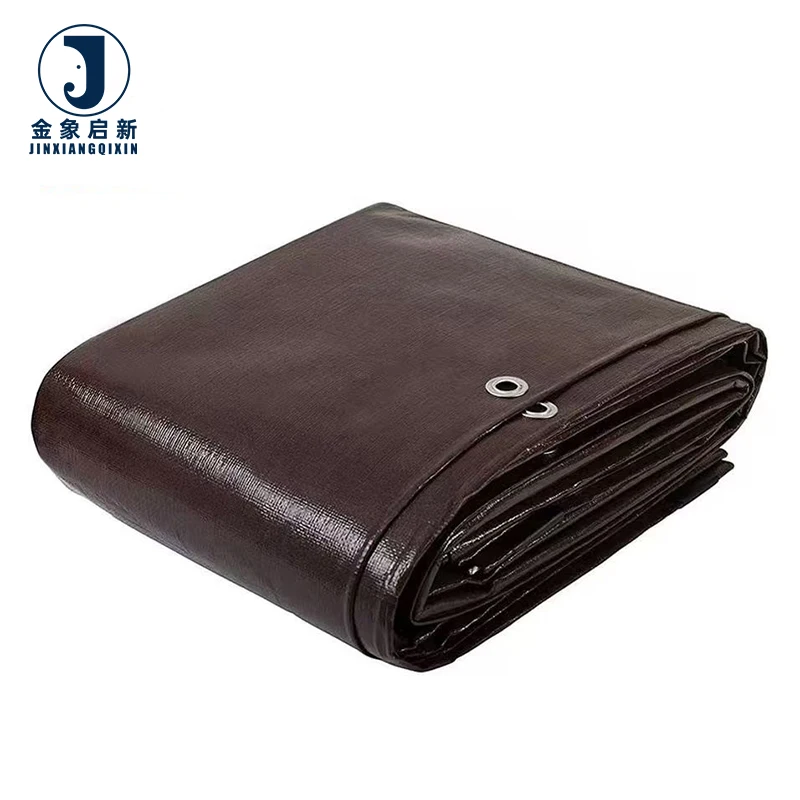
Coated Fabric Expertise — nearly 30 years focused on PE and PVC coating processes, with deep control over coating weight, adhesion, and batch-to-batch consistency verified at every production stage.
Technical Specifications
| Parameter | Value |
|---|---|
| Product Type | PE Tarpaulin |
| Material | Polyethylene (PE) |
| Weight (GSM) | 40g~500g/m² (available across lightweight to heavy-duty grades — confirm the grade for your application) |
| Mesh Count | 5×5 to 20×20 (available across grades — confirm mesh density required for your load and exposure) |
| Total Thickness | 0.18 mm to 0.35 mm (varies by grade selected) |
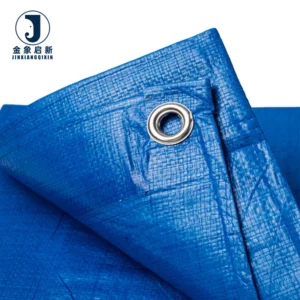
| Coating | PE laminated both sides |
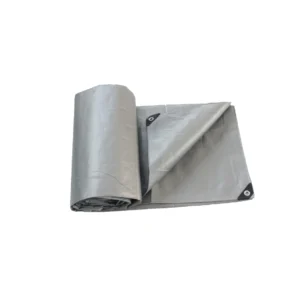
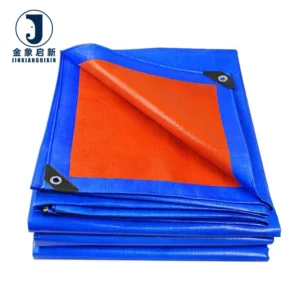
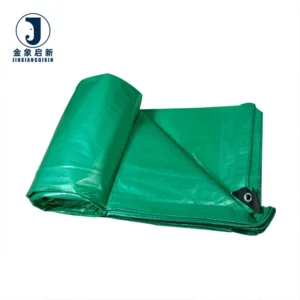
| Color | Custom color (batch-matched per order) |
| Size | Custom cut to trailer or equipment dimensions |
| Water Resistance | Double waterproof surfaces, reinforced corners |
| UV Treatment | UV treatment available — confirm test basis required for your market |
| Anti-Mildew | Mildew proof treatment available — confirm grade required |
| Eyelet Spacing | 39.4 Inches center-to-center (custom spacing available) |
| Standards | ISO, CE certified production |
Application Suitability
| Application | Exposure & Requirement |
|---|---|
| Long-haul truck load covering | Road vibration, wind abrasion at flex points, extended UV exposure, tie-down strap friction |
| Trailer side curtains | Constant flexing during loading, weather and road spray, repeated tension release cycles |
| Construction equipment covers on site | Dust ingress, rain exposure, ground contact abrasion, UV degradation over stationary periods |
| Warehouse and stockpile coverage | Water ingress prevention, wind uplift resistance, puncture from stacked materials |
| Agricultural stock and feed covering | Moisture barrier, mildew resistance, UV exposure in open yard storage |
Why a Generic-Fit PE Tarpaulin Fails on a Specific Trailer
A cover cut to standard dimensions never seals properly on a fleet’s actual trailer model — the gaps at corners and edges let weather in exactly where the load is most vulnerable.
Fleet operators regularly receive PE tarpaulin for truck and transport use that looks correct on paper but fails within the first few trips. The issue is rarely the fabric itself; it is the cut and finish. A cover that is even slightly oversized flaps in the slipstream, and that flapping concentrates stress at the hem and eyelet line. Within a short period, the reinforced corners begin to separate, and water channels through the gaps. Operators end up replacing covers far sooner than the material should require [NEED_CITE: fleet tarpaulin replacement cycles driven by fitment rather than fabric failure].
Cut and Finished to Fleet-Specific Trailer Dimensions
Every trailer model has its own deck length, side height, and tie-down rail position. We cut each PE tarpaulin for truck and transport use to those exact measurements rather than a nominal standard size. The hem is folded and heat-sealed to match the strap routing on your specific trailer, so the cover sits flush without excess material that would flap or pool water at low points.
Reinforced Corners and Eyelet Placement Under Load Stress
The corners of a truck cover endure the highest concentration of tension during transit. We reinforce these points with additional PE patches bonded before the final hem fold. Eyelet spacing follows your tie-down configuration — the standard 39.4-inch center-to-center spacing is available, but we adjust this to match the anchor points on your trailer’s load restraint system, eliminating the slack that leads to wind-driven abrasion.
Mesh Density and Weight Selection for Road Exposure
Lighter mesh counts and lower GSM grades suit short-haul or enclosed-yard coverage, while long-haul transit demands higher mesh density and heavier coating weight to resist sustained wind load and road debris impact [NEED_CITE: mesh count and tensile demand correlation for transport tarpaulins]. The available range spans from 5×5 to 20×20 mesh and 40g to 500g/m² — we recommend confirming the specific grade against your typical route conditions and load profile before production begins.
Reading the Specification Sheet Beyond the GSM Figure
GSM alone does not predict how a PE tarpaulin performs under a tie-down strap. The base fabric mesh count and the coating weight on each side together determine tear propagation resistance and seam integrity. A fabric with a tight 12×12 or higher mesh and moderate coating weight often outperforms a heavier but loosely woven alternative when the load flexes during cornering or braking. Coating adhesion — how firmly the PE layer bonds to the woven base — is equally important; poor adhesion leads to delamination at the hem fold, which is the most common failure mode on truck covers. Double waterproof surfaces only function as intended when the coating is fully bonded across the entire panel, not merely applied to the outer face.
The Cost of Specifying Without Verifying
When a buyer specifies a GSM on the purchase order but does not require pre-shipment weight verification, the material arriving on site may be lighter than agreed. This is rarely deliberate; it usually results from production variance that goes unchecked when the buyer has not made inspection a contractual requirement. The cover performs adequately in fair weather but fails when wind load peaks or when abrasion concentrates at a flex point [NEED_CITE: GSM variance impact on transport cover service life]. Similarly, UV treatment claimed without a supporting test report leaves the buyer with no basis for a claim if the fabric degrades prematurely on an exposed route.
Why Source PE Tarpaulin Through Jinxiang
Our 10-person R&D team develops samples within days for custom dimensions and eyelet configurations, so you can test fitment on your actual trailer before committing to a production run. Three full production lines with 36 sets of professional equipment handle bulk volume while maintaining roll-to-roll consistency in weight and color. Dedicated QA/QC runs at every stage — coating weight, mesh alignment, hem bonding, and eyelet pull-through strength — with 100% inspection before dispatch. Custom widths and colors carry the same lead time discipline as standard stock grades, removing the typical delay penalty on non-standard fleet requirements.
Documentation & Verification
- Weight verification per roll against the stated GSM before dispatch
- UV treatment test report supplied where the grade is specified on the order
- Custom size confirmation sheet matched to your trailer model dimensions
- Pre-shipment inspection record covering coating adhesion and eyelet pull strength
- Material specification sheet listing base fabric, coating weight, and color reference
- Certificate of origin and customs documentation for export shipments
Fabrication, Handling & Storage
- Heat-seal temperature must match the selected PE coating weight to avoid delamination at hem folds
- Eyelet reinforcement patches should be bonded before final hem folding to distribute strap load
- Store rolls on pallets in shade; direct sun on rolled PE tarpaulin causes uneven thermal set and creasing
- Allow cold-stored rolls to reach ambient temperature before unrolling to prevent coating crack at the fold line
- Clean double waterproof surfaces with mild detergent; solvents degrade the PE coating bond over repeated use
- Field repairs on punctures require PE-compatible adhesive patches, matched to the coating weight of the panel
What to Include With Your Enquiry
To provide a precise specification and sample, we need your trailer model and deck dimensions, typical route exposure conditions, and tie-down system configuration. If your market requires UV or flame-retardant certification, state the test standard so we can confirm the available grade. Let us know whether you need finished cut covers with eyelets or roll stock for your own fabrication line.
Frequently Asked Questions
Q: How do you verify GSM on arrival matches the quotation for PE tarpaulin orders?
A: Every roll is weighed and measured during our pre-shipment inspection. The inspection record states the actual GSM alongside the quoted figure, and this document accompanies the shipment. If you require third-party verification, we support independent testing at the production site before dispatch.
Q: Can PE tarpaulin covers be cut to fit specific truck and trailer model dimensions?
A: Yes. We cut and finish covers to your exact trailer deck length, side height, and tie-down rail positions. Provide the trailer model or dimensional drawing, and we develop a sample for fitment confirmation before production begins.
Q: What UV treatment test basis supports the outdoor exposure claim?
A: UV treatment is available for PE tarpaulin orders, but the specific test standard must be confirmed against your market requirements. State the applicable test method in your enquiry so we can supply the correct grade with supporting documentation.
Q: How are eyelet spacing and reinforced hems configured for tie-down systems?
A: Standard eyelet spacing is 39.4 inches center-to-center, but we adjust this to match your trailer’s anchor points. Reinforced corners use bonded PE patches applied before the final hem fold to distribute strap tension across a wider area.
Q: What documentation confirms material specs and pre-shipment quality?
A: Each shipment includes a material specification sheet, pre-shipment inspection record, roll packing list, and certificate of origin. Test reports for UV or other treatments are included where the relevant grade was specified on the order.