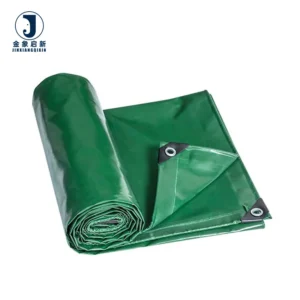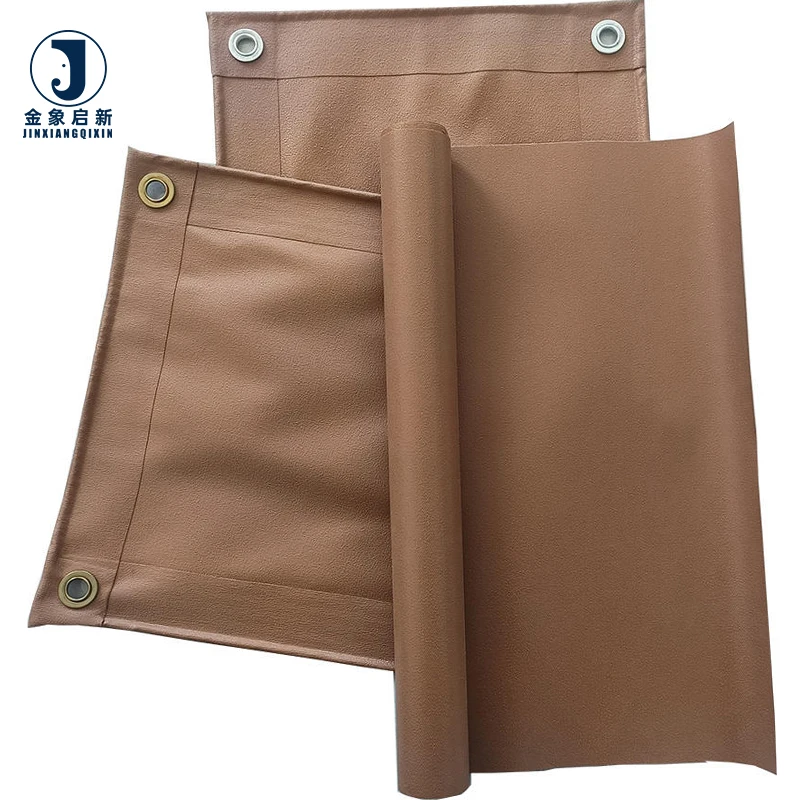
Process Control Over Coating Weight — Each roll of this PVC coated tarpaulin undergoes in-process coating weight checks across the production line to ensure the GSM delivered matches the GSM quoted.
Technical Specifications
| Parameter | Value |
|---|---|
| Product Type | PVC Coated Tarpaulin |
| Base Fabric Denier | 1000D |
| Weight Options | 550GSM / 900GSM |
| Coating Material | PVC |
| Surface Finish | Self-Clean |
| Waterproof | Fully waterproof coated construction |
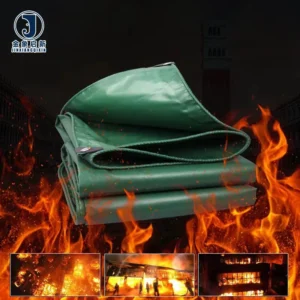
| Flame Retardant | Available in flame retardant grades — confirm the grade required for your market |
| Anti-Static | Anti-static treatment available — confirm the standard required for your application |
| Anti-Mildew | Anti-mildew treatment available |
| Anti-UV | Anti-UV treatment available — confirm the test basis for your outdoor exposure target |
| Anti-Cold | Anti-cold treatment available |
| Outdoor Life Expectancy | Suited to extended outdoor exposure (confirm years with manufacturer against your climate zone) |
| Standards | ISO, CE certified facility |
Application Suitability
| Application | Exposure & Requirement |
|---|---|
| Truck side curtain fabric | Constant flexing at load points, road abrasion, wind load, UV exposure during long-haul transit |
| Flatbed truck cover | Tie-down stress at edges, puncture risk from shifting loads, weather sealing across the deck |
| Articulated trailer enclosure | Repeated folding and unfolding, seam stress at articulation points, highway-speed wind pressure |
| Tent and temporary structure | Sustained wind load, rain exposure, structural tension at ridge and corner anchor points |
| Roof cover membrane | Standing water resistance, thermal cycling, UV degradation over extended installation periods |
| Flood barrier cover | Prolonged water contact, debris impact, rapid deployment and recovery cycles |
Why Generic Truck Covers Fail Where Custom-Fit PVC Coated Tarpaulin Succeeds
A cover cut to your exact trailer model dimensions seals the load completely, eliminating the gaps and flaps that generic sizing always leaves exposed.
Fleet operators who source truck covers by generic width and length consistently find material that bunches at corners, leaves cargo edges exposed, and creates flapping zones where abrasion accelerates wear. The PVC coated tarpaulin for truck and transport is cut to match specific trailer model profiles, so tie-down points align with the vehicle’s anchor hardware and the fabric sits under even tension rather than dragging loose at the edges. [NEED_CITE: common failure patterns in generic-fit versus model-specific truck covers on articulated trailers]
How Base Fabric Denier Translates to Road Performance
A 1000D base fabric provides the tensile backbone needed when a truck cover endures highway-speed wind loads and the repeated flexing that occurs every time a trailer navigates a curve or an uneven road surface. The denier rating refers to the linear mass density of the yarns in the woven base, and at this level, the fabric resists tearing propagation from puncture points caused by shifting cargo or contact with loading equipment. When paired with PVC coating, the woven structure is encapsulated so that individual yarns cannot fray or separate under sustained road vibration.
Self-Clean Coating and Maintenance Cycles for Transport Fleets
The self-clean surface finish on this PVC coated tarpaulin reduces dirt adhesion during long-haul operations where road grime, exhaust residue and industrial fallout accumulate across the cover surface. [NEED_CITE: self-clean coating technology for PVC tarpaulin surfaces in fleet transport environments] Without this treatment, fleet operators report needing to wash covers at intervals that add labour cost and vehicle downtime between trips. The finish works by modifying the surface energy of the PVC layer so that contaminants bond less aggressively and are more readily removed by rain or a low-pressure rinse.
Reading the Specification Sheet: What GSM, Denier and Finish Mean Together
The 1000D base fabric and the available 550GSM or 900GSM coating weights interact to produce very different performance profiles. GSM measures the total weight per square metre of the finished coated fabric — it includes both the woven base and the PVC coating layers. A heavier GSM does not automatically mean a stronger fabric if the base denier is low; conversely, a high denier base with a thin coating may tear easily along the weave. The self-clean finish adds a functional top layer that affects how the material handles cleaning chemicals, UV exposure and surface abrasion over time. Flame retardant and anti-static treatments, when specified, are integrated into the coating compound and must be verified against the regulatory requirements of the destination market before production begins. [NEED_CITE: relationship between base fabric denier, coating GSM and tensile performance in PVC coated fabrics per ISO 1421]
The Cost of Welded Seams Failing Before the Fabric Does
When a truck cover is in use, the highest stress concentrates at welded seams — particularly where the load flexes during braking, cornering and road undulation. If the welding temperature or pressure is set incorrectly for the specific coating weight, the seam can peel apart while the surrounding PVC coated tarpaulin remains intact. This failure mode is especially common when fabricators use generic welding settings across different GSM grades without adjusting for the thermal mass of the coating layer. Batch colour inconsistency across rolls in a single order compounds the problem: if panels from different rolls are welded together and the colours do not match, the visible mismatch is permanent once installed on the vehicle. [NEED_CITE: weld seam strength testing methodology for PVC coated tarpaulin at flex zones]
Why Sourcing This PVC Coated Tarpaulin Through Jinxiang
- 10-person R&D team handles pattern printing, custom sizing and sample development specifically for truck and transport cover applications.
- Three full production lines with dedicated equipment support bulk roll output with consistent coating weight across the batch.
- QA/QC checks at every production stage, with coating weight verified against the quoted GSM before any roll is cleared for dispatch.
- Samples developed within days so fleet operators and transport equipment builders can confirm colour, finish and weld compatibility before committing to production volume.
- Custom sizing cut to specific trailer model dimensions rather than generic templates, ensuring tie-down points and fabric tension match the vehicle profile.
Documentation & Verification
- Pre-shipment inspection record confirming coating weight per roll matches the quoted GSM specification
- Material specification sheet stating base fabric denier, coating weight, surface finish and treatment options
- Flame retardant test report supplied where applicable, matched to the grade specified on the purchase order
- Anti-UV test report provided when anti-UV treatment is selected, documenting the test basis used
- Certificate of origin and customs documentation for international shipment
- Roll packing list detailing roll dimensions, weight and batch reference for traceability
Fabrication, Handling & Storage
- Welding parameters must be calibrated to the selected GSM — 550GSM and 900GSM require different heat and pressure settings for reliable seam adhesion.
- Store rolls upright on a flat surface to prevent permanent creasing in the PVC coating layer, which becomes visible after installation.
- Clean the self-clean surface with mild detergent and low-pressure water; aggressive solvents will degrade the finish and reduce its dirt-shedding properties.
- Allow cold-stored rolls to reach ambient temperature before unrolling to prevent cracking in the anti-cold treated PVC coating.
- Plan panel layout to minimise cross-grain welds, which are more prone to peeling under road vibration than longitudinal seams.
What We Need to Quote Your PVC Coated Tarpaulin Requirement
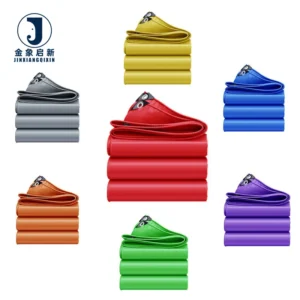
To provide an accurate specification and lead time, share your trailer model or structure dimensions, the preferred GSM grade, and any flame retardant or anti-static requirements tied to your destination market’s transport safety regulations. If you need colour matching across multiple rolls or custom branding, provide the RAL or Pantone reference and your estimated annual volume so we can plan batch consistency from the start.
Frequently Asked Questions
Q: How do you verify that the GSM on delivery matches the quoted specification?
A: Every roll undergoes a coating weight check during pre-shipment inspection. We record the measured GSM per roll on the inspection report, which ships with your documentation. If the measured weight deviates outside the agreed tolerance, the roll is held and reworked or replaced before dispatch — no roll leaves the facility without verified weight.
Q: What test reports accompany flame retardant grades?
A: When flame retardant treatment is specified, we supply the test report corresponding to the grade selected on your purchase order. The applicable standard depends on your destination market — confirm the fire classification your transport or construction site requires so we can match the correct compound and testing protocol during production.
Q: How do you ensure colour consistency across multiple rolls in one order?
A: Rolls within the same production batch are checked side by side for colour variation before packing. If your order spans multiple batches, we flag this during production planning and adjust the coating formulation to minimise visible differences. Provide your RAL or Pantone reference at the inquiry stage so we can confirm achievable tolerance before sampling.
Q: Can you cut truck covers to match our specific trailer model dimensions?
A: Yes — we cut to the exact trailer model profile you provide, including side curtain panels, tie-down reinforcement zones and eyelet placement matched to your vehicle’s anchor hardware. Share the trailer model designation or dimension drawings at the inquiry stage, and we will develop a cutting template for your approval before production begins.