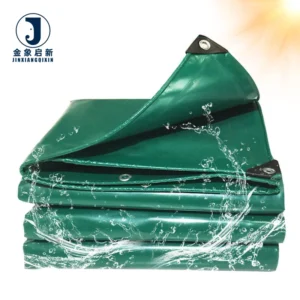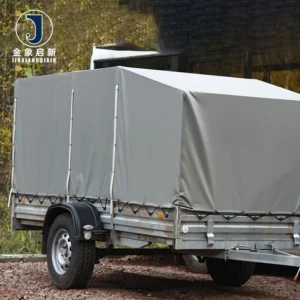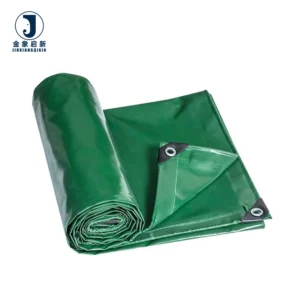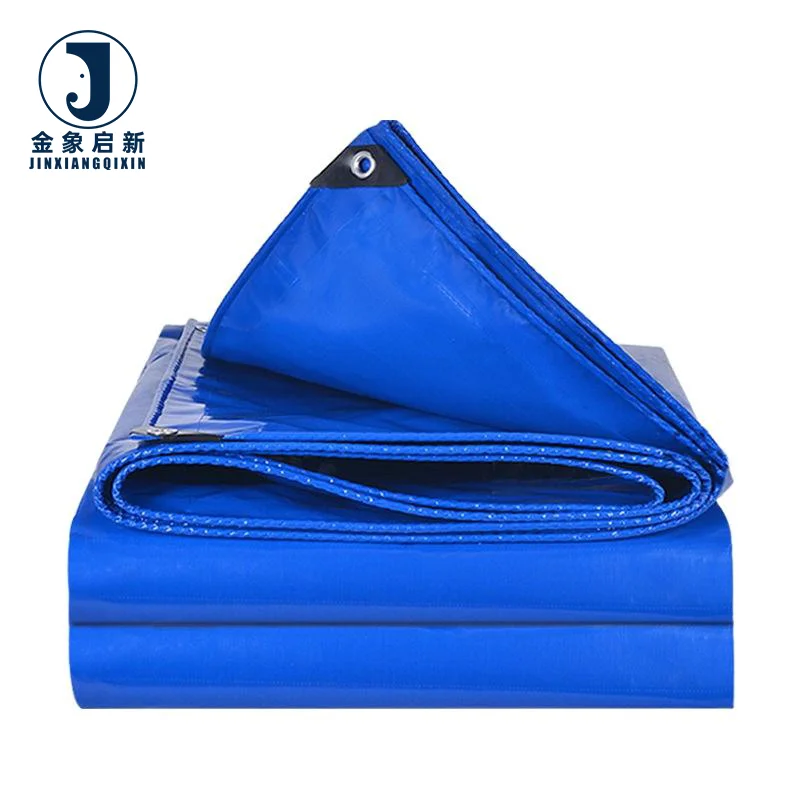
Proven Coating Adhesion — Hot-melt coating technology bonds the PVC layer to high-strength polyester mesh, reducing delamination risk at flex points where truck and trailer covers endure repeated load movement.
Technical Specifications
| Parameter | Value |
|---|---|
| Product Type | PVC Coated Tarpaulin |
| Material | PVC + High-strength polyester mesh fabric |
| Coating Method | Laminated technology & Hot-melt Coating technology |
| Surface Finish | Available in glossy or matte finish |
| Color Options | Blue, Red, Yellow, Light Blue, Grey (customized colors available) |
| Weight Range | 350gsm, 420gsm, 500gsm, 550gsm, 600gsm, 750gsm |
| Thickness Range | 0.32mm, 0.35mm, 0.4mm, 0.45mm, 0.5mm, 0.65mm |
| Roll Width | 2m, 2.1m |
| Roll Length | 75m (for 2m width), 50m (for 2.1m width) |
| Waterproof | Double-sided 100% waterproof |
| Key Features | Cold crack resistance, anti-mildew, anti-static treatment (grade not stated — confirm grade required for your market), sunproof (test basis not stated — request test report), color fastness, high tension strength, high tear strength |
| Certifications | ISO, CE |
Application Suitability
| Application | Exposure & Requirement |
|---|---|
| Truck side curtain fabric | Constant flexing at load points, road spray, abrasion against cargo edges, UV exposure during long-haul transit |
| Trailer load covers | Tie-down tension, wind flap fatigue, water ingress prevention across varied climates |
| Flatbed cargo protection | Direct sun and rain exposure, friction from shifting loads, cold-weather brittleness risk |
| Fleet branding covers | Color consistency across multiple vehicles, surface finish suitability for printed graphics |
Why PVC Coated Tarpaulin for Truck and Transport Fails at the Weld Line
Welded seam integrity depends on coating adhesion, not fabric weight alone.
Fleet operators regularly see covers tear not through the body of the fabric but along the heat-welded seams — precisely where the load flexes most during transit. When the coating method does not produce a sufficient bond between the PVC layer and the polyester mesh base, the seam becomes the weakest link [NEED_CITE: tensile and tear test methods for coated fabrics per ISO 1421]. A PVC coated tarpaulin for truck and transport applications must maintain seam strength through thousands of flex cycles, and that requirement starts with the coating technology used during manufacturing.
Hot-Melt Coating and Seam Performance on Moving Loads
The hot-melt coating technology used in this PVC coated tarpaulin for truck and transport creates a direct bond between the PVC layer and the high-strength polyester mesh base fabric. This adhesion method supports consistent heat welding during fabrication, which matters when covers are cut and joined to fit specific trailer dimensions. Fleet operators replacing worn side curtains or ordering new load covers benefit from welds that hold under road vibration rather than peeling apart at the overlap.
Cold Crack Resistance for Year-Round Fleet Operation
Truck and trailer covers face temperature swings that cause lesser materials to stiffen and crack at stress points. The cold crack resistance built into this PVC coated tarpaulin helps maintain flexibility during winter transit, reducing the risk of brittle failure at eyelet zones and hem folds. This characteristic matters particularly for fleets operating across regions where overnight temperatures drop significantly below daytime conditions.
Understanding How Base Fabric and Coating Weight Interact [NEED_CITE: relationship between denier, weave density, and tear propagation in coated technical textiles]
The high-strength polyester mesh base fabric provides the structural skeleton of this PVC coated tarpaulin for truck and transport, while the PVC coating delivers waterproofing and surface protection. Tensile and tear strength result from the combination of yarn denier, weave density, and coating weight — not from GSM alone. A heavier coating on a loosely woven base may resist water but tear easily under tie-down tension. The available GSM range from 350gsm to 750gsm allows specification matched to actual load and exposure conditions rather than over-specifying weight where it does not translate to service performance.
What Happens When Color Varies Between Rolls in a Fleet Order
When a transport company orders replacement covers for multiple trailers, color inconsistency between rolls becomes immediately visible once the covers are installed side by side in the yard. This batch-to-batch variation forces either an expensive re-order or an acceptance of mismatched fleet appearance [NEED_CITE: color fastness and batch consistency standards for coated fabrics in fleet applications]. Specifying color requirements upfront and requesting roll-to-roll verification before shipment prevents this problem, particularly when the PVC coated tarpaulin is used for branded fleet vehicles where uniform appearance matters for corporate identity.
Why Sourcing Here Reduces Procurement Risk
Our 10-person R&D team handles material selection and custom sizing specifically for fleet applications, developing samples within days so you can verify fit before committing to production volume. Three full production lines with 36 sets of professional equipment support bulk roll output while maintaining the coating consistency that welded seams depend on. Dedicated QA/QC inspection at every production stage, including 100% pre-shipment verification, confirms that GSM, color, and coating adhesion meet the specification agreed at quotation stage. With nearly 30 years focused on coated fabric, our process control addresses the failure modes that matter most in transport covering — seam peel, color drift, and weight discrepancy.
Documentation & Verification
- Material specification sheet confirming GSM, base fabric type, and coating method per roll
- Pre-shipment inspection record verifying weight and coating adhesion against agreed specification
- Test reports for sunproof and anti-static grades where applicable to your market requirements
- Roll packing list detailing width, length, color, and batch reference for each unit shipped
- Certificate of origin and customs documentation for international freight clearance
Fabrication, Handling & Storage
- Heat weld parameters should be adjusted to the specific GSM grade selected — heavier grades require higher temperature and longer dwell time
- Store rolls upright on end cores to prevent flat spots and permanent creasing across the 2m or 2.1m width
- When cutting to trailer dimensions, plan panel layout to minimize cross-width seams at high-flex zones
- Clean glossy surfaces with mild detergent only — abrasive cleaners damage the PVC coating layer
- Allow cold-stored rolls to reach ambient temperature before unrolling to prevent coating crack at fold lines
- Reinforce eyelet zones with additional PVC patches to distribute tie-down load across the polyester mesh base
Preparing Your PVC Coated Tarpaulin Enquiry
To provide an accurate specification and lead time, share your trailer model dimensions, fleet color requirements, and the exposure conditions your covers face on route. Let us know whether you need finished covers cut to size with reinforced hems or roll stock for your own fabrication workshop. If your market requires specific fire classification or anti-static certification, state the standard so we can confirm grade availability before sampling.
Frequently Asked Questions
Q: How do you ensure the truck cover fits my specific trailer model?
A: We take exact dimensions from your trailer model — including side curtain track profiles, corner radii, and tie-down positions — then cut and weld panels to match. Pre-shipment inspection verifies the finished cover against those dimensions before dispatch.
Q: What reinforcement options are available at tie-down and eyelet points?
A: We apply additional PVC patches behind eyelet zones to spread the tie-down load across the polyester mesh base fabric. Hem reinforcement uses folded and welded edges to prevent tearing where tension concentrates during transit.
Q: How do welded seams perform under repeated load flex and road vibration?
A: The hot-melt coating technology creates strong adhesion between the PVC layer and base fabric, supporting welds that resist peeling under flex fatigue. Seam integrity is tested at high-stress points during pre-shipment inspection.
Q: Can you match our fleet color across multiple cover orders?
A: Yes. We record the color reference for each fleet account and verify roll-to-roll consistency before shipment. Samples are produced for approval so you can confirm the match against your existing covers before bulk production begins.